


Modern interior design trends are constantly evolving, and homeowners today are exploring creative ways to combine durability with elegant aesthetics. One growing trend in residential and commercial spaces is installing tiles over wooden flooring surfaces. From stylish living rooms to moisture-resistant kitchens and bathrooms, tiled wooden floors are becoming increasingly popular in 2026.
However, successful tile installation on wood requires much more than simply placing tiles over the surface. Wood naturally expands and contracts due to temperature and moisture changes, making it a challenging base for tile installation. This is where choosing the right Tile Adhesive for Wooden Floors becomes extremely important.
Unlike traditional cement mortar, specialized adhesives are designed to handle floor movement, improve bonding strength, and reduce the risk of cracks or loose tiles. Whether you are renovating a home, upgrading office flooring, or planning a commercial project, selecting the correct adhesive can significantly improve long-term durability and performance.
In this complete guide, you will learn everything about wood flooring adhesive, the best installation methods, suitable tile types, common mistakes to avoid, and how to choose the best adhesive for wooden floor tiles for long-lasting results.
Tile adhesive for wood is a specially formulated bonding material designed to install ceramic, porcelain, vitrified, or stone tiles over wooden surfaces. Unlike conventional cement mortar, these adhesives contain polymer additives and flexible compounds that help accommodate the natural movement of wood.
Traditional cement becomes rigid after drying. Since wood expands and contracts over time, rigid bonding materials can easily crack or lose adhesion. Modern tile adhesive for wood is engineered to provide flexibility, strong bonding, and moisture resistance, making it suitable for challenging substrates like plywood and engineered wood.
Most high-quality tiles adhesive brands now manufacture flexible polymer-modified adhesives specifically designed for wood-based flooring applications.
Yes, installing a tile on wooden floor surface is absolutely possible when the correct preparation and adhesive system are used. In fact, many modern renovation projects use this method to upgrade interiors without removing the entire wooden subfloor.
However, successful installation depends on several important factors:
The wooden floor must be stable and structurally strong
There should be minimal floor movement
Proper waterproofing and priming are essential
Flexible adhesive must be used
Certain wooden surfaces work better than others for tile installation.
High-quality exterior-grade plywood is commonly used as a tile base because it provides better stability.
Engineered wood with proper reinforcement can support lightweight tiles when installed correctly.
Many professionals install cement backer boards over wooden floors before tiling to improve stability and durability.
Weak or damaged wooden floors
Floors with excessive movement
Water-damaged wood
Uneven surfaces with structural issues
Proper inspection before installation is critical for long-term performance.
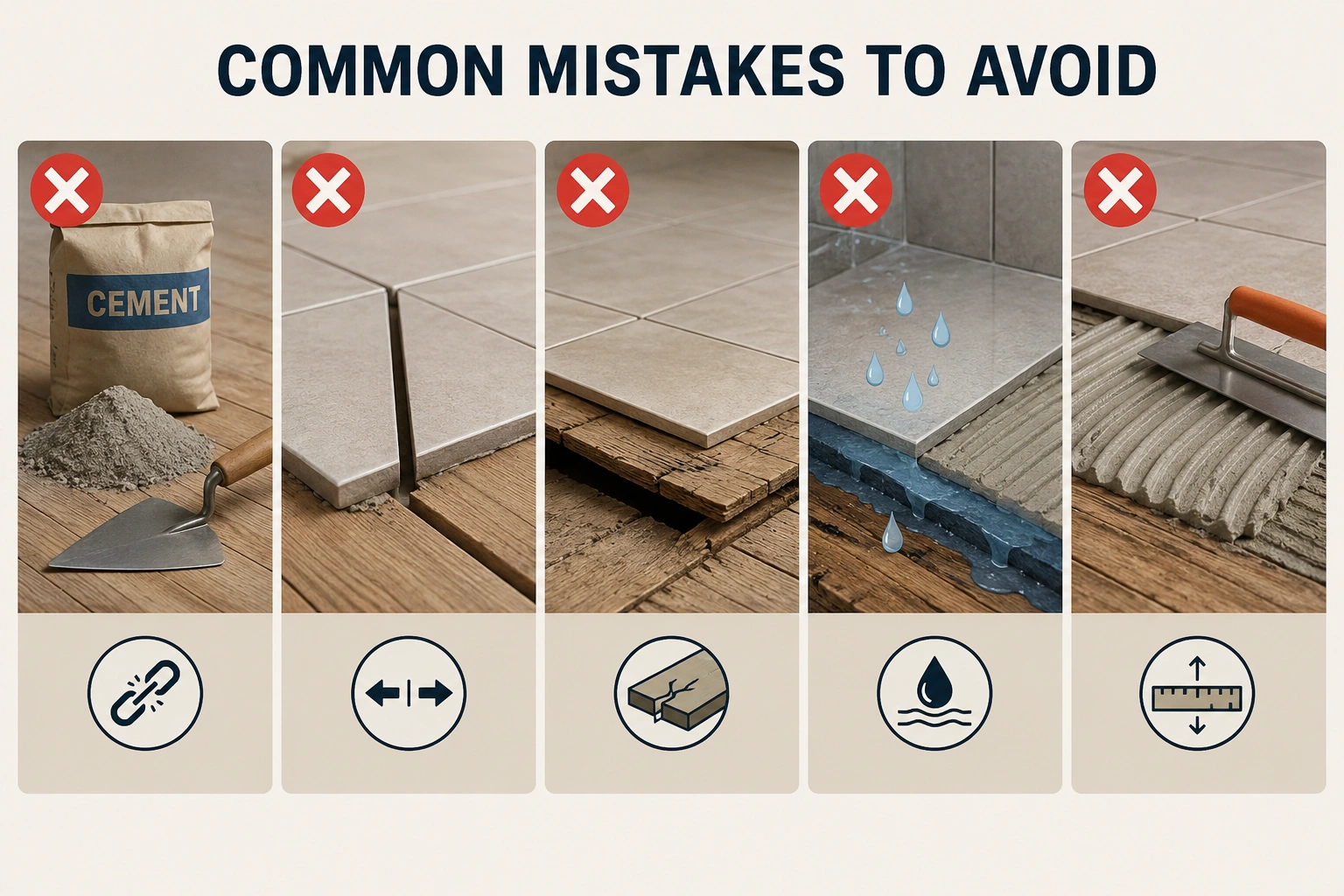
One of the most common installation mistakes is using ordinary cement mortar instead of specialized wood flooring adhesive.
Wood behaves very differently from concrete surfaces. It naturally expands during humid conditions and contracts in dry weather. Cement mortar lacks flexibility and cannot handle this movement.
As a result, several problems can occur:
Rigid cement layers often crack when the wooden substrate moves.
Cement does not create strong adhesion on smooth wooden surfaces.
Wood absorbs moisture easily, weakening traditional mortar over time.
Poor bonding can create air pockets beneath tiles.
This is why experts recommend flexible Tile Adhesive for Wooden Floors instead of conventional sand-cement mixtures.
Choosing the right Tile Adhesive for Wooden Floors is one of the most important steps for achieving a strong, durable, and long-lasting tile installation. Since wooden surfaces naturally expand and contract over time, the adhesive used must be flexible enough to absorb movement while maintaining strong bonding performance.
Unlike concrete floors, wood requires specialized adhesive systems that can handle vibration, temperature changes, and moisture exposure without causing tile cracks or debonding. This is why professional installers and leading tiles adhesive brands recommend advanced adhesive formulations instead of traditional cement mortar.
Today, several types of adhesive solutions are available for different flooring conditions, tile sizes, and project requirements. Selecting the correct adhesive depends on factors such as floor stability, moisture levels, tile weight, and installation area.
Below are the most commonly recommended adhesive types for wooden floor tile installation.
Flexible tile adhesive is one of the most widely used solutions for installing tiles over wooden surfaces. These adhesives are specially formulated to accommodate slight movement in wood without damaging the tile layer.
They are ideal for:
Residential flooring
Living rooms
Kitchens
Renovation projects
Large-format tile installation
Excellent bonding strength
Crack resistance
Better movement absorption
Reduced tile lifting issues
Long-lasting durability
Flexible adhesive systems are highly recommended for both ceramic and porcelain tiles installed on plywood or engineered wood surfaces.
Polymer-modified adhesive contains additional chemical compounds that improve adhesion, flexibility, and water resistance. These adhesives are considered one of the best options for tile adhesive for wood applications because they create stronger bonding on difficult surfaces.
Improved flexibility
High water resistance
Strong grip on wooden substrates
Better load-bearing strength
Enhanced durability in high-traffic areas
Most premium tiles adhesive manufacturer companies produce polymer-modified products specifically designed for wooden flooring and renovation applications.
These adhesives are commonly used in:
Bathrooms
Commercial interiors
Offices
Moisture-prone areas
Epoxy-based adhesive is a heavy-duty solution known for its extremely strong bonding performance and chemical resistance. It is commonly used in commercial and industrial projects where flooring experiences high stress and moisture exposure.
Commercial buildings
Industrial flooring
Hospitals
Restaurants
Wet environments
Superior bonding strength
Excellent moisture resistance
Chemical resistance
Long-term durability
High impact resistance
Although epoxy adhesive is more expensive than standard adhesives, it delivers excellent performance for demanding applications.
Ready-mix adhesives are pre-prepared products designed for convenient and easy application. These adhesives are often used for smaller residential projects and lightweight tile installations.
Easy to apply
Minimal mixing required
Faster installation process
Suitable for DIY projects
However, ready-mix products may not always be suitable for heavy tiles or areas with excessive floor movement. It is important to select high-quality products from trusted tiles adhesive brands for better performance.
For most residential and commercial projects, flexible polymer-modified adhesive is generally considered the best adhesive for wooden floor tiles. It provides the ideal balance of:
Flexibility
Bonding strength
Moisture resistance
Durability
The final adhesive choice should depend on:
Type of wooden surface
Tile size and weight
Indoor or outdoor use
Moisture exposure
Floor stability
Using the correct adhesive system is essential for achieving safe, durable, and professional-quality tile installation over wooden floors.
Using specialized Tile Adhesive for Wooden Floors offers several important advantages compared to traditional cement mortar. Since wooden surfaces naturally expand and contract over time, modern adhesive systems are designed to provide better flexibility, stronger bonding, and long-term durability.
Professional installers and trusted tiles adhesive brands recommend flexible adhesive solutions because they improve tile stability and reduce common flooring problems such as cracking and debonding.
Flexible adhesives are specially designed to absorb natural floor movement effectively. Wooden floors react to humidity and temperature changes, which can create stress beneath tiles.
High-quality tile adhesive for wood helps prevent:
Tile cracks
Grout damage
Loose tiles
Hollow flooring sounds
This flexibility is especially important for large-format tiles and high-traffic flooring areas.
Modern polymer-based adhesives provide excellent grip on wooden surfaces. Unlike regular cement mortar, specialized wood flooring adhesive creates stronger adhesion between the tile and substrate.
Better bonding strength improves:
Tile stability
Installation lifespan
Resistance to heavy foot traffic
Overall flooring performance
This is why professional wooden floor tile installation projects usually use polymer-modified adhesive systems.
Moisture protection is extremely important when installing tiles over wood surfaces. High-quality adhesives help reduce water penetration and protect the wooden substrate underneath.
Water-resistant adhesive systems are highly recommended for:
Bathrooms
Kitchens
Laundry areas
Commercial wet spaces
Using the best adhesive for wooden floor tiles helps reduce moisture-related damage and improves long-term flooring durability.
Modern adhesive systems are cleaner, easier, and faster to apply compared to traditional cement mortar methods.
Benefits include:
Easy trowel application
Reduced installation time
Better work efficiency
Cleaner construction process
Many professional contractors prefer advanced adhesive products because they simplify installation while delivering reliable results.
Proper adhesive selection significantly reduces future repair and maintenance costs. Flexible adhesive systems maintain strong bonding performance even under changing environmental conditions.
Trusted tiles adhesive manufacturer companies design their products for long-term durability, helping improve:
Crack resistance
Tile lifespan
Structural stability
Overall flooring reliability
Using premium adhesive products ensures better performance for both residential and commercial flooring projects.
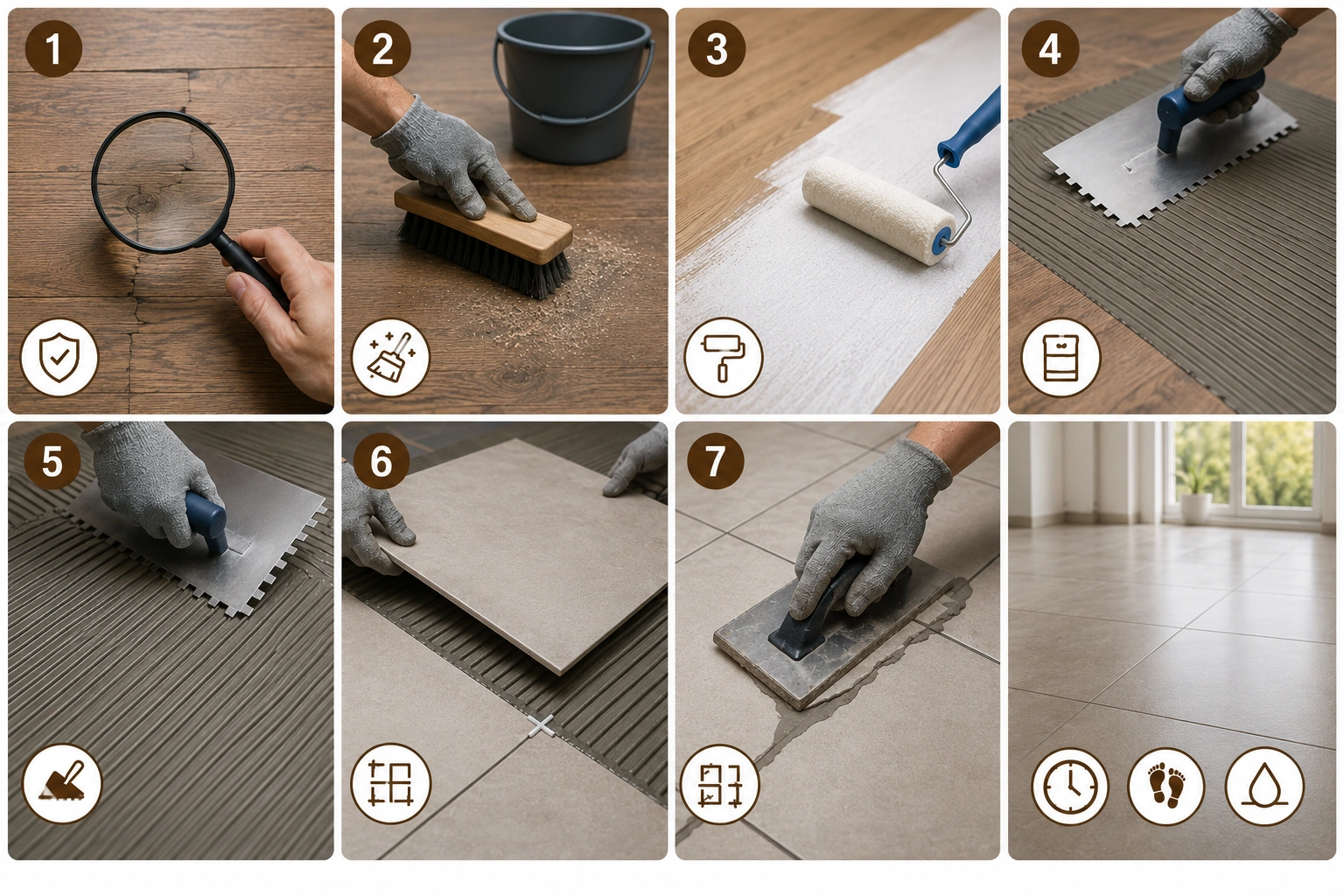
Proper installation plays a major role in the success of any wooden floor tile installation project. Even the best adhesive may fail if the floor preparation and application process are not done correctly. Since wood surfaces are more flexible than concrete, careful installation helps improve bonding strength, durability, and long-term tile performance.
Below is a professional step-by-step guide for installing tiles using the right Tile Adhesive for Wooden Floors.
Before starting installation, carefully inspect the wooden floor condition. The surface must be stable, strong, and free from structural damage.
Check for:
Loose wooden boards
Floor movement or bouncing
Water damage
Cracks or uneven areas
Weak structural support
Any damaged sections should be repaired before tile installation begins. Stable flooring creates better adhesion and reduces future cracking risks.
Professional contractors often recommend reinforcing weak areas before applying tile adhesive for wood.
Proper surface preparation is essential for strong bonding performance.
Remove:
Dust
Dirt
Oil stains
Grease
Paint residue
The floor should also be level and smooth. Uneven surfaces may create poor adhesive coverage and hollow spots beneath the tiles.
If necessary, use floor leveling compounds to improve surface flatness before applying adhesive.
Clean preparation improves the performance of wood flooring adhesive and increases installation durability.
Priming is an important step that many people overlook during tile installation.
A quality primer helps:
Improve adhesive bonding
Reduce surface absorption
Increase moisture resistance
Strengthen the substrate surface
For bathrooms, kitchens, and moisture-prone areas, waterproof primers or membranes are often recommended before applying adhesive.
Many trusted tiles adhesive brands provide compatible primer systems for better installation results.
Selecting the correct adhesive is one of the most important parts of the installation process.
The ideal Tile Adhesive for Wooden Floors should provide:
Flexibility
Strong bonding strength
Water resistance
Crack resistance
Polymer-modified adhesives are commonly recommended for wooden substrates because they can absorb slight floor movement without damaging the tile layer.
Always choose products from reliable tiles adhesive manufacturer companies to ensure long-term flooring performance.
Proper adhesive application ensures full tile support and strong bonding.
Use a notched trowel to spread adhesive evenly across the surface. The trowel size should match the tile size and adhesive type.
Recommended practices include:
Applying adhesive in small sections
Maintaining consistent thickness
Creating uniform trowel lines
Avoiding air pockets beneath tiles
Correct trowel techniques improve adhesive coverage and reduce hollow tile problems.
Place the tiles carefully over the adhesive while maintaining proper spacing and alignment.
Important installation tips:
Use tile spacers for uniform joints
Press tiles gently into the adhesive
Check alignment regularly
Avoid excessive adhesive squeeze-out
For large-format tiles, proper leveling systems may help achieve smoother installation results.
Careful tile placement improves both appearance and long-term durability.
After the adhesive has cured properly, grout can be applied between the tile joints.
Choosing the right grout is important for:
Water resistance
Crack prevention
Long-term durability
Flexible grout is often recommended for wooden floor applications because it can better handle slight movement.
Allow proper curing time before exposing the floor to foot traffic or moisture.
Typical curing guidelines:
Light foot traffic: 24 hours
Full curing: 48–72 hours
Wet area exposure: After complete curing
Following proper curing recommendations helps maximize the performance of the best adhesive for wooden floor tiles and improves flooring lifespan.
Even small installation mistakes can create long-term flooring issues when installing tiles over wood surfaces. Since wooden floors naturally expand and contract, proper preparation and the correct Tile Adhesive for Wooden Floors are essential for preventing damage.
Understanding these common problems can help improve installation quality and reduce future repair costs.
Tile cracking is one of the most common problems in wooden floor tile installation projects. This usually happens when the wooden substrate moves excessively or when rigid cement mortar is used instead of flexible adhesive.
Weak flooring structure
Rigid cement use
Poor expansion joints
Using flexible tile adhesive for wood helps absorb movement and significantly reduces the risk of cracked tiles over time.
Loose or lifting tiles are often the result of poor bonding between the tile and wooden surface. Incorrect adhesive selection or improper floor preparation weakens adhesion strength.
This Happens When:
Wrong adhesive is used
Surface preparation is poor
Adhesive coverage is uneven
Choosing high-quality wood flooring adhesive from trusted tiles adhesive brands improves bonding performance and tile stability.
Hollow sounds beneath tiles usually indicate air gaps or incomplete adhesive coverage under the tile surface. These empty spaces reduce tile support and may eventually lead to cracks or debonding.
Air pockets beneath tiles can create hollow sounds.
Proper adhesive spreading, correct trowel techniques, and full adhesive coverage help prevent this issue and improve flooring durability.
Wood is highly sensitive to moisture, making waterproofing extremely important during tile installation. Poor moisture protection can weaken the wooden substrate and damage the adhesive layer.
Poor waterproofing may damage wooden substrates over time.
Always protect wet areas properly using waterproof membranes, primers, and water-resistant Tile Adhesive for Wooden Floors to improve long-term flooring performance.
Wood surfaces naturally expand and contract with temperature and humidity changes. Flexible tile adhesive helps absorb this movement, reducing the risk of tile cracks and debonding over time.
Modern polymer-based tile adhesives create a powerful bond between tiles and wooden substrates. This ensures better tile stability and long-lasting performance even in high-traffic areas.
High-quality tile adhesive provides added protection against moisture penetration. This helps prevent water damage, swelling, and weakening of wooden surfaces beneath the tiles.
Tile adhesive is easy to apply and offers a cleaner installation process compared to traditional cement mortar. It also reduces application time, helping projects finish more efficiently.
Using the right adhesive improves the overall strength and lifespan of tiled wooden surfaces. It minimizes future maintenance issues and lowers repair costs in the long run.
Installing tiles over wooden floors is becoming increasingly popular in both residential and commercial spaces. With the right tile adhesive and proper surface preparation, tiled wooden flooring offers durability, stylish appearance, and long-lasting performance.
Tiles on wooden floors create a modern and premium interior look. They also improve durability while maintaining an elegant finish suitable for daily use.
Tiled wooden floors in kitchens offer better resistance against spills, stains, and moisture. They are also easier to clean and maintain compared to traditional wooden flooring.
With proper waterproofing and flexible tile adhesive, tiles can be successfully installed over wooden bathroom floors. This helps improve moisture protection and surface durability.
Offices, showrooms, and retail spaces benefit from tiled wooden floors due to their strength and low maintenance requirements. They provide a professional appearance while handling heavy foot traffic effectively.
Installing tiles over existing wooden flooring is an excellent renovation solution. It upgrades the overall look of the space without requiring complete floor removal, saving both time and cost.
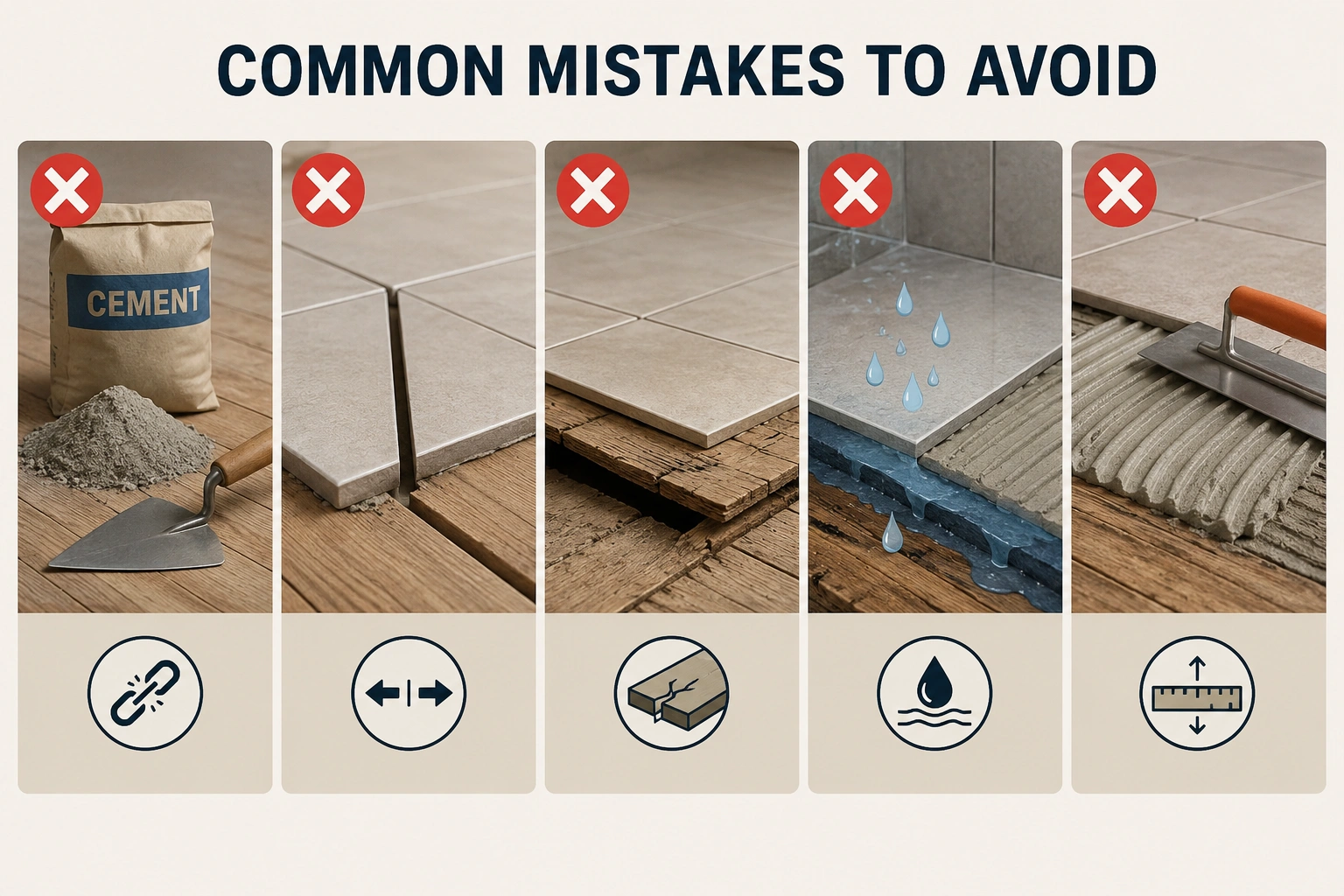
Proper installation is essential when laying tiles over wooden floors. Avoiding common mistakes can improve bonding strength, prevent tile damage, and ensure long-term durability of the flooring system.
Traditional cement mortar is not suitable for wooden surfaces because it lacks flexibility. Always use a high-quality flexible tile adhesive designed specifically for wood applications.
Wood naturally expands and contracts due to temperature and humidity changes. Expansion joints help absorb this movement and reduce the risk of tile cracking or lifting.
Tiles should only be installed on strong and stable wooden substrates. Weak or uneven floors can lead to adhesive failure, loose tiles, and surface damage over time.
Proper waterproofing is essential, especially in bathrooms and kitchens. Without moisture protection, water can penetrate the wooden base and weaken the flooring structure.
Applying too much or too little adhesive can affect tile bonding performance. Maintaining the correct adhesive thickness ensures better coverage, stability, and long-lasting installation.
Choosing the right tile adhesive brand is important for ensuring strong tile installation, long-lasting durability, and better resistance against moisture and surface movement. A high-quality adhesive not only improves bonding performance but also reduces future maintenance and repair issues.
Good tile adhesive brands offer highly flexible formulations that can absorb surface movement and temperature changes. Flexible adhesives help prevent tile cracks and debonding, especially on challenging substrates.
Water-resistant tile adhesives are essential for bathrooms, kitchens, balconies, and outdoor areas. They help protect surfaces from moisture damage and improve long-term tile stability in wet conditions.
Strong bonding strength ensures tiles remain firmly fixed for years without slipping or loosening. High grab adhesives are especially important for large-format tiles, natural stones, and vertical wall applications.
Anti-slip or non-sag properties help keep tiles in place during installation, especially on walls and elevated surfaces. This improves installation accuracy and reduces tile movement before curing.
Trusted adhesive brands usually comply with international standards like EN 12004 and IS 15477. These certifications indicate reliable performance, durability, flexibility, and safety for professional tile installation.
Reliable manufacturers provide technical guidance, product consistency, and quality assurance for different tile applications. Choosing a trusted tiles adhesive manufacturer ensures better product performance and long-term customer satisfaction.
Choosing the best adhesive for wooden floor tiles is one of the most important steps in the entire process.
Unlike traditional cement mortar, flexible polymer-modified adhesives are designed to absorb minor floor movement without damaging the tile layer. These advanced adhesives improve:
Bonding strength
Crack resistance
Water resistance
Long-term durability
Many trusted tiles adhesive brands now manufacture specialized products specifically for wood surfaces and renovation projects.
Using the correct adhesive system significantly increases the lifespan of the flooring installation and reduces future maintenance costs.
Installing tiles over wooden flooring is becoming increasingly popular in modern homes and commercial interiors. However, successful results depend heavily on choosing the right Tile Adhesive for Wooden Floors and following proper installation techniques.
Unlike traditional cement mortar, flexible adhesive systems provide stronger bonding, better moisture resistance, and long-term durability on wooden surfaces. Whether you are planning a residential renovation or a commercial flooring project, selecting high-quality wood flooring adhesive from trusted tiles adhesive brands can significantly improve performance and reduce maintenance issues.
With proper preparation, professional installation, and the right adhesive solution, wooden floor tile installation can deliver beautiful, durable, and long-lasting results for years to come.
Yes, but the floor must be stable, properly prepared, and installed using flexible tile adhesive.
Flexible polymer-modified adhesive is generally considered the best option for wooden floors.
Yes. Specialized adhesive provides better bonding and flexibility compared to regular cement mortar.
Yes, with proper floor preparation and suitable adhesive systems.
Drying time depends on adhesive type, temperature, and humidity. Most adhesives require 24 to 48 hours.
Yes, especially in bathrooms and kitchens where moisture exposure is high.
Medium and lightweight large-format tiles are commonly recommended for stable wooden floors.