

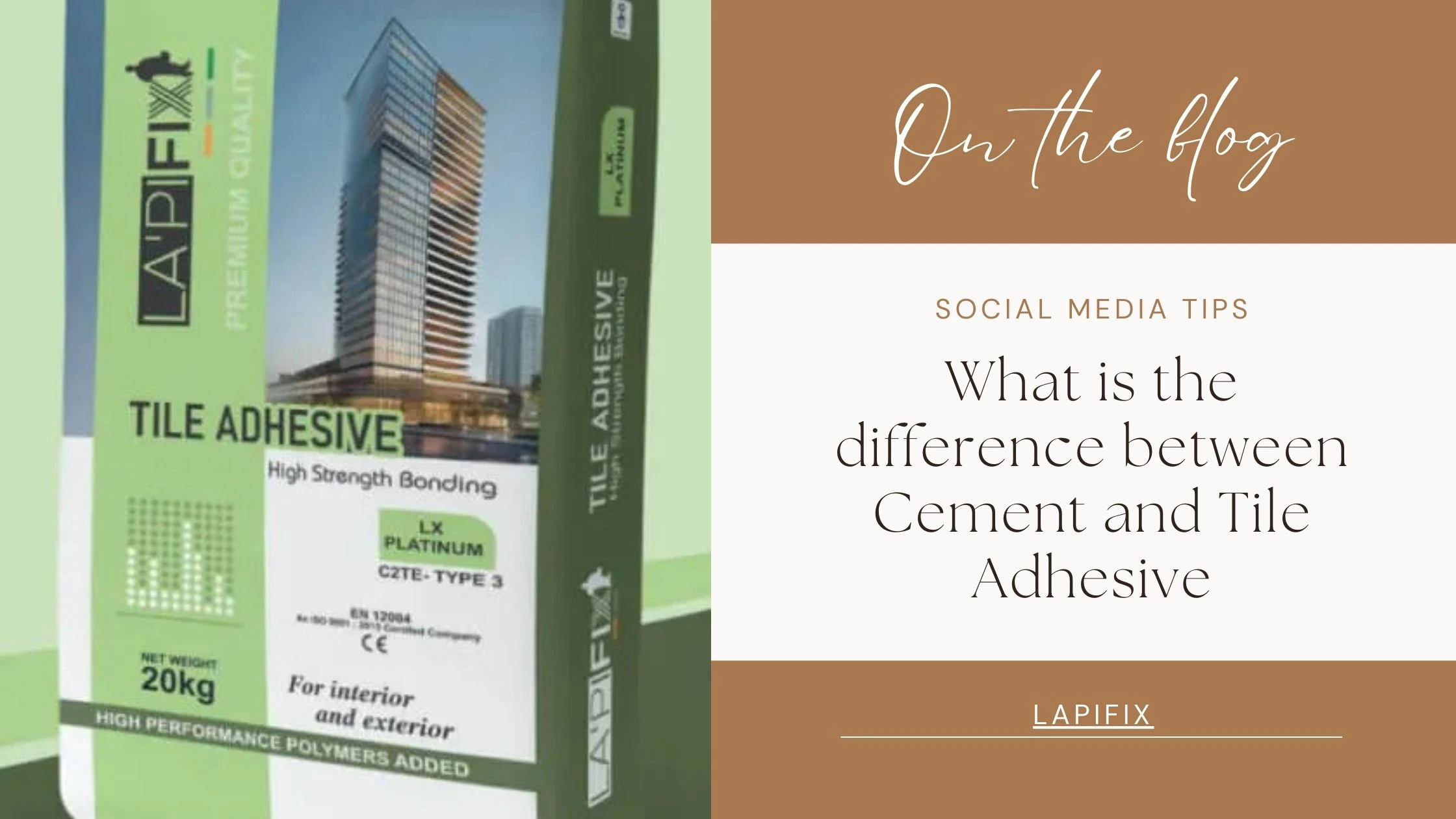
When it comes to installing tiles, the choice of the right bonding material plays a crucial role in ensuring durability, strength, and longevity. Traditionally, cement was widely used for tile installation, but modern construction methods have introduced tile adhesive, which provides better flexibility, bonding strength, and ease of application. Understanding the difference between cement and tile adhesive is essential for homeowners, contractors, and builders to achieve a long-lasting, high-quality tile installation.
Lapifix, a leading manufacturer of high-quality construction adhesives, offers advanced tile adhesives that are designed to improve the performance and durability of tile installations. In this article, we will compare cement and tile adhesive, explore their advantages and disadvantages, and determine which option is best for different applications.
Cement is a traditional binding material used in construction. It is made from a mixture of limestone, clay, and other additives that harden when mixed with water. Cement is commonly used for brickwork, concrete, and plastering, but it has also been used in the past for tile fixing.
Widely Available – Cement is easily accessible and commonly used in construction.
Cost-Effective – It is relatively cheaper compared to modern adhesives.
Multi-Purpose – Cement can be used for multiple construction applications, not just tile fixing.
Poor Adhesion – Cement does not provide strong bonding with tiles, especially non-porous tiles like vitrified or ceramic tiles.
Water Absorption – Cement-based installations are prone to water damage, leading to cracks and weak bonds.
Longer Curing Time – Cement takes a longer time to set, which delays project completion.
Thickness Requirement – A thicker layer of cement is needed for fixing tiles, increasing material usage.
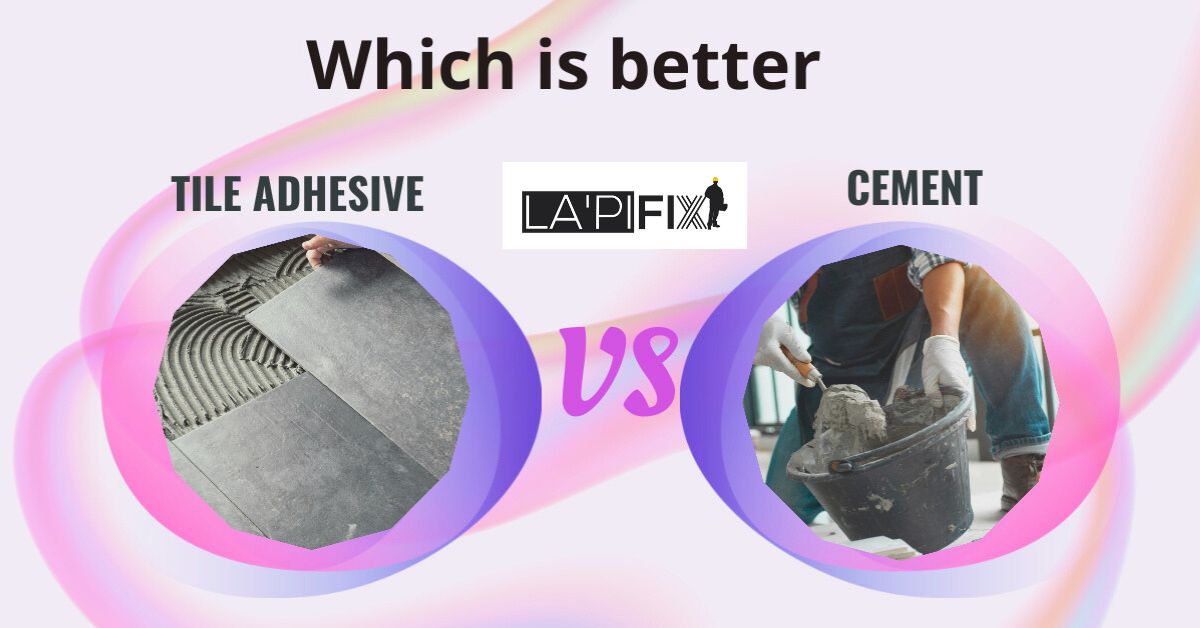
Tile adhesive is a specific glue that firmly adheres tiles to surfaces, making it a convenient alternative to typical cement combinations. Unlike cement-based adhesive, which requires the mixing of cement and sand to produce mortar, tile adhesive is available as ready-to-use pastes or powders, making the bonding process easier.
Optimized Ratio:Tile adhesive has a predetermined composition, ensuring the proper mix for firm bonding without the hassle of determining ratios.
Incorporating Cement: When tile adhesive is mixed with cement, it increases durability and adhesion, providing a strong base for tiles.
Rock Cement durability:Tile adhesive has equal durability as rock cement, beyond the limitations of cement alone.
Cost-Effective: Tile adhesive's fixed composition makes it a more cost-effective option than the complex process of combining numerous components for cement mixtures.
Mixture Homogeneity: Top Tile adhesive ensures a homogeneous and uniform mixture, reducing issues about uneven consistency and application that can occur with standard cement-based mixes.
Tile adhesive is a pre-mixed polymer-modified bonding material specifically designed for fixing tiles on various surfaces. Unlike traditional cement, tile adhesives provide high strength, flexibility, and resistance to moisture and temperature changes. Lapifix tile adhesives are formulated to meet the demands of modern construction projects.
Cementitious Tile Adhesive – Contains cement but is enhanced with polymers for better bonding strength.
Ready-Mix Tile Adhesive – Pre-mixed adhesive that is easy to apply, suitable for wall tiles.
Epoxy Tile Adhesive – High-performance adhesive used for heavy-duty and waterproof applications.
Stronger Bonding – Ensures high adhesion strength with all types of tiles, including porcelain, ceramic, and vitrified tiles.
Waterproof and Moisture-Resistant – Ideal for wet areas like bathrooms, kitchens, and swimming pools.
Thin Application Layer – Reduces material usage while improving bonding efficiency.
Fast Setting Time – Allows quicker installation and reduces downtime.
Flexibility and Crack Resistance – Absorbs minor structural movements, preventing cracks in tiles.
Higher Initial Cost – The price is slightly higher compared to cement but provides better long-term value.
Specific Application Process – Requires knowledge of proper mixing and application techniques.
|
Feature |
Cement |
Tile Adhesive |
|
Bonding Strength |
Weak, prone to detachment |
High, strong adhesion |
|
Water Resistance |
Absorbs water, weakens bond |
Waterproof and moisture-resistant |
|
Application Process |
Requires mixing on-site |
Pre-mixed and easy to apply |
|
Thickness Required |
Needs a thick layer |
Requires a thin layer, saving material |
|
Suitability for Large Tiles |
Not suitable for heavy or large tiles |
Ideal for large format tiles |
|
Curing Time |
Takes longer to set |
Faster setting time |
|
Durability |
Cracks over time |
Long-lasting and crack-resistant |
|
Cost Efficiency |
Lower upfront cost, but higher maintenance |
Slightly higher initial cost but long-term savings |
Lapifix is a trusted name in the tile adhesive industry, offering premium quality tile bonding solutions designed for different applications. Here’s why Lapifix Tile Adhesives are the best choice:
High Bonding Strength – Ensures superior adhesion for all tile types.
Waterproof & Weatherproof – Protects against moisture, reducing damage risks.
Eco-Friendly Formula – Made with sustainable materials, reducing environmental impact.
Quick Application & Setting – Saves time and labor costs.
Versatile Use – Suitable for floor tiles, wall tiles, outdoor installations, and heavy-duty applications.
If you are looking for a strong, durable, and easy-to-use solution for tile installation, tile adhesive is the better choice over cement. While cement may be cheaper initially, it does not provide the adhesion strength, flexibility, or water resistance that modern tile adhesives offer.
Lapifix tile adhesive is the perfect solution for professionals and homeowners looking for high-performance, cost-effective tile fixing solutions. Whether you are working on a residential project, commercial building, or outdoor space, Lapifix ensures long-lasting, professional results.
Best Tile adhesive is becoming increasingly popular in the building business due to its multiple benefits. However, some people still favor the conventional approach of employing sand and cement. To achieve the greatest results, you must evaluate both possibilities before beginning your tiling project.
In this blog, we will look at why tile glue is important for tile installation, as well as the benefits and drawbacks of tile adhesive over sand-cement mix. Understanding the benefits and downsides of each method allows you to make an informed selection and complete a successful tiling project. For more information about Lapifix Tile Adhesives, contact us today and get the best tile installation solution for your project!
Cement is a basic building material used for construction. Tile adhesive, on the other hand, is made for bonding tiles to surfaces. Cement hardens when mixed with water, while tile adhesive has additives for a stronger bond.
Cement is a fine gray powder made of minerals. It hardens when mixed with water. Tile adhesive includes cement and additives for better performance.
Cement is used for construction like foundations and walls. Tile adhesive is for bonding tiles to floors, walls, and countertops. It offers a stronger bond than cement.
Modern tile adhesives have stronger bonds and are more flexible. They are easier to apply than traditional cement. This makes them better for tile installations.
Cement is better for large construction projects and areas with high moisture. It's stronger and more durable than some tile adhesives.
Follow the manufacturer's instructions for mixing cement. For tile adhesive, prepare the surface well and apply evenly. Avoid mistakes like over-mixing or applying too much.
Cement is cheaper upfront, but tile adhesive offers more value over time. It provides a stronger bond, reducing maintenance costs. It also lasts longer, making it more cost-effective.
Cement production emits a lot of greenhouse gases. Tile adhesive has a smaller carbon footprint and can reduce waste. Eco-friendly tile adhesive options are available, like those made from recycled materials.