

You are going to tile your bathroom walls or your kitchen backsplash, and your mind has yet to be made on whether to use tile adhesive or cement. Both have their pluses and minuses regarding ease of application, durability promised, and cost. Reading through critical differences between these two will help you decide what is best to do in line with a tiling project and a fixed budget. With the appropriate information, you will have the right to make an informed decision and leave with beautiful, long-lasting results. This article breaks the two down in terms of pros versus cons, including insight into prep work, open time, water resistance, price, and much more. Keep reading for your best up-and-coming tiling option.
Tile adhesive is a thick, spreadable substance that bonds tiles directly onto concrete, plywood, or drywall substrates. It just sits there paste-like in consistency until mixed up in its plastic buckets or tubs. You use a notched trowel for spreading it, and all you need to do is to set your tiles in place and let them cure.
The adhesive ability of the tile adhesives is compelling, which is why people pick it. If you tile a floor or a wall with this substance, the tile shall not come off quickly. Furthermore, the layer is consistent and thin, making it difficult for the hollowing phenomena to develop.
It is worth noting that tile adhesive may save building time and is simple to install. This is due to its high water retention capacity.
Thinset cement, otherwise known as thinset mortar, is a dry, powdered mixture of cement, sand, and additives. Mix it with water to achieve a workable paste consistency before applying it to set tiles. It's thinner than mastic but thicker than dry mortar once mixed.
You may live comfortably in a room that has been tiled with cement mortar. Another benefit is that it is significantly less expensive than tile glue. The cost-performance ratio will be pretty high.
Cement and tile adhesive serve different purposes in construction. Cement is a general binding material used in masonry and concrete work, while tile adhesive is a specialized bonding agent designed for fixing tiles securely. Unlike cement, tile adhesive offers better flexibility, adhesion, and water resistance, ensuring long-lasting tile installations with minimal maintenance.
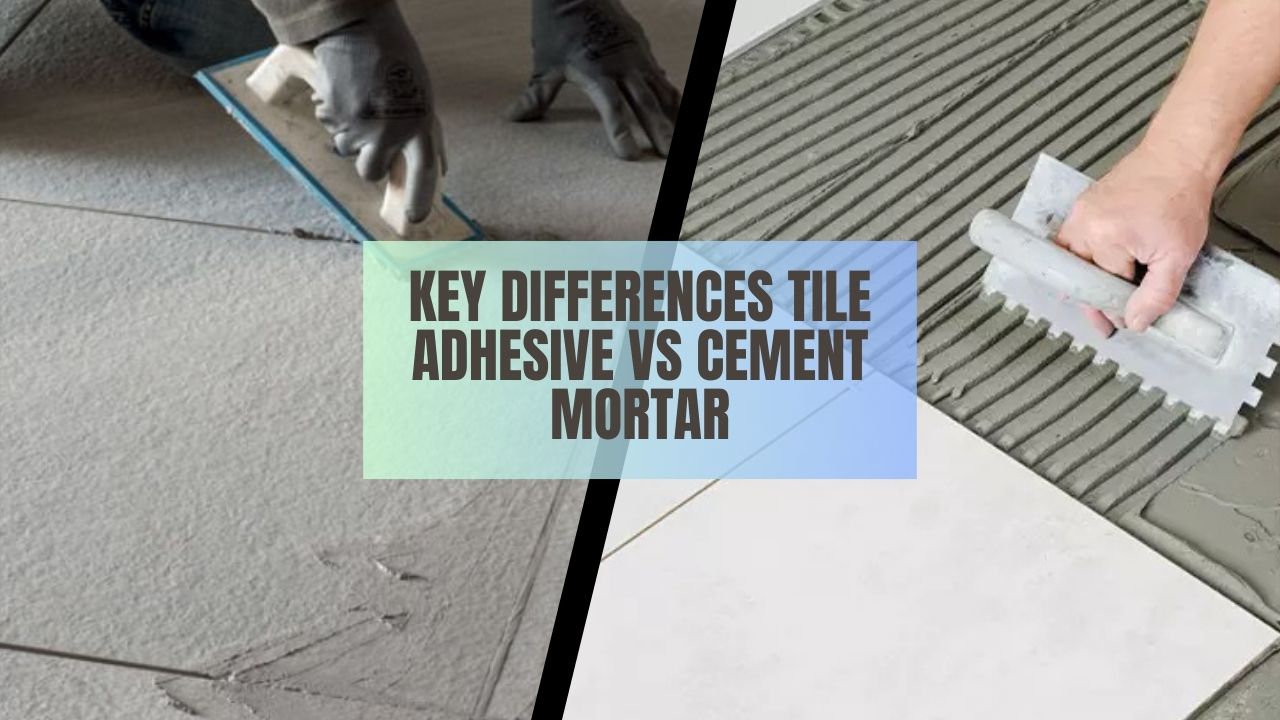
There are two major types of tile materials used typically: tile adhesive and Cement.
Tile adhesive : Tile adhesive is a kind of polymer-based adhesive substance with high hardness. It is used to adhere the tiles to the wall or the floor.
Cement adhesive : Cement, a kind of cementitious substance, is the most generally utilized material for placing ceramic tile. It is also the oldest material that is being used for tile walls/floors.
Composition: Adhesives are ready-mixed pastes, whereas cement is a dry powder mixed with water.
Application: Easy spread – adhesives, greater force required – thinset. Adhesives spread easily but have less open time. Thinset requires more force but has more open time.
Performance: Thinset offers a more robust bonding capacity and longevity compared to adhesive, hence making it suitable for flooring. The adhesives do not take much weight or moisture.
Mastic adhesive is durable only for tile installation on walls, ceilings, or backsplashes in dry areas. For load-bearing purposes, such as floors, showers, or outdoors, elect the strength and moisture resistance of thin-set cement. This is the professional-grade material that you can feel good about for durable tile installations.
Are you looking for an easy tile installation? Tile adhesive will be your best friend. No more mixing of cement and all the messes involved with it. With adhesives, you only need a bucket and a trowel no more and no less. It's that simple: just spread on some gooey substance and press your tiles into place.
Time is money, and tile adhesive can save you both. Unlike cement, which requires that you sit and wait for it to cure, adhesive lets you grout and walk on your new tiled surface within hours. And this makes it an excellent choice, especially when you need a tile job done fast or when your schedule really presses you.
One of the biggest pros associated with tile adhesive, though, is its versatility in that it can be used on such surfaces as drywall, plywood, and even on existing tile. This would make it a go-to choice in those weird areas where traditional cement may also not work.
While tile adhesives are very convenient, they aren't the most powerful. Nothing can beat the bonding power of cement; hence, it's optimal for high-traffic or perpetually wet areas.
Adhesives can break down with time, most especially due to water or extreme temperature exposure. This means that while they might be a quick fix, you might have to redo the job in a few years if the adhesive fails.
While tile adhesive may appear to be the cheaper option at the front, it runs into high costs, especially in larger projects. In the long run, cement tends to be more economical; hence, this is a better choice for people operating on meager budgets.
The choice between tile adhesive and cement solely depends on the needs, budget, and requirements of the work. Weigh carefully the pros and cons to arrive at a decision most appropriate for your tiling job.
This is attributed to the superb solidity and strength that cement possesses. The cement does not crack or crumble under heavy weights and is, therefore, the safest bet for laying tiles in places with high foot traffic, such as entryways or heavy kitchens. Proper installation and a cement-tiled floor will give very little trouble surviving for many decades.
This hardy nature also means that it is very resistant to moisture, much more than some tile adhesives. You will not need to fear that, with time, the bond will weaken due to water damage.
One of the significant drawbacks of cement is that laying tiles using it is such a labor-intensive activity. This means meticulous surface preparation, mixing up the cement precisely, securing the tiles in their places, and ensuring it doesn't dry on you before you have them all laid. One slip-up and you might end up with some sloppy, uneven floor.
Tile adhesives allow time for the installer but provide professional results. Allows flexibility with extended drying times to adjust anything that may need attention.
While cement itself makes comparisons in price with more expensive tile adhesives, once much of the labor involved in its execution is factored into place, it becomes, overall, more costly for many jobs.
This can involve adhesives, which significantly reduce labor costs because of the much quicker job. Thus, they may be more economical if you're paying professionals or highly value your time.
There are some issues with cement if you're nicely ecologically minded. It's emission-intensive to make, for one thing, and it requires mining ingredients like limestone.
Most tile adhesives now come from more sustainable materials and manufacturing processes themselves, so in that regard, they are blurring into being greener.
No option is perfect for every situation, but weighing the cons against the pros of cement versus adhesives will help ensure your vision turns out as envisioned.
There you go the key differences between tile adhesive and cement for tile installation. Each has its pros and cons, depending on the specifics of your tiling project. The takeaway would be that in most indoor house projects, flexible tile adhesive is the way forward for an easier installation and better long-term performance. But there's a place for cement mortar when looking at heavy-duty and outdoor applications. Just be sure to do your prep work and follow instructions carefully with either option. And don't forget those
Tile adhesive is generally better for modern tile installations. It offers better bonding strength, flexibility, and ease of use compared to traditional cement.
You can, but it's not recommended for most modern tiles. Cement is harder to work with, less adhesive, and may not hold heavy or large-format tiles well, especially on walls or wet areas.
Yes, tile adhesive usually costs more upfront. However, it reduces labor time, prevents tile damage, and requires less material overall, which can save money in the long run.
Tile adhesive provides better long-term durability. It’s designed to flex slightly, which helps prevent tile cracking due to surface movement. Cement may crack or cause tiles to debond over time.
Yes, tile adhesive comes ready to mix and spreads easily with a notched trowel. Cement requires precise mixing and curing and is messier to apply