

The various types of putty consist of wall putty as well as wood putty and specialty putties. The different types of wall putty include acrylic, cement-based and gypsum-based products which match different wall surfaces and particular requirements. The filling and repair of wood requires users to apply wood putty whereas specialty putties include epoxy putty for long-lasting fixes.
The most different types of putty which serve building and painting alongside carpentry and finishing needs appear in this complete breakdown. Putties exist in different varieties which present unique characteristics of use together with composition methods and finish properties:
1. Wall Putty (Cement-Based)
2. Acrylic Wall Putty
3. POP (Plaster of Paris) Putty
4. Wood Putty (Painter’s Putty)
5. Epoxy Putty
6. Auto Body Putty (Automotive Putty)
7. Glazing Putty
8. Tile Joint Putty / Tile Grout Putty
9. Polyester Putty
10. Silicone Putty
11. Acrylic Resin Putty
12. Latex-Based Putty
13. Oil-Based Wood Putty
14. Plumber's Putty
15. Two-Part Polyester Putty (Body Filler)
16. Flexible Crack Filler Putty
17. Fire-Resistant Putty
18. Mirror Fixing Putty and Glass Putty
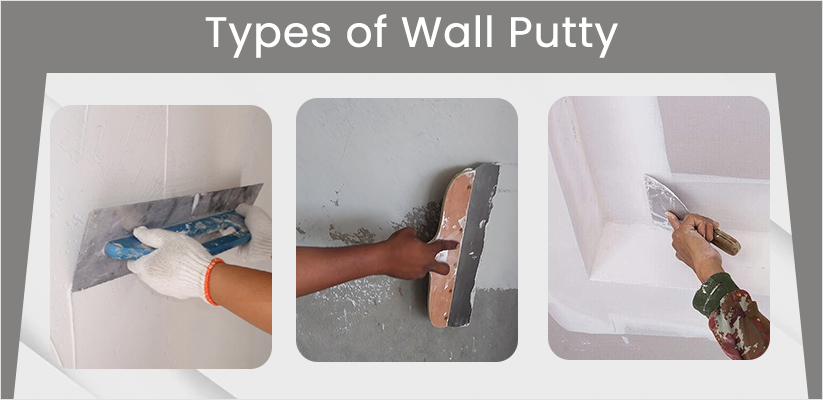
Engineers should use this material prior to paint applications on plastered surfaces.
Smoothens the surface.
Enhances paint adhesion.
Water-resistant and durable.
Builders use cement-based putty often for completing both interior and exterior wall surfaces.
Use: Used as a primer coat and for interior walls.
Users need not blend this material before application.
Smooth and soft finish.
Less durable than cement-based putty.
Popular in: Residential and decorative projects.
Use: For minor wall cracks and surface corrections.
Quick-setting.
Not water-resistant.
Best for dry indoor conditions.
Popular in: Interior ceiling designs and ornamental work.
The product serves as hole filler and fixes cracks and dents on wooden surfaces previous to painting or varnishing applications.
Soft and pliable.
Oil- or water-based.
The substance allows paint or staining applications.
Popular in: Carpentry and furniture repair.
Epoxy Putty provides heavy-duty repairs to all metallic materials together with ceramics and plastic items and wood objects and underwater surfaces.
Two-component resin + hardener.
Waterproof and heat-resistant.
This particular putty is similar to rock and allows tools for drilling and sanding or delivers a painting outcome.
The product finds its primary use in plumbing repairs alongside metal restorations as well as naval maintenance.
Professionals use this material to level out automobile dent damage before vehicle repaints.
Fast-drying and sandable.
High adhesion to metal surfaces.
Compatible with automotive primers and paints.
The auto industry and auto body shops widely implement this product.
This substance serves to securely attach glass materials within wooden and metal window structures.
Oil-based, pliable texture.
Forms a weather-resistant seal.
Can be painted after drying
Traditional window glazing services and frame building operations make use of this product.
Tile Joint Putty / Tile Grout Putty serves as an adhesive solution for tile gap closure after installation.
Users can find this product as either a powdered substance or a paste form.
Available in waterproof or epoxy versions.
The material stops water saturation and defends tiles from shifting position.
The material finds usage in elevating bathroom floors and walls and serving as a kitchen countertop surface and throughout floor installations.
Use: High-strength filling of deep dents in metal and fiberglass.
Quick drying.
The product finds use before applying epoxy or PU paint coatings.
Hardens for sanding and finishing.
Popular in: Automotive, marine, and fiberglass industries.
Silicone putty serves two main purposes: mold creation and waterproof sealing and gap filling in electronic devices and plumbing systems.
The material becomes rubbery and flexible after it cures.
Heat and water-resistant.
The material works well for creating personalized gaskets and molds.
This material finds its applications in three main areas: crafting, plumbing seal applications and electronic device maintenance.
Acrylic Resin Putty serves two functions: it works for fine surface finishing and artistic sculpting.
Lightweight and smooth.
Easily sanded and painted.
Good adhesion on plastic, resin, and wood.
This material finds its primary applications in model making, sculpture and DIY crafts.
People commonly employ this material to fill interior damage areas.
Water-based and easy to clean.
Flexible and low odor.
Paintable with water-based paints.
This putty finds its main use in repairing walls and trims for DIY projects.
This filler works for small wood imperfections in stained or finished wood surfaces.
Designed for stain-matching.
Non-hardening formula allows slight movement.
Not suitable for raw wood.
This product finds its main use in furniture maintenance and wood floor restoration.
Plaster of Paris achieves watertight seal protection which maintains drain and faucet integrity against leakage.
Stays soft and pliable for repositioning.
This material functions as a non-adhesive substance that serves only for sealing purposes.
The product should not be applied to surfaces that are porous such as granite or marble.
Popular in: Sink and faucet installations.
Automotive technicians apply this product to surfaces before painting.
The mixture with hardener turns into a solid form within a short period.
Very durable and sandable.
Can fill deeper dents.
Popular in: Car bodywork and dent repair.
Use: For minor wall cracks that may expand or contract.
Flexible polymer composition.
Prevents re-cracking.
Easy to apply and paint over.
Popular in: Interior wall crack repairs.
Builders apply this product to electrical boxes while also using it to protect pipes and walls in order to sustain fire ratings.
This material expands through heat exposure until it blocks both flame and smoke.
UL-rated for building safety.
Popular in: Commercial construction and fire-stopping systems.
The putty serves to attach glass panels and mirrors and delicate objects.
Neutral cure (non-corrosive).
Strong bonding with minimal expansion.
Compatible with smooth, non-porous surfaces.
Popular in: Interior decor and glasswork.
Spackling Paste:This type of putty serves to fix and smooth drywall and plaster surfaces' visible irregularities.
Other Specialty Putties:The toolkit should include both caulk and grain filler and rope caulk which serve different fixes for sealing joints and filling cracks.
The selection of improper putty results in the formation of damage that ranges from cracks to peeling away from surfaces and bad adherence and moisture entry. Here’s a quick guide:
|
Application |
Recommended Putty Type |
|
Wall painting |
Cement-based or acrylic wall putty |
|
Wood repairs |
Oil-based or wood filler putty |
|
Car dent repair |
Polyester body filler / automotive putty |
|
Wet areas/plumbing |
Epoxy putty or plumber's putty |
|
Fine art & modeling |
Silicone or resin-based putty |
|
Tile gap filling |
Tile grout or epoxy tile putty |
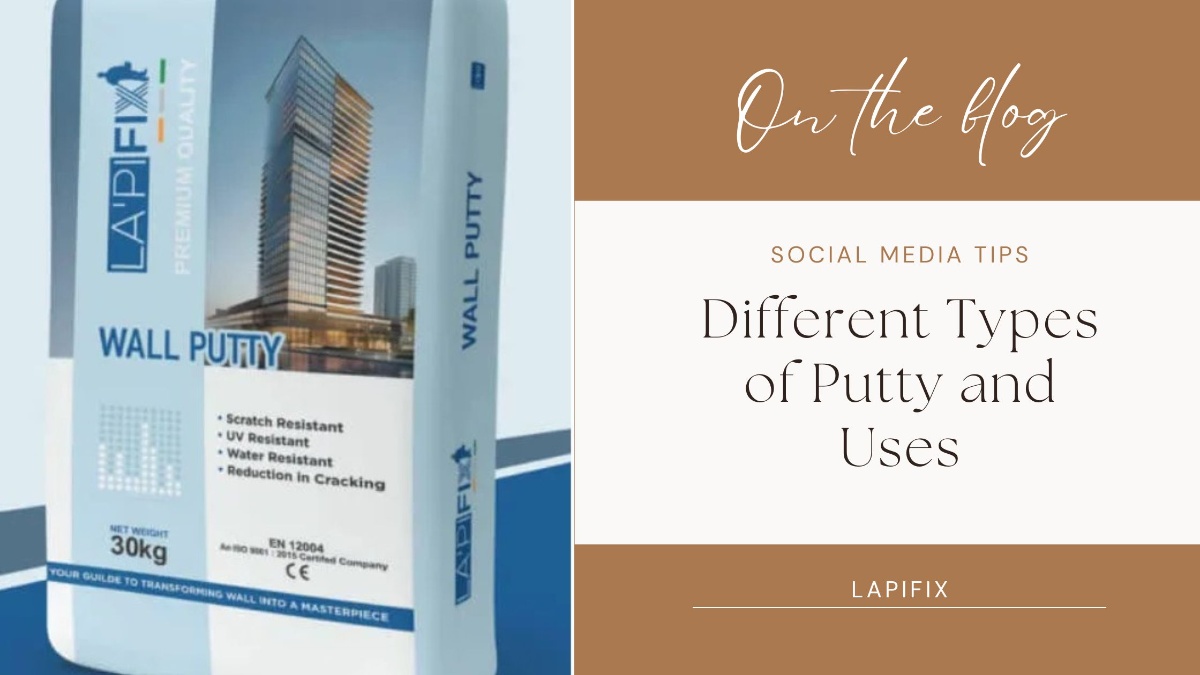
A proper wall putty selection leads to substantial changes in paint quality together with lasting durability. Lapifix Wall Putty surpasses other products by delivering perfect white smoothness which produces a powerful paint bond and safeguards against surface deterioration. The wall putty has UV-resistant and moisture-resistant capabilities that increase its durability alongside its no-curing-required application which reduces both time and application work.
The main dedication of Lapifix exceeds product excellence to successfully build trustworthy solutions and deliver contented customers alongside a convenient experience. This versatile product supports DIY users and professionals because it creates outstanding bonds, works effortlessly and functions on both indoor and outdoor areas. Lapifix stands as an economical wall putty solution which yields uniform results and shields surfaces perfectly while adding lasting beauty.
Acrylic and water-based acrylic putty functions as an ideal material for interior wall applications. The material offers extended durability and smooth application which makes it a superior choice compared to POP. Good quality putty creates a polished and impressive finish on walls.
The application of one or two wall putty layers creates walls that resist both water and heat. The paint becomes more durable and shiny as well as reduces the need for an additional paint layer. Homeowners seeking the best finish in their house walls should apply wall putty before painting.
Using wall putty enables you to cover wall defects, cracks and holes thus creating a uniform surface before painting. The correct number of wall putty layers determines both wall flatness and beauty while preventing wall cracking and peeling. Normally, three layers are needed!
The substance serves both therapeutic purposes for stress relief and provides entertainment during uninteresting meetings. The tool enables both amateur and professional CSIs to lift fingerprints. The material functions as a drumhead resonance damper. The putty works as a grip when you wrap it around a pencil.