

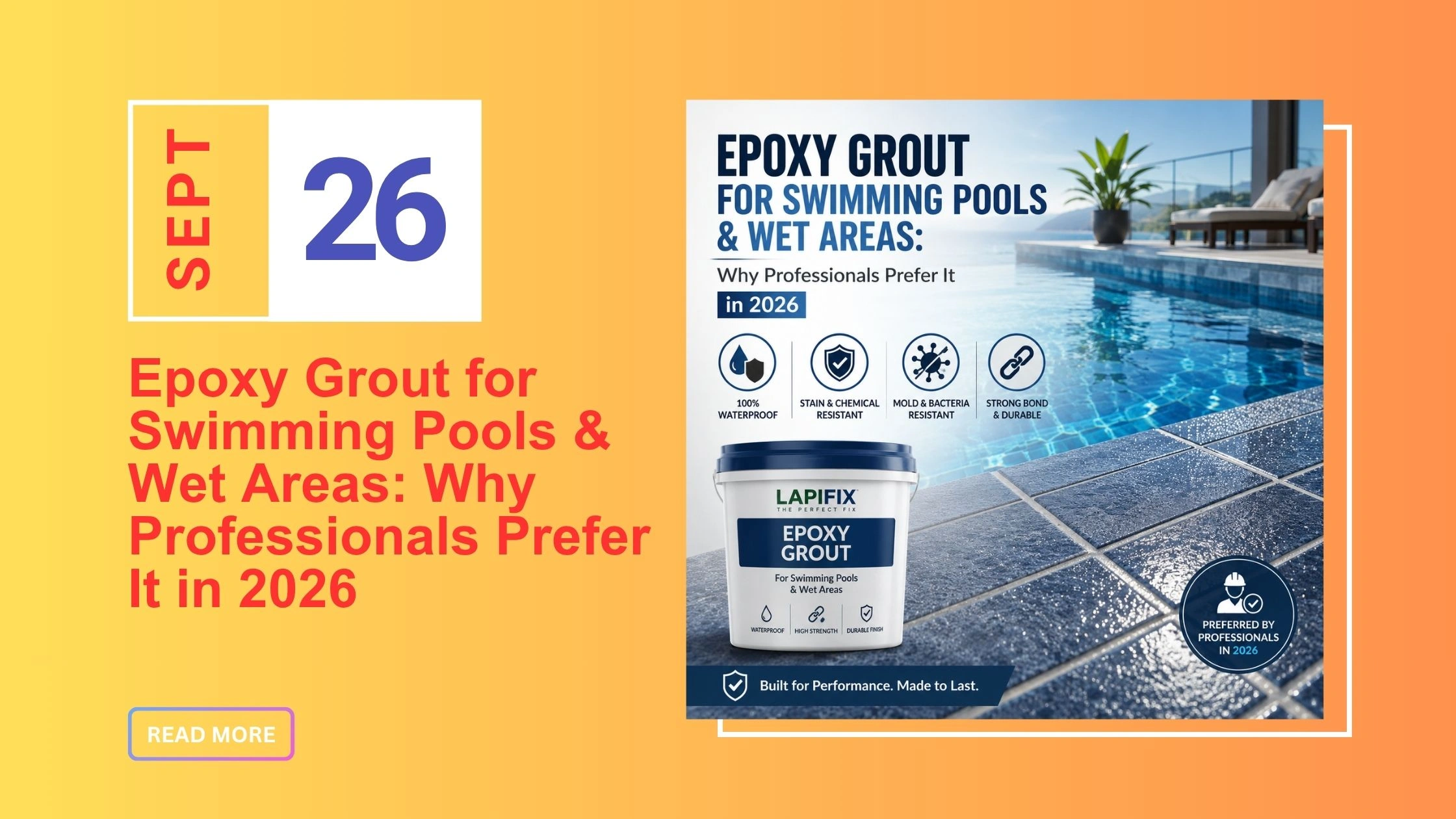
A swimming pool can have beautiful tiles, perfect lighting and that five-star-resort look, but one tired grout joint can ruin the whole picture. More importantly, grout around constantly wet areas does more than fill the gaps between tiles. It needs to handle moisture, cleaning, temperature changes and, in many pool environments, chemical exposure. That is why epoxy grout for swimming pools has become a serious consideration for professional tile installers, builders and property owners.
Traditional cement grout still has its place, particularly in many standard interior applications. However, swimming pools, showers, commercial washrooms and other demanding wet zones can push ordinary grout harder than a typical living-room floor ever will. Choosing the right system from the beginning can reduce staining, simplify maintenance and improve the long-term appearance of the tiled surface.
If you are comparing grout systems, it is also worth understanding how epoxy differs from conventional cement-based products. This guide to epoxy and cement grout provides useful background before you make a product decision.
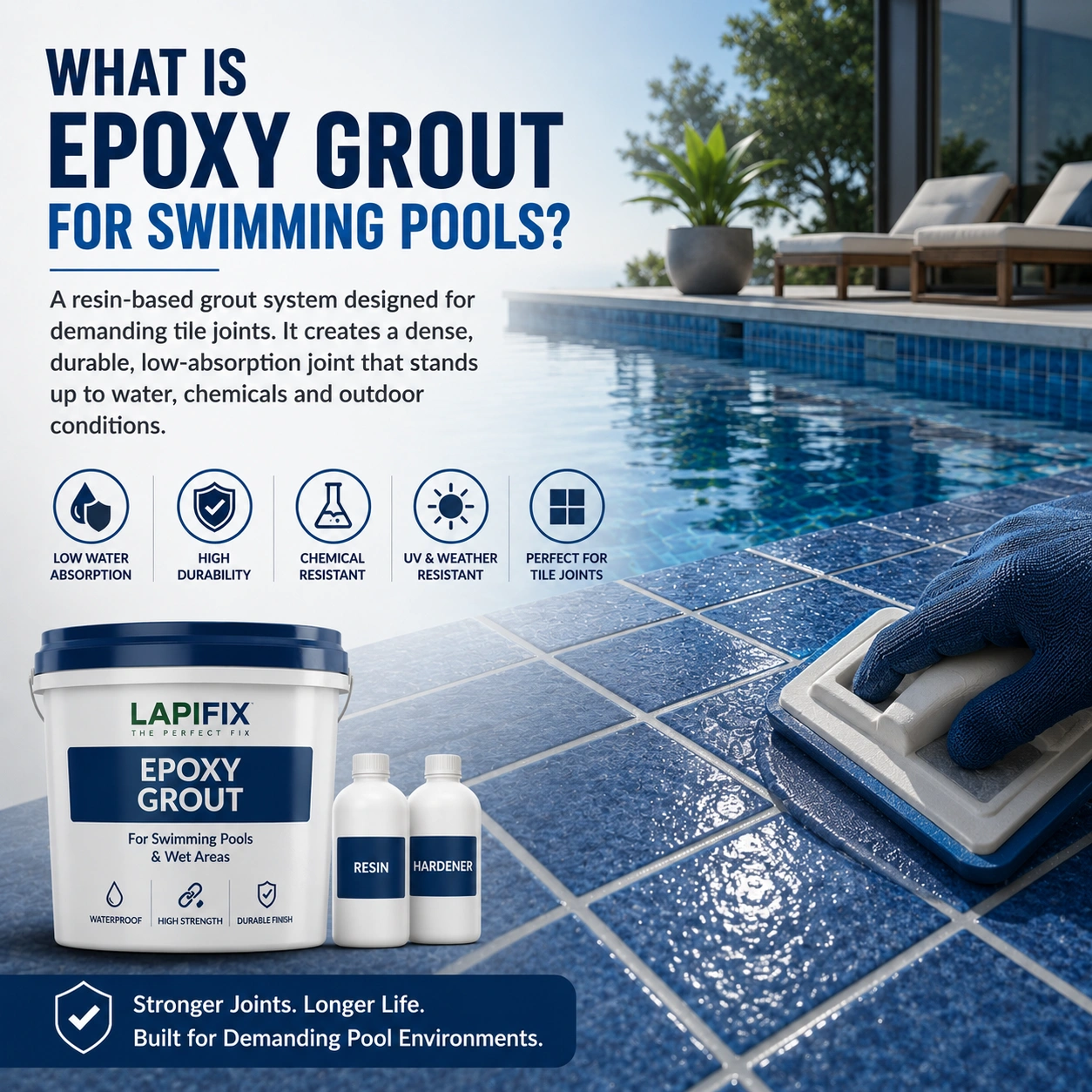
At its simplest, epoxy grout for swimming pools is a resin-based grout system designed for demanding tile joints. Unlike conventional cement grout, which relies on cementitious binders, epoxy grout typically combines resin and hardener components. Once properly mixed and cured, the material forms a dense, durable grout joint with low water absorption.
That difference matters in wet environments. Pool tiles face repeated exposure to water, cleaning routines and chemicals, while outdoor installations may also experience sunlight and temperature variation. A suitable epoxy grout can provide a more resistant joint than ordinary cement grout when the product specification and installation method match the application.
Professionals do not choose epoxy simply because it sounds more advanced. They look at the complete installation: tile type, joint width, substrate, exposure, cleaning requirements, movement and the manufacturer's technical data. A high-performance product only performs properly when the surrounding tile system and workmanship also meet the project requirements.
The main attraction of epoxy grout for swimming pools comes from its combination of durability, low absorption and resistance to many common contaminants. A well-installed epoxy joint can maintain its appearance under conditions that often cause cement grout to become discoloured or difficult to clean.
This makes epoxy particularly attractive when the installation needs a long service life with predictable maintenance. The higher material and installation cost can make sense when you consider the cost of removing failed grout, replacing tiles and paying for repeated repairs later.
It is important, however, not to treat epoxy as a magic waterproofing system. Grout is only one component of a tiled assembly. Proper substrate preparation, waterproofing where required, movement joints, tile adhesive selection and correct detailing all contribute to the final performance.
The appeal of epoxy grout for swimming pools extends well beyond swimming pools. Bathrooms, showers, commercial kitchens, laundries, spas and other wet environments can also benefit from a grout that resists moisture and staining.
In a bathroom, for example, repeated showering exposes grout joints to water, soap residues and cleaning products. In a commercial setting, the cleaning schedule can be much more aggressive. Epoxy can make sense when the project demands easier cleaning and stronger resistance than a basic cement grout can provide.
For wet areas, always check the complete system rather than selecting grout in isolation. The tile, adhesive, membrane, substrate and grout should all suit the application. The 2026 TCNA Handbook, for example, includes guidance covering wet areas, grout joints, substrate requirements and workmanship, highlighting how the entire tile assembly affects performance.
The phrase “waterproof grout” sounds straightforward, but professionals usually look more closely at what the product actually delivers. Epoxy grout for swimming pools generally has very low water absorption compared with conventional cement grout, which makes it attractive in continuously wet environments.
Cement grout can absorb moisture through its porous structure, particularly when it lacks suitable protection. Epoxy, once fully cured, forms a much denser joint. That does not mean the entire tiled assembly becomes waterproof simply because you use epoxy. Waterproofing should come from the correctly designed waterproofing system, not from grout alone.
The difference becomes particularly noticeable during cleaning. Cement grout can gradually collect dirt and stains within its pores, while a suitable epoxy joint tends to resist absorption and can remain easier to clean. This is one reason professionals often consider epoxy when appearance and maintenance matter as much as basic joint filling.
|
Feature |
Cement Grout |
Epoxy Grout |
|
Water absorption |
Generally higher |
Very low when fully cured |
|
Stain resistance |
Varies by formulation and sealer |
Generally high |
|
Chemical resistance |
Product dependent |
Generally strong |
|
Sealing |
Often required depending on product |
Usually does not require sealing |
|
Installation |
Generally easier |
Requires greater precision |
|
Upfront cost |
Usually lower |
Usually higher |
|
Maintenance |
Can require more attention |
Generally easier to maintain |
The right choice still depends on the manufacturer's technical requirements and the specific project.
Pool water chemistry creates another reason to consider epoxy grout for swimming pools. Swimming pools require controlled chemical treatment, and grout may encounter substances used to maintain water quality. The actual resistance depends on the formulation, concentration, temperature and exposure time, so professionals should always check technical documentation rather than assume every epoxy product has identical chemical performance.
ANSI A118.3 specifically covers chemical-resistant, water-cleanable tile-setting and grouting epoxy systems, providing a recognised specification for this category of material.
This distinction matters because “epoxy” alone does not tell you everything about a product. A professional installer should consider the manufacturer's chemical-resistance information alongside the intended pool environment. That approach creates a more reliable specification than simply choosing the most expensive grout available.
One of the biggest everyday advantages of epoxy grout for swimming pools is its resistance to staining. Pool surrounds can collect dirt, sunscreen residue, oils and other contaminants, especially in busy residential or commercial environments.
Because epoxy grout generally has a dense, low-absorption surface, contaminants have less opportunity to penetrate deeply into the joint. That can make routine cleaning more straightforward and help the grout maintain a consistent appearance for longer.
The same advantage explains why epoxy grout works well for bathrooms and commercial wet areas. If you want a grout joint that looks clean without constantly treating and resealing it, epoxy can be an attractive option.
However, easy maintenance still requires sensible cleaning. Avoid assuming that stronger chemicals always produce better results. Use cleaning products compatible with the grout and follow the manufacturer's instructions.
When professionals discuss epoxy grout for swimming pools, durability usually sits near the top of the conversation. A pool is not a static environment. Water, temperature changes, cleaning, foot traffic and building movement can all affect the tiled surface over time.
Epoxy grout can provide excellent resistance to cracking, staining and wear when the product suits the application and the installer follows the manufacturer's instructions. But grout cannot compensate for a poorly prepared substrate or incorrect movement-joint detailing.
That is an important practical point. If tiles move because of substrate problems, thermal movement or structural conditions, simply choosing a stronger grout will not solve the underlying issue. Good tile work starts below the grout line.
Installing epoxy grout for swimming pools requires more attention than simply mixing a bag and pushing material into joints. Resin and hardener components must be mixed according to the manufacturer's instructions, and the installer needs to work within the product's usable working time.
Cleaning also deserves serious attention. Epoxy residue can become increasingly difficult to remove once it cures. Professional installers therefore plan the grouting and cleaning process carefully rather than waiting until the entire area has been completed.
Joint width, tile surface texture and temperature can also affect application. Porous or textured tiles may require extra care to prevent residue from remaining on the surface. The best result comes from treating installation as a complete process rather than viewing grout as the final five-minute job.
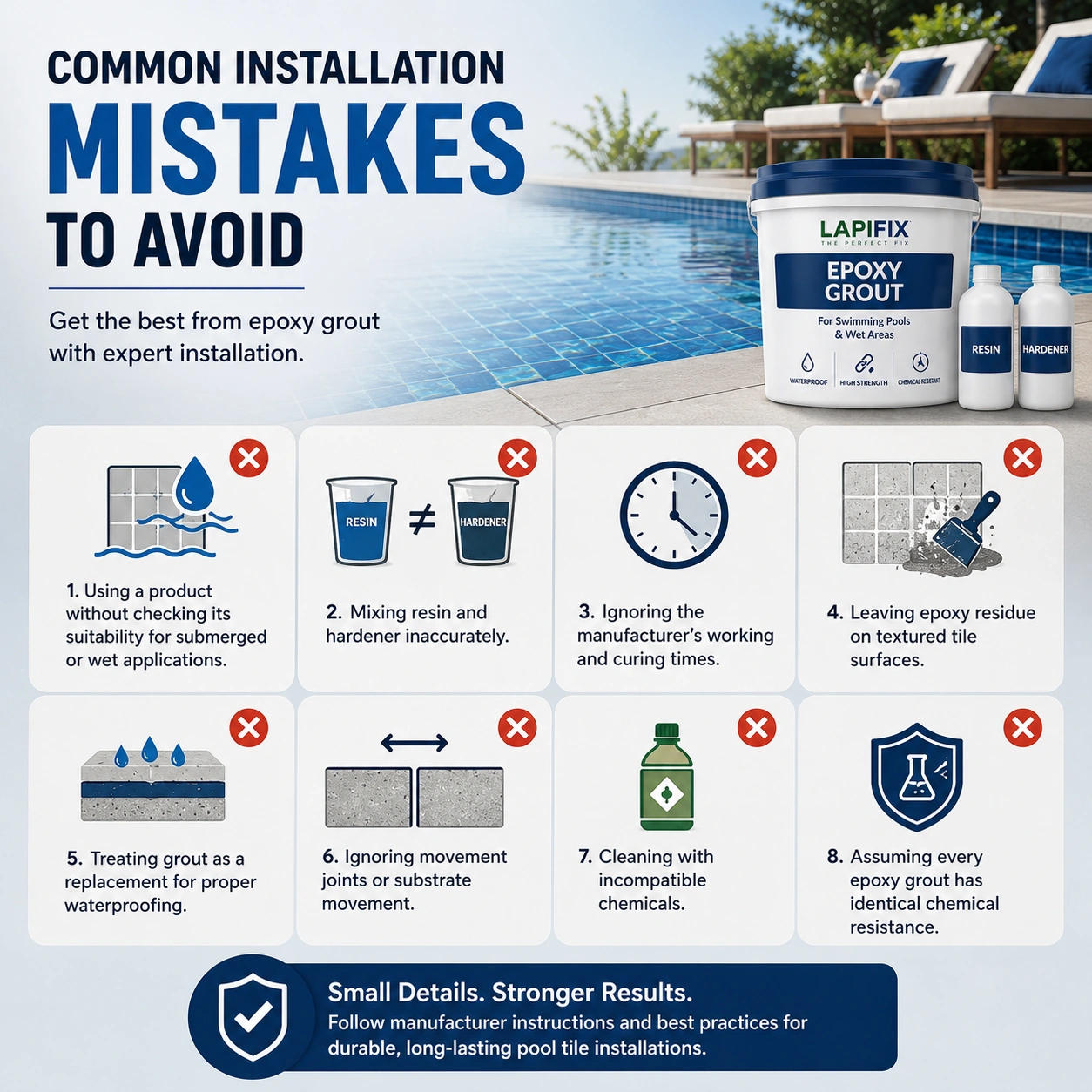
A few practical mistakes can turn a premium material into an expensive headache. With epoxy grout for swimming pools, installers should pay particular attention to:
Using a product without checking its suitability for submerged or wet applications.
Mixing resin and hardener inaccurately.
Ignoring the manufacturer's working and curing times.
Leaving epoxy residue on textured tile surfaces.
Treating grout as a replacement for proper waterproofing.
Ignoring movement joints or substrate movement.
Cleaning with incompatible chemicals.
Assuming every epoxy grout has identical chemical resistance.
These details may sound small, but professional tile installation often comes down to small details repeated consistently.
The same principles behind epoxy grout for swimming pools apply to bathrooms, showers and other wet rooms. A bathroom may not face pool chemicals, but it still experiences frequent moisture, cleaning products, temperature changes and daily traffic.
Epoxy grout for bathrooms can provide a dense joint that resists staining and moisture absorption. It also works particularly well when the homeowner wants a low-maintenance finish. That said, the grout should still match the tile system, joint size and application conditions.
In commercial washrooms, the argument can become even stronger. Frequent cleaning and heavy use can quickly expose weaknesses in low-quality materials. A suitable high performance epoxy grout can help maintain a cleaner, more consistent appearance when installed correctly.
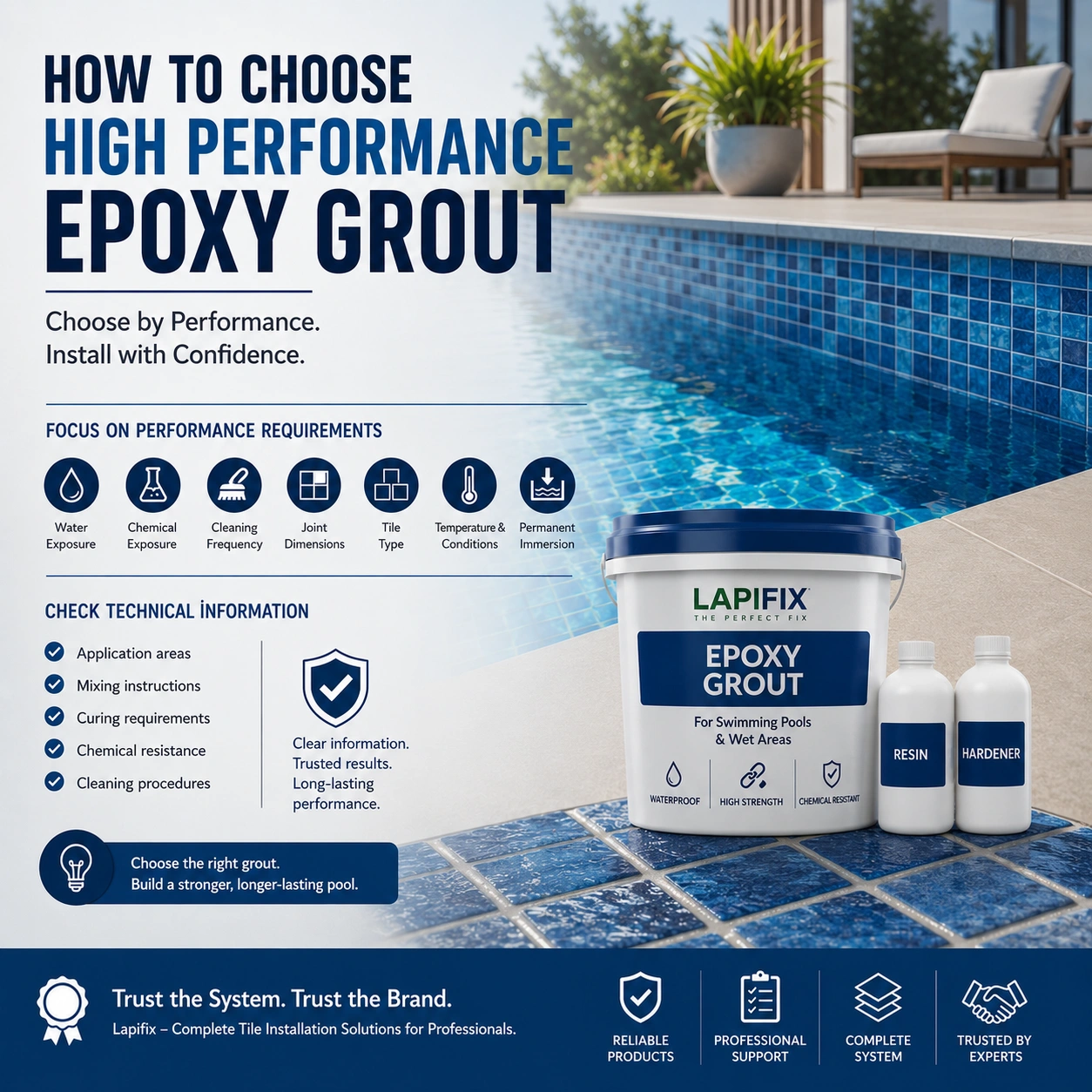
Choosing epoxy grout for swimming pools should start with performance requirements rather than colour or price. Ask what environment the grout will face and what the manufacturer actually guarantees.
A practical specification should consider water exposure, chemical exposure, expected cleaning frequency, joint dimensions, tile type, temperature and whether the installation involves permanent immersion.
Look for clear technical information covering application areas, mixing instructions, curing requirements, chemical resistance and cleaning procedures. If the supplier cannot provide useful technical information, that should make you pause.
This is also where product selection from an established construction-chemical manufacturer can help. For example, Lapifix provides epoxy and grout products alongside other tile installation materials, giving contractors access to a broader system rather than treating grout as an isolated component.
Not every project automatically requires epoxy. A residential pool with specific tile and exposure requirements may have different needs from a commercial aquatic facility. Budget, installation conditions and performance expectations all matter.
The key is to compare the total value rather than only the purchase price. Cement grout may cost less initially, but future cleaning, sealing and repairs can add to lifetime maintenance. Epoxy generally costs more upfront and demands more careful installation, yet its resistance and durability may justify that investment in demanding environments.
Professionals therefore ask a simple question: What performance does this installation need over its expected service life? That question is far more useful than simply asking which grout costs less.
Once epoxy grout for swimming pools has cured correctly, maintenance is generally straightforward. Regular cleaning helps prevent dirt and residue from building up on the tile and grout surface.
Use cleaning products appropriate for the grout and tile, and follow the manufacturer's recommendations. Pool operators should also maintain appropriate water chemistry because grout performance cannot compensate for poorly controlled pool conditions.
During routine inspections, look beyond the grout itself. Check for cracked tiles, movement joints, loose sections, sealant deterioration and signs of water-related problems. Early attention can prevent a small maintenance issue from becoming a full tile repair project.
For many demanding wet-area projects, epoxy grout for swimming pools can be worth the higher initial investment. Its low absorption, stain resistance, durability and chemical resistance make it particularly attractive where maintenance and long-term appearance matter.
Still, “worth it” depends on the project. A small decorative dry-area installation may not need epoxy, while a commercial pool, spa or heavily used wet area may benefit considerably from its performance.
The smartest approach combines product selection with correct installation. A premium grout cannot rescue poor workmanship, just as excellent workmanship cannot make an unsuitable product appropriate for a harsh environment.
For demanding wet environments, epoxy grout for swimming pools offers a compelling combination of durability, low water absorption, stain resistance and chemical resistance. Professionals prefer it when the installation requires more than basic joint filling, particularly in pools, spas, bathrooms and commercial wet areas. The important part is choosing a product that matches the application and installing it according to the manufacturer's technical requirements.
If you are planning a swimming pool, bathroom, spa or other high-moisture tiling project, epoxy grout for swimming pools deserves a place on your specification shortlist. Explore the epoxy grout and finishing solutions available from Lapifix, or speak with the team about selecting a suitable system for your project. A little planning before installation can save a lot of headaches after the tiles are in place.
For many pool applications, epoxy offers advantages such as low water absorption, stain resistance and strong chemical resistance. However, the correct choice depends on the product specification, pool conditions, tile system and installation requirements.
Most epoxy grouts do not require the same type of penetrating sealer used with many cement-based grouts because cured epoxy has low porosity. Always follow the specific manufacturer's instructions because formulations differ.
Some products are specifically designed for submerged or continuously wet applications, while others may not be suitable. Check the technical data before using epoxy grout for swimming pools below the waterline.
Epoxy requires greater installation discipline than many cement grouts. Accurate mixing, controlled application and timely cleaning matter because cured residue can become difficult to remove. Experienced installers can manage these requirements effectively.
Service life depends on product quality, installation, water chemistry, substrate movement, cleaning practices and environmental exposure. A correctly specified and installed epoxy grout can provide long-term performance, but no grout should be treated as maintenance-free.