

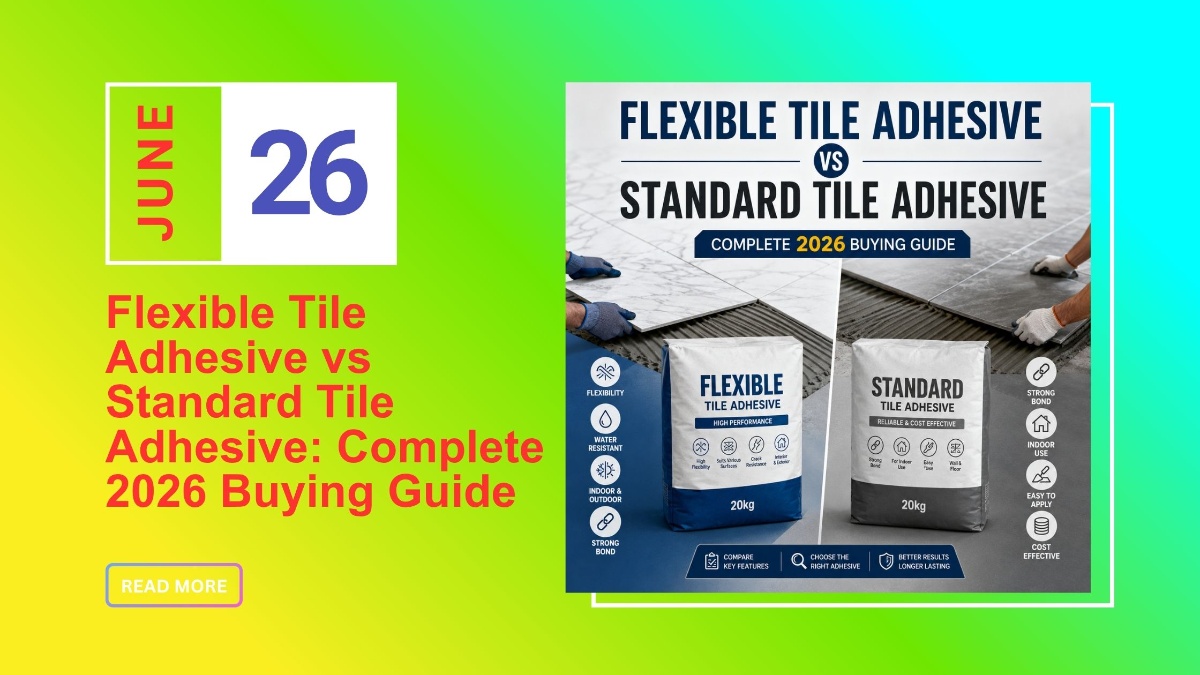
Choosing the right tile adhesive can make the difference between a floor that lasts for decades and one that starts showing cracks, loose tiles, or hollow spots within a few years. Many homeowners, builders, contractors, and architects focus heavily on selecting premium tiles but often overlook the adhesive underneath. In reality, even the most expensive porcelain tile can fail if paired with the wrong adhesive.
As modern construction continues to evolve, larger tiles, porcelain surfaces, underfloor heating systems, and high-traffic commercial spaces have become increasingly common. These applications demand adhesives that can handle movement, temperature fluctuations, and heavy loads. This is where the debate between flexible tile adhesive and standard tile adhesive becomes particularly important.
For professionals looking for reliable tile installation solutions, exploring quality tile adhesive products from Lapifix can help ensure long-lasting performance across residential and commercial projects.
Tile adhesive is the bonding material used to fix tiles securely onto floors, walls, countertops, and other substrates. While it may seem like a simple construction product, tile adhesive plays a critical role in the overall durability and appearance of a tiled surface.
A properly selected adhesive provides strong bonding, absorbs movement stress, resists moisture, and supports the weight of the tiles. The wrong adhesive, however, can result in debonding, cracks, uneven surfaces, and costly repairs.
Today's tile market includes ceramic tiles, porcelain tiles, vitrified tiles, natural stone, mosaic tiles, and large-format slabs. Each material comes with different installation requirements, making adhesive selection more important than ever.
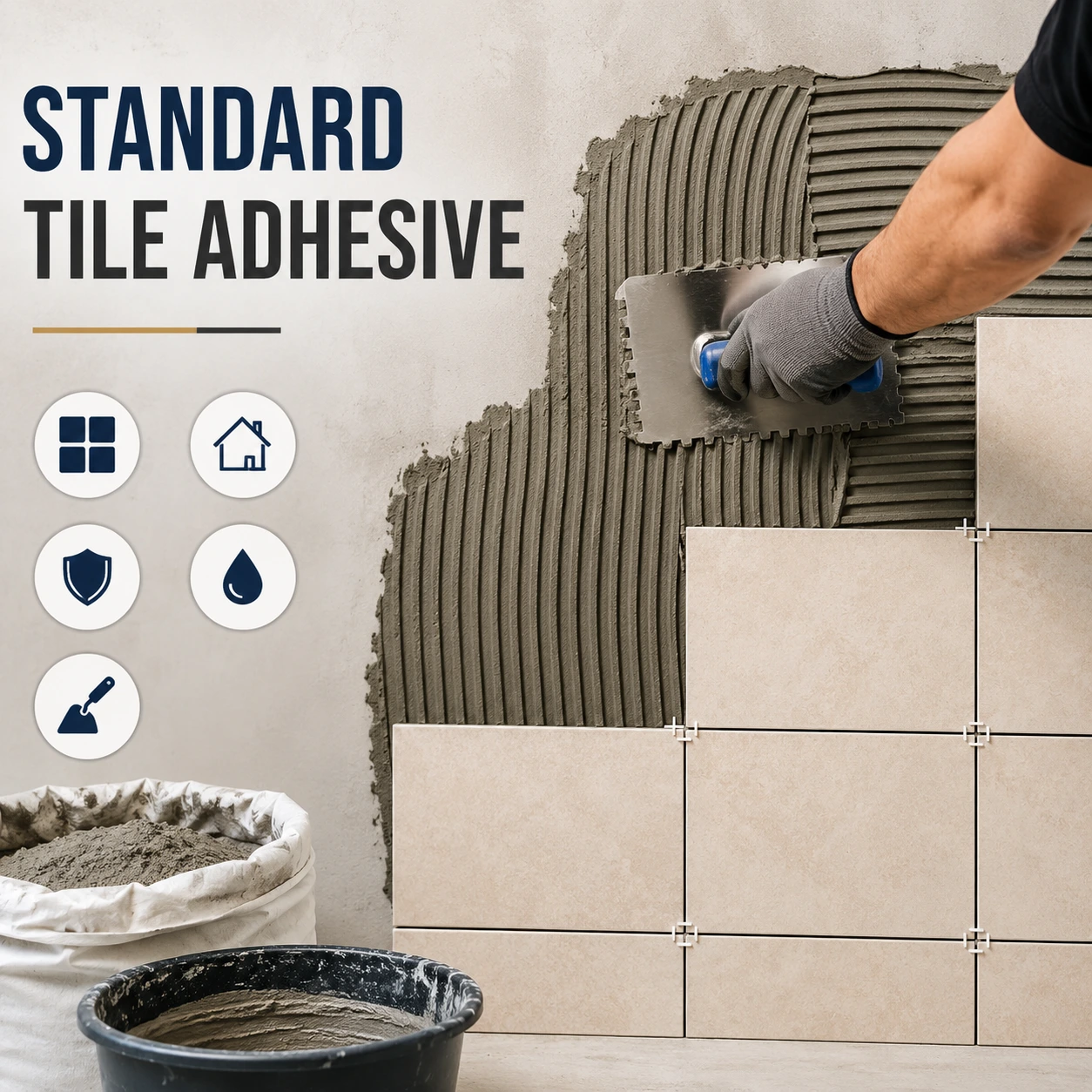
Standard tile adhesive is generally a cement-based bonding material designed for basic tile installations. It offers adequate bonding strength for conventional ceramic tiles installed on stable and properly prepared substrates.
Traditionally, standard adhesives have been used in residential projects where movement, vibration, moisture exposure, and temperature changes are minimal. They are often selected because of their affordability and ease of application.
However, standard adhesives have limitations. They are less capable of handling substrate movement, thermal expansion, and the additional weight associated with modern large-format tiles. As construction methods evolve, many professionals are moving toward higher-performance adhesive systems.
Small ceramic wall tiles
Low-traffic residential spaces
Stable cement screeds
Dry indoor environments
Basic renovation projects
While standard adhesive remains suitable for certain applications, it may not be the best solution for demanding installations.
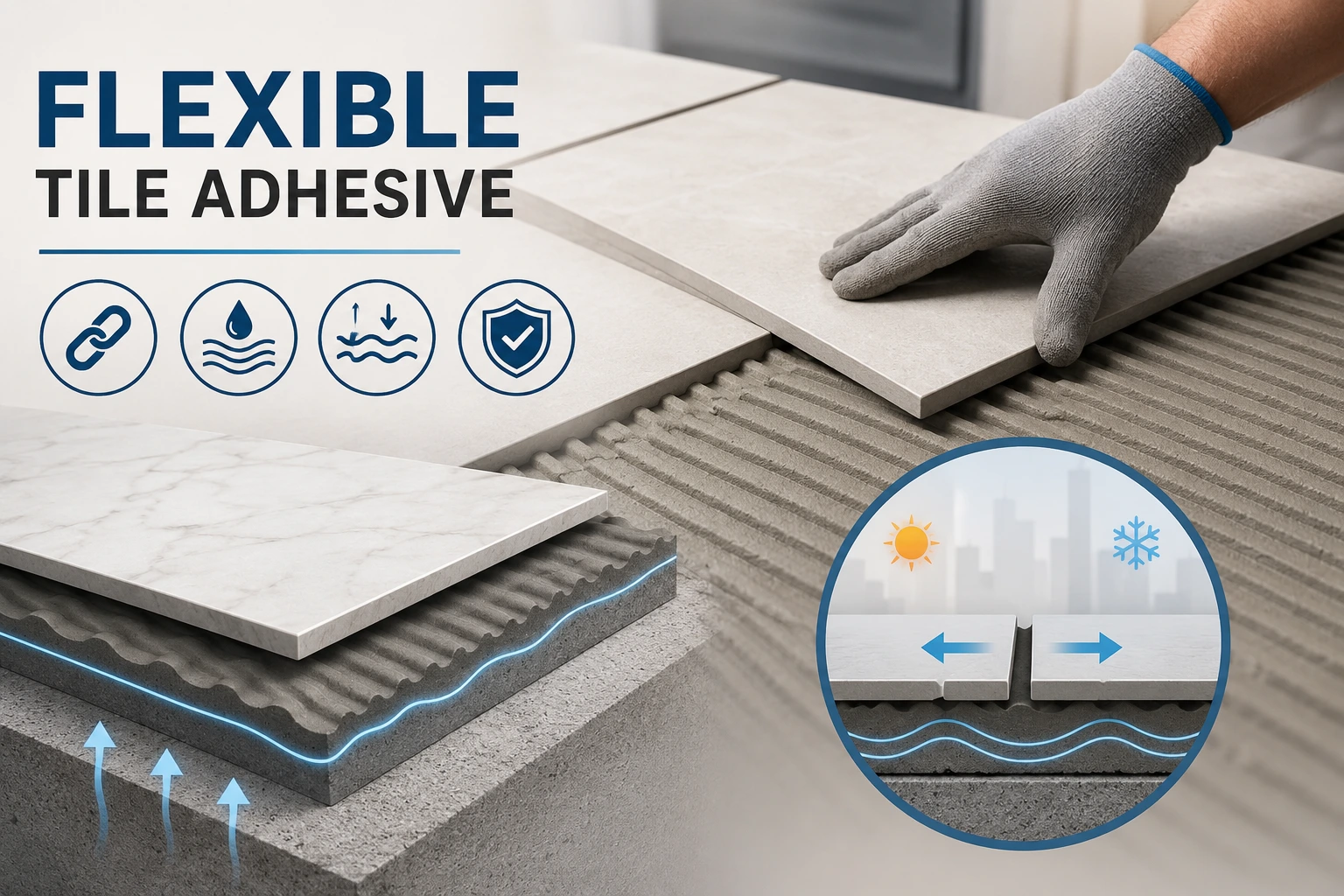
Flexible tile adhesive is an advanced adhesive formulation enhanced with polymers that improve flexibility, bonding strength, water resistance, and overall performance. Unlike traditional adhesives, it can accommodate slight substrate movement without losing its grip.
Modern buildings naturally expand and contract due to temperature variations, structural movement, and daily usage. Flexible adhesive systems are specifically engineered to absorb these stresses while maintaining a strong bond between the tile and substrate.
This enhanced performance makes flexible tile adhesive one of the most preferred solutions among contractors and tile installation professionals in 2026.
The secret behind flexible adhesive performance lies in polymer technology. A polymer modified tile adhesive contains special additives that improve adhesion and flexibility beyond what traditional cement-based adhesives can achieve.
These polymers create a stronger internal structure within the adhesive layer, allowing it to resist cracking and maintain bond strength even when exposed to movement or environmental stress.
Benefits of polymer enhancement include:
Improved adhesion strength
Greater flexibility
Better water resistance
Enhanced impact resistance
Reduced tile slippage
Longer installation lifespan
This is why polymer modified tile adhesive has become a preferred choice for both residential and commercial construction projects worldwide.
The biggest difference between the two options lies in their ability to handle stress and movement.
|
Feature |
Flexible Tile Adhesive |
Standard Tile Adhesive |
|
Bond Strength |
High |
Moderate |
|
Flexibility |
Excellent |
Limited |
|
Water Resistance |
High |
Moderate |
|
Suitable for Porcelain Tiles |
Yes |
Limited |
|
Suitable for Large Format Tiles |
Yes |
Not Recommended |
|
Thermal Movement Resistance |
Excellent |
Low |
|
Commercial Applications |
Highly Suitable |
Limited |
|
Lifespan |
Longer |
Moderate |
While standard adhesives can still perform adequately in basic situations, flexible systems provide greater security and long-term durability in modern construction environments.
In our experience across residential and commercial tile installations, adhesive failures are more commonly linked to substrate movement and tile weight than to the tiles themselves. This is especially true when working with porcelain tiles and large-format tiles, which place greater stress on the bonding layer.
Many professional tile installers therefore prefer flexible tile adhesive because it can accommodate minor movement while maintaining a strong bond. This additional flexibility helps reduce the risk of cracked grout lines, loose tiles, and costly repair work over the long term.
For projects involving underfloor heating, exterior applications, or high-traffic areas, using a high-performance flexible tile adhesive is often considered a practical investment rather than an optional upgrade. The improved bonding strength and durability can contribute significantly to the lifespan of the finished installation.
Walk through any modern residential development, shopping centre, luxury hotel, or commercial office project and you'll notice a common trend—larger tiles and more demanding installation environments.
These projects require adhesives capable of supporting:
Large-format porcelain tiles
Heated floors
Exterior wall installations
Wet areas
High-traffic environments
A flexible adhesive for tiles provides the versatility needed to meet these challenges without compromising performance.
Think of it like suspension in a vehicle. A rigid system may work on a perfectly smooth road, but real-world conditions require flexibility to absorb movement and stress. Tile installations operate under the same principle.
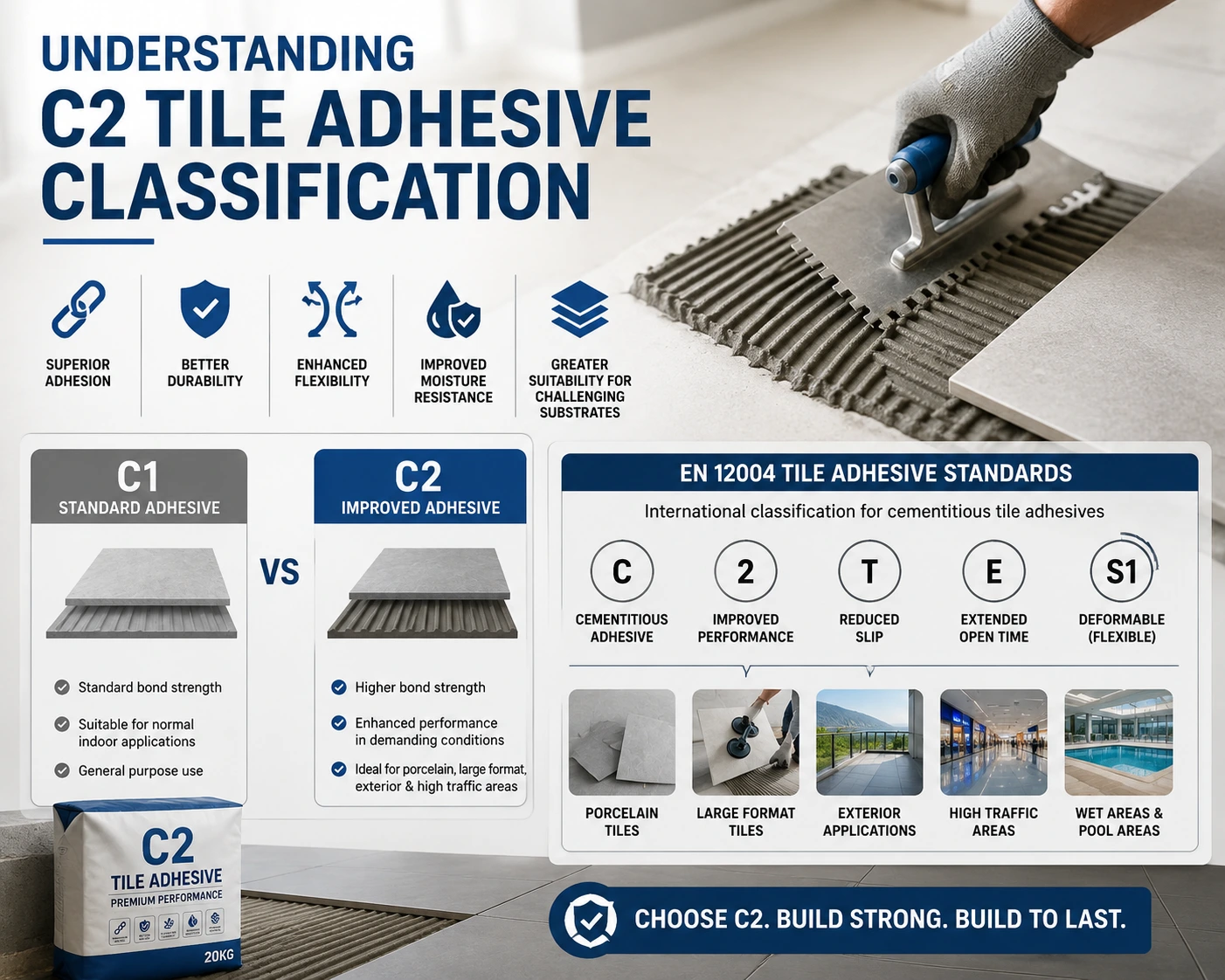
One term you'll frequently encounter when researching adhesives is C2 tile adhesive.
The C2 classification refers to an improved cementitious adhesive that meets higher performance standards for bonding strength compared to standard C1 adhesives.
A C2 tile adhesive typically offers:
Superior adhesion
Better durability
Enhanced flexibility
Improved moisture resistance
Greater suitability for challenging substrates
For many professional installers, C2-rated products have become the minimum standard for premium residential and commercial tile installations.
When comparing tile adhesives, professionals often refer to the EN 12004 standard. This internationally recognised classification system evaluates cementitious tile adhesives based on factors such as bond strength, slip resistance, open time, deformability, and overall performance characteristics.
Under EN 12004, adhesives are grouped into different performance categories. For example, a C1 adhesive meets standard bonding requirements, while a C2 tile adhesive delivers improved adhesion and enhanced performance under more demanding conditions. Additional classifications may indicate properties such as reduced slip, extended open time, or increased flexibility.
Understanding these classifications helps builders, contractors, and homeowners choose an adhesive that matches the specific requirements of a project. For porcelain tiles, large-format tiles, exterior applications, and high-traffic areas, many professionals prefer products that meet C2 performance standards because they provide stronger bonding and greater long-term reliability.
Porcelain tiles have transformed modern design. Their sleek appearance, low water absorption, and exceptional durability make them a favourite choice among homeowners and designers.
However, porcelain's dense structure creates unique installation challenges. Since the tile absorbs very little water, achieving a strong bond requires an adhesive specifically formulated for high-performance applications.
The best tile adhesive for porcelain tiles is typically a polymer-enhanced flexible adhesive with strong bonding properties and excellent workability.
When installing porcelain tiles, consider:
Tile size
Surface preparation
Environmental conditions
Traffic levels
Indoor or outdoor application
Choosing a high-quality flexible adhesive significantly reduces the risk of future installation failures.
Large-format tiles continue to dominate contemporary architecture and interior design trends in 2026. Their seamless appearance creates a luxurious, spacious feel while reducing grout lines.
However, bigger tiles introduce greater weight and increased stress on the adhesive layer.
A flexible tile adhesive for large format tiles offers several advantages:
Enhanced bonding strength
Better load distribution
Reduced risk of tile lippage
Greater resistance to movement
Improved long-term stability
Without sufficient flexibility and adhesion strength, large-format installations are far more vulnerable to cracking and debonding.
Consider a modern living room fitted with large-format porcelain tiles or a busy retail space that experiences constant foot traffic. While the finished surface may appear completely stable, the underlying structure is continually subjected to small movements caused by temperature changes, daily use, and natural building settlement.
Over time, these forces can place considerable stress on the bond between the tile and the substrate. A standard adhesive may struggle to accommodate this movement, increasing the risk of cracked grout joints, hollow-sounding tiles, or tile debonding.
In comparison, a flexible tile adhesive is designed to absorb minor movement while maintaining a strong and durable bond. This is one of the key reasons why professional installers often recommend flexible adhesive systems for porcelain tiles, large-format tiles, and high-traffic environments where long-term performance is essential.
Despite the advantages of flexible products, standard adhesive has not disappeared from the market entirely.
It remains suitable for applications such as:
Small ceramic tiles
Interior residential walls
Stable concrete surfaces
Budget-sensitive projects
Low-traffic installations
In these situations, standard adhesive can provide satisfactory performance while helping control project costs.
However, installers should carefully assess future movement, moisture exposure, and tile type before making a final decision.
One of the most common questions buyers ask is whether flexible adhesive justifies its higher price.
At first glance, standard adhesive may appear more economical. Yet adhesive typically represents a small percentage of the overall project cost compared with tiles, labour, preparation, and finishing materials.
When viewed from a lifecycle perspective, flexible adhesive often provides better value because it:
Reduces repair costs
Extends installation lifespan
Improves performance
Minimises maintenance issues
Enhances customer satisfaction
Spending slightly more on adhesive today can prevent substantial repair expenses tomorrow.
For more information about selecting the right adhesive solution for specific tile applications, explore Lapifix's complete range of professional tile installation products.
Many tile failures can be traced back to poor adhesive selection rather than poor workmanship.
Common mistakes include:
Using standard adhesive for porcelain tiles
Ignoring substrate movement
Choosing adhesive based solely on price
Installing large-format tiles with inadequate bonding strength
Neglecting environmental conditions
A successful installation starts with understanding both the tile and the substrate before selecting the appropriate adhesive system.
The best adhesive depends on several factors rather than a single universal rule.
Consider the following questions:
What type of tile is being installed?
Is the installation indoors or outdoors?
Will the surface experience movement?
Is moisture exposure expected?
Are large-format tiles involved?
What level of traffic will the area receive?
If multiple demanding conditions exist, flexible tile adhesive is usually the safer and more reliable choice.
The difference between flexible tile adhesive and standard tile adhesive goes far beyond price. Modern tile installations demand stronger bonding, greater flexibility, and improved resistance to movement, moisture, and temperature fluctuations. Whether you're working with porcelain tiles, large-format slabs, commercial flooring, or residential renovations, selecting the correct adhesive is essential for long-term success.
For builders, contractors, architects, and homeowners seeking dependable installation performance, flexible tile adhesive has become the preferred choice in 2026. With advanced polymer technology, superior adhesion, and enhanced durability, it delivers the confidence needed for today's demanding construction projects.
Contact Lapifix to explore professional-grade tile adhesive solutions designed for porcelain tiles, large-format installations, and demanding construction projects. Our range of flexible tile adhesive products helps deliver durable, long-lasting tile installations with confidence.
Yes. Flexible tile adhesive generally provides higher bond strength, improved durability, and better resistance to movement compared to standard adhesive. This makes it suitable for more challenging installations and modern construction requirements.
Absolutely. In fact, many professionals recommend flexible adhesive systems as the best tile adhesive for porcelain tiles because they deliver stronger bonding and improved long-term performance.
A polymer modified tile adhesive contains special polymer additives that enhance flexibility, adhesion, water resistance, and durability. These properties help improve overall installation reliability.
Yes. A quality C2 tile adhesive typically offers the enhanced performance needed for large-format tile installations, particularly when combined with proper installation techniques.
Standard adhesive may not be suitable for porcelain tiles, exterior applications, wet areas, heated floors, or installations involving significant substrate movement. In these situations, flexible adhesive solutions are generally recommended.