

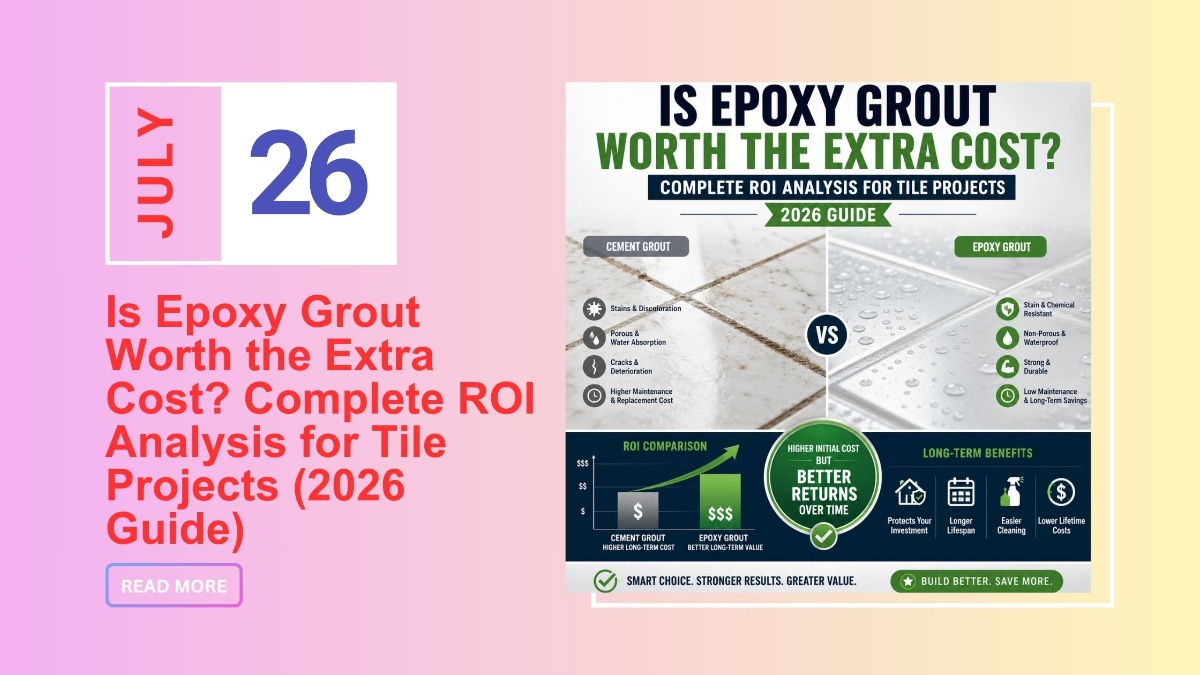
Picture this. You have just invested thousands of dollars in beautiful porcelain tiles for your kitchen, bathroom, or commercial space. The installation looks flawless, the design feels premium, and everything appears perfect. Then comes the question that many homeowners, builders, and project managers face: should you spend extra on epoxy grout or stick with traditional cement grout?
At first glance, epoxy grout often appears significantly more expensive. For budget-conscious property owners, that price difference can be difficult to justify. However, the real question is not whether epoxy grout costs more today. The real question is whether it saves money over the next five, ten, or even twenty years.
At Lapifix, we regularly work with contractors, architects, developers, and homeowners evaluating grout options for residential, commercial, and industrial projects. If you're still comparing grout technologies, our guide on epoxy vs cement grout provides useful background before exploring the financial side of the decision.
One common observation across many projects is that buyers often focus heavily on initial material costs while overlooking maintenance expenses, cleaning requirements, repair frequency, and long-term performance. When those factors are included, the ROI calculation often changes dramatically.
For many residential, commercial, and industrial tile installations, epoxy grout can deliver a higher long-term return on investment despite its higher initial cost. Its superior stain resistance, waterproof performance, durability, colour stability, and reduced maintenance requirements often result in lower lifecycle costs compared to traditional cement grout. While not every project requires epoxy grout, it frequently provides better long-term value in moisture-prone, high-traffic, and demanding environments.
Most people think grout simply fills the gaps between tiles. In reality, grout plays a major role in protecting the tile installation, maintaining hygiene, and preserving appearance over time.
Traditional cement grout contains cement-based materials that remain somewhat porous after curing. Epoxy grout, on the other hand, consists of epoxy resins and hardeners that create a dense, non-porous structure. This difference significantly affects durability, stain resistance, moisture protection, and maintenance requirements.
Because of its composition, waterproof epoxy grout performs differently under demanding conditions such as bathrooms, swimming pools, commercial kitchens, food processing facilities, and outdoor environments.
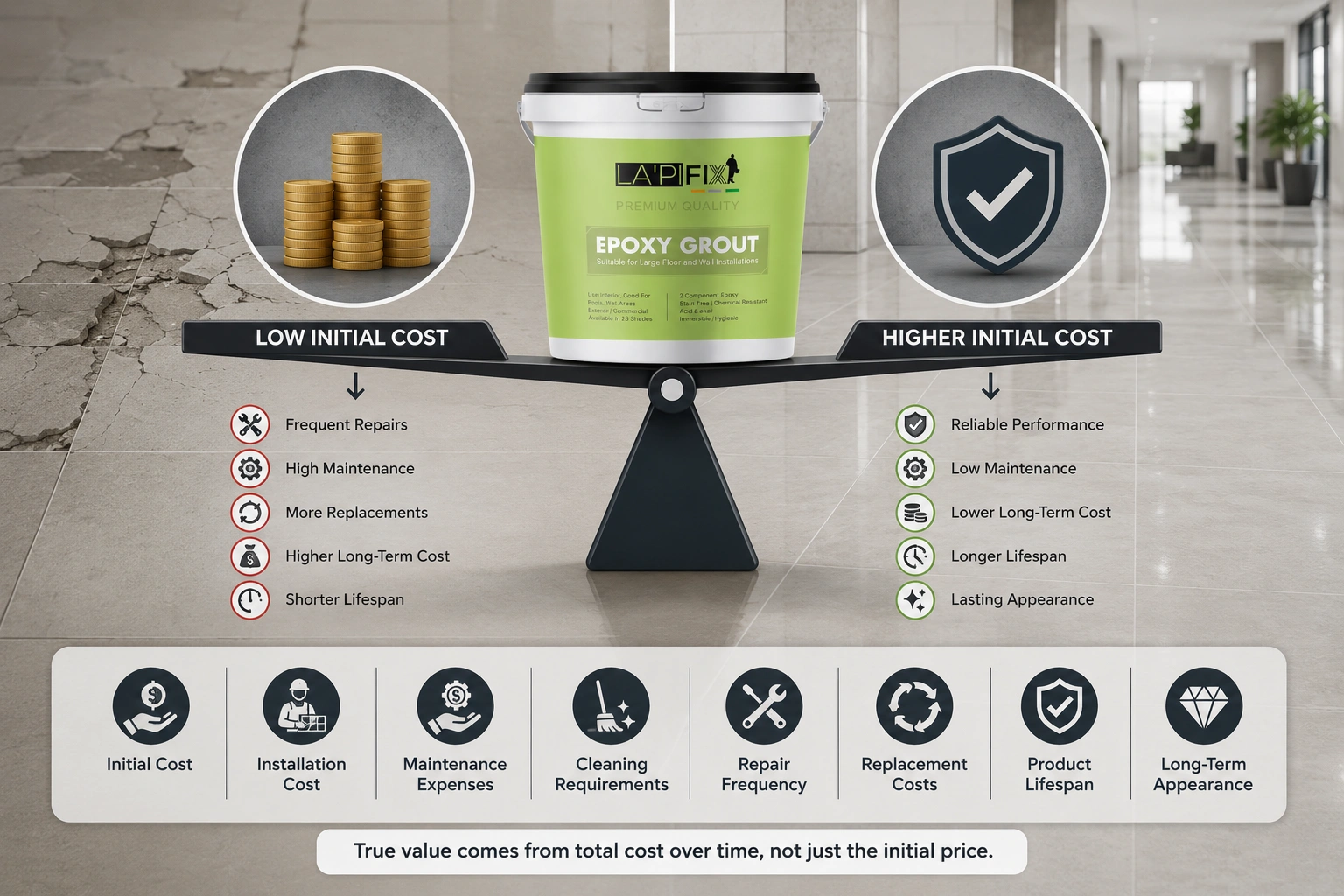
Many purchasing decisions focus on material price alone.
Imagine buying two vehicles. One costs less initially but requires frequent repairs, replacement parts, and ongoing maintenance. The other costs more upfront but performs reliably for years with minimal intervention. Most people understand that the second option may ultimately be the better financial decision.
The same principle applies to tile projects.
When evaluating epoxy grout cost vs value, buyers should consider:
Initial material cost
Installation cost
Maintenance expenses
Cleaning requirements
Repair frequency
Replacement costs
Product lifespan
Long-term appearance retention
The true ROI emerges when all these factors are considered together rather than evaluating purchase price alone.
One of the strongest arguments in favour of epoxy grout is longevity.
In many properly installed tile systems, epoxy grout lifespan can significantly exceed that of traditional cement grout. While actual performance varies depending on environmental conditions, cleaning practices, installation quality, maintenance routines, traffic levels, and usage conditions, epoxy systems are generally known for maintaining their appearance and structural integrity for extended periods. Properly installed epoxy grout can often maintain performance for 15–20 years or longer in many residential and commercial applications, making it an attractive option for projects focused on long-term value.
Unlike conventional grout, epoxy grout is less susceptible to moisture absorption, staining, erosion, and chemical degradation. These characteristics help reduce maintenance requirements, minimise repair frequency, and extend service life while helping preserve the overall appearance of tiled surfaces.
For project owners focused on long-term ownership rather than short-term construction budgets, lifespan often becomes a major component of ROI. The longer a grout system performs without significant maintenance or replacement, the stronger its overall value proposition becomes.
Maintenance is one of the most overlooked expenses in tile ownership.
Traditional grout often requires periodic sealing, intensive cleaning, stain removal, mould treatment, and occasional repairs. These costs may seem small individually, but they accumulate over time.
Epoxy grout maintenance is typically much simpler because the surface resists moisture penetration, staining, and bacterial growth more effectively.
Property owners frequently discover that the reduction in maintenance labour alone helps offset a significant portion of the initial investment difference.
Anyone who has cleaned grout lines understands how frustrating discolouration can be.
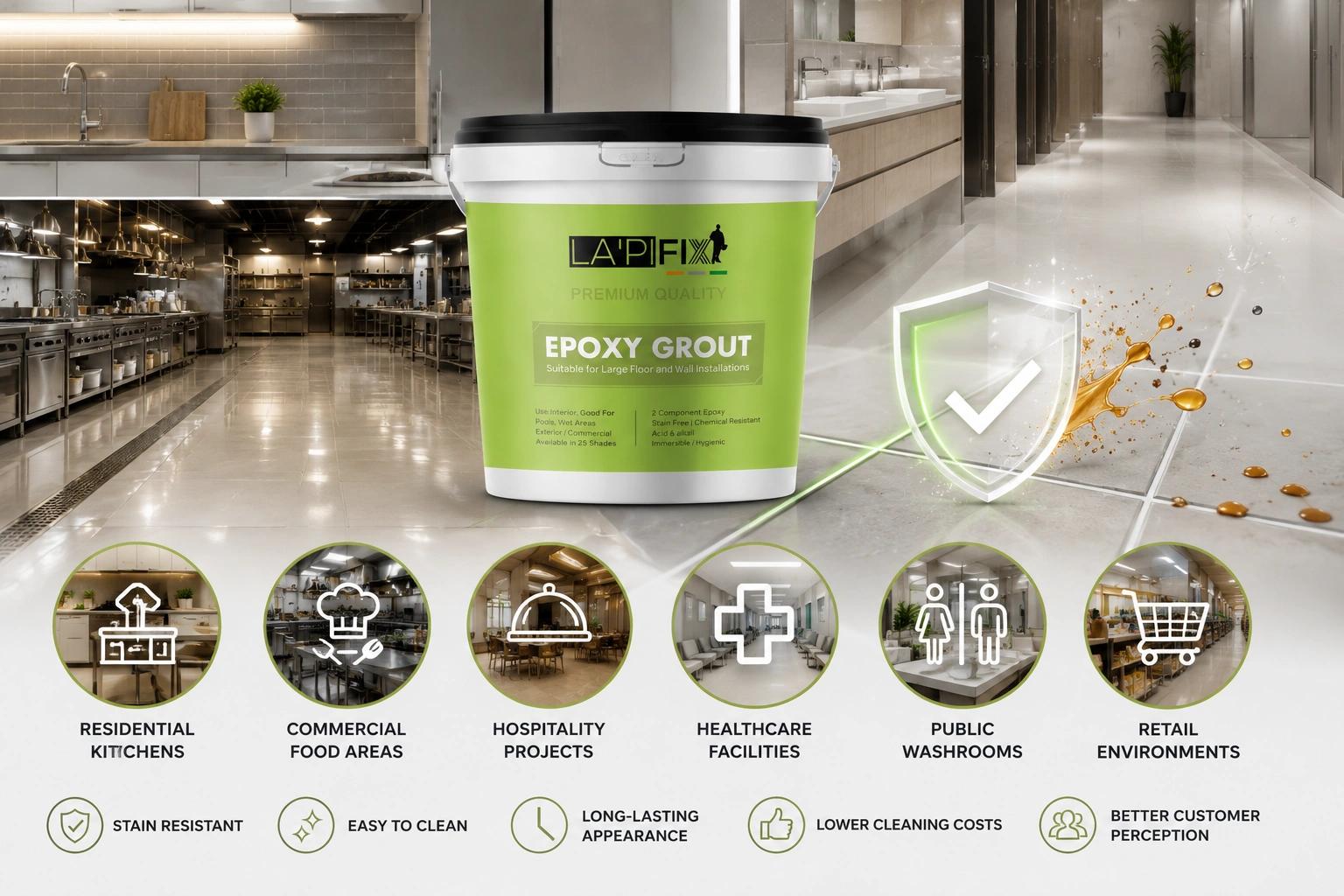
Bathrooms, kitchens, cafés, restaurants, and commercial facilities constantly expose grout to oils, soaps, detergents, food spills, and contaminants. Over time, porous grout materials often absorb these substances and become stained.
Stain resistant epoxy grout helps minimise these issues because the material resists absorption far more effectively than conventional cement-based alternatives.
This advantage becomes especially valuable in:
Residential kitchens
Commercial food preparation areas
Hospitality projects
Healthcare facilities
Public washrooms
Retail environments
Maintaining a clean appearance often translates directly into reduced cleaning costs and improved customer perception.
Moisture remains one of the biggest threats to tile installations.
Bathrooms, swimming pools, spas, balconies, shower areas, and commercial wet zones expose grout joints to constant moisture cycles. Over time, water intrusion can contribute to staining, mould growth, deterioration, and maintenance challenges.
Waterproof epoxy grout creates a highly moisture-resistant barrier that helps protect the installation from many of these risks.
This is one reason why epoxy grout for swimming pools continues to gain popularity worldwide. Pool environments demand materials capable of withstanding constant water exposure while maintaining long-term performance.
Bathrooms and kitchens represent some of the most demanding environments inside residential properties.
Steam, humidity, water splashes, cleaning chemicals, cooking oils, food spills, and regular cleaning cycles place continuous stress on grout joints.
Epoxy grout for bathrooms offers significant advantages because it resists moisture, mould formation, and staining more effectively than many traditional alternatives.
Similarly, epoxy grout for kitchens helps maintain cleaner grout joints while reducing the likelihood of staining caused by food preparation activities.
For homeowners seeking low-maintenance surfaces, these benefits often contribute significantly to long-term value.
The most effective way to evaluate value is to compare the entire lifecycle of the installation rather than focusing solely on material costs.
Consider two identical tile installations. One uses conventional cement grout, while the other uses epoxy grout. The cement grout option may initially cost less, but over the years it may require periodic sealing, intensive cleaning, stain removal treatments, mould remediation, touch-up repairs, or even partial regrouting.
Epoxy grout typically eliminates or significantly reduces many of these ongoing expenses. Although the upfront investment is higher, the long-term ownership cost can often be lower.
The question is no longer, “Which grout is cheaper today?” but rather, “Which grout costs less over the life of the project?”
When evaluating epoxy grout cost vs value, several performance factors should be considered together.
|
Performance Factor |
Traditional Cement Grout |
Epoxy Grout |
|
Initial Cost |
Lower |
Higher |
|
Stain Resistance |
Moderate |
Excellent |
|
Water Resistance |
Moderate |
Excellent |
|
Maintenance Requirements |
Higher |
Lower |
|
Sealing Requirements |
Usually Required |
Typically Not Required |
|
Colour Stability |
Moderate |
Excellent |
|
Mould Resistance |
Moderate |
Excellent |
|
Chemical Resistance |
Limited |
High |
|
Lifespan |
Moderate |
Long-Term |
|
Long-Term ROI |
Moderate |
Higher |
This comparison highlights why many project owners increasingly view epoxy grout as an investment rather than an expense.
Many tile installations look fantastic on day one. The real challenge is maintaining that appearance years later.
One common complaint with conventional grout involves colour inconsistency, fading, staining, and patchy appearance. These cosmetic issues may not affect structural performance, but they often affect visual appeal.
Epoxy grout colour stability is one of the material's strongest advantages. Because epoxy grout resists moisture penetration and staining more effectively, colour retention often remains far more consistent throughout the life of the installation.
This becomes particularly important for:
Luxury residential interiors
Hospitality projects
Commercial showrooms
Retail environments
Healthcare facilities
Architectural feature installations
A floor that still looks new after several years often delivers value beyond simple maintenance savings.
Traffic intensity significantly affects ROI calculations.
A guest bathroom in a private residence experiences very different usage compared to an airport, shopping centre, restaurant, hospital, or hotel lobby.
High traffic epoxy grout solutions are frequently selected because they can withstand heavier wear while maintaining appearance and performance.
Foot traffic, rolling loads, cleaning equipment, chemical exposure, and continuous usage create conditions that can quickly expose weaknesses in lower-performance materials.
In many commercial projects, durability directly impacts operating costs. Reduced maintenance interruptions and fewer repair cycles often justify the higher upfront investment.
Commercial property owners often evaluate projects differently than homeowners.
For businesses, maintenance disruptions translate directly into operational costs. A restaurant that must temporarily close for repairs loses revenue. A hotel undergoing bathroom renovations affects occupancy. A shopping centre performing maintenance may disrupt customer traffic.
In facilities such as hotels, hospitals, restaurants, shopping centres, healthcare environments, and commercial kitchens, even a single maintenance shutdown can cost significantly more than the original grout upgrade. This is one reason many facility managers, property owners, and operations teams evaluate grout systems based on lifecycle costs rather than initial material pricing. Long-term durability, reduced maintenance requirements, and operational continuity often have a greater financial impact than short-term material savings.
Commercial epoxy grout solutions are frequently selected because they help reduce these risks.
The ability to minimise maintenance downtime often provides financial benefits that far exceed the original material cost difference. For commercial operators, reliability, appearance retention, and predictable maintenance costs often become more valuable than initial savings.
Industrial environments introduce another level of complexity.
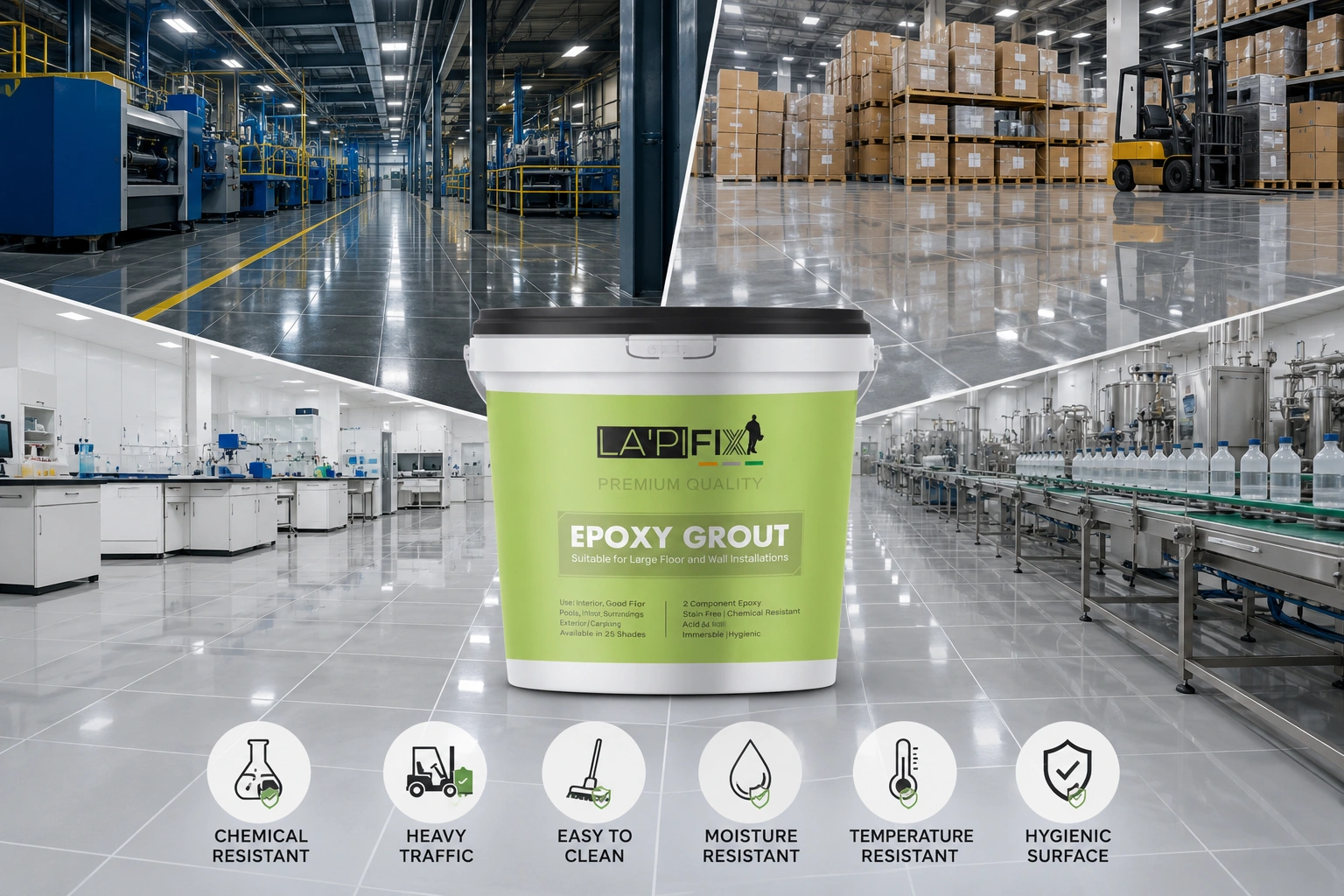
Factories, warehouses, laboratories, food production facilities, pharmaceutical plants, and manufacturing environments expose grout systems to demanding conditions.
Industrial epoxy grout applications are commonly used because of their ability to resist:
Chemical exposure
Heavy traffic
Frequent cleaning
Mechanical stress
Moisture intrusion
Temperature fluctuations
In these settings, grout performance directly influences operational efficiency, hygiene standards, and maintenance costs.
Choosing the wrong grout in an industrial environment can become an expensive mistake.
One area where epoxy grout clearly distinguishes itself is chemical resistance.
Many commercial and industrial environments expose surfaces to cleaning chemicals, detergents, acids, oils, and other substances that may degrade conventional grout over time.
Chemical resistant epoxy grout provides an additional layer of protection by resisting many forms of chemical attack that can compromise traditional grout systems.
This characteristic often makes epoxy grout the preferred choice for:
Commercial kitchens
Food processing facilities
Healthcare environments
Laboratories
Industrial production areas
Hospitality facilities
Reduced degradation typically translates into longer service life and lower maintenance costs.
Most property owners underestimate the true cost of grout replacement.
Regrouting involves more than purchasing new material. Labour, cleaning, surface preparation, downtime, disruption, and finishing work all contribute to the overall expense.
Even small residential projects can become surprisingly costly when regrouting is required.
One reason many project owners choose epoxy grout is the desire to avoid future repair cycles altogether.
The less often a grout system requires replacement, the stronger the long-term ROI becomes.
One of the biggest myths surrounding epoxy grout is that it requires special maintenance.
In reality, epoxy grout cleaning guide recommendations are generally straightforward.
Routine maintenance often involves:
Regular cleaning with suitable cleaners
Removing spills promptly
Following manufacturer cleaning recommendations
Avoiding highly abrasive cleaning methods
Because epoxy grout resists moisture absorption and staining more effectively, cleaning often becomes simpler rather than more complicated.
For many property owners, reduced maintenance effort becomes one of the most valuable benefits.
Sustainability discussions increasingly focus on product lifespan rather than simply material composition.
A material that lasts significantly longer often generates less waste over time because fewer replacements are required.
Epoxy grout durability can contribute positively to lifecycle sustainability goals by reducing repair frequency and extending installation service life.
For guidance on building performance and construction practices, professionals can review information available through the Australian Building Codes Board (ABCB) building guidance resources.
When evaluating sustainability, durability and long-term performance deserve equal consideration alongside initial material selection.
Despite its advantages, epoxy grout is not always the best solution.
Some low-traffic residential projects may perform perfectly well with conventional grout systems. Budget limitations, project scope, aesthetic preferences, and performance requirements all influence material selection.
The goal is not to use the most expensive product available. The goal is to select the material that delivers the best balance of performance, durability, maintenance requirements, and value.
A small decorative wall installation does not necessarily require the same grout technology as a commercial kitchen or swimming pool.
The smartest decision is the one that aligns product performance with project demands.
Insert image of residential bathroom using epoxy grout here.
Even the highest-quality material can underperform if installed incorrectly.
Professional epoxy grout installation requires proper mixing, timing, application techniques, and cleaning procedures. Unlike traditional grout, epoxy systems often have specific working characteristics that installers must understand.
Many performance complaints associated with epoxy grout actually originate from installation errors rather than material defects.
This is why experienced contractors and trained installers play such an important role in achieving expected results.
Projects that combine premium materials with professional installation practices consistently achieve stronger long-term outcomes.
Quality grout selection extends beyond colour and appearance. Long-term performance depends on formulation consistency, manufacturing standards, installation quality, and suitability for the intended environment.
A reliable premium epoxy grout manufacturer should maintain documented quality control systems, consistent raw material sourcing, and ongoing product performance testing. These practices help ensure predictable installation results and long-term durability.
Buyers evaluating epoxy grout products should consider:
Stain resistance
Water resistance
Chemical resistance
Colour stability
Bond strength
Cleaning requirements
Long-term durability
These factors influence not only installation quality but also lifecycle costs and overall project value.
Many contractors, architects, facility managers, and project owners also review technical data sheets, application guidelines, performance certifications, and product testing reports before selecting grout systems. Reviewing technical documentation alongside project requirements helps reduce specification risks and supports better long-term performance outcomes.
Insert image of epoxy grout quality testing process here.
Successful tile installations depend on more than simply selecting quality materials.
At Lapifix, we believe long-term tile performance is achieved through the combination of quality grout systems, correct substrate preparation, proper installation techniques, and adherence to recommended application procedures. Every stage contributes to the durability, appearance, and reliability of the finished installation.
Depending on project requirements and application conditions, epoxy grout systems may undergo multiple quality checkpoints throughout the installation process. These evaluations can include substrate inspections, grout mixing consistency verification, joint preparation reviews, curing assessments, cleaning evaluations, and final appearance inspections. This systematic approach helps improve finish quality, maximise grout performance, and minimise the risk of staining, discolouration, moisture intrusion, and premature deterioration.
Our focus is on helping contractors, builders, architects, designers, and property owners achieve reliable tile installation outcomes across residential, commercial, hospitality, healthcare, and industrial projects.
In our experience working across a variety of tile installations, projects that prioritise proper grout selection, professional installation practices, and recommended maintenance procedures consistently achieve better appearance retention, improved hygiene performance, and lower long-term maintenance costs. By contrast, installations where these steps are overlooked often experience avoidable maintenance challenges and shortened service life.
Many project owners and contractors also conduct sample installations, mock-up panels, or performance evaluations before specifying epoxy grout across large-scale projects. Testing materials under actual site conditions helps verify suitability, improve specification confidence, and reduce project risk before full implementation.
Professionals seeking to improve overall tile performance can also explore our guide on epoxy vs cement grout to better understand the differences between grout technologies and their applications.
Grout problems rarely appear overnight.
In many cases, early warning signs develop gradually before larger maintenance issues become visible. Identifying these indicators early often allows corrective action before more expensive repairs become necessary.
Some common warning signs include:
Persistent staining
Discolouration
Mould growth
Surface erosion
Water absorption
Cracking joints
Difficult cleaning
Repeated maintenance requirements
Addressing these issues early can help preserve both appearance and long-term performance.
For many projects, the answer is yes.
Epoxy grout typically requires a higher initial investment than traditional cement grout. However, when stain resistance, waterproof performance, colour stability, chemical resistance, hygiene benefits, reduced maintenance requirements, and longer lifespan are considered together, the overall value proposition becomes much stronger.
Projects exposed to moisture, heavy traffic, frequent cleaning, food preparation activities, chemical exposure, or demanding operational conditions often benefit the most from epoxy grout systems.
For lower-demand applications, conventional grout may still be appropriate. However, for projects where long-term durability and maintenance reduction are priorities, epoxy grout frequently delivers a stronger return on investment over the life of the installation.
One of the biggest mistakes in construction procurement is evaluating materials solely on purchase price.
A product that costs slightly more today may save significantly more tomorrow through reduced maintenance, fewer repairs, lower replacement costs, improved appearance retention, and better operational performance.
This is particularly true for tile installations where grout performance directly affects aesthetics, hygiene, maintenance effort, and long-term durability.
When viewed through a lifecycle-cost perspective rather than an upfront-cost perspective, epoxy grout often becomes easier to justify.
While epoxy grout generally involves a higher upfront investment than conventional cement grout, the long-term value often outweighs the additional cost. Benefits such as superior stain resistance, waterproof performance, colour stability, chemical resistance, mould resistance, reduced maintenance requirements, and extended service life can significantly improve overall project ROI. For bathrooms, kitchens, swimming pools, commercial facilities, healthcare environments, hospitality projects, and industrial applications, epoxy grout frequently delivers stronger lifecycle performance and lower ownership costs.
If you're planning a residential, commercial, hospitality, healthcare, or industrial tile project, Lapifix can help. From premium epoxy grout solutions to expert guidance on grout selection and installation best practices, our team is committed to helping you achieve durable, low-maintenance, long-lasting tile installations. Explore our epoxy grout solutions and connect with Lapifix to discuss the ideal grout system for your next project.
For many projects, yes. Although epoxy grout has a higher initial cost, its superior durability, stain resistance, waterproof properties, and reduced maintenance requirements often provide better long-term value than traditional cement grout.
Epoxy grout lifespan varies based on installation quality, traffic levels, maintenance practices, and environmental conditions. However, properly installed epoxy grout can maintain its performance and appearance for many years with minimal maintenance.
Yes. Epoxy grout for bathrooms and epoxy grout for kitchens are among the most common applications because of its waterproof characteristics, stain resistance, mould resistance, and ease of cleaning.
In most cases, epoxy grout does not require sealing. Unlike many traditional cement grouts, epoxy grout is naturally resistant to water absorption and staining, reducing the need for additional protective treatments.
No. One of the key advantages of epoxy grout maintenance is its simplicity. Routine cleaning and proper care are typically sufficient to maintain appearance and performance over the long term.
Projects that experience moisture exposure, heavy traffic, strict hygiene requirements, chemical exposure, or demanding maintenance conditions generally achieve the greatest value from epoxy grout. Examples include swimming pools, commercial kitchens, healthcare facilities, hospitality projects, industrial environments, and premium residential installations.