

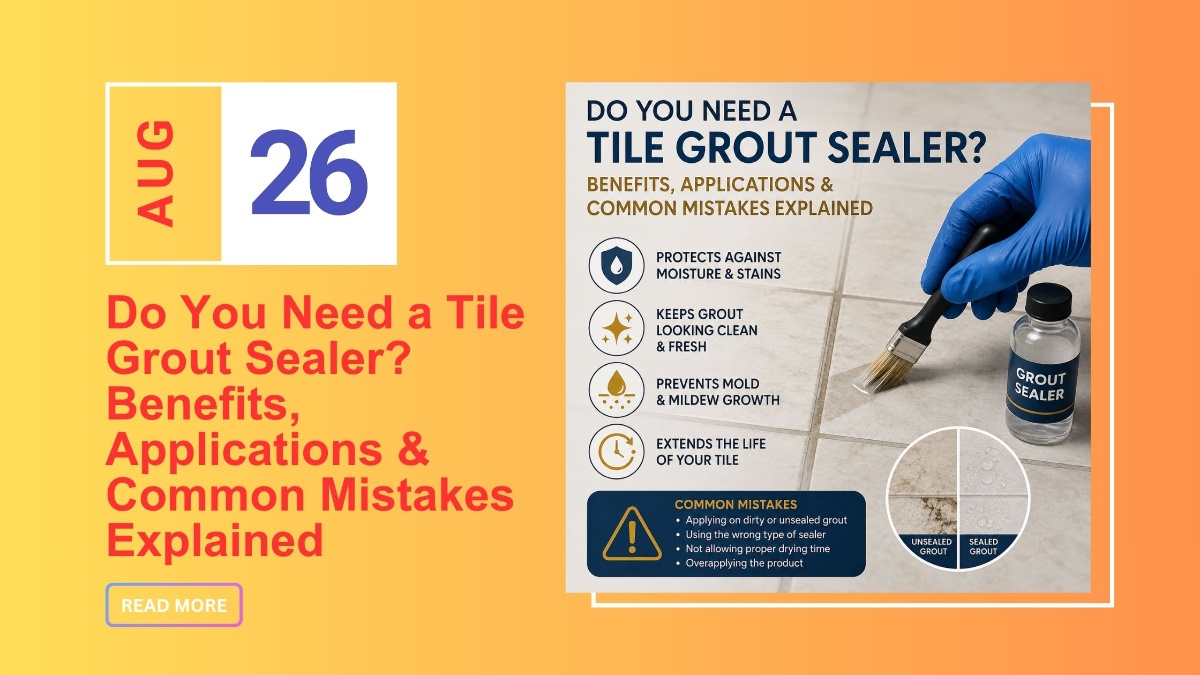
Beautiful tiles can instantly transform any space, but the real strength of a tiled surface lies in something much less noticeable—the grout joints. While grout fills the gaps between tiles and keeps the installation stable, it is naturally porous. Without proper protection, it can absorb water, stains, oils, and dirt, gradually leading to discoloration, mold growth, and premature deterioration. This is where a tile grout sealer becomes an important part of long-term tile maintenance.
Whether you're installing tiles in a residential bathroom, a commercial kitchen, a shopping mall, or an outdoor patio, sealing grout helps preserve both appearance and performance. A quality sealer acts as a protective barrier that reduces moisture penetration while making routine cleaning easier. Although not every grout requires the same treatment, understanding when and how to seal grout can significantly extend the life of your tiled surfaces.
In this comprehensive guide, you'll learn how grout sealers work, where they should be used, how to choose the right product, and the common mistakes to avoid for long-lasting results.
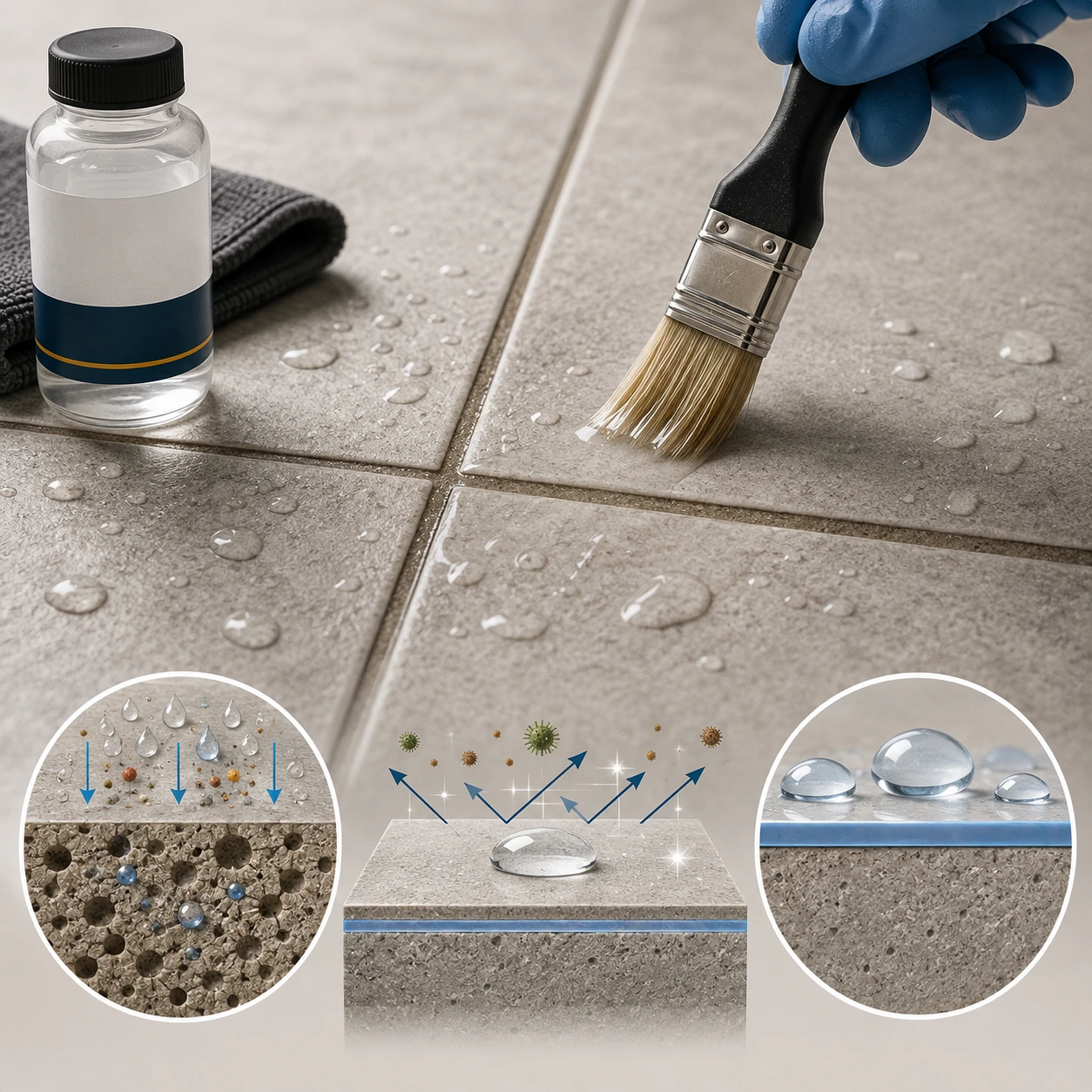
A tile grout sealer is a protective coating applied over cured grout joints to reduce the absorption of water, stains, oils, and other contaminants. Instead of strengthening the grout itself, the sealer protects its surface and internal pores, helping maintain its appearance and durability over time.
Grout is generally made from cement-based materials, making it naturally porous. Tiny microscopic pores allow moisture and dirt to penetrate the surface, especially in wet environments like bathrooms, kitchens, balconies, and swimming pools. Over time, this can cause staining, mold growth, efflorescence, and grout deterioration.
A properly selected grout sealer fills or coats these pores without affecting the appearance of the grout. Depending on the product type, it may either penetrate deep into the grout or create a protective layer on the surface.
Sealing grout is often considered one of the simplest ways to improve tile longevity while reducing future maintenance costs.
Many homeowners assume grout is naturally waterproof after installation. In reality, most cementitious grouts readily absorb moisture unless protected with an appropriate grout sealer.
When water repeatedly enters unsealed grout, it carries dissolved salts, dirt, soap residues, oils, and bacteria into the material. As moisture evaporates, these contaminants remain trapped inside, gradually causing discoloration and weakening the grout.
In areas exposed to constant moisture, unsealed grout also creates favorable conditions for mold and mildew growth. Bathrooms, showers, commercial kitchens, laundries, and swimming pool surrounds are particularly vulnerable.
Applying a waterproof grout sealer significantly reduces moisture absorption while helping grout remain cleaner and easier to maintain.
Grout sealing works by creating a protective barrier that limits the movement of liquids and contaminants into the grout structure. Rather than making the grout completely waterproof, most modern sealers significantly reduce water absorption while allowing trapped moisture vapor to escape.
This balance is important because moisture trapped beneath tiles should still be able to evaporate naturally. High-quality sealers provide excellent grout protection without preventing the substrate from breathing.
The effectiveness of grout sealing depends on several factors, including:
The type of grout used.
The condition of the grout before sealing.
The quality of the sealer.
Correct application techniques.
Ongoing grout maintenance.
When applied correctly, grout sealing helps preserve both the appearance and structural integrity of tiled surfaces for many years.
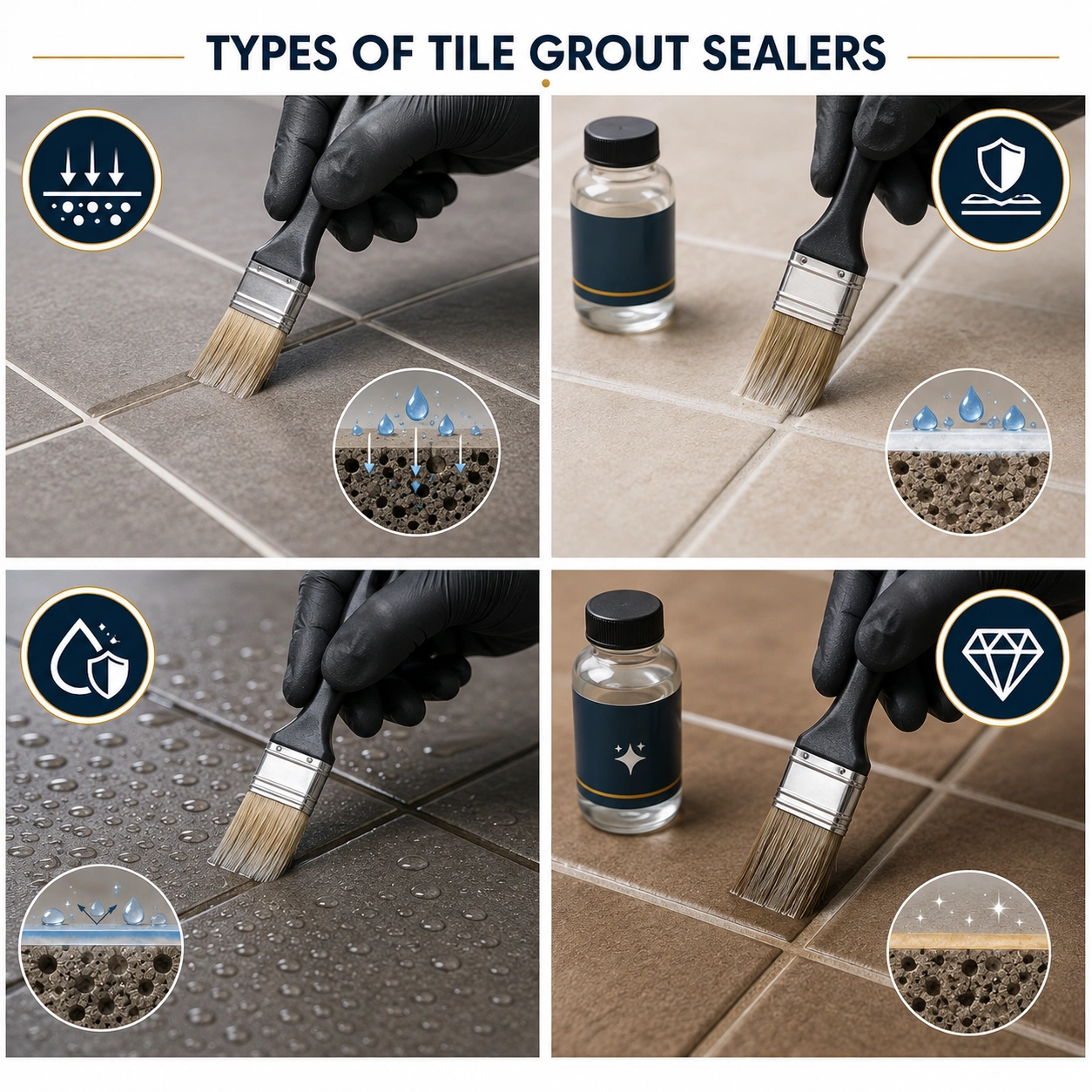
Not every project requires the same type of sealer. Understanding the different categories helps ensure the best protection for each application.
Penetrating sealers are among the most widely recommended options for residential and commercial tile installations. Instead of forming a visible coating, they penetrate deep into the grout and chemically repel water, oils, and stains from within.
Because these sealers remain largely invisible after curing, they preserve the natural appearance of the grout while providing durable protection. They are especially suitable for bathrooms, kitchens, living areas, and commercial flooring.
Another advantage is that penetrating sealers generally do not peel or wear away like surface coatings.
Surface sealers create a thin protective film over the grout joints. This coating prevents moisture and stains from reaching the grout while offering an additional layer of protection.
These products can enhance color slightly and may provide a subtle sheen depending on the formulation. However, because the protective layer remains on the surface, it may require more frequent maintenance in areas experiencing heavy foot traffic.
Surface sealers are often selected where appearance enhancement is as important as moisture resistance.
A waterproof grout sealer is specifically formulated for areas exposed to frequent moisture. Bathrooms, showers, kitchens, laundry rooms, balconies, terraces, and swimming pool surrounds all benefit from products that reduce water penetration while maintaining grout durability.
Although the term "waterproof" is commonly used, it's important to understand that most grout sealers are designed to be highly water-repellent rather than completely waterproof. They work by minimizing moisture absorption while allowing vapor transmission that helps prevent trapped moisture problems.
Some sealers not only protect grout but also enrich its natural color. These products are particularly popular for natural stone installations where deeper color tones improve overall aesthetics.
Color-enhancing sealers combine decorative improvement with practical grout protection, making them suitable for premium residential and commercial projects.
Investing in grout sealing provides advantages that extend well beyond appearance. Properly sealed grout remains cleaner, lasts longer, and requires less maintenance throughout its service life.
Moisture is one of the biggest threats to grout performance. By limiting water absorption, grout sealers reduce the likelihood of staining, mold growth, and gradual deterioration caused by repeated wetting and drying cycles.
This makes sealing especially valuable in bathrooms, kitchens, swimming pools, and outdoor tiled areas.
Kitchen spills, soap residues, oils, coffee, wine, and everyday dirt can permanently stain unsealed grout. A high-quality grout sealer helps repel these contaminants before they penetrate the grout, making routine cleaning much easier.
Instead of absorbing spills immediately, sealed grout gives homeowners valuable time to wipe away liquids before staining occurs.
One of the biggest long-term benefits of grout sealing is reduced maintenance. Dirt and dust remain closer to the surface instead of becoming deeply embedded within the grout.
As a result, regular cleaning often requires only mild detergent and water rather than aggressive chemical cleaners or repeated scrubbing.
This not only saves time but also helps preserve the grout itself by reducing wear caused by harsh cleaning products.
Although grout occupies only a small portion of a tiled surface, it plays a critical role in protecting tile edges and maintaining overall installation stability.
Well-maintained grout helps prevent moisture-related problems beneath the tiles while supporting long-term durability. As part of a complete maintenance strategy, grout sealing contributes to extending the service life of the entire tile installation.
For projects that require premium installation materials alongside grout products, you can also explore Lapifix Tile Adhesives
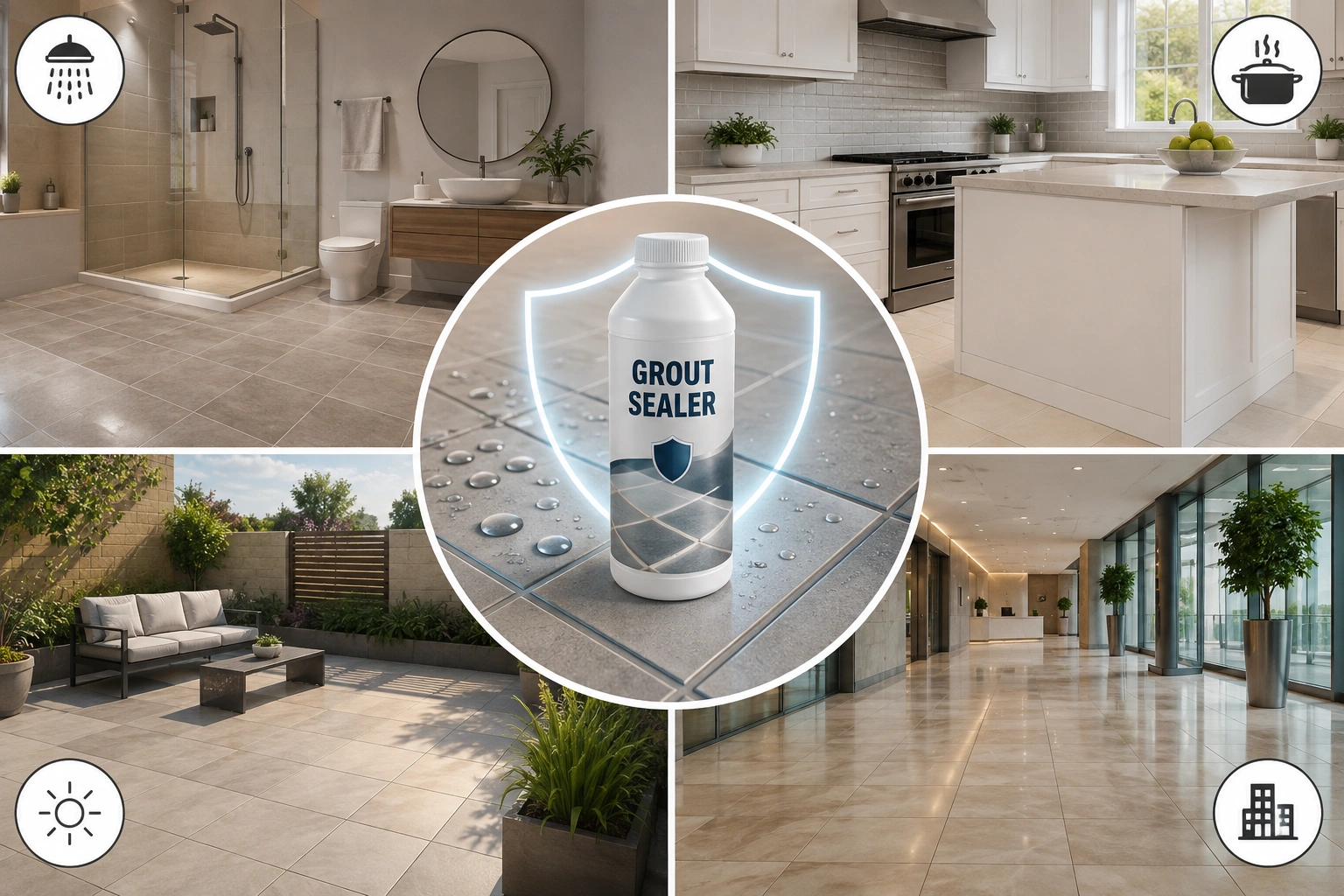
Although grout sealing is beneficial for most tiled surfaces, some areas require it more than others. The amount of moisture, foot traffic, cleaning frequency, and exposure to stains all influence whether sealing should be considered a priority.
High-moisture environments such as bathrooms and kitchens experience frequent water exposure, while commercial spaces often deal with heavy traffic and repeated cleaning. Outdoor installations face additional challenges from rain, sunlight, temperature fluctuations, and airborne contaminants.
Understanding the conditions of each space helps you select the most suitable grout sealer and develop a maintenance plan that keeps the grout looking clean and performing well for years.
Bathrooms are among the most demanding environments for grout. Daily exposure to showers, steam, soap residues, shampoos, and humidity creates ideal conditions for mold, mildew, and discoloration if grout remains unprotected.
A bathroom grout sealer helps reduce water penetration into grout joints while making routine cleaning much easier. Instead of allowing moisture to soak into the grout, sealed joints repel water more effectively, reducing the likelihood of staining and biological growth.
In shower enclosures, wet rooms, and spa facilities, periodic resealing is often recommended to maintain consistent protection.
Kitchen floors and backsplashes face a different type of challenge. Cooking oils, food spills, sauces, grease, coffee, tea, and cleaning chemicals can gradually stain porous grout if it has not been properly sealed.
Applying a kitchen grout sealer creates a protective barrier that limits stain absorption and simplifies everyday maintenance. Instead of deep scrubbing, many spills can simply be wiped away before they penetrate the grout.
For busy family kitchens and commercial food preparation areas, grout sealing contributes to both hygiene and long-term appearance.
Patios, balconies, terraces, walkways, and exterior walls experience constant exposure to rain, UV radiation, dust, and seasonal temperature changes.
These environmental conditions accelerate grout deterioration if moisture repeatedly enters and exits the grout structure. Using a waterproof grout sealer helps reduce water absorption while protecting grout from weather-related damage.
Outdoor grout should also be inspected regularly, especially after severe weather or freeze-thaw cycles in colder climates.
Shopping centres, hotels, hospitals, airports, schools, restaurants, and office buildings experience significantly higher traffic than residential properties.
Frequent cleaning, heavy pedestrian movement, and increased wear place additional stress on grout joints. Professional grout sealing helps preserve appearance while reducing maintenance costs over the life of the installation.
For commercial property managers, proactive grout protection often proves more cost-effective than repeated repairs or grout replacement.
Choosing the right product becomes easier when you compare sealers based on application and performance requirements.
|
Application Area |
Recommended Sealer |
Water Resistance |
Stain Resistance |
Maintenance Frequency |
|
Bathroom |
Waterproof grout sealer |
Excellent |
Excellent |
Medium |
|
Kitchen |
Penetrating grout sealer |
High |
Excellent |
Low |
|
Living Room |
Penetrating grout sealer |
Moderate |
High |
Low |
|
Outdoor Patio |
Waterproof grout sealer |
Excellent |
High |
Medium |
|
Commercial Flooring |
Professional-grade grout sealer |
Excellent |
Excellent |
Medium |
|
Swimming Pool Surround |
Waterproof penetrating sealer |
Excellent |
High |
Medium |
This comparison demonstrates that grout sealing should be matched to the environment rather than relying on a single product for every application.
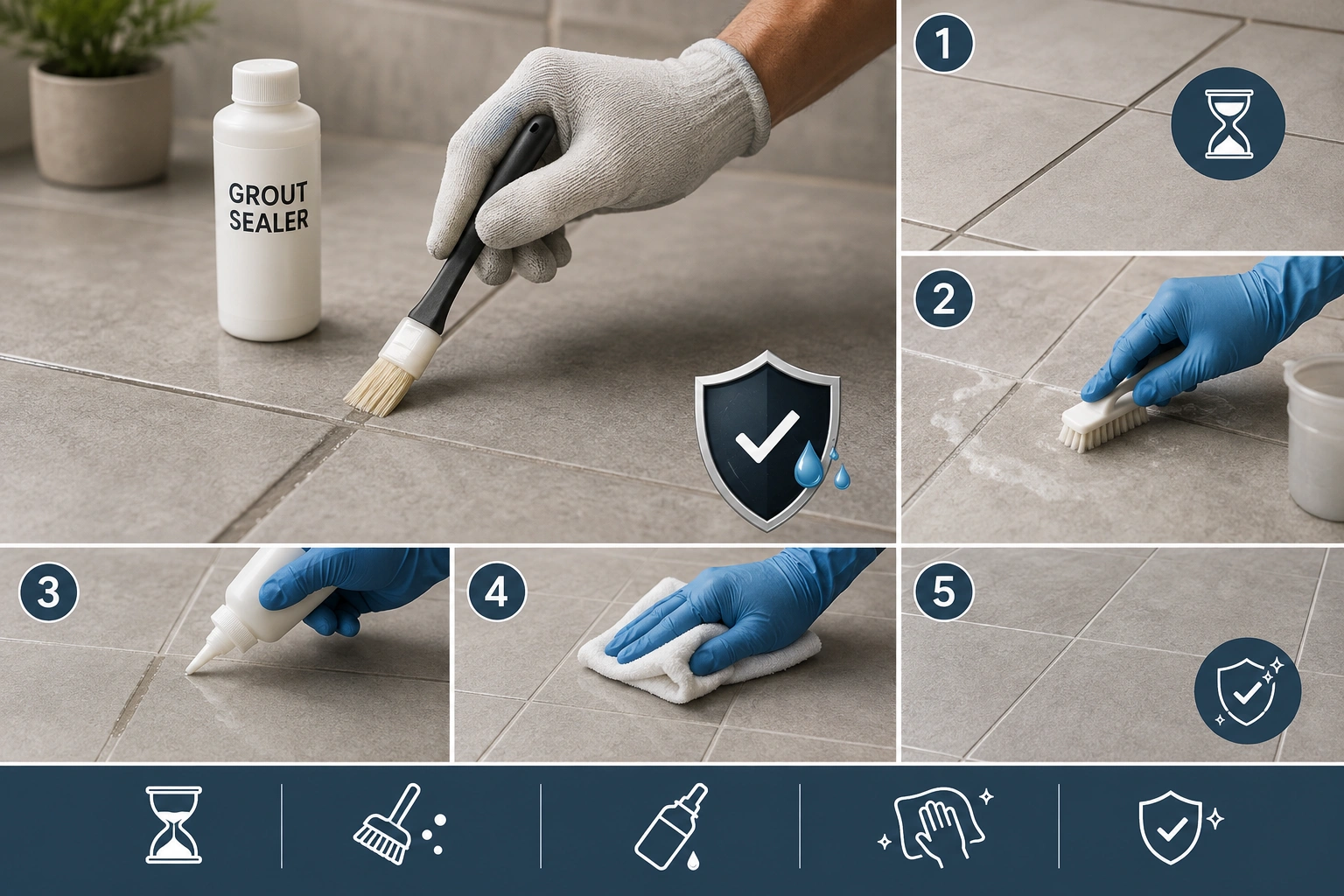
Correct application is just as important as selecting the right product. Even premium sealers cannot deliver their full performance if applied incorrectly.
Fresh grout should cure completely before sealing begins. Applying a sealer too early may trap moisture inside the grout, reducing both curing quality and sealer performance.
Always follow the grout manufacturer's recommended curing time before applying any protective coating.
Dust, soap residue, grease, construction debris, and surface contaminants should be removed before sealing.
Clean grout allows the sealer to penetrate evenly, improving grout protection and creating more consistent results across the tiled surface.
If existing grout contains mold or stains, these issues should be addressed before sealing.
Use an applicator bottle, sponge, foam brush, or small roller to apply the grout sealer directly onto the grout joints.
Work in manageable sections while ensuring complete coverage without excessive pooling on the tile surface. Many penetrating sealers require several minutes to absorb into the grout before excess material is removed.
Following the manufacturer's application instructions helps maximize performance.
Any sealer remaining on the tile surface should be wiped away before it dries completely.
Leaving excess material on glazed or polished tiles may create a hazy appearance that requires additional cleaning after curing.
Careful removal ensures clean grout lines and an attractive finished appearance.
After application, allow the sealer to cure according to the manufacturer's recommendations before exposing the tiled surface to water or heavy traffic.
Proper curing is essential for achieving maximum stain resistance and long-term durability.
Many grout sealing problems occur because of application errors rather than product quality. Avoiding these mistakes can significantly improve long-term performance.
Sealing grout before it has fully cured.
Applying sealer over dirty or damp grout.
Using excessive amounts of sealer and leaving residue on tiles.
Assuming one application provides permanent protection.
Selecting a sealer unsuitable for the installation environment.
Ignoring regular grout maintenance after sealing.
Professional installers understand that proper preparation and periodic maintenance are just as important as the sealer itself.
Maintaining sealed grout does not require complicated procedures, but following a few professional practices can extend the life of both the grout and the sealer.
Choose a grout sealer that matches the installation environment rather than selecting a product based solely on price. Bathrooms, kitchens, outdoor areas, and commercial buildings each have different protection requirements.
Clean tiled surfaces regularly using pH-neutral cleaners instead of harsh acidic or abrasive chemicals that may gradually degrade the protective sealer.
Inspect grout periodically for signs of water absorption or staining. If water no longer beads on the grout surface, it may be time to reseal the installation before moisture begins penetrating the grout again.
Proper ventilation also plays an important role in grout maintenance. Reducing excess humidity helps minimize mold growth and prolongs the effectiveness of the sealer.
For projects requiring complete tile installation systems, including adhesives and finishing products, you can also explore Lapifix Finishing & Repair Solutions
Applying a tile grout sealer once does not mean the grout will remain protected forever. Over time, regular foot traffic, routine cleaning, moisture exposure, and everyday wear gradually reduce the effectiveness of the protective barrier. The frequency of resealing depends on the type of sealer used, the installation environment, and the amount of daily use the tiled surface receives.
In residential homes, grout in living rooms and bedrooms generally experiences less moisture and wear, allowing sealers to last longer. Bathrooms, kitchens, laundry rooms, and shower areas require more frequent inspection because constant exposure to water and cleaning products accelerates sealer degradation.
Commercial environments such as hotels, shopping centres, restaurants, airports, and healthcare facilities often require shorter maintenance intervals due to heavy pedestrian traffic and frequent cleaning.
Rather than following a fixed schedule, many professionals recommend testing grout periodically. A simple water-drop test can quickly indicate whether the grout continues to repel moisture effectively.
Although every installation is different, the following recommendations provide a useful starting point:
Residential dry areas: Every 3–5 years
Bathrooms and showers: Every 1–3 years
Kitchen floors and backsplashes: Every 2–3 years
Outdoor tiled areas: Every 1–2 years
Commercial installations: Based on inspection and maintenance schedules
Regular inspections are more reliable than relying solely on time. Environmental conditions, cleaning habits, and sealer quality all influence actual service life.
Grout rarely fails suddenly. Instead, it gradually loses its protective properties, making early warning signs relatively easy to recognize.
If water no longer forms beads on the grout surface and instead absorbs quickly, the existing grout sealer has likely worn away. This is one of the clearest indicators that resealing should be considered.
Dark staining that becomes difficult to remove, recurring mold growth in damp areas, and grout joints that remain wet long after cleaning are also common signs that protection has diminished.
Fading grout color and increased dirt accumulation may indicate that contaminants are penetrating the grout rather than remaining on the surface for easy cleaning.
Addressing these signs early helps preserve grout condition and reduces the need for more extensive repairs later.
Not every grout requires the same level of protection. Whether sealing is necessary depends largely on the grout formulation.
Traditional cementitious grout is naturally porous and generally benefits from grout sealing after curing. Sealing improves stain resistance, simplifies maintenance, and helps reduce moisture absorption.
Many modern polymer-modified grouts offer improved stain resistance compared with conventional cement grouts, but sealing may still be recommended in high-moisture or high-traffic environments for additional protection.
Some epoxy grouts are inherently non-porous and typically do not require a tile joint sealer because they already provide excellent resistance to water, stains, and chemicals.
Always follow the grout manufacturer's recommendations before deciding whether sealing is required.
Advances in material technology continue to improve grout protection while making maintenance easier for homeowners and professionals alike.
One of the most significant developments is the increased use of nanotechnology-based sealers. These products penetrate deeper into grout pores, creating highly effective water and stain resistance while maintaining excellent vapor permeability.
Low-VOC and environmentally friendly formulations are also becoming increasingly popular as sustainability continues to influence the construction industry. These products reduce indoor emissions while maintaining professional-grade performance.
Manufacturers are also developing longer-lasting penetrating sealers that require less frequent maintenance, reducing lifecycle costs for both residential and commercial projects.
Another growing trend is the integration of complete tile installation systems, where adhesives, grout, waterproofing products, and sealers are designed to work together for maximum long-term durability.
Professional tile installers follow industry-recommended practices to achieve consistent, durable results. Successful grout protection begins long before the sealer is applied.
Proper surface preparation, allowing grout to cure fully, selecting a compatible grout sealer, and following manufacturer application instructions are all essential steps. Skipping any of these stages can reduce the effectiveness of even premium sealers.
The Tile Council of North America (TCNA) publishes widely respected installation guidelines that emphasize correct installation methods, substrate preparation, movement joints, and maintenance practices for tiled surfaces.
Following recognized industry guidance helps improve installation quality while supporting the long-term performance of both grout and tile systems.
Many property owners focus on selecting premium tiles while overlooking the importance of grout maintenance. However, grout plays a vital role in protecting the entire tile installation.
A quality grout sealer helps minimize staining, reduces moisture penetration, simplifies cleaning, and extends the service life of grout joints. Over time, these benefits translate into lower maintenance costs, fewer repairs, and improved aesthetics.
For commercial buildings, reducing maintenance frequency also lowers labour costs and minimizes disruption to building occupants.
Whether you're maintaining a family home, hotel, healthcare facility, or office complex, protecting grout is one of the most cost-effective ways to preserve the overall appearance and durability of tiled surfaces.
A tile grout sealer is one of the simplest yet most effective ways to protect tiled surfaces from moisture, stains, mold, and everyday wear. Whether you're maintaining a bathroom, kitchen, outdoor patio, or commercial floor, selecting the right sealer and following proper application techniques helps preserve grout appearance, reduce maintenance, and extend the life of your tile installation. Regular inspection and timely resealing ensure that grout continues to perform effectively for years to come.
If you're planning a new tile installation or upgrading an existing one, choosing high-quality installation materials is just as important as selecting the right tiles. Explore the complete range of professional tile installation products from Lapifix, including tile grouts, adhesives, and finishing solutions. The right products and maintenance practices today can help keep your tiled surfaces looking their best well into the future.
In most cases, yes. Cement-based grout is naturally porous and can absorb water, stains, oils, and dirt if left unsealed. Applying a tile grout sealer helps protect grout, improve durability, and simplify long-term maintenance, particularly in wet or high-traffic areas.
The lifespan depends on the product, application quality, and environmental conditions. Residential installations may remain protected for several years, while bathrooms, kitchens, outdoor areas, and commercial spaces typically require more frequent inspection and resealing.
Yes. Many grout sealers are suitable for DIY application provided the grout has fully cured and the manufacturer's instructions are followed carefully. Proper cleaning, even application, and sufficient curing time are essential for good results.
Most waterproof grout sealers are highly water-repellent rather than completely waterproof. They significantly reduce water absorption while allowing moisture vapor to escape, helping protect grout without trapping moisture beneath the tiled surface.
Yes, provided it is structurally sound and thoroughly cleaned before application. Existing stains, mold, and damaged grout should be repaired before sealing to achieve the best long-term performance.