

Wall cracks are among the most common building maintenance issues, affecting everything from newly constructed homes to decades-old commercial buildings. While a small hairline crack may seem harmless, ignoring it can allow moisture to penetrate the surface, weaken finishes, and eventually lead to more extensive repairs. The good news is that most non-structural cracks can be repaired effectively when the right crack filler for walls is selected and applied correctly.
Whether you are a homeowner refreshing interior walls, a contractor handling renovation projects, or a facility manager maintaining commercial properties, understanding the cause of wall cracks is the first step toward a durable repair. Modern repair materials have evolved significantly, offering improved flexibility, stronger adhesion, and better resistance to weathering than traditional cement-based patching methods.
Choosing the correct repair product isn't simply about filling a visible gap. It involves identifying the crack type, understanding why it occurred, preparing the surface properly, and selecting a filler designed for the specific application. Doing so helps restore both the appearance and structural integrity of the wall while reducing the chance of recurring cracks.
A crack filler for walls is a specially formulated repair material designed to fill, seal, and restore cracks in plaster, concrete, cement, gypsum, masonry, and drywall surfaces. Unlike ordinary cement paste, modern fillers are engineered to provide excellent adhesion, controlled shrinkage, and smooth finishing characteristics that blend seamlessly with surrounding surfaces.
Depending on the formulation, crack fillers may contain acrylic polymers, cementitious binders, mineral fillers, fibers, or flexible additives that improve durability. These materials not only fill visible gaps but also strengthen the repaired area and create a surface ready for sanding, priming, and painting.
High-quality repair products are commonly used in residential homes, apartments, office buildings, schools, hospitals, hotels, shopping centres, and industrial facilities where maintaining attractive, damage-free walls is essential.
Wall cracks rarely appear without a reason. They are usually the result of movement, environmental changes, construction practices, or ageing materials. Understanding the root cause helps ensure that repairs last instead of simply hiding the problem temporarily.
New buildings naturally settle during the first few years after construction. As foundations adjust to soil conditions, small movements may create minor cracks around windows, doors, ceilings, or wall junctions. In most cases, these are cosmetic rather than structural, but they should still be repaired to prevent moisture penetration.
Older buildings can also experience settlement over time due to changes in soil moisture, nearby excavation, or gradual foundation movement. Monitoring crack growth is important, particularly if cracks widen significantly.
Building materials continuously expand and contract in response to changing temperatures and humidity levels. Exterior walls are especially vulnerable because they experience direct sunlight, rainfall, seasonal temperature swings, and varying moisture levels.
Repeated expansion and contraction place stress on plaster and paint layers, eventually leading to surface cracks. Using a flexible wall crack sealant or polymer-enhanced repair material helps accommodate these movements more effectively.
Fresh plaster, cement renders, and concrete naturally shrink as they cure. If drying occurs too quickly because of high temperatures, strong winds, or insufficient curing, shrinkage cracks may develop.
These cracks are generally narrow but can become more noticeable over time if left untreated. Applying an appropriate crack repair compound restores the surface and prepares it for finishing.
Improper mixing ratios, inadequate curing, low-quality materials, insufficient reinforcement, or rushed workmanship can all contribute to premature cracking. For example, applying plaster over dusty or unstable surfaces often leads to poor adhesion, increasing the likelihood of cracking later.
Following recommended construction practices and using high-quality repair materials significantly reduces these risks.
Moisture is one of the most damaging factors affecting wall finishes. Water entering through roofs, leaking plumbing, damaged waterproofing, or external walls can weaken plaster, dissolve salts, and create internal pressure that causes cracks.
Before repairing any crack, the source of moisture should always be identified and corrected. Filling a crack without addressing water ingress often results in repeated failures.
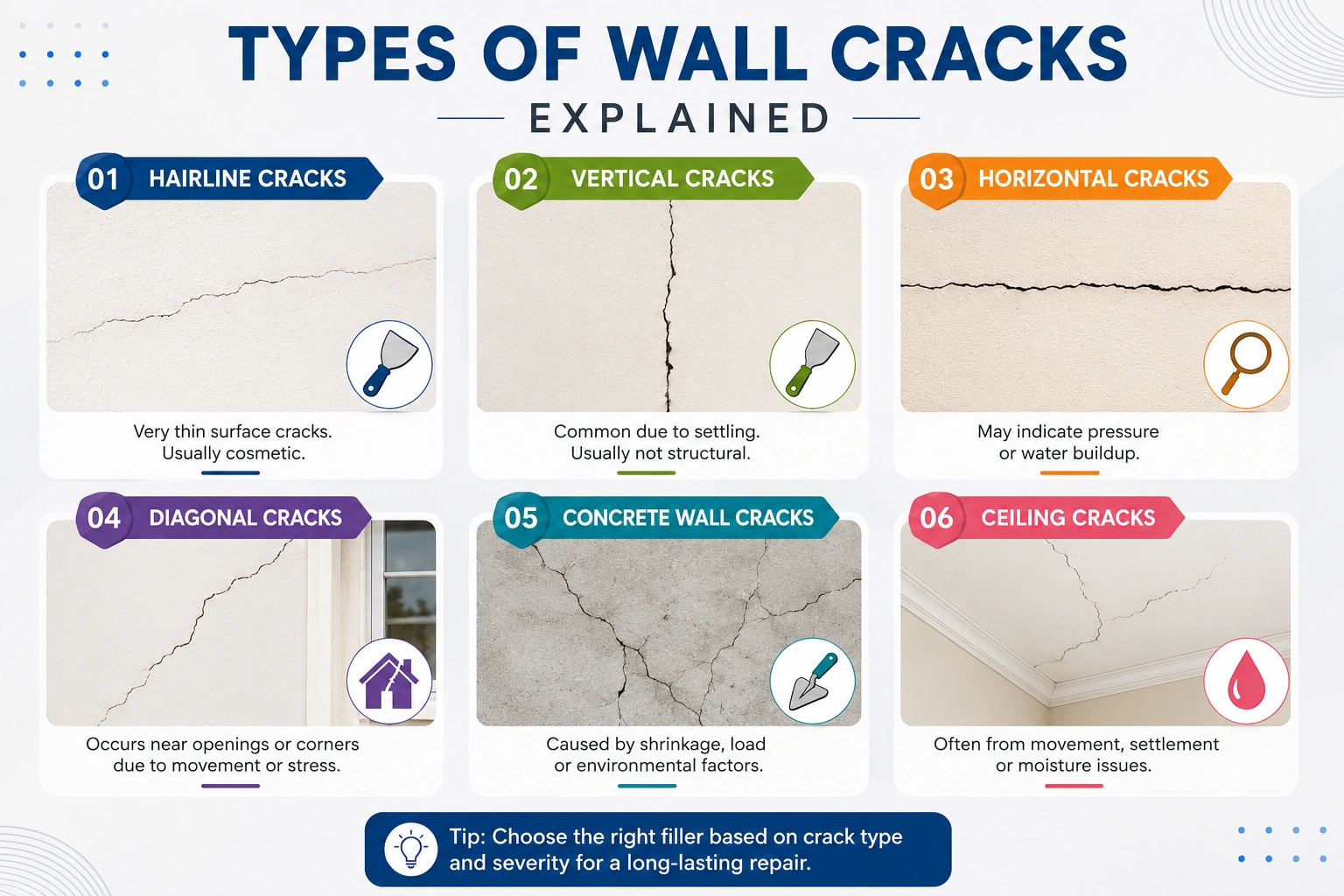
Not all wall cracks require the same repair method. Identifying the crack type helps determine whether a simple cosmetic repair is sufficient or if further investigation is needed.
Hairline cracks are extremely thin surface cracks that usually appear in paint, plaster, or skim coat. They commonly develop due to normal drying shrinkage or minor building movement and are generally considered cosmetic.
An acrylic crack filler is often the preferred solution because it offers flexibility while producing a smooth finish that blends well after painting.
Vertical cracks frequently occur as buildings settle naturally over time. If they remain narrow and stable, they are usually not a cause for structural concern.
These cracks can typically be repaired using an interior wall crack filler followed by sanding and repainting to restore a uniform appearance.
Horizontal cracks deserve closer attention because they may indicate excessive pressure on the wall or structural movement. In retaining walls or basements, they can sometimes result from soil pressure or water buildup behind the structure.
If a horizontal crack continues to widen, professional inspection is recommended before carrying out cosmetic repairs.
Diagonal cracks often appear near doors, windows, or building corners where stress is concentrated. They may develop because of foundation movement, differential settlement, or structural loading.
Minor diagonal cracks can often be repaired successfully, while larger or expanding cracks should be assessed to determine the underlying cause.
Concrete walls may develop cracks due to shrinkage, thermal movement, overloading, or environmental exposure. Selecting the right concrete crack filler depends on crack width, movement, and whether the crack affects structural performance.
Small non-structural cracks are generally repaired using specialized repair compounds, while structural cracks may require epoxy injection or engineered repair methods.
Ceiling cracks commonly develop because of building movement, plaster shrinkage, or minor structural settlement. While many are cosmetic, cracks accompanied by sagging, water stains, or widening gaps should be investigated before repair.
Ignoring small cracks often allows them to grow into larger maintenance problems. Moisture penetration, dust accumulation, paint failure, and repeated thermal movement gradually worsen damaged areas, increasing repair costs over time.
Early repair using the appropriate wall repair filler not only restores appearance but also protects underlying materials from further deterioration. In many cases, addressing a minor crack today prevents far more expensive restoration work in the future.
Additionally, prompt repairs improve indoor aesthetics, maintain property value, and contribute to a cleaner, more professional-looking environment for homes and commercial spaces alike.
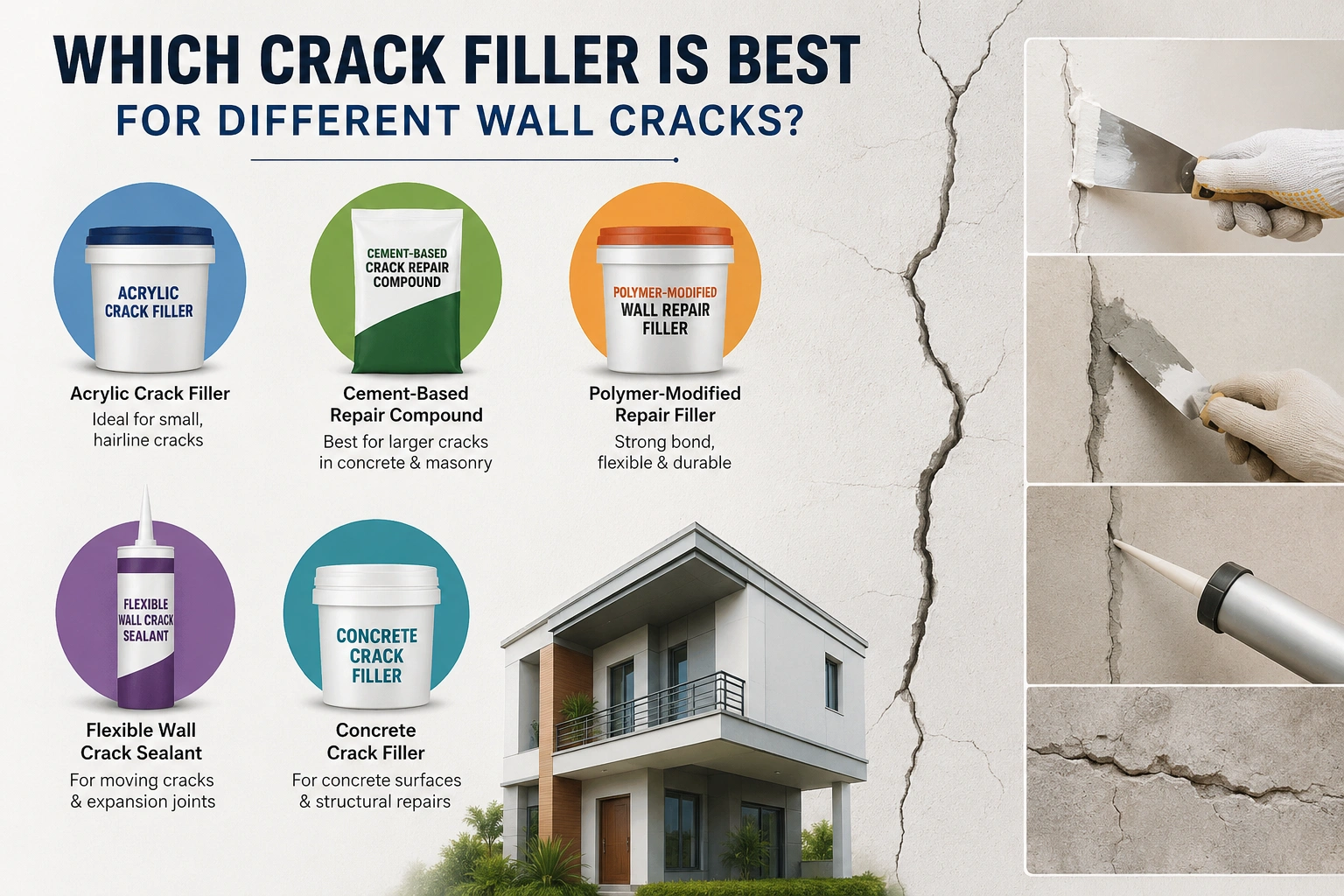
There is no universal repair material that works for every crack. The best crack filler for walls depends on several factors, including the crack width, the type of substrate, whether the wall is indoors or outdoors, and if movement is expected after the repair. Choosing the correct product helps ensure a durable repair that resists future cracking and provides a smooth finish for painting.
Modern repair materials are available in different formulations, each designed for specific applications. Understanding their strengths makes product selection much easier and improves long-term performance.
An acrylic crack filler is one of the most popular choices for repairing minor cracks in painted walls, plaster, drywall, and interior finishes. Its flexibility allows it to accommodate slight building movement without cracking again, making it particularly effective for hairline and shrinkage cracks.
Another advantage of acrylic-based products is their smooth finish. Once cured, they can usually be sanded easily and painted without creating noticeable repair marks. This makes them ideal for residential interiors, offices, hotels, and commercial spaces where appearance is important.
A cement-based crack repair compound is commonly used for masonry, concrete, plaster, cement render, and exterior wall repairs. These products provide excellent compressive strength and are suitable for repairing larger cracks where durability is a priority.
Because cement-based fillers are more rigid than acrylic products, they perform best in areas with minimal movement. They are frequently used for repairing damaged concrete surfaces, balconies, boundary walls, and structural plaster.
Proper curing is essential to achieve maximum strength and minimize shrinkage.
Polymer-modified repair materials combine cementitious binders with advanced polymers to improve adhesion, flexibility, and crack resistance. These products bridge the gap between traditional cement fillers and acrylic compounds, offering a balanced solution for both interior and exterior applications.
A high-quality wall repair filler formulated with polymers bonds well to concrete, plaster, brickwork, and cement boards while reducing the likelihood of recurring cracks caused by minor movement.
These products are increasingly preferred for professional construction and renovation projects because they provide stronger, longer-lasting repairs.
Certain cracks continue to experience movement due to thermal expansion, vibration, or structural settlement. In these situations, a flexible wall crack sealant performs better than rigid fillers because it stretches slightly as the substrate moves.
Flexible sealants are commonly used around window frames, door joints, expansion joints, and areas exposed to changing weather conditions. They help maintain a watertight seal while reducing the risk of future cracking.
Concrete walls, floors, columns, and structural elements often require specialized repair materials capable of bonding securely to dense concrete surfaces. A concrete crack filler is formulated to withstand higher loads while resisting moisture and environmental exposure.
The choice of product depends on whether the crack is cosmetic or structural. Narrow, non-structural cracks can usually be repaired using cementitious repair compounds, while structural cracks may require epoxy injection or engineered repair systems.
Selecting the correct repair material becomes easier when you compare products based on application and performance.
|
Crack Type |
Recommended Filler |
Best Location |
Flexibility |
Paintable |
|
Hairline cracks |
Acrylic crack filler |
Interior walls |
Excellent |
Yes |
|
Shrinkage cracks |
Polymer-modified wall repair filler |
Interior & exterior |
High |
Yes |
|
Plaster cracks |
Crack repair compound |
Residential & commercial walls |
Moderate |
Yes |
|
Concrete cracks |
Concrete crack filler |
Concrete structures |
Moderate |
Yes |
|
Moving joints |
Flexible wall crack sealant |
Exterior walls & joints |
Excellent |
Most products |
|
Masonry cracks |
Cement-based repair compound |
Brick and block walls |
Low |
Yes |
This comparison highlights an important principle: successful repairs depend as much on selecting the right material as on proper surface preparation and application.
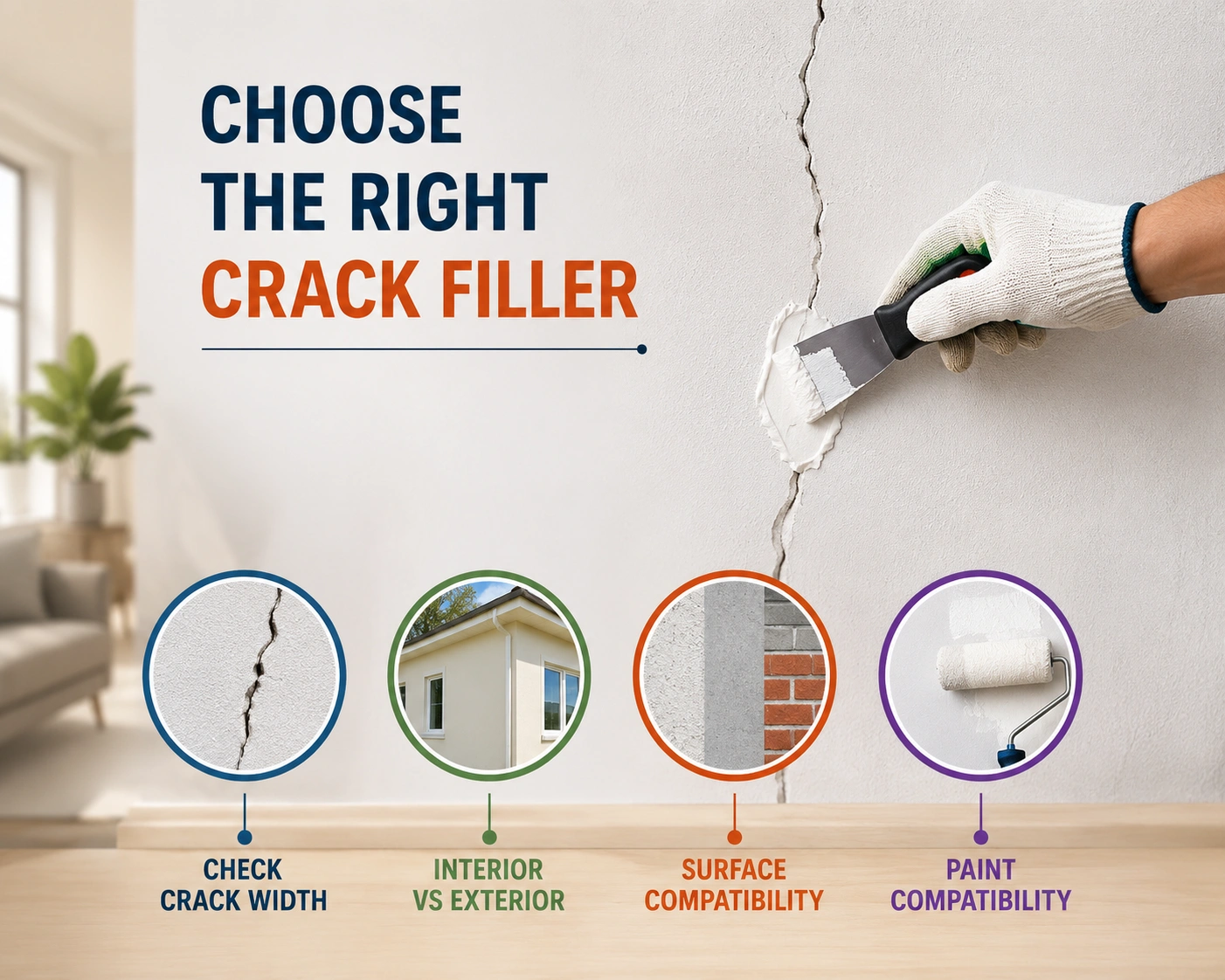
With many repair products available, selecting the best solution becomes easier when you evaluate the project conditions before purchasing a filler.
Very fine hairline cracks generally require flexible acrylic products that can move with the surface. Wider cracks may need a stronger crack repair compound capable of filling larger gaps while maintaining structural integrity.
If a crack continues to widen over time, cosmetic repair alone may not be sufficient. Identifying the underlying cause should always come before selecting a repair material.
Interior walls are typically protected from direct sunlight and heavy rain, allowing a wider range of repair materials to perform well.
Exterior walls face much harsher conditions. Continuous exposure to UV radiation, rainfall, humidity, and temperature changes requires repair products that provide improved weather resistance and flexibility. For these environments, products specifically designed for exterior wall crack repair generally offer better long-term durability.
Different substrates require different repair materials. Plaster, gypsum, concrete, cement render, brick masonry, and drywall all have unique properties that influence adhesion and performance.
Always verify that the selected filler is compatible with the wall material before application. Using the correct product improves bonding while reducing the likelihood of repair failure.
Most wall repairs eventually receive a decorative finish. Choosing a paintable repair material helps achieve a seamless appearance after sanding and priming.
Many modern fillers are specifically designed to accept water-based and acrylic paints, allowing repaired surfaces to blend naturally with surrounding walls.
Successful wall crack repair depends on following the correct procedure rather than simply applying filler over the damaged area. Professional contractors typically use the following process to achieve durable results.
Inspect the crack carefully. Determine whether it is cosmetic or indicates a deeper structural issue before beginning repairs.
Prepare the surface. Remove loose material, dust, paint flakes, and contaminants using a scraper or wire brush. Clean surfaces improve adhesion significantly.
Apply the repair material. Fill the crack completely using the appropriate crack filler for walls, ensuring there are no trapped air pockets.
Smooth the repaired area. Use a putty knife or finishing tool to level the surface before the filler begins to set.
Allow adequate curing. Follow the manufacturer's recommended drying time before sanding, priming, or painting the repaired wall.
Taking time during preparation often has a greater impact on repair quality than the filler itself. Clean surfaces and proper curing create stronger, longer-lasting repairs.
Although the repair process appears similar, indoor and outdoor walls experience very different service conditions.
Interior wall crack filler products focus on achieving a smooth finish, easy sanding, and excellent paint compatibility. They are designed primarily for cosmetic restoration where environmental exposure is limited.
Exterior wall crack repair materials prioritize durability, moisture resistance, flexibility, and weather protection. They must withstand rain, sunlight, humidity, and temperature fluctuations without losing adhesion or developing new cracks.
Choosing an interior product for exterior applications often leads to premature failure because it lacks the weather resistance required for outdoor conditions.
Concrete structures demand careful evaluation before repairs begin. Small shrinkage cracks usually require only cosmetic restoration, while larger or active cracks may indicate movement that requires engineering assessment.
Surface preparation is especially important when repairing concrete. Loose particles, laitance, oil, and contaminants should be removed before applying any repair product. This creates a stronger bond between the repair material and the existing concrete.
For non-structural repairs, a high-quality concrete crack filler provides excellent adhesion and durability. However, structural cracks affecting load-bearing elements should always be evaluated by qualified professionals before selecting a repair method.
For projects requiring complete wall finishing and repair solutions, you can also explore Lapifix Finishing & Repair Products
Repairing a crack successfully involves much more than filling a visible gap. Professional contractors understand that a durable repair depends on proper diagnosis, careful preparation, quality materials, and correct application techniques. Even the best crack filler for walls will not perform well if applied over a dirty, damp, or unstable surface.
Before beginning any repair, inspect the crack closely. If it has increased in width, appears repeatedly after previous repairs, or is accompanied by signs of structural movement, investigate the underlying cause before applying filler. Repair materials are designed to restore damaged surfaces, not solve foundation or structural issues.
Surface preparation is equally important. Remove all loose plaster, flaking paint, dust, grease, and debris so the repair material can bond directly with the substrate. For deeper cracks, slightly widening the opening into a V-shaped groove often improves penetration and creates a stronger mechanical bond.
Apply the repair material in thin, controlled layers instead of forcing a thick application into the crack. Multiple thin layers cure more evenly, reduce shrinkage, and produce a smoother finish. Once fully cured, sand the repaired area lightly, apply a suitable primer, and finish with a compatible paint system for a seamless appearance.
Many recurring wall cracks result from incorrect repair methods rather than poor-quality products. Avoiding a few common mistakes can significantly improve the durability of the repair.
Filling cracks without identifying their root cause.
Applying repair material over dusty, damp, or loose surfaces.
Choosing an interior filler for exterior applications.
Painting before the filler has completely cured.
Ignoring recurring or widening structural cracks.
Using excessive water while mixing cement-based repair compounds.
Professional repairs focus on solving the problem rather than simply hiding the crack. Proper preparation and the correct product selection usually determine the success of the repair.
Most wall cracks are cosmetic and can be repaired without major concern. However, some cracks may indicate structural movement that requires professional assessment before cosmetic repairs begin.
You should consider expert evaluation if cracks continue to widen over time, exceed approximately 5 mm in width, appear suddenly after foundation movement, or are accompanied by sticking doors, uneven floors, sagging ceilings, or water infiltration. Stair-step cracks in masonry walls or long horizontal cracks in retaining walls may also indicate structural stress.
Monitoring crack progression is often a practical first step. Marking the ends of a crack and checking it periodically helps determine whether movement is ongoing. Stable cracks are generally suitable for repair using an appropriate crack repair compound, while active cracks may require engineering solutions before finishing work begins.
Although wall cracks may appear similar, indoor and outdoor environments place very different demands on repair materials.
Interior walls are protected from direct sunlight, heavy rainfall, and temperature extremes. In these conditions, an interior wall crack filler that provides a smooth finish, easy sanding, and excellent paintability is usually sufficient.
Exterior walls, however, experience continuous exposure to rain, UV radiation, humidity, and seasonal temperature changes. These conditions require products specifically designed for exterior wall crack repair with enhanced flexibility, weather resistance, and long-term durability.
Using the appropriate product for each environment helps prevent recurring repairs and extends the life of painted finishes.
The construction industry continues to develop more advanced repair technologies that improve durability while simplifying application. Several important trends are influencing wall repair solutions in 2026.
Polymer-enhanced repair materials are becoming the preferred choice because they combine excellent adhesion with improved flexibility. These products are particularly effective in buildings where minor movement occurs naturally over time.
Fast-drying repair compounds are also gaining popularity, allowing contractors to complete repairs more quickly while maintaining consistent quality. This is especially valuable for commercial projects where downtime must be minimized.
Another growing trend is the increased emphasis on sustainable construction materials. Many manufacturers now develop low-VOC formulations that contribute to healthier indoor environments while maintaining professional performance.
Digital construction practices are also improving repair planning through moisture detection tools, crack monitoring systems, and detailed maintenance documentation that supports long-term building management.
Repairing a wall is not just about improving its appearance—it is about protecting the building envelope and extending the life of the surface.
High-quality repair materials provide stronger adhesion, reduced shrinkage, better flexibility, and improved resistance to moisture. These characteristics reduce maintenance requirements and help repairs remain stable for years rather than months.
For property owners, contractors, and facility managers, investing in premium repair materials often results in lower lifecycle costs. Fewer repeat repairs mean reduced labour expenses, less disruption, and better long-term value.
Professional-grade products also provide smoother finishes that require less sanding and produce superior paint results, making them an excellent choice for both residential and commercial projects.
Reliable wall repairs should follow established construction standards and manufacturer recommendations. Industry best practices emphasize proper diagnosis, surface preparation, compatible repair materials, and adequate curing before finishing.
For guidance on repairing concrete surfaces and evaluating structural conditions, professionals frequently refer to publications from the American Concrete Institute (ACI), which provides internationally recognized technical standards and recommendations for concrete repair and maintenance.
Following recognized industry guidance helps ensure safer, longer-lasting repairs and improves confidence in both residential and commercial construction projects.
Repairing wall cracks correctly starts with understanding why they appeared in the first place. From identifying cosmetic hairline cracks to recognizing signs of structural movement, selecting the appropriate crack filler for walls and following proper repair techniques ensures durable, professional results. Whether repairing plaster, masonry, or concrete surfaces, quality materials and careful surface preparation remain the foundation of successful long-term repairs.
If you're looking for reliable repair materials that deliver excellent adhesion, smooth finishing, and long-lasting performance, explore the professional wall repair solutions from Lapifix. Learn more about products designed for modern construction and renovation by visiting or request expert guidance to choose the right solution for your next project.
The best crack filler for walls depends on the crack type, location, and substrate. Hairline cracks are often repaired using flexible acrylic fillers, while wider masonry or concrete cracks generally require polymer-modified or cement-based repair compounds for greater strength and durability.
Yes. Most modern repair materials are designed to be sanded, primed, and painted after they have fully cured. Following the manufacturer's recommended curing time helps achieve a smooth, uniform finish.
Acrylic crack fillers provide greater flexibility and are commonly used for interior cosmetic repairs. Cement-based fillers offer higher compressive strength and are better suited for masonry, concrete, and exterior repairs where durability is important.
Long-lasting exterior repairs begin by identifying the cause of the crack. After correcting any moisture or structural issues, the damaged area should be cleaned thoroughly before applying a weather-resistant repair material suitable for exterior wall crack repair.
Professional inspection is recommended if cracks continue to widen, exceed several millimetres in width, appear suddenly after foundation movement, or are accompanied by uneven floors, sticking doors, roof movement, or other signs of structural distress.