

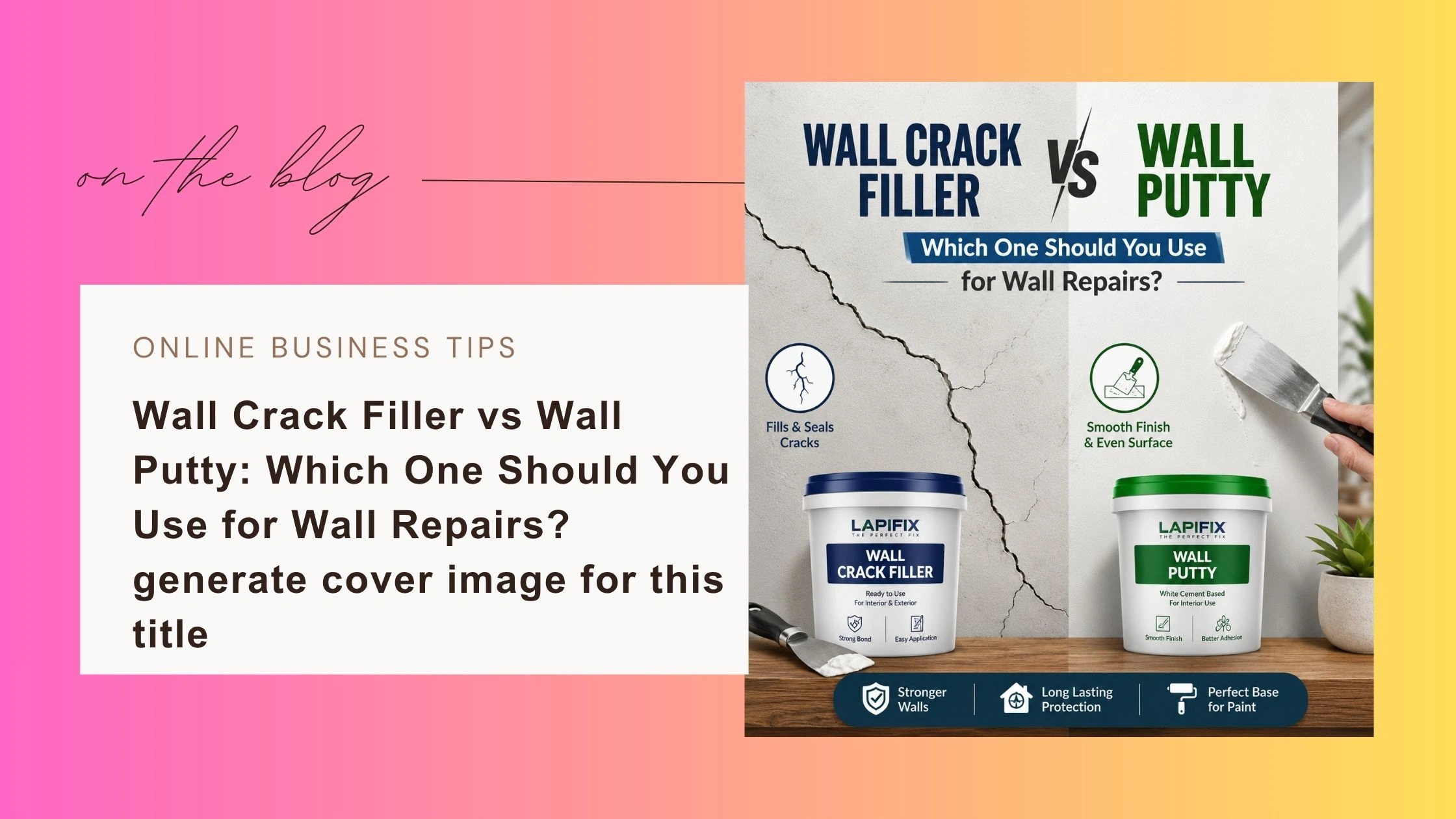
A small crack on a freshly painted wall has a special talent for ruining an otherwise perfect room. You paint over it, step back, admire the finish, and then—weeks later—the same little line makes an unwelcome comeback. Choosing the right repair material before painting can save you from doing the same job twice.
The key difference comes down to purpose. A wall crack filler is designed to fill and repair cracks or gaps, while wall putty mainly helps create a smoother, more uniform surface before painting. They can look similar when sitting in a bucket, but they solve different problems. Knowing which one to use makes wall repair faster, cleaner and more durable.
If you're planning a broader surface repair project, you can also explore construction repair solutions to understand how specialised materials fit different applications.
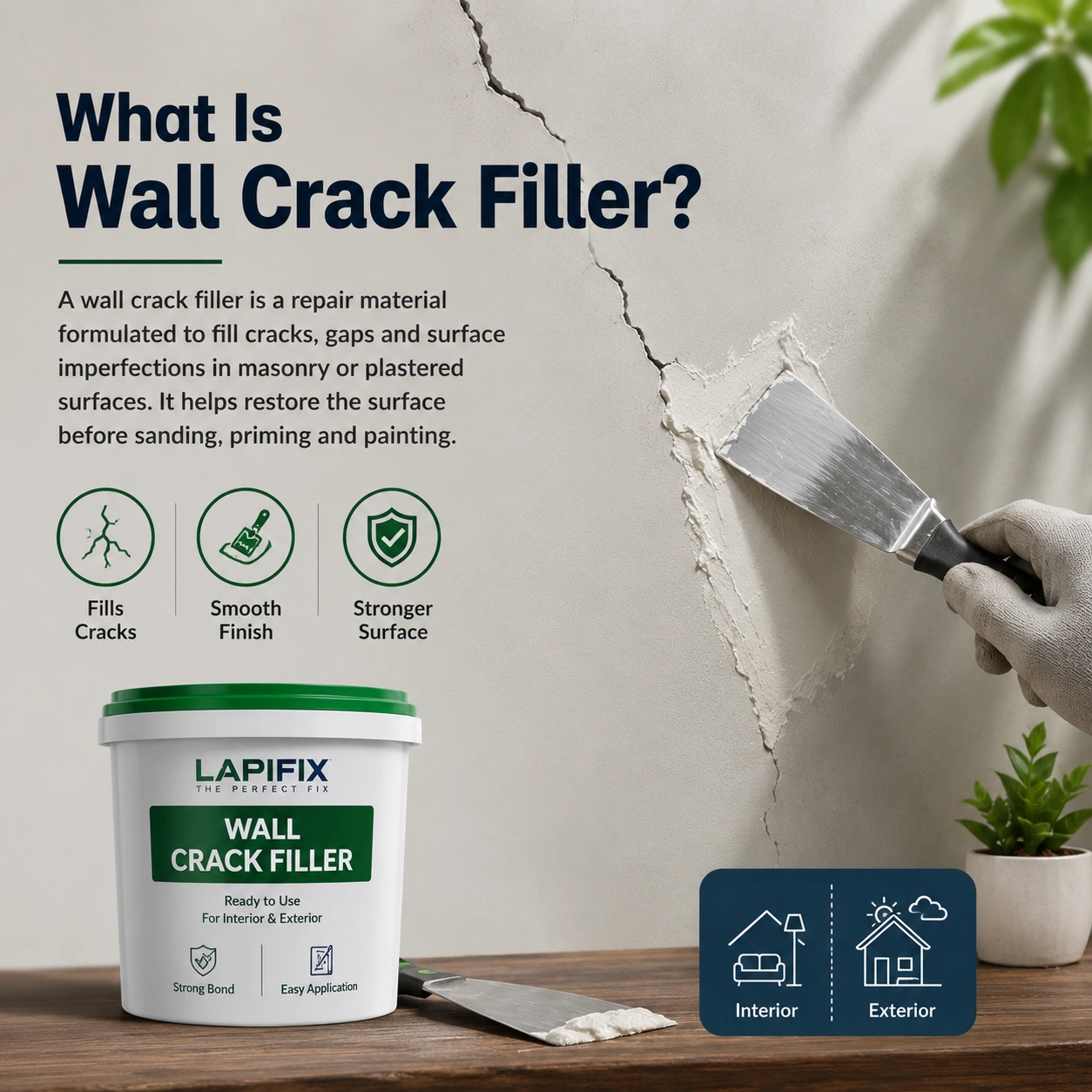
A wall crack filler is a repair material formulated to fill cracks, small gaps, surface imperfections and similar defects in masonry or plastered surfaces. The right product can help restore a damaged area before sanding, priming and painting.
The important thing to remember is that a crack represents a defect in the surface, not simply an ugly line. A suitable wall crack filler should bond effectively with the surrounding material and remain appropriate for the movement and exposure expected in that location. Interior plaster, exterior render and concrete may require different formulations.
For example, a hairline crack in an indoor plaster wall may need a different treatment from a wider crack exposed to rain, temperature changes or movement outdoors. Choosing based purely on the label "filler" can therefore be a little like buying running shoes because they look fast.
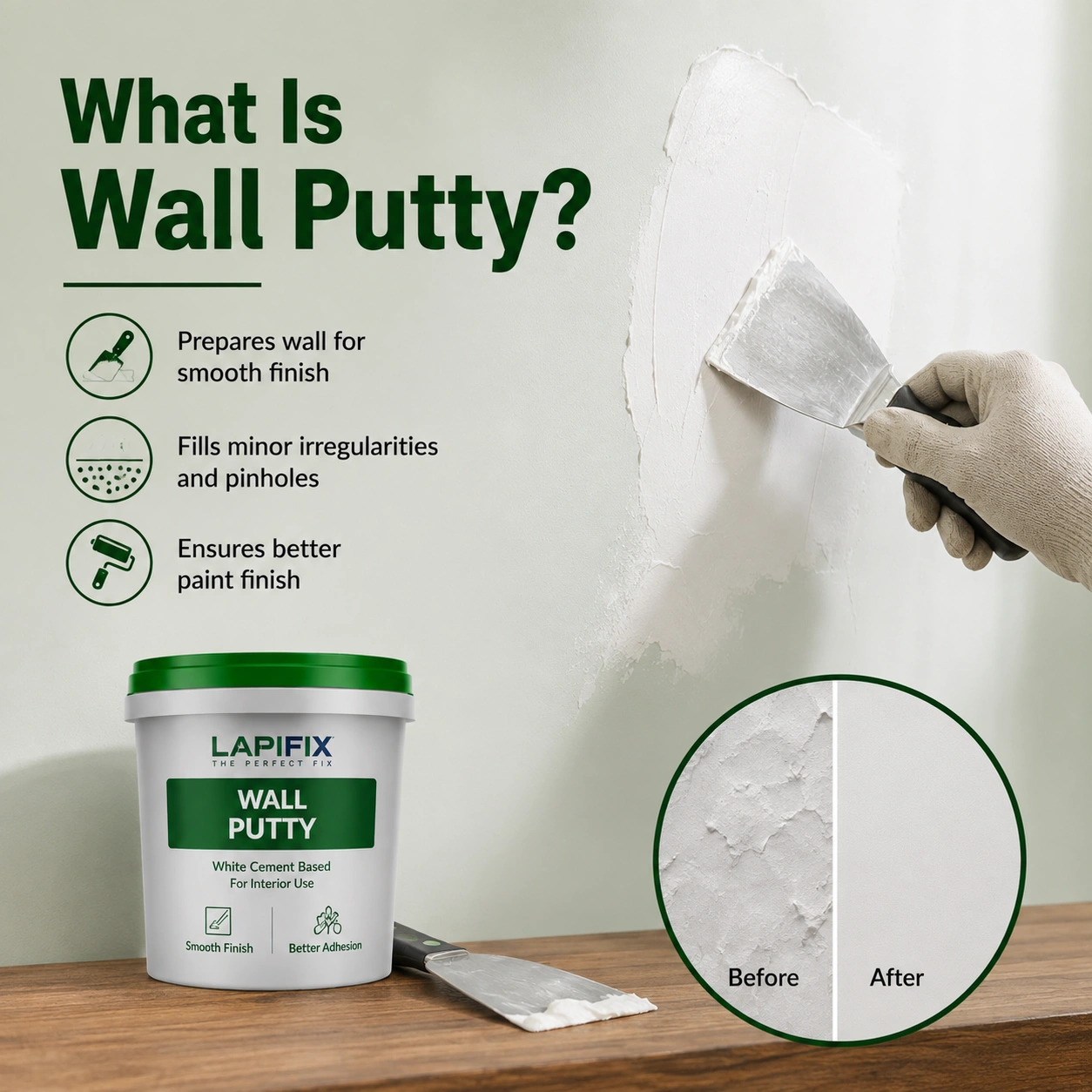
Wall putty primarily prepares a wall for a smooth decorative finish. It can help even out minor surface irregularities, pinholes and shallow imperfections before primer and paint. It is particularly useful when you want a consistent base that gives the final coating a cleaner appearance.
Wall putty should not automatically replace a dedicated crack repair compound. If you simply spread putty across a noticeable crack without addressing the defect underneath, the crack may reappear as the substrate moves or the repaired area fails to bond properly.
This distinction becomes especially important when preparing large walls. Putty can improve the overall surface, but a dedicated wall crack filler handles the repair stage. In a well-planned repair, you address the defect first and then prepare the surrounding surface for decoration.
The simplest way to understand the difference is to think of repair versus finishing. A wall crack filler deals with the damaged area, while putty focuses on creating a smooth surface for the next coating.
|
Feature |
Crack Filler |
Wall Putty |
|
Main purpose |
Repair cracks and gaps |
Smooth and level surfaces |
|
Best suited to |
Cracks, defects and voids |
Minor surface imperfections |
|
Typical stage |
Repair stage |
Surface preparation stage |
|
Hairline cracks |
Often suitable, depending on product |
Not always the best choice |
|
Final finish |
Repaired surface |
Smooth paint-ready surface |
|
Exterior use |
Product-dependent |
Product-dependent |
A good repair may actually use both materials. You might first use a wall crack filler to address the crack, allow it to cure as directed, sand or smooth the repaired area, and then use an appropriate finishing material where necessary.
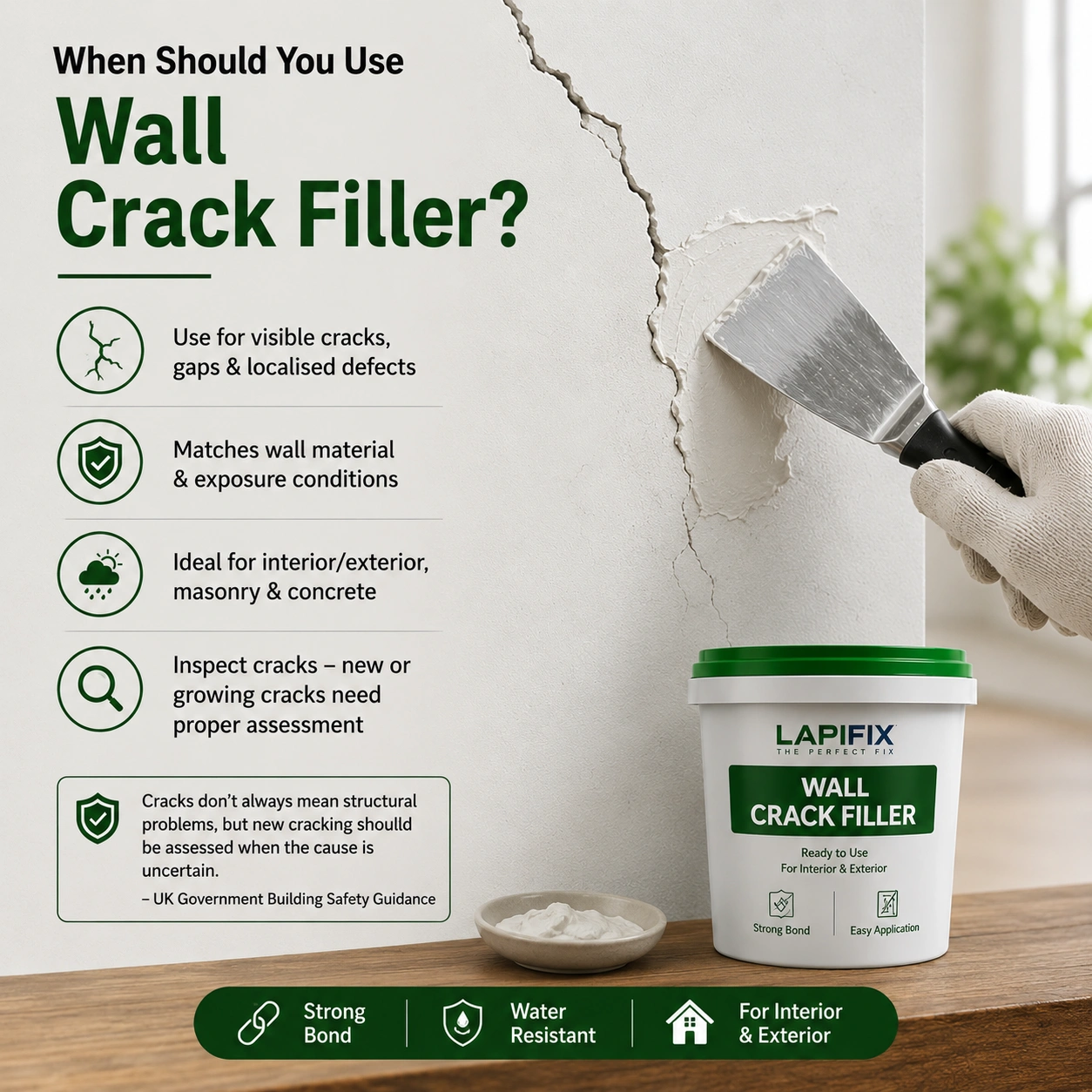
Use a wall crack filler when the main problem involves a visible crack, small gap or localised defect that needs filling before finishing. The exact product should match the wall material and exposure conditions.
For a narrow interior defect, a suitable hairline crack filler may provide a practical solution. For masonry, concrete or exterior surfaces, look for a formulation specifically designed for that substrate and environment. Moisture, temperature changes and movement can all influence how a repair performs.
You should also inspect the crack before filling it. A new crack that keeps growing deserves more attention than an old, stable cosmetic line. UK government building-safety guidance notes that cracks do not automatically indicate structural problems, but new cracking should be assessed when its cause or significance is uncertain.
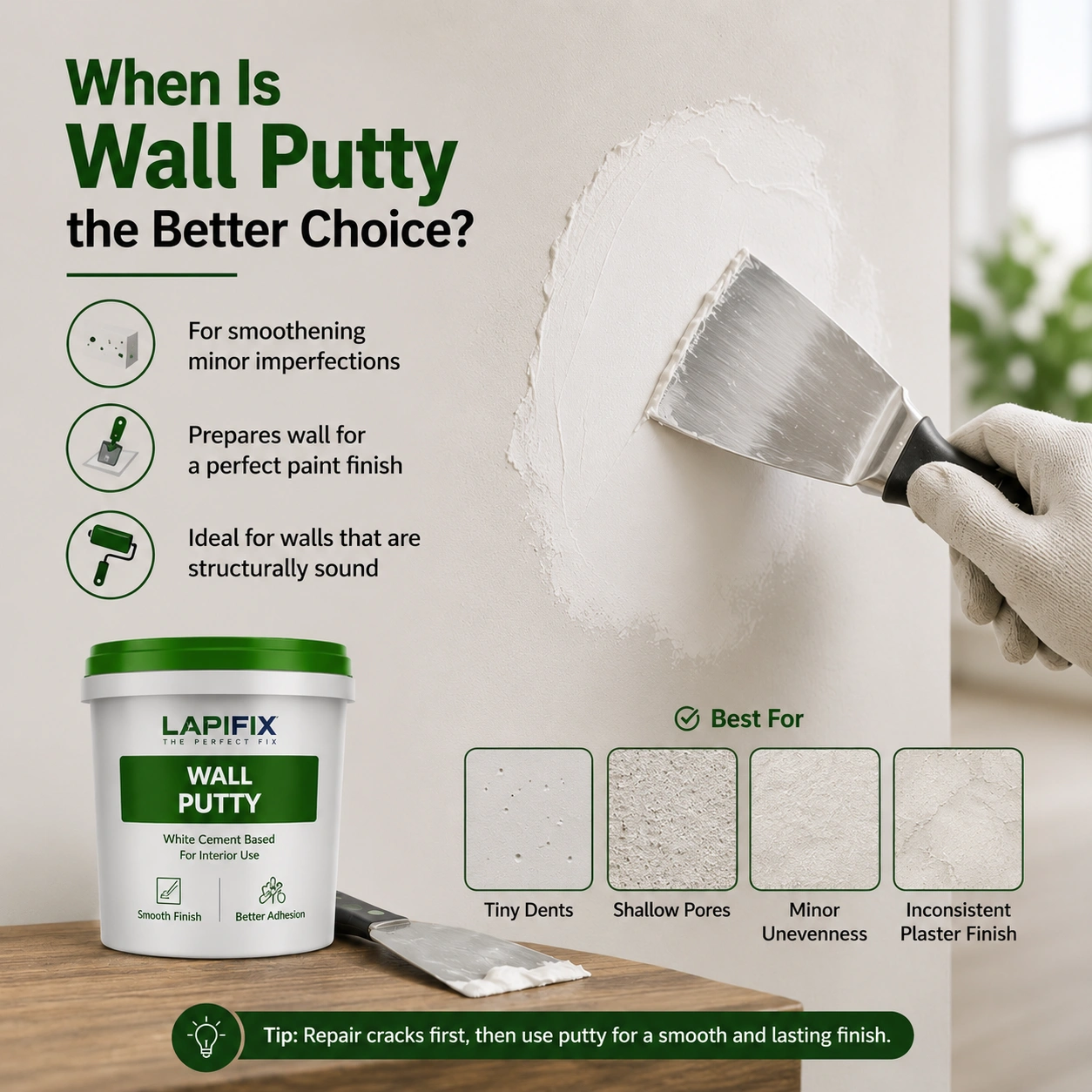
Wall putty makes more sense when your wall is generally sound but the surface needs refinement before painting. Think tiny dents, shallow pores, minor unevenness or areas where the plaster finish lacks consistency.
Suppose you're renovating a bedroom and the plaster looks structurally fine but feels rough under your hand. In that situation, spreading a suitable putty can help create a more uniform base. If you find a distinct crack during preparation, however, stop treating it like an ordinary surface imperfection and repair it appropriately first.
This sequence matters because paint is not a magic eraser. It can hide tiny imperfections temporarily, but it cannot reliably solve an active crack underneath.
An interior wall crack filler should match the surface and the type of defect. Plasterboard, plaster, masonry and other wall systems can behave differently, so always check the manufacturer's recommended substrates.
For small decorative cracks, ease of application and sanding can matter just as much as raw strength. You want a repair that fills the defect cleanly without creating an unnecessarily hard ridge around the damaged area.
Preparation also makes a difference. Remove loose material, dust and flaky paint around the crack before application. If the crack has an obvious underlying cause, such as recurring movement or moisture, address that issue rather than repeatedly filling the symptom.
Exterior repairs face a tougher environment. Rain, sunlight, temperature swings and moisture can put additional stress on the repair, so an exterior wall crack filler should specifically suit outdoor exposure and the substrate involved.
A concrete crack filler, for example, should be selected for concrete rather than assuming one universal filler will perform equally well on every surface. Rendered walls, masonry and concrete each have different characteristics.
Before repairing an exterior crack, check nearby gutters, downpipes, flashing, joints and drainage. Water can turn a minor surface defect into a recurring maintenance headache. If moisture enters through the wall, filling the visible crack without fixing the water source may simply move the problem around.
The application process depends on the product, but good preparation remains universal. Start by identifying whether the crack appears cosmetic and stable. Remove loose particles and flaky material, then clean the area so the repair material can make proper contact with the surrounding surface.
Follow the manufacturer's instructions for opening, mixing and applying the product. Some cracks may require slight preparation to remove weak edges and create a sound repair surface, while others may need a flexible treatment because of movement. Never widen a crack automatically without understanding why the product recommends that preparation.
Once the filler cures, smooth the repaired area as directed. Avoid sanding too aggressively, because you can create a shallow depression around the repair and make the finished wall look worse rather than better.
The final stage usually involves priming and painting the repaired area. Allowing adequate drying or curing time matters. Rushing because the wall "feels dry" can compromise the finish.
Hairline cracks are among the most common wall defects, and many remain cosmetic. They can develop from drying, minor shrinkage, thermal movement or normal building movement.
A hairline crack filler can work well when the defect is stable and the chosen product suits the wall. However, repeated cracking deserves investigation. If the same line returns after several repairs, the filler may not be the real issue.
Look at the pattern as well as the width. A single fine surface line is different from a rapidly growing crack accompanied by sticking doors, uneven floors, bulging walls or other signs of movement. In those situations, skip the DIY cosmetic fix and obtain appropriate professional advice.
A wall crack filler can repair a visible defect, but it cannot guarantee crack prevention when the underlying cause remains. This distinction saves a lot of frustration.
For example, if moisture continues entering through an exterior wall, repairing the visible crack without fixing the water source will not solve the complete problem. Likewise, if movement continues through a joint or substrate, a rigid repair may crack again.
Good crack prevention starts with understanding the wall. Control moisture, maintain exterior finishes, address drainage issues and use suitable materials for the expected movement. Repair becomes much more effective when you treat the cause as seriously as the cosmetic damage.
Concrete and masonry surfaces can develop cracks for several reasons, including shrinkage, settlement, temperature movement and local damage. The correct wall repair filler depends on the crack, substrate, location and expected exposure.
A product designed specifically for concrete may perform differently from a filler intended for interior plaster. Likewise, an exterior repair requires consideration of weather exposure that an indoor repair does not.
Before choosing a product, ask three simple questions: What material am I repairing? How wide and active is the crack? What conditions will the repair experience? Those questions usually lead you towards a much better product choice than simply picking the most convenient tub from the hardware shelf.
Most disappointing repairs do not happen because the person cannot spread filler. They happen because the preparation or product selection goes wrong.
Common mistakes include:
Applying filler over dust, loose paint or weak material.
Using wall putty as a substitute for a dedicated crack repair product.
Painting before the repair has properly cured.
Applying excessive material in one layer when the instructions call for multiple applications.
Ignoring recurring cracks or signs of movement.
Using an interior product on an exterior surface without checking suitability.
If you want consistent results, treat preparation as part of the repair rather than an annoying chore before the "real" work begins.
The best crack repair compound depends on the job, not simply the product's claimed strength. Check the recommended substrate, interior or exterior suitability, application thickness, drying or curing requirements and compatibility with your intended finish.
You should also consider whether the crack requires flexibility. A static cosmetic defect and a crack affected by ongoing movement present different repair challenges. Using the wrong product can produce a beautifully smooth repair that lasts about as long as a cheap umbrella in a storm.
For larger projects, buying based on technical information rather than packaging claims can help contractors and homeowners make more reliable decisions. Product documentation should clearly explain the intended application and limitations.
A wall crack sealant can be useful where flexibility and sealing against moisture or air matter. Sealants and fillers are not interchangeable, even though both can occupy a gap.
A sealant generally remains more flexible, while a conventional filler may provide a harder, sandable surface suitable for decorative finishing. The choice depends on the location and movement of the joint.
For example, a junction between different materials may experience movement that makes a flexible sealant more appropriate. A small stable plaster defect may instead suit a sandable filler designed for interior decoration.
Choosing the right repair material should start with the substrate and defect rather than the brand name. Lapifix can be considered as part of a broader construction-material selection process when you're comparing products for repair and finishing applications.
The same principle applies whether you're repairing one room or managing a larger building project: understand the defect, prepare the surface correctly and use a product designed for the conditions. That approach generally produces better results than trying to make one material do every job.
For contractors, consistency matters even more. A repeatable repair method helps different workers achieve a similar finish across multiple rooms, apartments or commercial spaces.
If you can see a genuine crack, start by assessing the crack rather than reaching for wall putty automatically. A suitable wall crack filler is generally the more logical choice when you need to fill the defect itself.
If the wall has no meaningful crack but has small surface imperfections, wall putty may make more sense as part of surface preparation. If both conditions exist, you may need a repair product first and a finishing product afterwards.
The smartest approach is therefore not really "filler versus putty". It is "repair first, finish second". Once you understand that sequence, choosing the material becomes much easier.
The choice between filler and putty becomes much simpler when you separate repair from finishing. Use the appropriate wall crack filler for a genuine crack or gap, while wall putty generally works better for smoothing and preparing an otherwise sound surface. Always consider the substrate, crack behaviour, indoor or outdoor exposure and manufacturer's instructions. Most importantly, do not treat a recurring or rapidly changing crack as purely cosmetic.
If you are planning a wall repair project and want to compare suitable construction materials, explore the available product range and choose according to the actual surface and repair conditions. A little extra attention during diagnosis and preparation can turn a frustrating repeat repair into a clean, professional-looking finish.
You can use wall putty for minor surface imperfections, but it should not automatically replace a dedicated crack repair product. A visible or recurring crack may require a material specifically designed to fill and accommodate that type of defect.
Some products are specifically formulated for exterior use, while others are intended only for interiors. Always check the manufacturer's instructions for weather exposure, substrate compatibility and recommended application conditions before using a product outdoors.
The best option depends on the wall material, crack characteristics and whether the crack remains stable. A suitable hairline crack filler can work well for minor cosmetic defects, but recurring or widening cracks require further assessment.
Yes, when a genuine crack exists, repair it before using putty as a general surface-finishing material. Filling the defect first gives you a more logical repair sequence and helps prevent the putty from simply masking the underlying problem.
Recurring cracks can result from ongoing movement, moisture, settlement, thermal changes or other substrate conditions. Reapplying filler without investigating the cause may only provide a temporary cosmetic improvement.