

Moisture is one of the biggest threats to the durability and structural integrity of any building. Whether it's a residential home, commercial complex, industrial facility, or infrastructure project, uncontrolled water penetration can cause serious damage over time. Common issues such as wall dampness, paint peeling, mold growth, structural cracks, and water leakage often result from inadequate moisture protection systems.
To address these problems, builders and property owners typically rely on two common solutions: waterproofing and damp proofing. Although these terms are often used interchangeably, they serve different purposes and provide different levels of protection.
Understanding the difference between Waterproofing vs Damp Proofing is essential for selecting the right solution for your building. Choosing the wrong method can lead to recurring moisture problems, expensive repairs, and reduced building lifespan.
In this guide, we'll explain how waterproofing and damp proofing work, their key differences, applications, benefits, and how to determine which solution is best for your project.
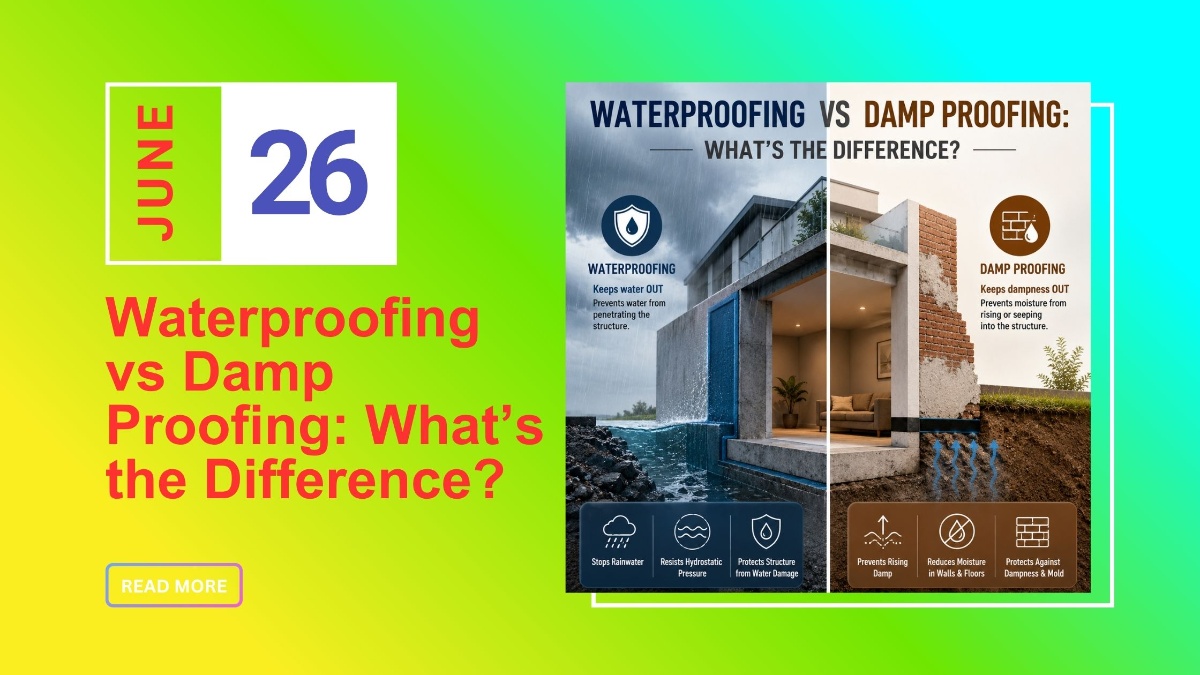
Waterproofing and damp proofing are both moisture protection methods used in construction, but they serve different purposes. Waterproofing completely prevents water penetration and protects structures exposed to direct water contact, standing water, or hydrostatic pressure. Damp proofing, on the other hand, is designed to resist moisture and control dampness in walls, floors, and foundations but does not stop significant water intrusion.
In simple terms, waterproofing provides complete water protection, while damp proofing provides moisture resistance.
|
Feature |
Waterproofing |
Damp Proofing |
|
Protection Level |
Complete water protection |
Moisture resistance |
|
Resists Water Pressure |
Yes |
No |
|
Suitable for Standing Water |
Yes |
No |
|
Common Applications |
Roofs, basements, bathrooms, water tanks |
Walls, floors, foundations |
|
Cost |
Higher |
Lower |
|
Durability |
Long-term water protection |
Basic moisture control |
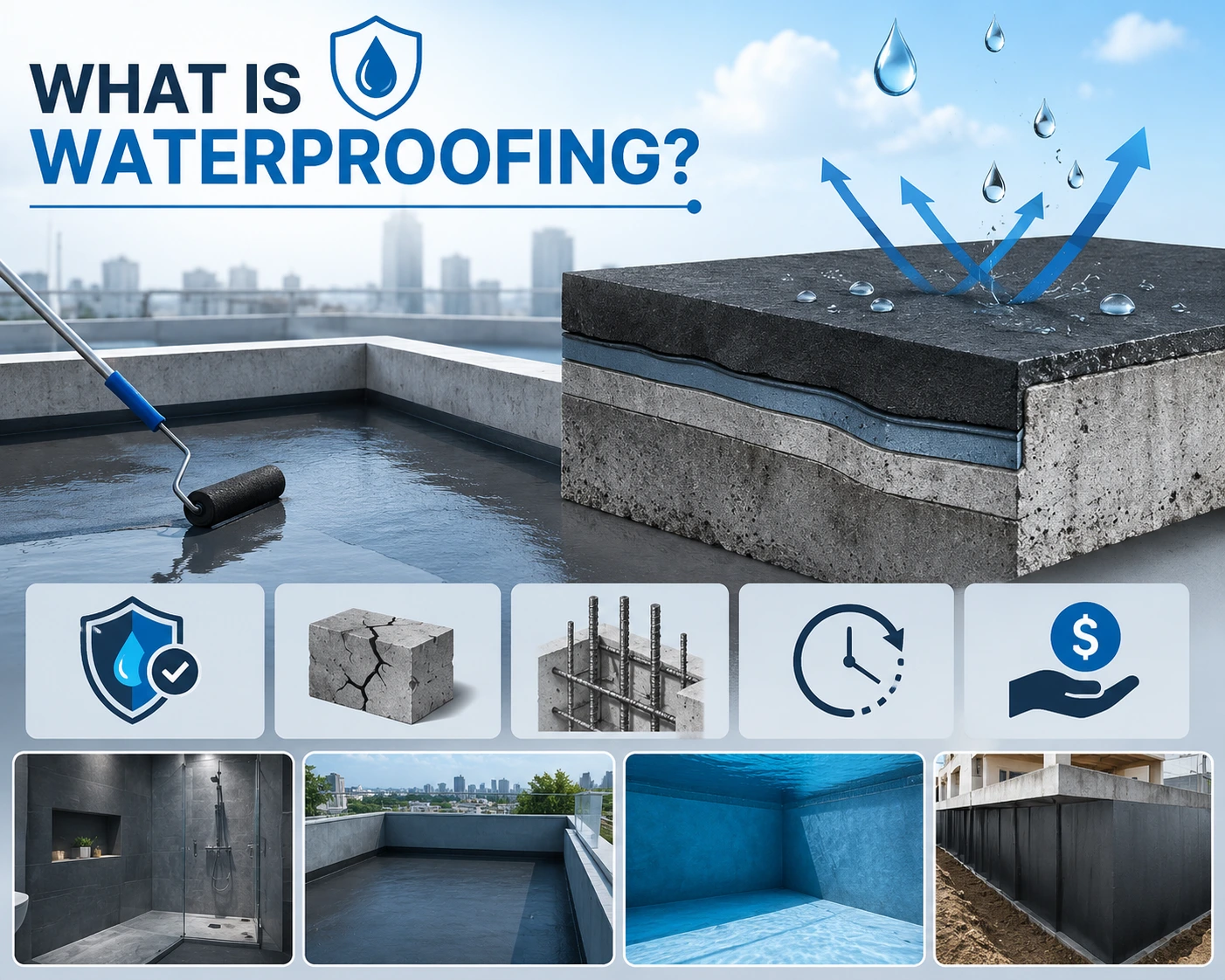
Waterproofing is a protective process that completely prevents water from penetrating a structure. It creates an impermeable barrier that blocks water entry, even in areas exposed to continuous moisture or standing water.
Waterproofing is widely used in modern construction to protect buildings from water damage and ensure long-term durability.
Waterproofing refers to the application of specialized materials and systems designed to make a surface completely resistant to water penetration.
Unlike moisture-resistant treatments, waterproofing provides full protection against water intrusion under various environmental conditions.
This makes waterproofing essential for areas that are constantly exposed to water pressure or heavy rainfall.
Waterproofing systems create a continuous protective layer over a surface. This barrier prevents water from entering the building structure and protects underlying materials from deterioration.
A properly installed waterproofing system helps:
Prevent water leakage
Reduce structural damage
Protect concrete and steel reinforcement
Extend building lifespan
Minimize maintenance costs
The effectiveness of waterproofing depends on the quality of materials used and proper surface preparation.
Several types of waterproofing products are used in modern construction.
These coatings form a seamless waterproof layer after curing and are commonly used on roofs, balconies, and terraces.
Cement-based waterproofing products are easy to apply and are often used in bathrooms, water tanks, and basements.
Bitumen-based waterproofing systems offer excellent water resistance and are widely used for foundations and underground structures.
Polyurethane coatings provide superior flexibility, crack-bridging ability, and long-term protection against water intrusion.
Waterproofing is recommended in areas exposed to direct water contact or continuous moisture.
Common applications include:
Roofs
Basements
Water tanks
Bathrooms
Swimming pools
Foundations
Balconies
Terraces
In these areas, waterproofing provides essential protection against water leakage and structural damage.
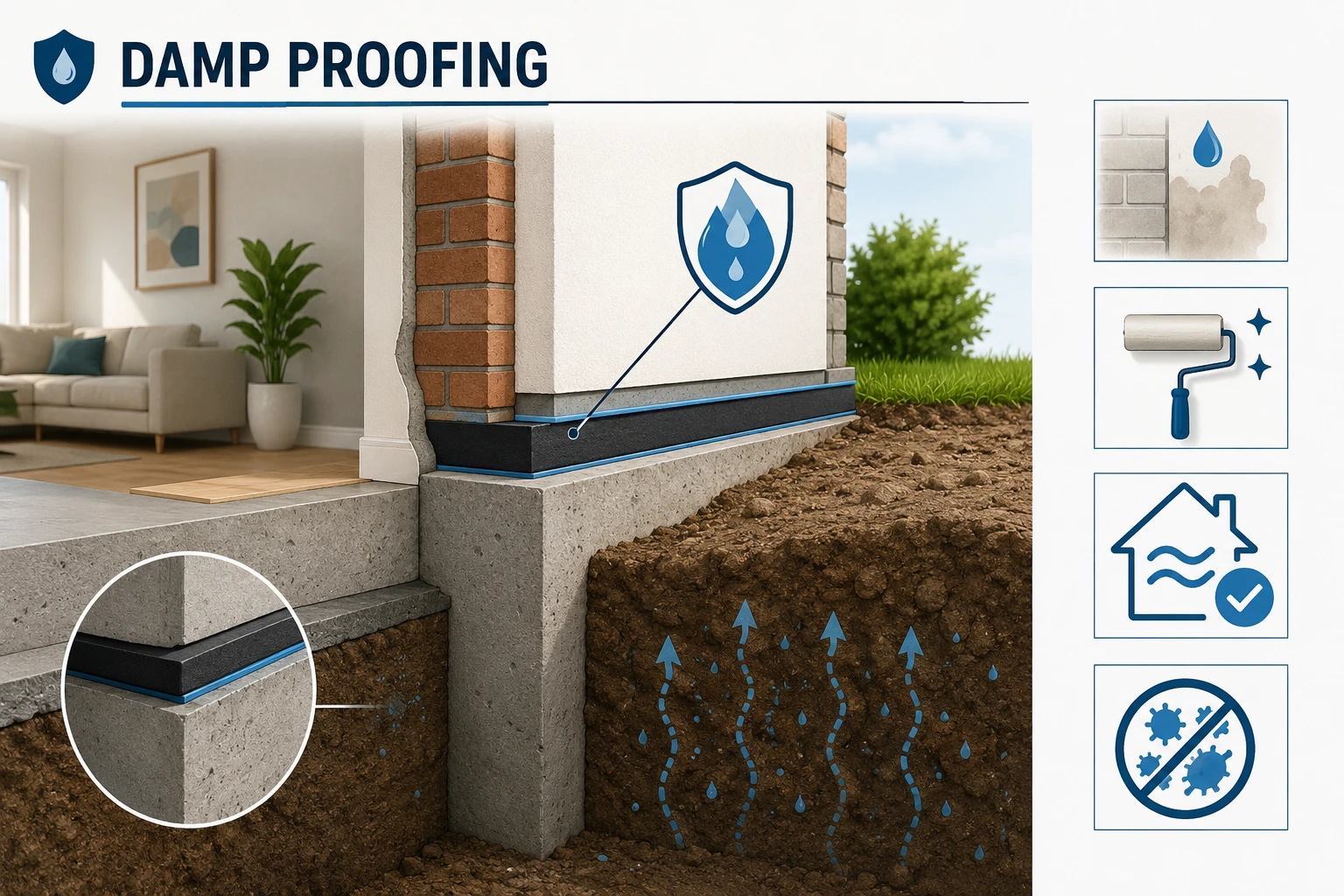
Damp proofing is a moisture-control method designed to reduce the movement of moisture through walls, floors, and foundations. Unlike waterproofing, damp proofing does not provide complete protection against water pressure or standing water.
Instead, it helps control dampness caused by ground moisture, humidity, and minor water exposure.
Damp proofing is the process of applying moisture-resistant materials that reduce the transfer of moisture through building elements.
Its primary purpose is to prevent damp conditions that can affect interior finishes and indoor comfort.
Damp proofing is commonly used in buildings where moisture is present but significant water exposure is unlikely.
Damp proofing creates a protective layer that slows down or blocks moisture migration through construction materials.
This helps:
Prevent damp patches
Reduce wall staining
Protect paint finishes
Improve indoor air quality
Minimize mold growth
While damp proofing can resist moisture, it is not designed to withstand hydrostatic water pressure.
Several materials are used to create damp-resistant barriers.
Bituminous products are commonly applied to foundations and walls to reduce moisture penetration.
Special membranes are installed within walls or floors to block rising damp.
Certain additives improve the moisture resistance of cement-based materials.
These treatments are injected into walls to create a barrier against moisture movement.
Damp proofing is generally used in areas exposed to moisture rather than direct water.
Common applications include:
Internal walls
External walls
Ground floors
Foundations
Crawl spaces
It provides an economical solution for managing dampness in residential and commercial buildings.
Although both methods protect buildings from moisture-related problems, their performance, applications, and protection levels differ significantly.
Provides complete protection against water penetration, even under water pressure.
Provides resistance against moisture and dampness but does not stop significant water intrusion.
Suitable for areas exposed to standing water, heavy rainfall, or continuous moisture.
Suitable for areas with low moisture exposure and limited water contact.
Commonly used for:
Roofs
Basements
Bathrooms
Water tanks
Swimming pools
Terraces
Typically used for:
Walls
Ground floors
Foundations
Crawl spaces
Liquid membranes
Cementitious coatings
Polyurethane systems
Bituminous membranes
Damp-proof membranes
Bituminous coatings
Chemical treatments
Waterproof admixtures
Waterproofing systems generally require higher investment due to advanced materials and installation requirements.
Damp proofing is typically more affordable because it provides basic moisture resistance rather than complete water protection.
High-quality waterproofing systems can provide long-term protection for many years when properly maintained.
Damp proofing systems can also be durable but may require additional protection if water exposure increases over time.
Modern construction projects increasingly rely on waterproofing systems to protect structures from environmental damage.
Water can weaken concrete, masonry, and reinforcement steel over time.
Proper waterproofing reduces corrosion and improves structural durability.
Buildings with effective waterproofing typically require fewer repairs and maintenance interventions.
Dry environments help maintain healthier indoor air quality.
Investing in waterproofing early can significantly reduce future repair expenses.
While waterproofing provides complete protection against water intrusion, damp proofing plays an equally important role in controlling moisture-related problems within buildings. Excess moisture can gradually damage walls, floors, finishes, and indoor environments, leading to costly maintenance and reduced property value.
Damp proofing helps manage moisture before it develops into a serious structural issue.
One of the primary purposes of damp proofing is to reduce moisture movement through walls and floors.
By creating a moisture-resistant barrier, damp proofing helps prevent:
Damp patches
Wall discoloration
Moisture stains
Interior surface damage
This is particularly beneficial in ground-floor areas and buildings located in humid regions.
Excess moisture often creates ideal conditions for mold, mildew, and fungal growth.
These issues can negatively affect indoor air quality and may contribute to health concerns such as:
Allergies
Respiratory discomfort
Unpleasant odors
Proper damp proofing helps maintain a healthier and more comfortable indoor environment.
Moisture can gradually damage decorative finishes and construction materials.
Damp proofing helps protect:
Paint coatings
Wallpaper
Decorative panels
Interior plaster
This improves the appearance and lifespan of interior surfaces while reducing maintenance requirements.
One of the most common signs of moisture problems is peeling or blistering paint.
When moisture penetrates walls, paint layers lose adhesion and begin to deteriorate.
Effective damp proofing minimizes moisture penetration and helps maintain long-lasting wall finishes.
Efflorescence appears as white powdery deposits on masonry surfaces.
It occurs when moisture carries salts through walls and deposits them on the surface as water evaporates.
Damp proofing helps reduce moisture movement and minimizes the occurrence of efflorescence in buildings.
Many property owners only discover water protection problems after visible damage occurs. Identifying early warning signs can help prevent costly repairs and structural deterioration.
Below are some common indicators that waterproofing may be required.
Roof leaks are one of the most obvious signs that a building requires waterproofing.
Common symptoms include:
Water dripping from ceilings
Damp ceiling patches
Stained plaster surfaces
Mold growth near roof areas
Proper roof waterproofing helps prevent water intrusion and extends roof lifespan.
Basements are particularly vulnerable to water penetration because they are located below ground level.
Signs of basement seepage include:
Wet walls
Standing water
Damp flooring
Mold formation
Basement waterproofing is often necessary to prevent long-term structural damage.
Bathrooms experience constant exposure to water and moisture.
Common warning signs include:
Water stains on adjacent walls
Damp ceilings below bathrooms
Cracked grout joints
Persistent moisture problems
Waterproofing membranes help protect bathrooms from hidden leakage issues.
Water tanks require reliable waterproofing systems to prevent leakage and water loss.
Signs of tank leakage may include:
Visible cracks
Water seepage
Damp surrounding surfaces
Continuous water loss
Timely waterproofing repairs help maintain structural integrity and water storage efficiency.
Structural cracks that allow water entry should never be ignored.
Water entering through cracks can:
Weaken concrete
Corrode reinforcement steel
Accelerate deterioration
Proper crack treatment combined with waterproofing helps prevent further damage.
Dampness often develops gradually and may not be immediately noticeable. Recognizing early symptoms can help property owners address moisture problems before they worsen.
Dark or wet patches on walls are among the most common indicators of moisture movement.
These patches often appear:
Near floor levels
Around foundations
On exterior-facing walls
Damp proofing can help control moisture migration and reduce recurring damp spots.
Moisture trapped behind painted surfaces can cause paint to peel, bubble, or crack.
This issue is particularly common in:
Ground-floor rooms
Bathrooms
Poorly ventilated spaces
Damp proofing helps protect painted surfaces and improve finish durability.
Persistent musty smells often indicate excessive moisture inside walls or floors.
These odors are commonly associated with:
Mold growth
Damp construction materials
Poor ventilation
Addressing moisture problems through damp proofing can significantly improve indoor conditions.
White powdery deposits on walls and masonry surfaces are a clear sign of moisture movement.
Efflorescence not only affects appearance but may also indicate deeper moisture-related issues within the structure.
Proper damp proofing helps minimize these deposits.
If walls remain damp despite repainting or surface repairs, the underlying moisture source has likely not been addressed.
In such cases, damp proofing may be required to provide long-term moisture control.
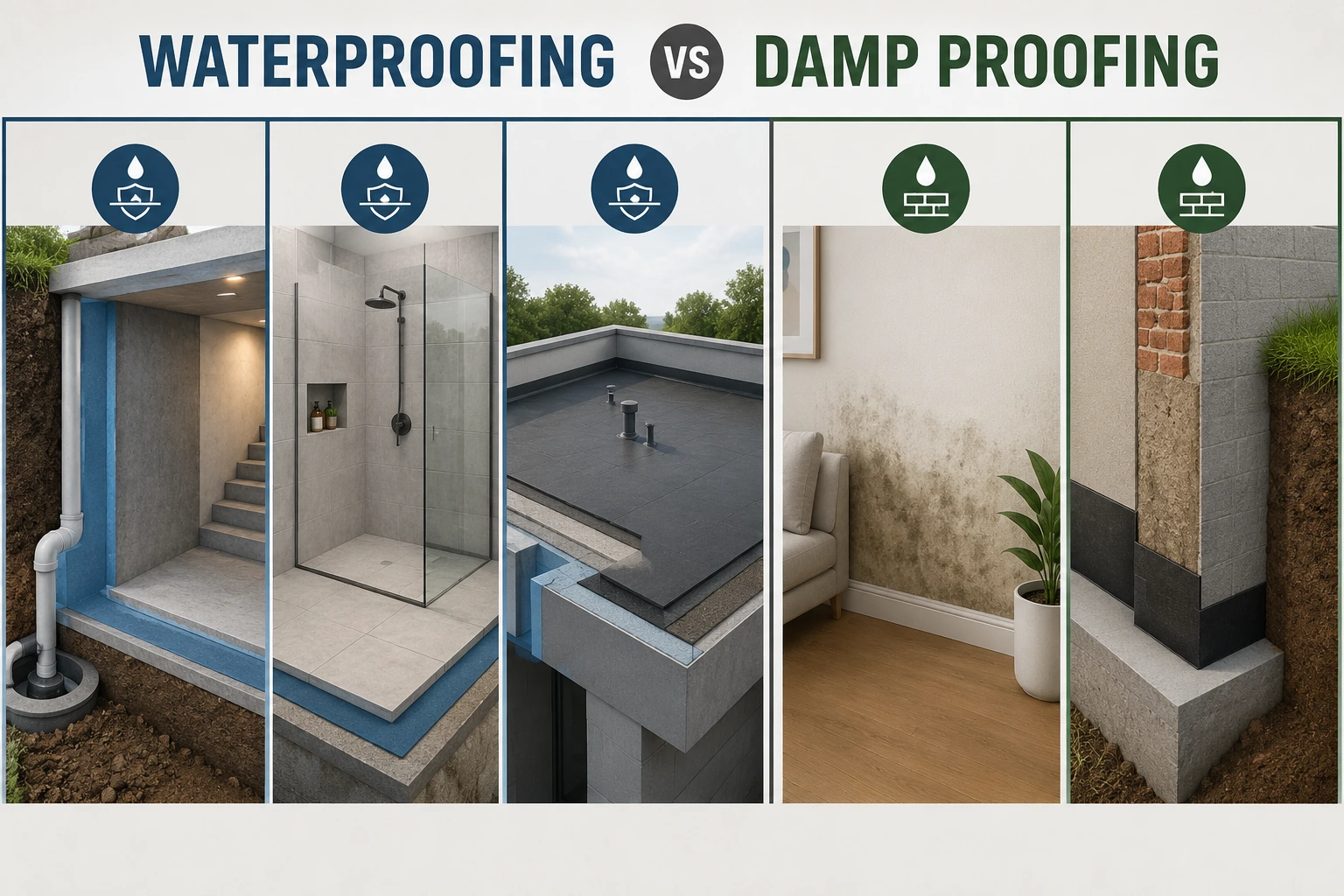
Choosing between Waterproofing vs Damp Proofing depends largely on the level of water exposure and the specific area of the building requiring protection.
Understanding where each system performs best can help prevent costly mistakes and improve long-term building durability.
Basements are exposed to groundwater pressure and moisture intrusion from surrounding soil.
Waterproofing provides the level of protection needed to prevent water seepage and structural damage.
Bathrooms experience constant water exposure from showers, sinks, and plumbing systems.
A complete waterproofing system helps prevent leakage and protects surrounding structures.
Roofs and terraces are directly exposed to rainwater and weather conditions.
Waterproofing membranes create a protective barrier that prevents water penetration and leakage.
Internal walls are typically affected by moisture rather than direct water exposure.
Damp proofing is often sufficient to control humidity-related issues and maintain wall integrity.
Ground floors and foundations may experience rising damp caused by moisture moving through the soil.
Damp proofing systems help reduce moisture migration and protect interior finishes.
In many construction projects, waterproofing and damp proofing are used together to provide comprehensive moisture protection.
Combining both systems can offer additional benefits in areas exposed to varying moisture conditions.
Using both systems helps:
Improve structural durability
Reduce maintenance costs
Minimize moisture-related damage
Enhance indoor comfort
Extend building lifespan
Foundations
Basements
External walls
Retaining walls
High-moisture environments
When properly designed, combined protection systems offer the highest level of defense against both water penetration and dampness.
Modern construction projects use various waterproofing systems depending on the type of structure, exposure conditions, and performance requirements. Choosing the right waterproofing method is essential for ensuring long-term protection against water damage and structural deterioration.
Below are the most commonly used Waterproofing Solutions in residential, commercial, and industrial construction.
Cementitious waterproofing is one of the most widely used methods because it is simple to apply and highly effective for moisture-prone areas.
It is commonly used in:
Bathrooms
Water tanks
Basements
Internal wet areas
Swimming pools
Easy application
Cost-effective solution
Excellent adhesion to concrete
Suitable for positive water pressure
This method is popular for both new construction and renovation projects.
Liquid membrane systems create a seamless waterproof layer after application.
The coating is typically applied using:
Rollers
Brushes
Spray equipment
Flexible waterproof barrier
Seamless finish
Crack-bridging capability
Easy maintenance
Liquid waterproofing is commonly used for:
Roofs
Balconies
Terraces
Podiums
Polyurethane waterproofing provides superior flexibility and long-term durability.
This system is highly resistant to:
Water penetration
UV exposure
Temperature variations
Surface movement
Flat roofs
Exposed terraces
Parking decks
Commercial buildings
Polyurethane coatings are often chosen for projects requiring premium waterproofing performance.
Bituminous waterproofing uses asphalt-based materials to create a durable water-resistant barrier.
This method is frequently used for:
Foundations
Retaining walls
Underground structures
Roof systems
Excellent water resistance
Strong adhesion
Long service life
Suitable for below-ground applications
Bituminous systems remain one of the most trusted waterproofing methods in the construction industry.
Sheet membrane systems consist of prefabricated waterproof sheets installed over the surface.
These membranes provide:
Uniform thickness
Consistent protection
High durability
Reliable waterproof performance
Basements
Roofs
Tunnels
Foundation structures
Professional installation is important to ensure proper joint sealing and long-term effectiveness.
Damp proofing methods are designed to control moisture movement within building elements. These systems help prevent dampness, improve indoor comfort, and protect finishes from moisture-related damage.
Below are the most common Damp Proofing Methods used in modern construction.
A Damp Proof Course is one of the oldest and most effective damp proofing solutions.
It involves installing a moisture-resistant layer within walls to prevent rising damp from the ground.
Prevents moisture migration
Protects wall finishes
Reduces damp patches
Improves building durability
DPC systems are commonly installed during new construction projects.
Bituminous coatings are also widely used for damp proofing applications.
These coatings create a moisture-resistant barrier that helps reduce water absorption.
Foundations
Ground-contact walls
Basement walls
External surfaces
Bituminous damp proofing offers a practical and economical moisture-control solution.
Surface treatments involve applying moisture-resistant coatings directly to walls and floors.
These products help:
Reduce moisture penetration
Improve wall protection
Prevent paint deterioration
Enhance surface durability
Surface damp proofing is commonly used during building maintenance and renovation projects.
Chemical injection systems are often used to treat existing buildings affected by rising damp.
The process involves injecting specialized chemicals into walls to create a moisture-resistant barrier.
Suitable for renovation projects
Minimal structural disruption
Effective rising damp control
Long-lasting protection
This method is widely used in older buildings experiencing persistent dampness issues.
Waterproof admixtures are additives mixed into concrete or mortar to improve moisture resistance.
Benefits include:
Reduced water absorption
Improved durability
Better resistance to dampness
Enhanced structural performance
These admixtures are commonly used in foundations, walls, and floor systems.
Choosing the wrong moisture protection system can lead to expensive repairs and long-term structural issues. Understanding common mistakes helps property owners make informed decisions.
One of the most common mistakes is using damp proofing where waterproofing is actually required.
Areas exposed to:
Standing water
Heavy rainfall
Hydrostatic pressure
typically require complete waterproofing rather than simple damp proofing.
Small leaks often become major structural problems if left untreated.
Early signs such as:
Damp patches
Ceiling stains
Water seepage
Mold growth
should be addressed immediately.
The effectiveness of any moisture protection system depends heavily on product quality.
Poor-quality materials may result in:
Premature failure
Reduced durability
Higher maintenance costs
Always select products from trusted manufacturers.
Even the best waterproofing products can fail if surfaces are not prepared correctly.
Before application:
Clean the surface thoroughly
Repair cracks
Remove loose materials
Ensure proper curing
Good preparation significantly improves system performance.
Moisture-related issues rarely resolve on their own.
Delaying repairs can lead to:
Structural damage
Mold growth
Interior deterioration
Higher repair expenses
Timely intervention helps protect both the building and its occupants.
Selecting the right solution depends on the building's exposure conditions and moisture risks.
Determine whether the area experiences:
Direct water contact
Standing water
Ground moisture
Humidity exposure
This helps identify whether waterproofing or damp proofing is required.
Understanding the source of moisture is critical.
Common sources include:
Rainwater
Groundwater
Plumbing leaks
Condensation
Rising damp
Different problems require different solutions.
Moisture protection requirements vary depending on whether the project is:
Residential
Commercial
Industrial
Infrastructure-related
The selected system should match the building's functional requirements.
Professional evaluation helps ensure accurate diagnosis and appropriate system selection.
Experts can recommend the most effective solution based on:
Site conditions
Exposure levels
Budget considerations
Long-term performance goals
Quality materials deliver:
Better protection
Longer service life
Reduced maintenance
Improved return on investment
Investing in proven waterproofing solutions helps protect the building for years to come.
The effectiveness of any moisture protection system depends heavily on the quality of materials used. Even the best application techniques may fail if low-quality waterproofing products are selected. Investing in reliable products helps ensure long-term protection, reduced maintenance costs, and improved building durability.
Whether you choose waterproofing or damp proofing, product quality plays a critical role in overall performance.
Premium waterproofing products are designed to withstand harsh environmental conditions and prolonged water exposure.
High-quality materials provide:
Strong water resistance
Better adhesion
Improved flexibility
Enhanced crack-bridging performance
These characteristics help prevent leakage and structural deterioration over time.
Quality waterproofing systems typically last much longer than low-grade alternatives.
Advantages include:
Reduced repair frequency
Improved durability
Consistent performance
Better weather resistance
Long-lasting protection helps property owners maximize their investment.
Moisture-related repairs can be expensive and disruptive.
Using premium waterproofing products helps reduce:
Leak repairs
Surface restoration
Paint replacement
Structural maintenance
Lower maintenance requirements translate into significant long-term savings.
Water can weaken concrete, corrode steel reinforcement, and damage masonry structures.
Quality waterproofing systems help protect:
Foundations
Roofs
Walls
Basements
Structural components
This contributes to greater building stability and longevity.
Although premium waterproofing products may have a higher initial cost, they often deliver superior value over the building's lifespan.
Benefits include:
Lower maintenance expenses
Longer protection periods
Improved property value
Reduced risk of structural damage
For most projects, quality waterproofing provides a stronger long-term return on investment.
Modern waterproofing technologies have significantly improved moisture protection in construction projects. Today's products offer better performance, easier application, and longer service life compared to traditional methods.
As a result, builders, architects, and contractors increasingly prefer advanced waterproofing systems.
Many modern waterproofing products are designed for quick and efficient installation.
Benefits include:
Reduced labor time
Faster project completion
Simplified application process
Improved productivity
This helps contractors meet project deadlines more effectively.
Advanced waterproofing systems are engineered to withstand:
Extreme weather conditions
UV exposure
Temperature fluctuations
Structural movement
Improved durability ensures long-term building protection and reduced maintenance.
Small cracks often develop naturally as buildings settle and materials expand or contract.
Modern waterproofing membranes can bridge minor cracks and maintain protection even when slight movement occurs.
This helps prevent water infiltration and structural damage.
Today's waterproofing technologies provide superior defense against:
Water leakage
Dampness
Groundwater intrusion
Rainwater penetration
Enhanced protection improves building performance and occupant comfort.
Builders prefer systems that continue performing effectively for many years.
Reliable waterproofing solutions offer:
Consistent protection
Reduced repair requirements
Better structural preservation
Increased building lifespan
These advantages make modern waterproofing an essential component of quality construction.
Selecting the right moisture protection system depends on the level of water exposure, building design, and long-term performance requirements. In areas exposed to direct water contact or hydrostatic pressure, such as roofs, basements, water tanks, swimming pools, terraces, and bathrooms, waterproofing is generally the recommended solution because it provides complete protection against water penetration.
Damp proofing is more suitable for controlling moisture migration in walls, foundations, crawl spaces, and ground-floor areas where dampness is present but continuous water exposure is unlikely.
For optimal results, the moisture source should be accurately identified before selecting a protection system. In complex projects or where recurring moisture problems exist, consulting qualified waterproofing professionals or construction experts can help ensure the most effective and durable solution for the structure.
Understanding Waterproofing vs Damp Proofing is essential for choosing the right moisture protection system for your building. While damp proofing helps control moisture and reduce dampness, waterproofing provides complete protection against water penetration and is recommended for areas exposed to significant water contact.
The right solution depends on the level of moisture exposure, building type, and application area. In many cases, combining waterproofing and damp proofing can provide comprehensive protection and improve long-term building performance.
By investing in quality products and proper installation, property owners can protect their structures from moisture damage, reduce maintenance costs, and extend the lifespan of their buildings.
The main difference is the level of protection. Waterproofing provides complete protection against water penetration, while damp proofing only resists moisture and dampness.
Neither is universally better. Waterproofing is ideal for areas exposed to water, while damp proofing is suitable for controlling moisture in walls and foundations.
No. Damp proofing is designed to control moisture, not withstand significant water pressure or active leaks. Waterproofing is required for water leakage protection.
Generally, yes. Waterproofing systems typically involve more advanced materials and provide a higher level of protection, resulting in a higher initial cost.
Waterproofing is commonly required in:
Roofs
Bathrooms
Basements
Swimming pools
Water tanks
Terraces
Foundations
Damp proofing is suitable for:
Internal walls
Ground floors
Foundations
Areas affected by rising damp
Buildings exposed to moderate moisture
Yes. Many projects use both systems together for enhanced moisture protection, particularly in foundations, basements, and external walls.
The lifespan depends on the product type, installation quality, and environmental conditions. High-quality waterproofing systems can last many years with proper maintenance.
Common causes include:Waterproofing vs Damp Proofing
Identifying the source is essential for selecting the correct solution.
Liquid membrane waterproofing and polyurethane waterproofing are among the most popular and effective solutions for roofs because they provide seamless protection and excellent weather resistance.