

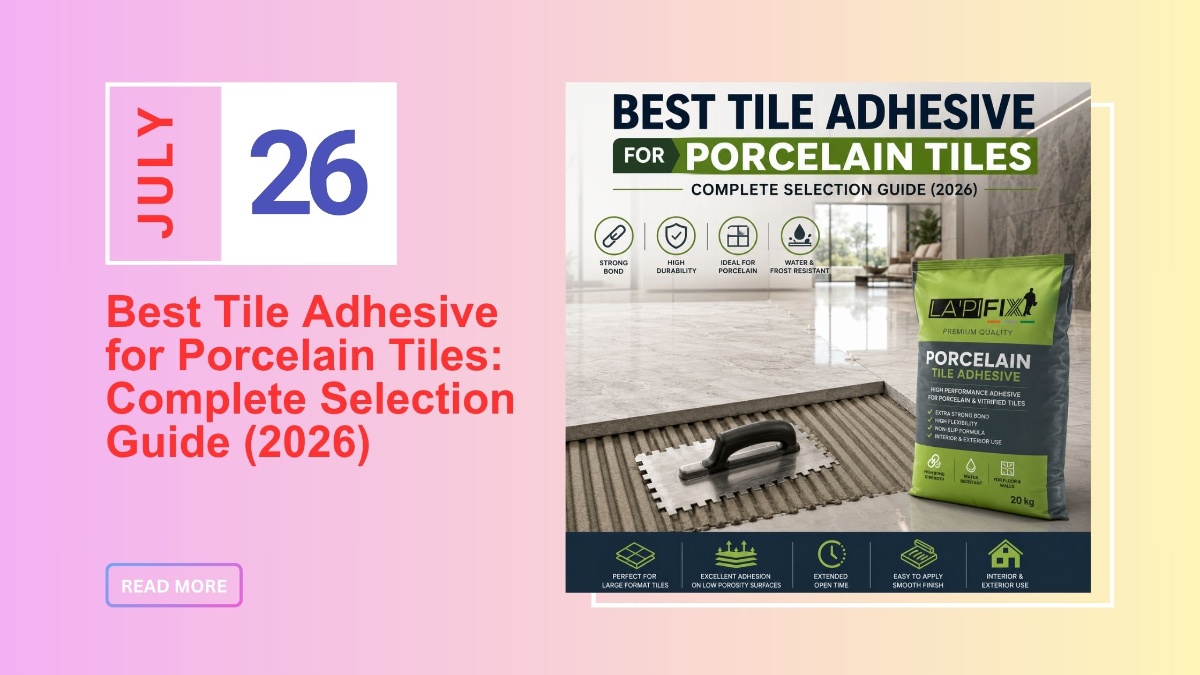
Porcelain tiles have become the first choice for modern homes, luxury hotels, commercial buildings, and outdoor spaces across the world. Their elegant appearance, low water absorption, and exceptional durability make them suitable for almost every application. Yet many beautiful tile installations fail for one surprisingly simple reason—the wrong adhesive.
If you've ever seen a porcelain tile detach from a wall or heard that unsettling hollow sound when tapping on a newly installed floor, chances are the adhesive wasn't designed for the job. Porcelain is denser than ceramic, heavier than many natural materials, and far less forgiving during installation. Choosing the correct tile adhesive for porcelain tiles isn't just another buying decision; it's what determines whether your installation lasts five years or twenty.
Whether you're renovating a bathroom, installing a large-format living room floor, or working on a commercial project, understanding adhesive performance can save time, money, and future repairs. If you're still comparing different adhesive categories, our detailed Tile Adhesive Guide: Types, Uses and Benefits provides an excellent starting point before selecting the right product for porcelain applications.
Many people assume all tile adhesives perform the same way. That's a costly misconception.
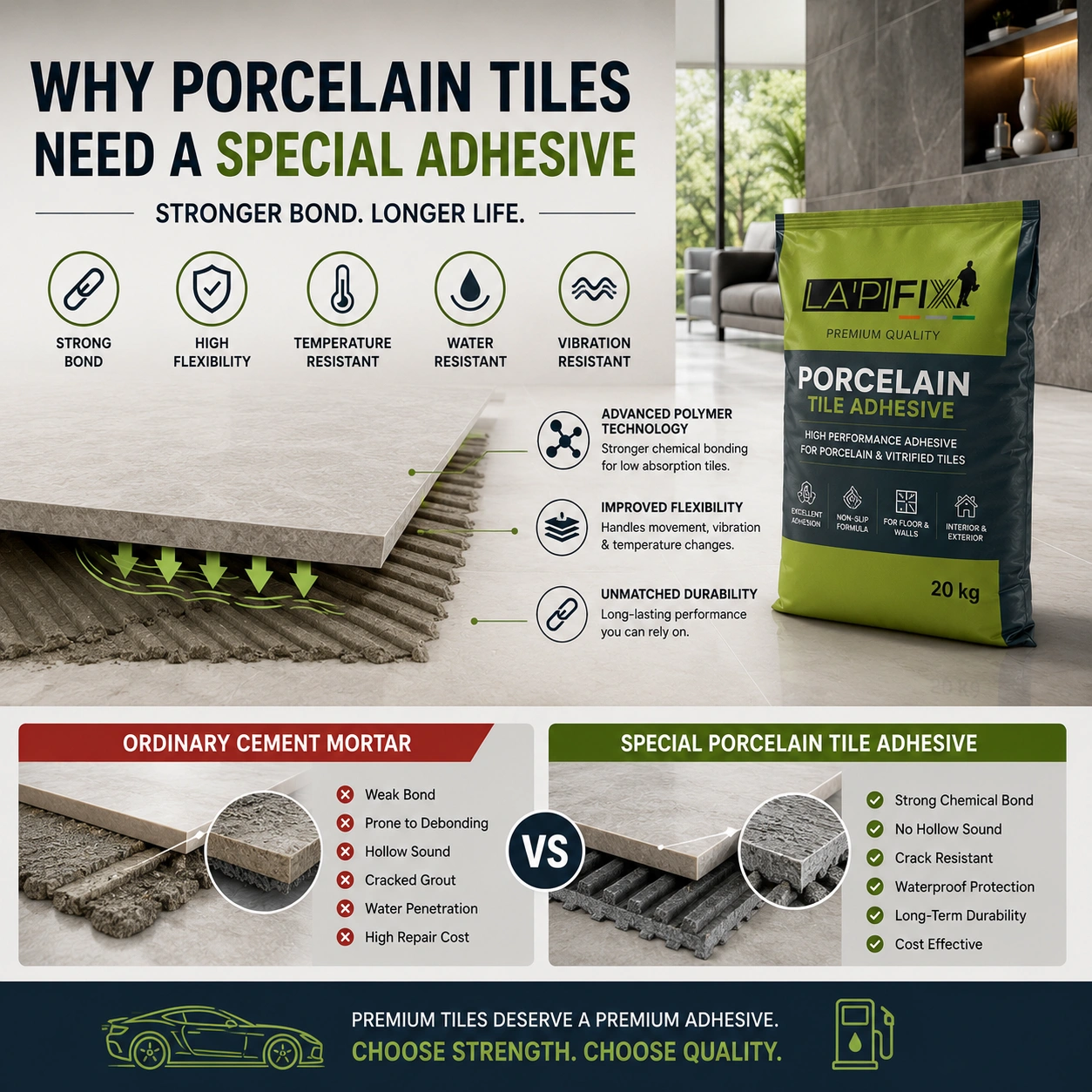
Porcelain tiles are manufactured under extremely high pressure and fired at very high temperatures, resulting in water absorption below 0.5%. While this makes them incredibly durable, it also means ordinary cement mortar struggles to create a reliable bond. Instead of absorbing moisture like traditional ceramic tiles, porcelain leaves very little room for mechanical grip.
A quality porcelain tile adhesive is formulated with advanced polymers that create stronger chemical bonding. These additives improve flexibility, adhesion, and resistance to movement caused by temperature changes, moisture, and structural vibration.
In practical terms, using the right adhesive helps prevent:
Tile debonding over time
Hollow-sounding installations
Cracked grout joints
Water penetration behind tiles
Expensive repair work
Think of porcelain like a luxury sports car. You wouldn't fill it with the cheapest fuel available. Likewise, premium tiles deserve an adhesive engineered specifically for their performance requirements.
Selecting the right adhesive isn't about buying the most expensive product. It's about matching the adhesive's technical properties with your project requirements.
Several factors influence adhesive performance, including tile size, substrate condition, environmental exposure, and installation location. For example, a residential kitchen floor has very different demands compared to a swimming pool or an exterior façade exposed to weather year-round.
The best tile adhesive for porcelain tiles generally includes polymer modification, high bond strength, extended open time, and flexibility. These characteristics ensure reliable adhesion while allowing the installation to accommodate minor structural movement without cracking.
Choosing the right adhesive depends on the tile material, installation environment, and performance requirements. The table below provides a quick reference to help you match the most suitable adhesive with different tile types.
|
Tile Type |
Recommended Adhesive |
Best For |
|
Ceramic Tiles |
C1 Tile Adhesive |
Standard indoor wall and floor applications with light to moderate traffic. |
|
Porcelain Tiles |
C2TE S1 Tile Adhesive |
Dense porcelain tiles requiring high bond strength, flexibility, and long-term durability. |
|
Large-Format Porcelain Tiles |
Flexible Polymer Modified Tile Adhesive |
Large porcelain slabs and oversized tiles that require excellent coverage and deformation resistance. |
|
Marble & Natural Stone |
Natural Stone Tile Adhesive |
Marble, limestone, and other natural stones that require strong bonding and reduced risk of staining. |
|
Granite Tiles |
Heavy Duty Tile Adhesive |
Thick, heavy granite installations for residential and commercial projects. |
|
Swimming Pools & Wet Areas |
Waterproof Flexible Tile Adhesive |
Swimming pools, fountains, spas, bathrooms, and continuously wet environments. |
Professional installers often recommend a polymer modified tile adhesive because it offers better workability and long-term durability than conventional cement-based mortar.
Rather than focusing on brand names alone, evaluate products based on technical performance.
|
Feature |
Why It Matters |
|
High Bond Strength |
Keeps heavy porcelain tiles securely attached |
|
Polymer Modification |
Improves adhesion and flexibility |
|
Slip Resistance |
Prevents wall tiles from sliding during installation |
|
Extended Open Time |
Allows easier adjustment of tile alignment |
|
Flexible Performance |
Reduces stress from thermal expansion |
|
Water Resistance |
Suitable for wet areas and outdoor installations |
If you've looked at premium adhesives, you've probably noticed technical codes like C2TE S1. At first glance, they seem confusing, but they're actually helpful indicators of performance.
Professional Installation Tip: Before fixing porcelain tiles, ensure the substrate is clean, level, and structurally sound. For large-format tiles, use a properly sized 12–15 mm notched trowel (depending on the tile size and substrate) together with back-buttering to maximise adhesive contact. Professional installers aim for at least 95% adhesive coverage beneath large-format porcelain tiles to minimise hollow spots and improve long-term performance.
A C2TE S1 tile adhesive is a cement-based adhesive tested under internationally recognised performance standards. Each letter represents a specific characteristic that contributes to installation quality.
C2 indicates improved adhesion strength.
T means reduced slip, making wall installations easier.
E represents extended open time for better workability.
S1 confirms the adhesive has deformability, allowing it to accommodate minor movement without losing bond strength.
These properties make this type of adhesive particularly suitable for porcelain tiles, porcelain slabs, and other demanding installations where durability is essential.
For internationally recognised adhesive classifications and testing methods, installers can also refer to the European Commission's harmonised construction standards
Large-format porcelain tiles have transformed modern architecture. Their minimal grout joints create a seamless, luxurious appearance that designers love. However, as tile size increases, so do installation challenges.
A 1200×2400 mm porcelain slab behaves very differently from a standard floor tile. Larger tiles place significantly greater stress on the adhesive layer, making coverage consistency more important than ever.
The best tile adhesive for large porcelain tiles provides high grab, excellent flexibility, and sufficient working time to achieve nearly complete adhesive coverage beneath the tile. Professionals generally recommend back-buttering alongside notched trowel application to eliminate air pockets.
In professional installations, large-format porcelain tiles are commonly installed using a 12–15 mm notched trowel, depending on the tile size and substrate condition. Installers also back-butter each tile to achieve at least 95% adhesive coverage, which helps eliminate voids that can lead to hollow spots, cracking, or tile debonding over time.
When selecting a large format tile adhesive, also consider substrate flatness. Even the highest-quality adhesive cannot compensate for poorly prepared surfaces.
Not every installation faces the same environmental conditions. That's why adhesive selection should always begin with understanding where the tiles will be installed.
|
Installation Area |
Recommended Adhesive |
|
Bathroom Walls |
Flexible adhesive for porcelain tiles |
|
Living Room Floors |
High strength tile adhesive |
|
Commercial Spaces |
Heavy duty tile adhesive |
|
Outdoor Patio |
Exterior tile adhesive |
|
Balcony |
Outdoor tile adhesive |
|
Swimming Pool |
Swimming pool tile adhesive |
|
Large Porcelain Slabs |
C2TE S1 tile adhesive |
|
Natural Stone |
Marble tile adhesive or granite tile adhesive |
A project-specific approach almost always delivers better long-term performance than trying to use one adhesive for every situation. Whether you're renovating a bathroom, installing a commercial floor, or working on a luxury villa, selecting the correct tile adhesive for porcelain tiles ensures stronger bonding, better durability, and fewer maintenance issues over the life of the installation.
People often use the terms vitrified and porcelain interchangeably, but they are not always the same. Both are manufactured at high temperatures and have low water absorption, yet porcelain tiles are generally denser and heavier. That extra density demands stronger bonding performance.
An adhesive for vitrified tiles may work well for standard floor applications, but large porcelain tiles, porcelain slabs, or premium polished porcelain usually benefit from a polymer modified tile adhesive with higher flexibility and bond strength. Choosing an adhesive based solely on price can lead to hollow spots, cracked grout, or even tile failure over time.
If you're unsure which product fits your project, check the tile manufacturer's recommendations and match them with the adhesive's technical specifications rather than relying on generic labels.
Walls and floors experience different types of stress, so the adhesive should match the application.
Wall installations depend heavily on slip resistance. The adhesive must hold heavy porcelain tiles in place immediately after installation without allowing them to slide. This is especially important for bathrooms, kitchens, and feature walls with large-format tiles.
Floor installations, on the other hand, must withstand continuous foot traffic, furniture loads, and occasional impact. A high strength tile adhesive provides the durability needed to resist compression while maintaining a secure bond.
For commercial projects, hotels, shopping centres, and office buildings, using a heavy duty tile adhesive helps ensure long-term performance even under demanding conditions.
Natural stone installations deserve the same attention as porcelain. Materials such as marble and granite vary in weight, thickness, and moisture sensitivity, making adhesive selection even more critical.
A quality natural stone tile adhesive offers strong bonding while reducing the risk of staining or discolouration caused by excess moisture. Likewise, a marble tile adhesive should provide excellent support without affecting the stone's appearance, while a granite tile adhesive must deliver high bond strength to handle the additional weight.
Many premium polymer-modified adhesives are suitable for both porcelain and selected natural stones, making them a versatile choice for mixed-material projects.
Outdoor installations face challenges that indoor floors never experience. Rain, sunlight, freezing temperatures in colder regions, and daily expansion and contraction all put pressure on the adhesive layer.
An exterior tile adhesive is specifically designed to resist moisture, temperature fluctuations, and environmental stress. Whether you're installing tiles on a balcony, terrace, garden pathway, or building façade, flexibility is just as important as bond strength.
Similarly, an outdoor tile adhesive should maintain its performance despite changing weather conditions. Premium flexible adhesives reduce the risk of cracks and tile detachment, helping outdoor surfaces remain safe and attractive for years.
Projects in coastal or humid regions should also prioritise water-resistant adhesive systems to minimise long-term maintenance.
Swimming pools create one of the most demanding environments for any tile installation. Constant immersion, water treatment chemicals, and hydrostatic pressure require an adhesive that performs far beyond standard residential applications.
A dedicated swimming pool tile adhesive provides exceptional bond strength while resisting prolonged exposure to water. It also works well with waterproofing systems to create a durable installation that can withstand continuous use.
For commercial pools, spas, fountains, and wellness centres, professional installers typically combine premium adhesive with compatible grout and waterproof membranes to maximise durability.
One of the biggest misconceptions in tile installation is assuming drying and curing mean the same thing. They don't.
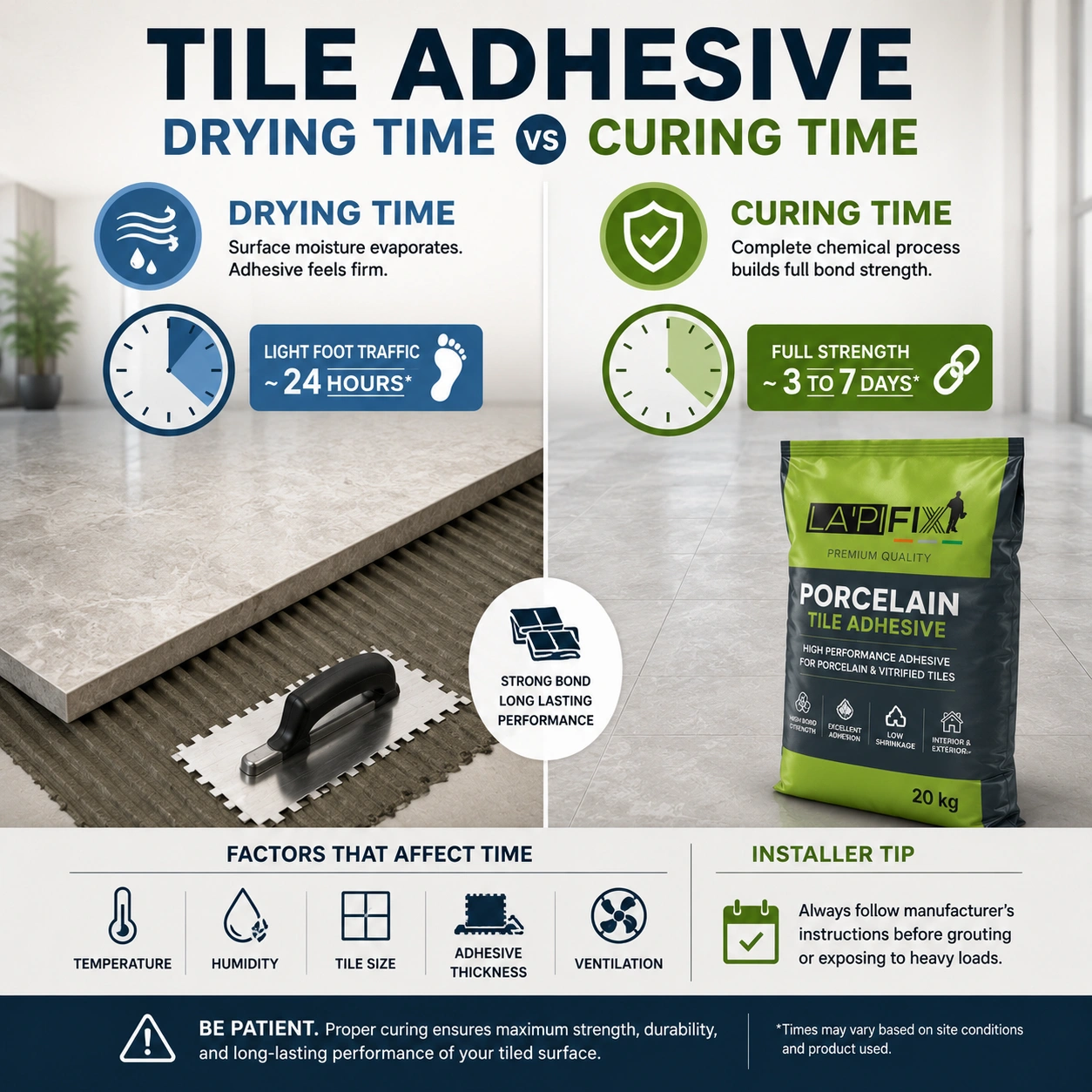
Drying refers to the stage where surface moisture evaporates, making the adhesive feel firm enough for light activity. Curing is the complete chemical process that develops the adhesive's full bond strength.
Several factors influence tile adhesive drying time, including room temperature, humidity, tile size, adhesive thickness, and ventilation. Larger porcelain tiles slow moisture evaporation because they absorb very little water.
Tile adhesive curing time usually takes longer than the initial drying period. Although some fast-setting products allow light foot traffic within 24 hours, full curing often requires several days. Always follow the manufacturer's instructions before grouting or exposing the installation to heavy loads.
Experienced installers also avoid rushing the process. Walking on newly installed porcelain tiles before the adhesive has fully cured can weaken the bond and compromise the long-term performance of the installation, especially when working with large-format tiles.
Being patient during curing is one of the simplest ways to improve the longevity of your tiled surface.
Even the best adhesive cannot compensate for poor installation practices. Many tile failures occur because basic preparation steps are skipped.
The most common mistakes include:
Using ordinary cement mortar instead of a specialised porcelain tile adhesive.
Installing over dusty, uneven, or unstable substrates.
Applying insufficient adhesive beneath large-format tiles.
Ignoring expansion joints in large floor areas.
Walking on newly installed tiles before the adhesive has fully cured.
Mixing the adhesive with incorrect water ratios.
Choosing indoor adhesive for exterior applications.
Many tile failures are not caused by the quality of the porcelain tile itself but by poor substrate preparation or inadequate adhesive coverage. Small air pockets beneath large tiles can concentrate stress during everyday use, increasing the likelihood of cracking or debonding over time.
Avoiding these errors dramatically improves installation quality and reduces the likelihood of costly repairs.
When selecting adhesive, think beyond today's installation and consider how the surface will perform years from now.
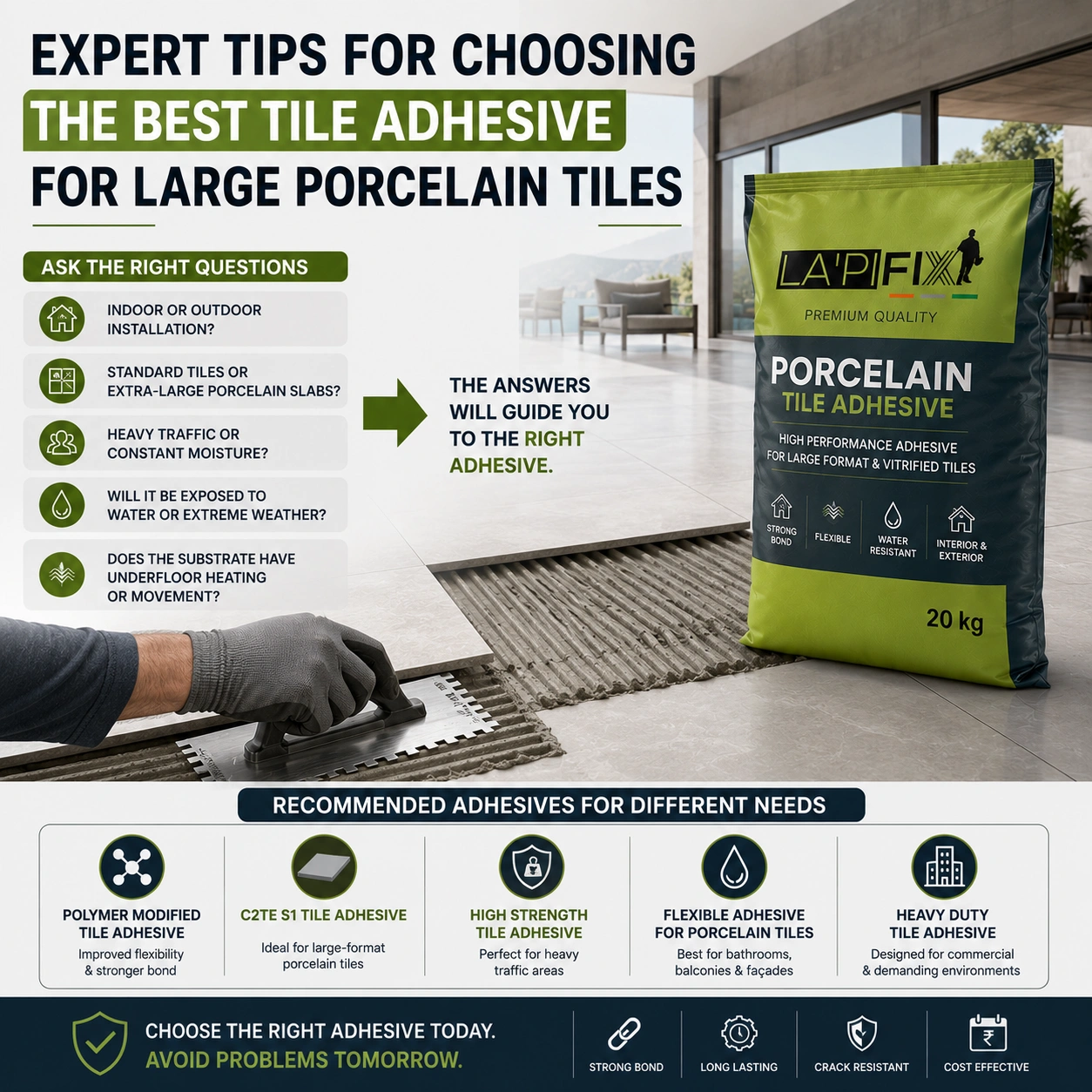
Ask yourself a few practical questions. Will the tiles be installed indoors or outdoors? Are they standard size or extra-large porcelain slabs? Will they experience heavy traffic or constant moisture? Does the substrate have underfloor heating or slight movement?
The answers will guide you toward the right product.
For most premium residential and commercial projects, professionals recommend:
Polymer modified tile adhesive for improved flexibility.
C2TE S1 tile adhesive for large-format porcelain installations.
High strength tile adhesive for heavy traffic areas.
Flexible adhesive for porcelain tiles in bathrooms, balconies, and façades.
Heavy duty tile adhesive for commercial environments.
Choosing the correct adhesive at the beginning costs far less than repairing a failed installation later.
Every successful tile installation begins with quality materials. At Lapifix, we develop advanced tile adhesive solutions designed to meet the demands of modern construction projects worldwide.
Our product range includes solutions for porcelain tiles, porcelain slabs, vitrified tiles, natural stone, marble, granite, swimming pools, exterior façades, commercial flooring, and high-performance residential applications. Each formulation is engineered to deliver reliable bond strength, excellent workability, and long-lasting durability under real-world conditions.
Whether you're a homeowner planning your first renovation or a contractor managing a large commercial project, choosing the right adhesive can make all the difference.
Choosing the right tile adhesive for porcelain tiles is about much more than sticking tiles to a surface. The best tile adhesive for porcelain tiles delivers reliable bonding, long-term durability, moisture resistance, and confidence that your installation will perform beautifully for years.
The correct adhesive improves bond strength, accommodates movement, resists moisture, and protects your investment for years to come. Whether you're installing porcelain slabs, vitrified tiles, marble, granite, or outdoor paving, matching the adhesive to the application ensures a safer, stronger, and longer-lasting finish.
If you're looking for reliable, high-performance tile adhesive solutions, Lapifix is here to help. Explore our complete range of premium products and connect with our team for expert guidance on selecting the ideal adhesive for your next project. Visit our Tile Adhesive Product Page today and discover solutions designed for professional results across residential, commercial, and industrial applications.
The best tile adhesive for porcelain tiles is typically a polymer modified C2TE S1 adhesive that provides excellent bond strength, flexibility, reduced slip, and long-term durability. Choosing a premium tile adhesive for porcelain tiles is especially important for large-format installations, porcelain slabs, and areas exposed to moisture or heavy traffic.
No. Regular cement mortar is generally unsuitable because porcelain absorbs very little water. A specialised tile adhesive for porcelain tiles creates a much stronger bond and significantly reduces the risk of hollow tiles, cracking, and tile debonding over time.
Large porcelain slabs require a large format tile adhesive with excellent flexibility and high bond strength. Professional installers also recommend back-buttering the tiles to achieve maximum adhesive coverage and reduce air pockets beneath the surface.
Although drying times vary, most tile adhesives require at least 24 hours before grouting under normal conditions. Complete curing may take several days depending on temperature, humidity, tile size, and the specific adhesive formulation. Always follow the manufacturer's instructions for the best results.
Some premium polymer modified adhesives are suitable for porcelain tiles as well as selected natural stones such as marble and granite. However, always confirm compatibility with both the tile manufacturer and adhesive manufacturer before installation, especially for moisture-sensitive stone.