

Tiles are a popular choice for kitchens and bathrooms because they are durable and easy to maintain. However, the strength and longevity of tiled surfaces also depend on the quality of grout used between the tiles. In moisture-prone areas, using the right grout is essential to prevent water damage and maintain a clean appearance.
This is where Waterproof Tile Grout for Kitchen and Waterproof Tile Grout for Bathroom becomes important. High-quality waterproof tile grout helps seal tile joints and prevents water from seeping beneath the tiles. It also reduces the risk of stains, mold growth, and tile loosening over time.
Using waterproof grout for tiles ensures better protection in wet environments like sinks, showers, and kitchen backsplashes. Choosing the right tile grout for kitchen and bathroom applications helps maintain durability, hygiene, and long-lasting performance of tiled surfaces.
Waterproof tile grout is a specially formulated material used to fill the gaps between tiles while preventing water from penetrating the surface. Unlike traditional grout, it contains advanced additives such as polymers or epoxy resins that create a strong and moisture-resistant seal. This makes waterproof grout for tiles ideal for areas exposed to frequent water contact.
The primary purpose of waterproof grout for tile joints is to protect the underlying surface from moisture damage. It helps maintain the stability of tiles while preventing problems like mold growth, staining, and grout deterioration. Because of its strong bonding and water-resistant properties, waterproof grout for tile is commonly used in kitchens, bathrooms, showers, and other wet areas where durability and hygiene are important.
Kitchens and bathrooms are constantly exposed to moisture, spills, and humidity. If tile joints are not properly sealed, water can seep into the gaps and cause stains, mold growth, and tile damage. Using Waterproof Tile Grout for Kitchen and Waterproof Tile Grout for Bathroom helps prevent these issues and protects tiled surfaces.
A quality bathroom waterproof grout creates a strong barrier that stops water from penetrating tile joints, especially in showers and wet floors. Similarly, kitchen tile grout waterproof solutions help protect tiles from spills, steam, and daily cleaning.
Using waterproof grout for wet areas improves durability, maintains hygiene, and ensures tiles remain strong and attractive for a longer time.
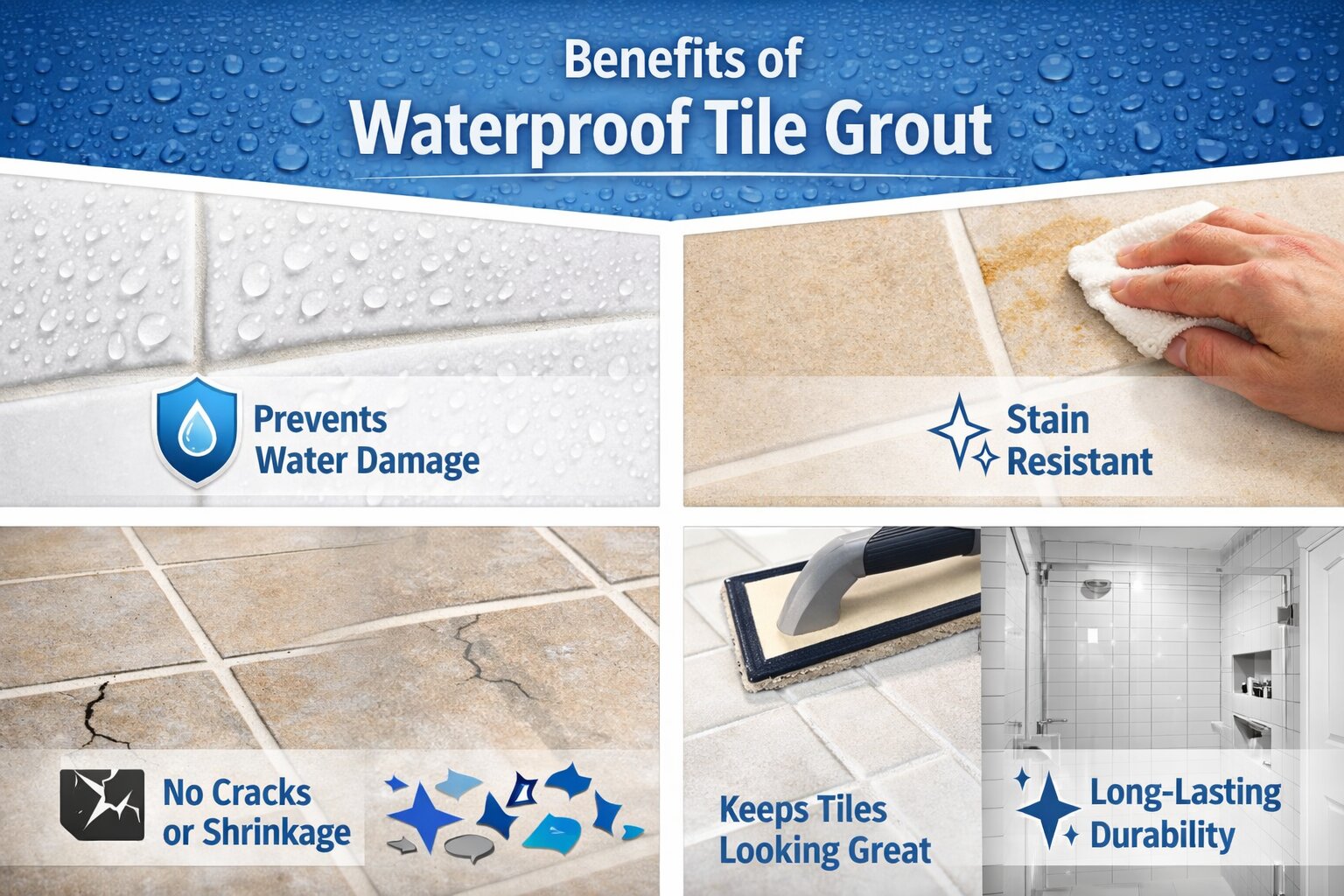
Using waterproof tile grout is essential for maintaining durable and hygienic tiled surfaces in kitchens and bathrooms. Unlike regular grout, waterproof grout is specially designed to resist moisture and protect tile joints from damage. This makes it a reliable solution for both residential and commercial tiled areas.
One of the biggest advantages of using waterproof grout for wet areas is its ability to stop water from entering tile joints. It forms a strong protective barrier that prevents moisture from seeping beneath the tiles. This helps protect the substrate and reduces the risk of long-term structural damage.
Kitchens and bathrooms are prone to stains from cooking oils, soap, shampoo, and cleaning products. High-quality waterproof grout for wall tiles helps resist stains and keeps grout lines looking clean and fresh. This makes maintenance easier and improves the overall hygiene of tiled surfaces.
Low-quality grout can crack or shrink over time due to moisture exposure and temperature changes. The best waterproof tile grout is designed to maintain flexibility and strength, reducing the chances of cracks forming in tile joints.
Tiles installed in bathrooms, showers, and kitchens are constantly exposed to water and humidity. Using waterproof grout for floor tiles ensures long-term durability, even in high-moisture environments. It helps keep tiles firmly in place and protects the entire installation.
Apart from functionality, waterproof grout also enhances the visual appeal of tiled surfaces. Smooth and well-protected grout lines create a clean and polished finish, improving the overall look of floor tiles and wall tiles in modern kitchens and bathrooms.
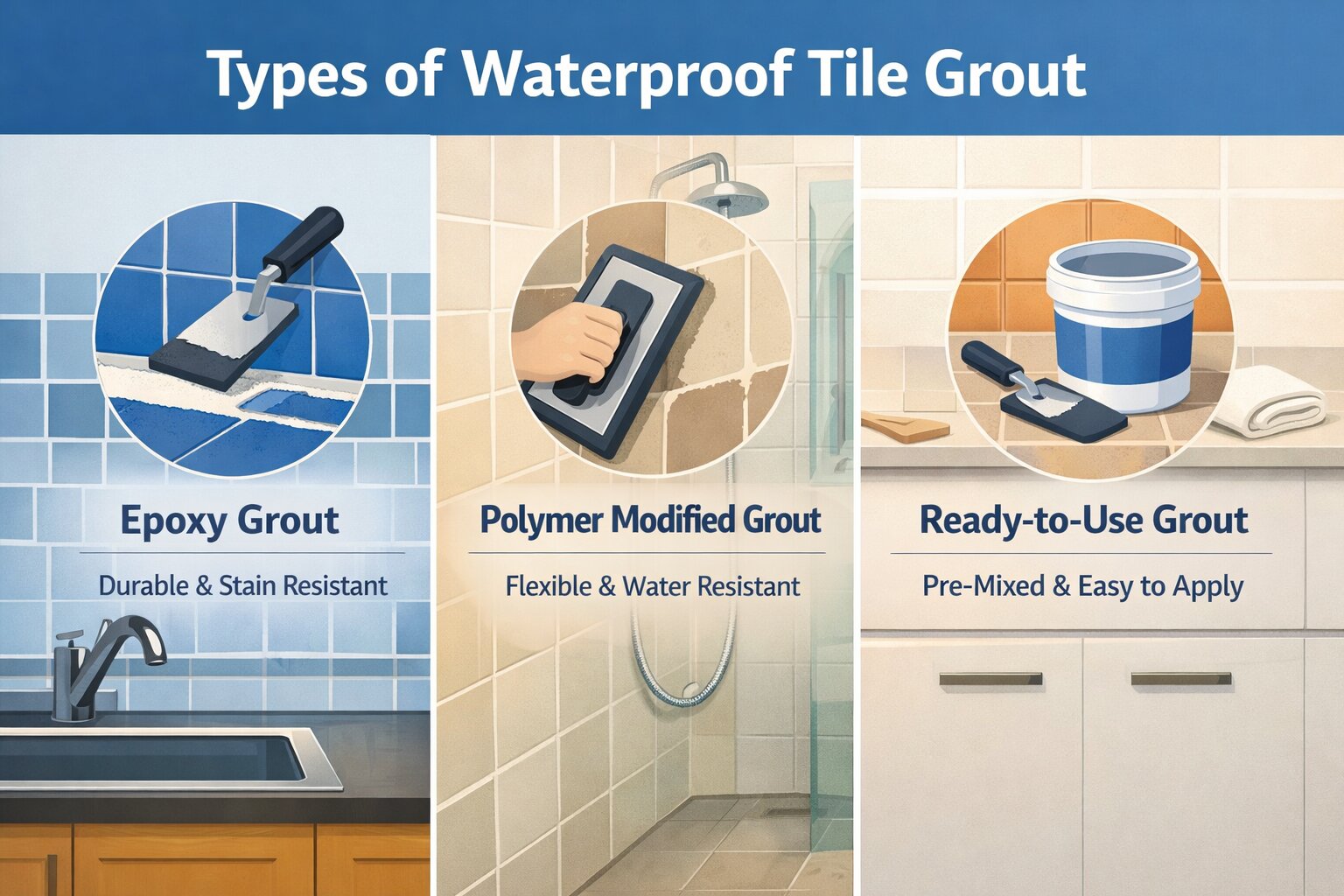
There are different types of waterproof grout for tiles available in the market, each designed to suit specific applications and environments. Choosing the right type helps ensure durability, water resistance, and long-term performance. Understanding these options can help homeowners and professionals select the best waterproof tile grout for kitchens, bathrooms, and other wet areas.
Epoxy grout is considered one of the best waterproof tile grout options due to its exceptional strength and durability. It is made from epoxy resins and hardeners that create a highly water-resistant and chemical-resistant surface.
This type of grout is ideal for kitchens, commercial spaces, and high-traffic areas where tiles are exposed to oil, cleaning chemicals, and frequent moisture. Epoxy grout also offers excellent stain resistance, making it a reliable choice for modern tiled surfaces.
Polymer modified grout is an improved version of traditional cement grout. It contains special additives and polymers that enhance flexibility, adhesion, and water resistance. Because of its balanced performance and cost-effectiveness, it is widely used as waterproof grout for tiles in residential kitchens and bathrooms.
This grout provides better protection against moisture compared to standard cement grout while remaining easier to apply for most tile installations.
Ready-to-use grout is pre-mixed and designed for quick and convenient application. It eliminates the need for mixing on-site, reducing preparation time and application errors.
This type of waterproof grout for tiles is commonly used in residential projects where ease of use and consistent performance are important. It offers good water resistance and helps achieve neat, smooth grout joints for modern kitchen and bathroom tiles.

Waterproof tile grout is widely used in areas where tiles are exposed to moisture, spills, and frequent cleaning. Its water-resistant properties make it suitable for both residential and commercial spaces. Using the right waterproof grout for wet areas helps protect tile joints and ensures long-lasting performance.
Bathrooms are constantly exposed to water, steam, and humidity. Using waterproof grout for bathroom tiles helps prevent moisture from penetrating tile joints and protects the surface underneath.
It is commonly used in shower walls, bathroom floors, and bathtub areas, where tiles experience regular water exposure. High-quality waterproof grout for shower tiles also helps reduce mold growth and keeps grout lines clean and durable.
Kitchens require strong and moisture-resistant grout because tiles often come in contact with water, oil, and food spills. Installing waterproof grout for kitchen tiles helps maintain the strength and appearance of tiled surfaces.
It is widely used for kitchen floor tiles, kitchen backsplash, and countertop tiles. In particular, waterproof grout for kitchen backsplash prevents stains and moisture buildup behind sinks and cooking areas, making cleaning easier.
Apart from kitchens and bathrooms, many other spaces also require reliable waterproof grout for wet areas. Locations such as swimming pools, laundry areas, and outdoor kitchens need grout that can withstand continuous moisture and environmental exposure.
Using waterproof grout in these areas helps maintain tile stability, prevents water leakage, and improves the overall lifespan of the tiled installation.
Selecting the best waterproof tile grout is important to ensure durability, moisture protection, and long-lasting tile installations. The right grout not only protects tiles but also improves the appearance and maintenance of tiled surfaces. When choosing waterproof grout for tile joints, several factors should be carefully considered.
Different tiles require different types of grout depending on where they are installed. For example, kitchens, bathrooms, and showers require highly moisture-resistant grout because they are exposed to frequent water contact. In such wet environments, epoxy or waterproof grout solutions are often recommended due to their strong water resistance and durability.
The width of the grout joints plays an important role in selecting the right grout type. Narrow joints usually require unsanded grout, while wider joints often need sanded grout for added strength and stability. Choosing the correct grout based on joint width helps prevent cracking and ensures proper bonding between tiles.
Areas with high moisture exposure require grout that offers strong water resistance and durability. Bathrooms, kitchens, and shower areas should always use high-quality waterproof grout for tile joints to prevent water penetration, mold growth, and structural damage beneath the tiles.
Tiles in kitchens and bathrooms are often exposed to stains, soap residue, and humidity. Selecting grout that is resistant to stains and mold helps maintain cleaner grout lines and reduces maintenance. Many modern waterproof grouts are designed to resist discoloration and bacterial growth in wet environments.
Using products from trusted brands ensures better performance and durability. High-quality grout solutions such as those offered by Lapifix are designed for long-lasting performance, strong bonding, and reliable waterproof protection. Choosing a reputable product helps ensure that your tile installation remains strong and visually appealing for years.
By considering tile type, joint width, moisture exposure, and product quality, homeowners and professionals can confidently select the best waterproof tile grout for kitchens, bathrooms, and other wet areas.
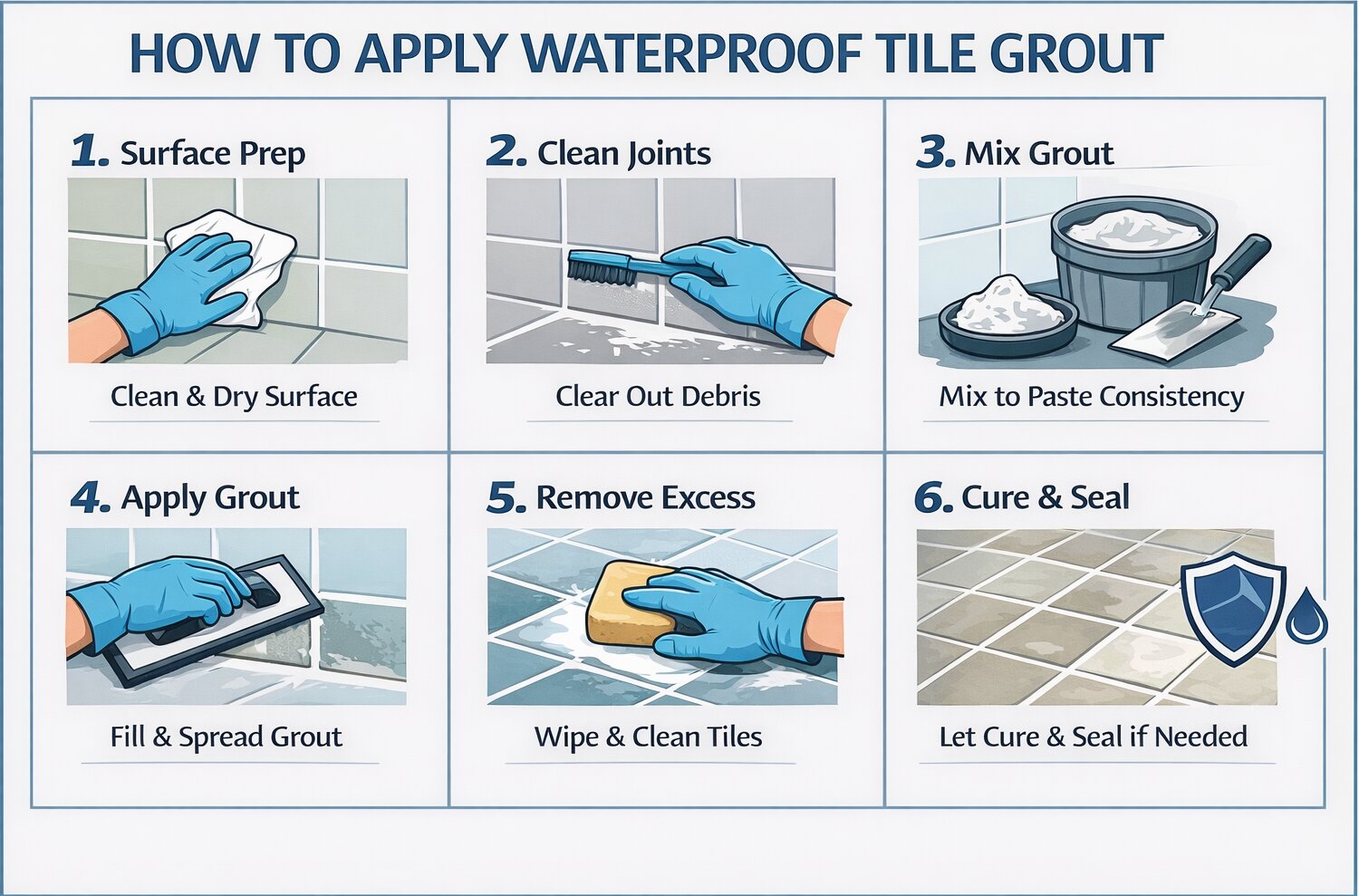
Applying grout correctly is essential to ensure strong bonding, durability, and proper waterproofing between tiles. When installing waterproof grout for tile joints, following the right process helps achieve a clean finish and long-lasting performance in kitchens, bathrooms, and other wet areas.
Before applying grout, make sure the tiled surface is completely dry and properly set. Any dust, debris, or adhesive residue should be removed from the surface. Proper preparation ensures that the waterproof grout for tile adheres well and fills the joints effectively.
Tile joints should be thoroughly cleaned before grouting. Remove leftover spacers, dust, or adhesive from the gaps between tiles. Clean joints allow the waterproof grout for tile joints to fill the gaps evenly and create a strong seal against moisture.
If you are using powdered grout, mix it with water according to the manufacturer’s instructions. Proper mixing is important to achieve the right consistency for smooth application. A well-mixed waterproof grout for tile ensures better bonding and durability.
Use a rubber grout float to press the grout firmly into the tile joints. Spread the grout diagonally across the tiles to ensure the joints are completely filled. This step helps create tight and durable waterproof grout for tile joints that resist water penetration.
Once the joints are filled, remove the extra grout from the tile surface using the grout float. After a few minutes, wipe the tiles gently with a damp sponge to clean the surface and smooth the grout lines.
Allow the grout to cure properly according to the recommended drying time. Proper curing helps strengthen the grout and improve water resistance. In some cases, sealing may be applied for additional protection, especially in high-moisture areas.
Following these steps ensures that the waterproof grout for tile joints performs effectively and provides long-lasting protection for tiled surfaces.
Choosing the right grout is essential for maintaining strong, clean, and long-lasting tiled surfaces. Lapifix waterproof tile grout is specially designed to deliver reliable performance in areas exposed to moisture, such as kitchens and bathrooms. Its advanced formulation helps protect tile joints while ensuring durability and a neat finish.
Lapifix grout offers excellent moisture protection, making it ideal as waterproof tile grout for kitchen and other wet environments. It helps prevent water from penetrating tile joints, reducing the risk of mold growth and surface damage.
One of the key advantages of Lapifix grout is its strong adhesion. It forms durable tile joints that keep tiles firmly in place, improving the stability of the tiled surface and ensuring long-term performance.
Tiles in kitchens and bathrooms are exposed to frequent water contact, temperature changes, and daily cleaning. Using waterproof tile grout for bathroom installations helps maintain the strength of grout lines and protects tiles from moisture-related issues over time.
Lapifix grout is designed for easy mixing and smooth application. Once applied, it creates neat grout lines that are resistant to stains and moisture, reducing the need for frequent maintenance.
Contractors, architects, and tile installers often prefer Lapifix products because of their consistent quality and reliability. Its performance and durability make it one of the best waterproof tile grout options for modern kitchen and bathroom tile installations.
Using Waterproof Tile Grout for Kitchen and Waterproof Tile Grout for Bathroom is essential for protecting tiled surfaces in moisture-prone areas. It helps prevent water penetration, maintains strong tile joints, and improves overall hygiene in kitchens and bathrooms.
High-quality waterproof grout for tiles also enhances durability and reduces the risk of mold, stains, and tile damage. For long-lasting and reliable performance, it is always best to choose trusted products from reputable manufacturers like Lapifix.
Waterproof tile grout is a grout designed to resist water absorption and seal tile joints, protecting tiles from moisture damage.
Yes, it is important because kitchens and bathrooms are exposed to water and humidity. Waterproof grout helps prevent water seepage and protects tiled surfaces.
Epoxy grout and polymer-modified grout are commonly considered the best options because they provide strong water resistance and durability.
Yes, waterproof grout helps reduce moisture buildup in tile joints, which helps prevent mold and keeps bathroom areas more hygienic.
When properly installed and maintained, waterproof tile grout can last many years and maintain strong, sealed tile joints.