

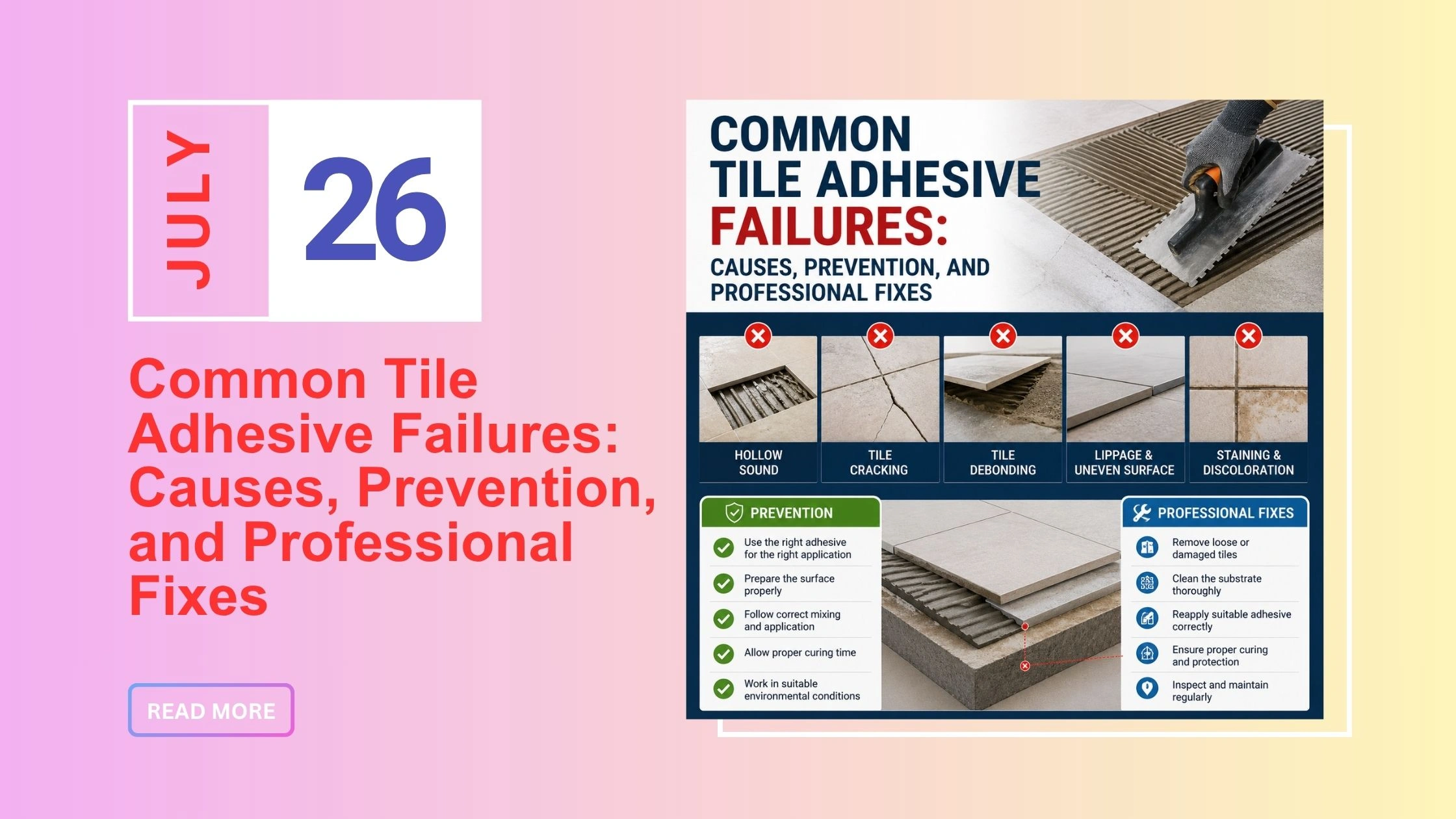
You finish a beautiful tile installation. The lines are perfect, the tiles look stunning, and the project appears complete. Then a few months later, tiles begin lifting, hollow sounds appear underfoot, cracks emerge, or sections start detaching from the substrate. Suddenly, what seemed like a successful installation becomes an expensive repair project.
Across residential homes, commercial developments, shopping centres, hotels, and renovation projects worldwide, tile installation failures remain one of the most common construction defects. In many cases, the tiles themselves are not the problem. The issue often lies beneath the surface in the tiles adhesive system responsible for holding everything together.
At Lapifix, we work with contractors, builders, architects, developers, and tile professionals who require reliable tile installation performance across a wide range of environments. If you're planning a new tiling project, our guide on flexible tile adhesive vs standard tile adhesive can help you understand how adhesive selection affects long-term performance.
Based on our experience across residential, commercial, and industrial projects, most tile failures are not caused by defective tiles. Instead, they result from substrate preparation issues, incorrect adhesive selection, poor installation practices, insufficient coverage, environmental factors, or inadequate curing. Understanding these causes early helps prevent costly failures and significantly improves installation durability.
Tile adhesive failures are typically caused by poor surface preparation, incorrect adhesive selection, inadequate adhesive coverage, improper mixing, insufficient curing time, substrate movement, moisture exposure, or environmental conditions. These issues can result in tile debonding, hollow spots, cracking, lippage, reduced bonding strength, and premature installation failure. Following professional installation practices and using the appropriate tiles adhesive significantly improves long-term performance.
The most common tile adhesive failures include tile debonding, hollow or drummy tiles, cracked tiles, poor bonding strength, edge lifting, adhesive shrinkage, moisture-related failures, and movement-related cracking. These problems often occur when installation procedures are rushed, substrate conditions are ignored, or the wrong adhesive is selected for the project requirements.
For most tile installations, adhesive failures are typically linked to poor substrate preparation, incorrect adhesive selection, inadequate adhesive coverage, improper curing practices, or moisture-related issues. Using the appropriate tiles adhesive, following manufacturer recommendations, and maintaining professional installation standards significantly reduces the risk of tile debonding, cracking, hollow spots, and long-term performance problems.
Most people blame the tile when something goes wrong. In reality, tiles are often just the visible symptom of a deeper installation issue.
Think of a tile system like a high-performance sports car. The paintwork gets attention, but the engine determines performance. In tile installations, the adhesive system is the engine. If it fails, even the most expensive porcelain slabs or natural stone surfaces can experience problems.
Many failures remain hidden during installation and only appear months after project completion. This delayed nature makes prevention far more valuable than repair.
Tiles adhesive is a specially engineered bonding material designed to secure tiles to walls, floors, and various substrates. Unlike traditional cement mortar, modern tile adhesives are formulated to provide superior bonding strength, flexibility, workability, and durability.
Today's projects may utilise porcelain tile adhesive, ceramic tile adhesive, natural stone tile adhesive, flexible tile adhesive for large tiles, or high performance tile adhesive systems depending on the installation requirements.
The adhesive serves as the critical link between the substrate and the tile. If that link fails, the entire installation can be compromised.
One of the leading causes of tile installation failures begins before adhesive is even mixed.
Substrates contaminated with dust, grease, curing compounds, paint residues, loose materials, or moisture problems prevent proper adhesion. Even premium tile products cannot compensate for a poorly prepared surface.
Professional installers understand that bonding strength depends heavily on substrate quality. Proper cleaning, levelling, and inspection are essential before installation begins.
At Lapifix, we frequently observe that projects experiencing premature failures often share a common factor: inadequate substrate preparation.
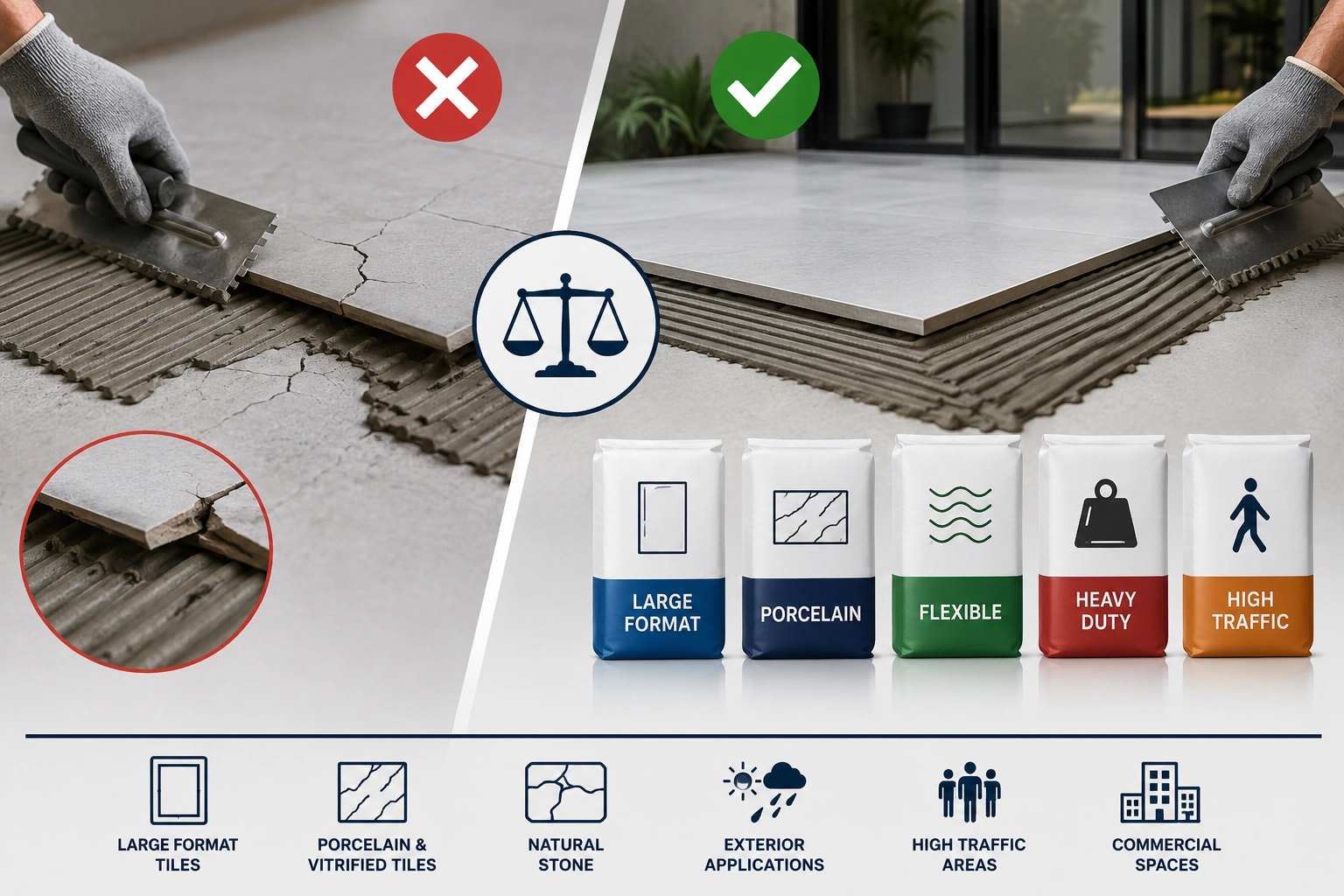
Not all adhesives are created equal.Using standard adhesive beneath large porcelain slabs or applying interior-grade adhesive in demanding exterior environments can significantly increase failure risks.
Modern installations often require:
Large format tile adhesive
Porcelain tile adhesive
Flexible tile adhesive for large tiles
Commercial tile adhesive
Heavy duty tile adhesive
High traffic area tile adhesive
For example, porcelain slabs, vitrified tiles, natural stone panels, and large-format ceramic tiles often require different adhesive performance characteristics based on weight, size, substrate conditions, and environmental exposure. Selecting an adhesive without considering these factors can increase the risk of tile debonding, cracking, lippage, and long-term installation failure.
Matching adhesive performance characteristics to project demands remains one of the most important decisions in tile installation.
Coverage problems are among the most misunderstood installation issues.
Many installers apply adhesive inconsistently, leaving large voids beneath tiles. These voids create weak zones that increase the likelihood of cracking, debonding, and hollow sounds.
The problem becomes even more significant with large format tiles and porcelain slabs where load distribution depends on consistent adhesive contact.
Professional installers typically use appropriate trowel sizes and back-buttering techniques to maximise tile bonding strength and minimise void formation.
Coverage requirements vary based on tile type, application area, and project demands.
|
Installation Type |
Recommended Coverage |
|
Interior Dry Areas |
80–90% |
|
Exterior Installations |
95%+ |
|
Large Format Tiles |
95%+ |
|
High Traffic Areas |
95%+ |
|
Commercial Projects |
Near Full Coverage |
In large format tile and porcelain slab installations, many professional installers target adhesive coverage levels exceeding 95% to maximise tile bonding strength and minimise the risk of void formation beneath the tile. This becomes particularly important in commercial projects, exterior applications, high-traffic areas, and installations exposed to heavy loads or environmental stress. Achieving higher coverage helps improve load distribution, reduces the likelihood of hollow spots, and supports long-term installation durability.
Higher coverage levels help improve bonding strength, reduce stress concentrations, and enhance long-term durability.
Many installation failures originate before the adhesive reaches the wall or floor.
Adding too much water may improve workability temporarily, but it often reduces adhesive strength. Insufficient water can create poor consistency and difficult application conditions.
Manufacturers provide mixing instructions for a reason. Consistent mixing helps achieve predictable performance and reliable bonding characteristics.
Professional tile installation adhesive systems rely on precise mixing procedures to achieve optimal results.
Tile adhesive open time and tile adhesive working time are critical performance characteristics.
Open time refers to how long adhesive remains workable after being spread on the substrate. Working time refers to how long installers can effectively manipulate the tile after placement.
When installers exceed these limits, adhesive skinning may occur. Once skinning develops, bonding strength can be significantly reduced.
Many large-format tile failures originate from installers attempting to cover excessive areas before tile placement.
A tile may appear bonded initially even when adhesive has exceeded its open time. However, reduced contact and weakened adhesion can eventually lead to:
Tile lifting
Hollow spots
Reduced bond strength
Premature failure
Increased repair costs
Understanding adhesive timing characteristics is essential for successful installations.
Tiles do not exist in isolation.Buildings expand, contract, settle, vibrate, and respond to environmental changes. When movement exceeds the adhesive system's ability to accommodate stress, failures can occur.
Cracked grout lines, tile cracking, and debonding are common indicators of movement-related issues.
Flexible tile adhesive products are often selected because they help absorb certain levels of substrate movement while maintaining bond integrity.
Modern tile projects increasingly rely on crack resistant tile adhesive systems to improve long-term performance.
Moisture remains one of the most challenging conditions for tile installations.
Bathrooms, swimming pools, balconies, kitchens, façades, and exterior projects all expose adhesive systems to varying levels of moisture.
Improper waterproofing, excessive substrate moisture, or inappropriate adhesive selection can weaken bonding performance over time.
For guidance on construction waterproofing and building performance requirements, professionals can review information available through the Australian Building Codes Board (ABCB) building guidance resources.
Projects exposed to regular moisture should utilise adhesive systems specifically designed for such environments.
The tile industry has changed dramatically.Large porcelain slabs, oversized wall panels, and ultra-thin large-format products create demands that traditional installation methods were never designed to handle.
Best adhesive for porcelain slabs applications often requires enhanced flexibility, improved bonding characteristics, extended open times, and specialised installation techniques.
Using outdated methods for modern tile systems frequently leads to installation failures.
Many failures can be prevented through proper planning and installation practices.
|
Common Failure Cause |
Professional Solution |
|
Poor substrate preparation |
Thorough surface preparation |
|
Incorrect adhesive selection |
Application-specific adhesive |
|
Low coverage |
Proper trowelling and back-buttering |
|
Incorrect mixing |
Manufacturer-recommended mixing |
|
Exceeded open time |
Controlled installation workflow |
|
Moisture issues |
Proper waterproofing measures |
|
Structural movement |
Flexible adhesive systems |
|
Large format tile challenges |
High-performance adhesive selection |
This comparison highlights a simple reality: successful tile installations rarely happen by accident.
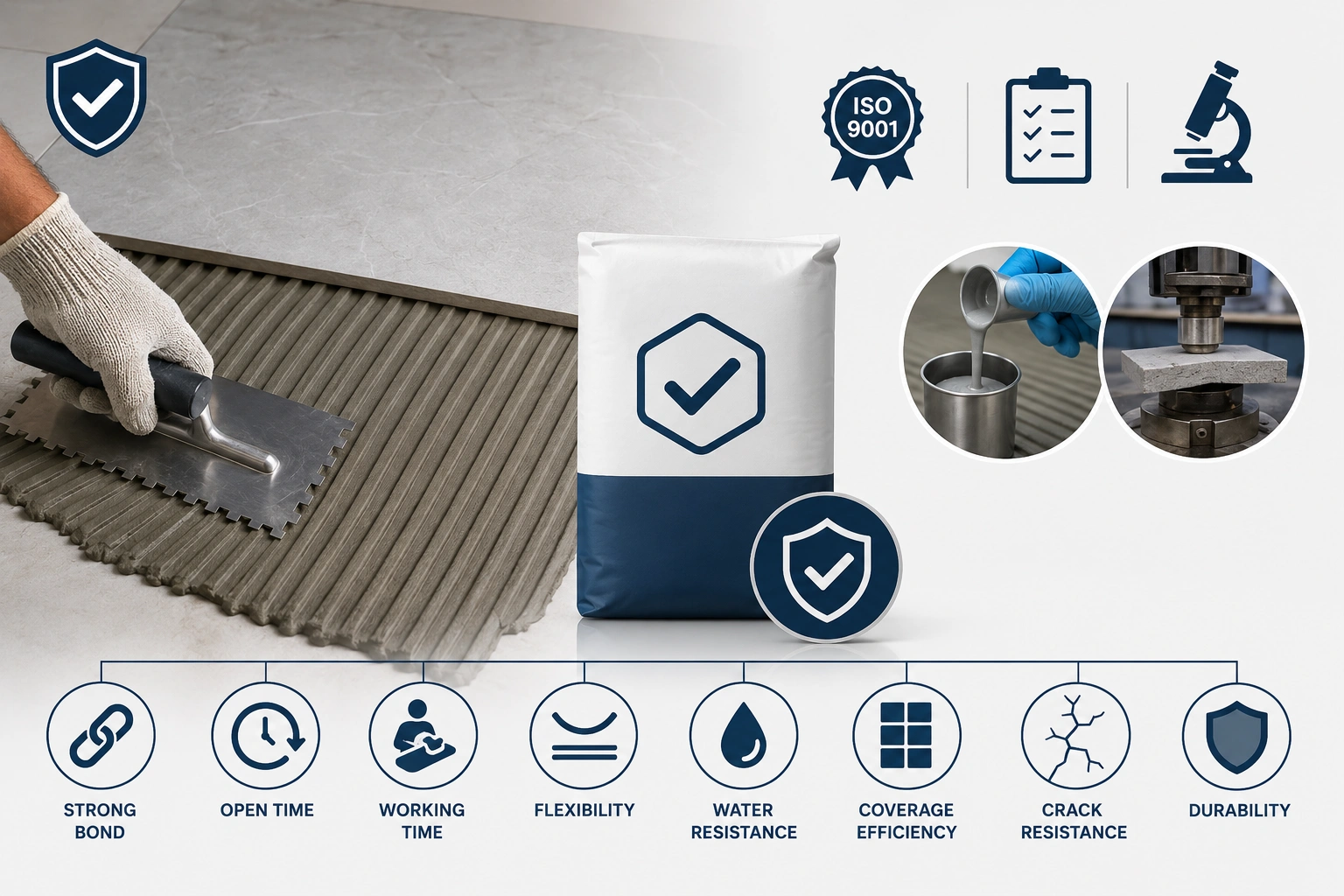
Quality adhesives play a major role in long-term installation success.
A reliable tiles adhesive manufacturer should maintain consistent raw material quality, documented production procedures, and rigorous quality assurance systems.
Buyers should evaluate whether manufacturers operate under recognised quality management systems such as ISO 9001 and maintain documented quality control procedures throughout production. Consistent raw material verification, batch testing, bond strength evaluation, and performance monitoring help improve installation reliability and long-term performance.
When evaluating adhesive systems, professionals should consider:
Tile bonding strength
Open time
Working time
Flexibility
Water resistance
Coverage efficiency
Crack resistance
Durability
These factors influence both installation success and long-term performance.
Many contractors and project owners also review technical data sheets, installation guidelines, performance certifications, and product testing documentation before selecting adhesive systems. This evaluation process helps reduce project risks and improve installation outcomes.
Successful tile installations begin long before the first tile is placed.
At Lapifix, we believe long-term tile performance depends on quality products, proper surface preparation, correct installation techniques, and adherence to professional application standards. Every stage contributes to overall system durability.
Depending on project requirements and installation conditions, tile adhesive systems may undergo multiple quality checkpoints throughout the installation process. These evaluations can include substrate inspections, mixing consistency verification, adhesive coverage assessments, open time monitoring, bond strength evaluations, curing assessments, and final installation reviews. This systematic approach helps improve installation quality and minimise the risk of debonding, cracking, hollow spots, and premature failures.
Our focus is on helping contractors, builders, architects, and developers achieve reliable tile installation outcomes across residential, commercial, and industrial projects.
Many contractors, developers, and project owners also perform trial installations, mock-up panels, or adhesion tests before commencing large-scale tiling projects. Evaluating adhesive performance under actual site conditions helps verify substrate compatibility, confirm installation methods, improve consistency across the project, and reduce potential risks before full-scale tile installation begins. This practical approach is particularly valuable for large format tiles, porcelain slabs, commercial projects, and installations involving challenging site conditions.
Based on our experience across a wide variety of tile installations, projects that prioritise proper substrate preparation, adhesive selection, coverage control, and curing procedures consistently achieve stronger bonding performance and fewer long-term maintenance issues. By contrast, installations where these critical steps are rushed often experience avoidable failures and increased lifecycle costs.
Professionals looking to improve installation performance can also explore our guide on EN 12004 tile adhesive standards to better understand adhesive classifications and performance requirements.
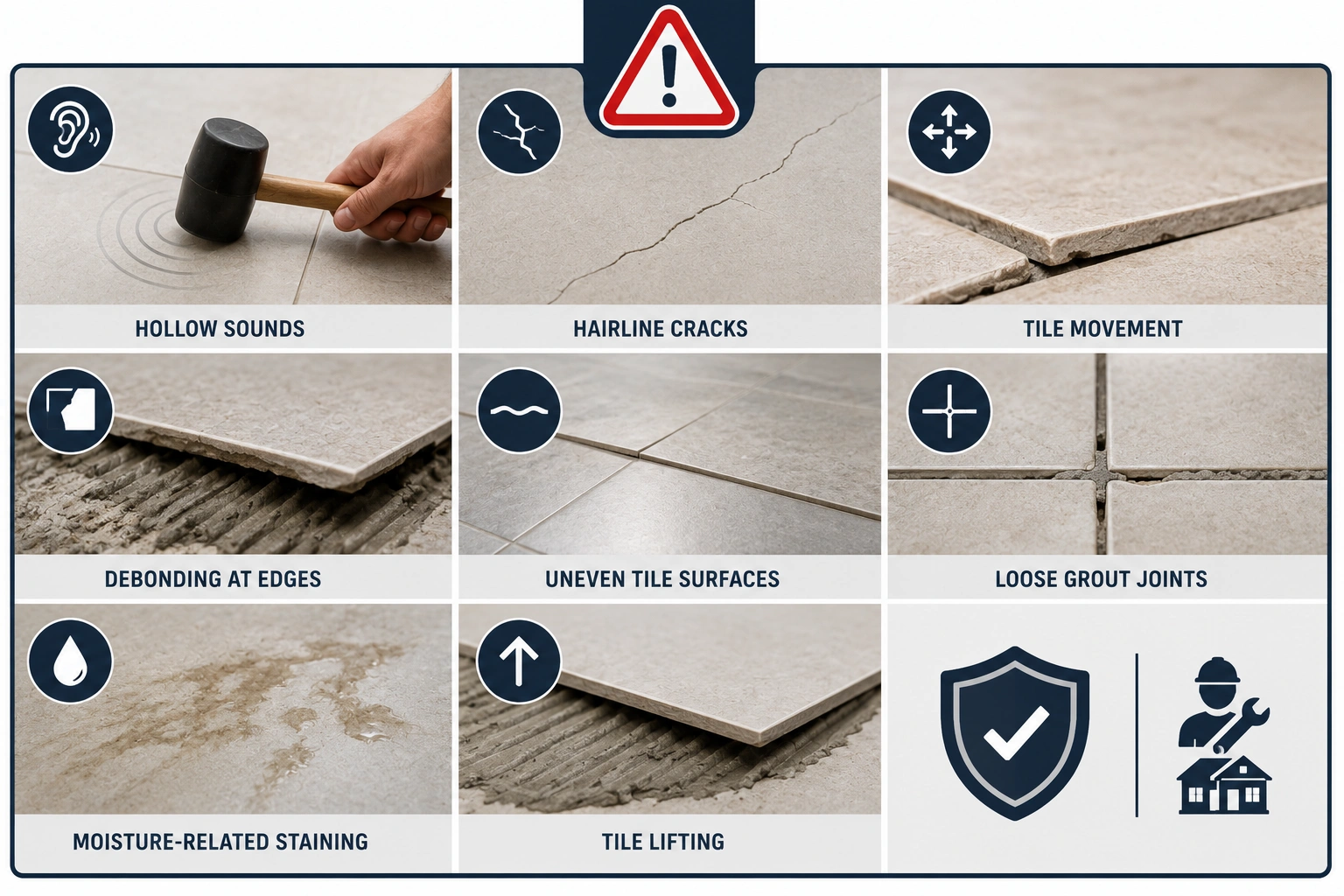
Tile failures rarely appear without warning.
Some early indicators include:
Hollow sounds beneath tiles
Hairline cracks
Tile movement
Debonding at edges
Uneven tile surfaces
Loose grout joints
Moisture-related staining
Tile lifting
Addressing these signs early often prevents larger and more expensive repairs.
Repairing failed tile installations is rarely simple.
Removing tiles, preparing substrates again, replacing damaged materials, and reinstalling finishes can quickly become expensive. In many cases, the repair cost significantly exceeds the original installation savings that resulted from shortcuts.
Successful projects focus on prevention through proper planning, correct product selection, and professional installation practices.
Most tile installation failures can be traced back to a handful of preventable causes, including poor substrate preparation, incorrect adhesive selection, inadequate coverage, improper mixing, insufficient curing, moisture exposure, and structural movement. While these issues can lead to costly repairs, project delays, and reduced installation lifespan, they are largely avoidable when the correct tiles adhesive is selected and professional installation practices are followed.
Understanding these tile adhesive failure causes helps contractors, builders, architects, and property owners make better installation decisions, achieve stronger tile bonding, and improve long-term performance across residential, commercial, and industrial projects.
If you're planning a residential, commercial, or industrial tiling project, Lapifix can help. From high performance tile adhesive systems to professional installation guidance, our team is committed to helping you achieve durable and reliable results. Explore our tile adhesive solutions and connect with Lapifix to discuss the right adhesive system for your next project.
Poor surface preparation is one of the most common causes of tile adhesive failure. Dust, contaminants, moisture problems, and unstable substrates can significantly reduce bonding strength and increase the likelihood of debonding.
Hollow tiles are usually caused by inadequate adhesive coverage or voids beneath the tile. These gaps reduce support and can eventually lead to cracking or debonding.
Yes. Using an adhesive that is not suitable for the tile type, project environment, or substrate conditions can significantly increase failure risks and reduce long-term performance.
Open time is extremely important because it determines how long adhesive remains capable of forming a proper bond. Exceeding open time can reduce adhesion and lead to future failures.
Large porcelain slabs typically require high performance tile adhesive systems specifically designed for large format installations. These adhesives provide enhanced flexibility, bonding strength, and coverage characteristics.
Most failures can be prevented through proper substrate preparation, correct adhesive selection, accurate mixing, adequate coverage, appropriate curing procedures, and adherence to manufacturer installation guidelines.