

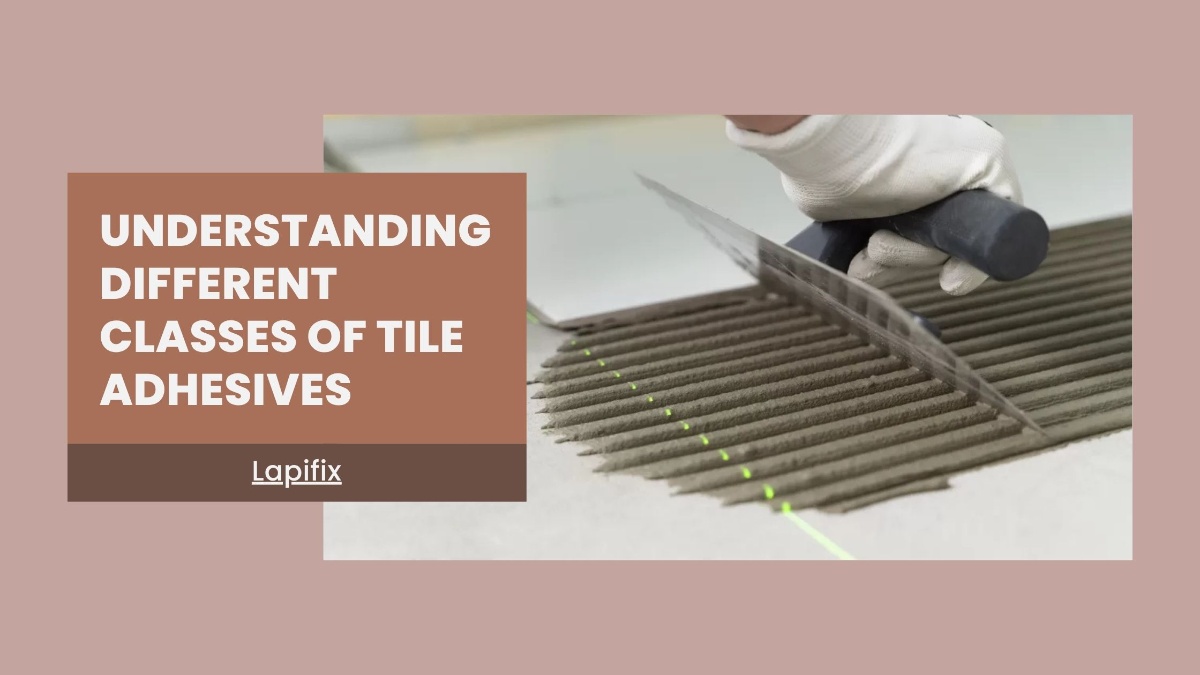
Any durable tile installation depends on tile adhesives. The durability of tiled surfaces depends fundamentally on tile adhesives for achieving proper strength. The selection of the correct adhesive during tile installations determines how well tiles maintain their position in walls, floors, and external locations. Misapplication of wrong adhesive materials between surfaces leads to serious tile damage that requires expensive repairs. The following guide explains tile adhesive classes with their applicable uses to assist your selection process.
The fact that the correct glue is used in tiling is not only an enhancement of the strength of the tiling system but assists in reducing risks such as tile lifting, water damage and cracking. Be it a ceramic tile, porcelain tile or a vitrified tile; to have the perfect laying you must always have an idea of the different adhesive types. All contractors, architects, and DIY enthusiasts find it helpful to get acquainted with the best available tile adhesive types to be applied in this or that room or on this or that surface.

The bonding component known as tile adhesive operates as a specialized agent to connect tiles to concrete plaster, wooden plywood and metal surfaces. The adhesive products were created to work with various combinations of environmental conditions and tile products. The bond between tiles and substrates gets stronger through tile adhesives which makes tiles survive movements and temperature changes alongside moisture exposure. You should choose the suitable tile adhesive type for your tiling work due to its varied formulas.
Modern tile adhesives are designed to meet the diverse demands of today’s tiling projects. With advancements in polymer-modified adhesives and specialty formulations, you can now choose products that provide enhanced water resistance, flexibility, and heat tolerance.
For example, tile adhesive for outdoor use differs significantly from one used indoors. Likewise, tile glue for bathroom walls must resist constant moisture exposure. Investing in the right adhesive is crucial to long-term success and professional-grade installation results.
Under the EN 12004 European standard, tile adhesives are grouped into three primary classes:
Cementitious Adhesives (C-Class)
Dispersion Adhesives (D-Class)
Reaction Resin Adhesives (R-Class)
Each class has unique applications and properties based on composition, flexibility, and bonding strength.
Tile adhesives receive their classifications from both performance standards and their chemical makeup. Adhesives fall under three main classes based on European standard EN 12004 with the divisions of Cementitious (C) alongside Dispersion (D) and Reaction Resin (R). The various categories of tiles demand unique attributes from adhesive products depending on material type and location requirements as well as exposure conditions.

The most widely utilized tile-adhesive category contains cement and sand mixtures which chemical additives boost their flexibility and bonding power. Adhesive components require water mixing during preparation before they are appropriate for multiple kinds of surfaces. Their adhesive strength allows use on both interior spaces and exterior areas.
C1 – Standard Cementitious Adhesive
Best suited for basic ceramic tiles
Suitable for ceramic and porous tiles.
Ideal for low-traffic areas like residential walls and floors
Cost-effective option for residential spaces.
C2 – Improved Cementitious Adhesive
When used compared to C1 cementitious adhesive it demonstrates enhanced bond strength as well as better flexibility.
Ideal for high-traffic areas, heavy tiles, and large-format tiles.
The adhesive functions properly within wet spaces and works in both indoor and outdoor settings.
Works well in wet areas like bathrooms and balconies
Offers stronger bonding and flexibility than C1
C2S1 – Flexible Cementitious Adhesive
Provides medium-level deformability
This adhesive type can adapt to small alterations of the substrate with its average deformability level.
Best for substrates prone to movement, such as plywood or heated floors.
The adhesive is appropriate for residential and commercial use along wall surfaces and floor surfaces.
C2S2 – Highly Flexible Cementitious Adhesive
Maximum flexibility and bonding strength
Excellent for high-traffic commercial zones, external façades, and variable substrates, extreme temperature variations, outdoor applications, and unstable substrates like metal or fiberglass.
Suitable for metal, glass fiber, and outdoor conditions

Dispersion type adhesives would be ideal when working on a quick-fix job to lay tiles especially on interior walls. These are ready-to-use adhesives that provide clean and convenient solutions devoid of on-site mixing.
Elaborating on their capability to bond wall tiles, dispersion adhesives are available as pre-mixed products designed for effective tile adhesion. The main indoor use of such material occurs because application methods are considered straightforward. Dispersion adhesives supply multiple benefits because they combine ready-to-use features with no mixing requirements suitable for diverse users including DIY builders and quick renovation teams.
D1 – Standard Dispersion Adhesive
Best for ceramic tiles on interior walls in dry areas.
This adhesive system can be used directly from its reservoir without any need for mixing procedures.
No mixing required; easy to apply
Common in residential kitchens, living rooms, and decorative wall tiling
D2 – Improved Dispersion Adhesive
The product dimension D2 shows superior water resistance to its predecessor D1.
Decorative tiles installed in bathrooms, shower walls, and kitchens should employ this material because of its water-resistance features.
The adhesive provides powerful bonding strength in areas that remain damp.
Provides added security in wet environments

Epoxy tile adhesives and other reaction resin adhesive products have been designed to survive in the most hostile conditions.Reaction resin adhesives contain epoxy or polyurethane materials which form two-part adhesives. These adhesives demonstrate the best performance regarding strength of attachment with added chemical resistance and water protection for challenging conditions. Businesses and industries depend on these adhesives because they need strong durability and chemical protection in their operations.The products are used when tiling industrial areas, where a surface can be subjected to industrial chemicals, industrial/heavy machinery, and humidity.
R1 – Standard Reaction Resin Adhesive
Works well in light industrial environments
Reaction resin bonds powerfully to no-porous glass and metal surfaces that do not permit permeation.
Strong bond under normal conditions
Ideal for small-scale commercial installations.
R2 – Improved Reaction Resin Adhesive
High-performance adhesive with excellent chemical and water resistance
Ensures tile stability under constant chemical exposure and pressure
Perfect for swimming pools, laboratories, food processing plants, and commercial kitchens
Applications of R2 adhesives A typical application contains pool tiling, food processing plant, and medical labs, where safety and performance are not compromisable. They are among the best tiling options in specialized areas that are highly risky due to their good chemical bonds with metal, fiber glass, glass among others.
Selecting the right tile adhesive depends on several factors:
|
Factors |
Recommendations |
|
Tile Type |
Use C2 or R2 adhesives for heavy or large-format tiles like porcelain, vitrified, or stone tiles |
|
Substrate |
Choose S1/S2 variants for flexible or moving substrates like plywood, heated floors, or metal |
|
Location |
Outdoor & wet areas need C2S2 or R2 adhesives for weather and moisture protection |
|
Traffic Load |
High-traffic zones require durable and flexible adhesives like C2S1 or C2S2 |
|
Application Speed |
Use D-class adhesives for faster installations in dry, indoor wall tiling |
When in doubt, consult a professional tile installer or adhesive manufacturer to determine the best product for your tiling scenario. Also, consider the tile adhesive drying time, setting strength, and resistance to movement or vibration. Always follow manufacturer instructions for mixing, spreading, and curing to achieve optimum performance. Using the right adhesive not only safeguards your investment but also enhances the overall finish and strength of your tilework.
Ensures long-lasting durability and prevents tile detachment
Provides resistance against water, chemicals, and temperature changes
Accommodates surface movements and prevents cracks
Enhances overall aesthetics by ensuring uniform tile placement
Reduces maintenance costs by preventing tile failures and water damage
By choosing the best tile adhesive for your project, you're adding value to your property. Whether you are renovating a home or constructing a commercial space, reliable adhesives help reduce future repairs, improve structural integrity, and enhance safety. From wall tile adhesive to floor tile glue, the market offers specialized solutions for every use case.
Knowledge about tile adhesive classes stands as an essential factor for reaching long-term successful results in tiling projects. The three different adhesive groups named Cementitious (C), Dispersion (D), and Reaction Resin (R) suit individual tiles and their environments as well as installation needs. Your selection of appropriate adhesive materials must consider both tile types and substrates and installation position along with expected weight pressure to avoid the detachment of tiles while also preventing cracking and water-related harm.
By investing in high-quality adhesives from trusted suppliers like Lapifix, you can achieve a durable and aesthetically pleasing tile installation. The product line of Lapifix includes Lx Standard, Lx Super, and Lx Platinum, which offer reliable solutions for residential and commercial tiling requirements. Using appropriate adhesives for tiled surfaces strengthens durability and minimizes your future maintenance expenses, which results in spaces that will stay attractive and resistant for extended periods.
Tile adhesives are generally classified into C1, C2, D1, D2, R1, and R2 based on their composition and performance as per international standards. These include cementitious, dispersion, and reactive resin adhesives.
C1 adhesives are standard cement-based adhesives suitable for basic applications, while C2 adhesives are improved versions offering higher bond strength, flexibility, and resistance to moisture and temperature changes.
For wet areas like bathrooms or swimming pools, D2 (dispersion adhesive) or R2 (reactive resin adhesive) are recommended due to their waterproofing and strong bonding capabilities.
C1 adhesives are generally not recommended for large format tiles, as they lack the flexibility and strength needed. C2 or R-class adhesives are more suitable for such applications.
S1 and S2 refer to the deformability of the adhesive. S1 means the adhesive is deformable, and S2 means it is highly deformable, which is essential for areas with thermal or structural movement.
Epoxy (R-class) adhesives offer superior chemical resistance, waterproofing, and bonding strength compared to cement-based adhesives, but they are more expensive and harder to work with.
C2 or R2 class adhesives with flexibility and resistance to temperature changes are ideal for outdoor tile installations.
Yes, tile adhesive offers better bonding strength, faster installation, reduced shrinkage, and improved durability compared to traditional cement mortar.