

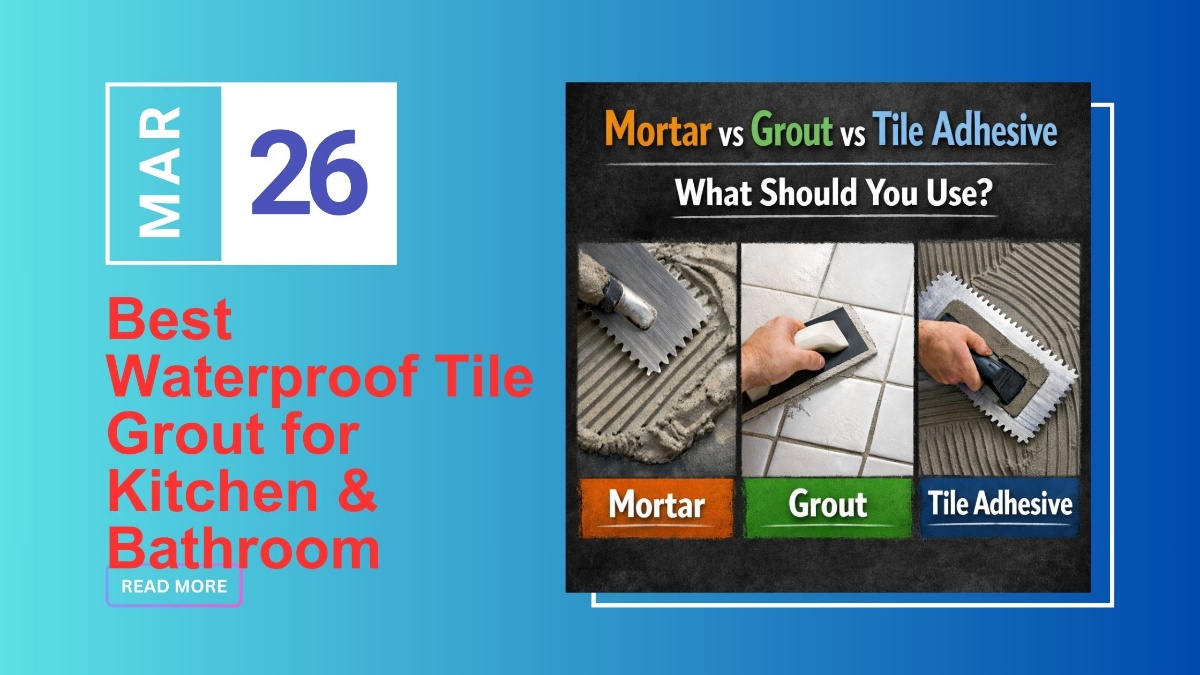
Tiles are widely used for floors and walls because they are durable, attractive, and easy to maintain. However, the quality of a tile installation depends not only on the tiles but also on the materials used to fix and finish them.
Many people often get confused when comparing tile adhesive vs mortar vs grout because these materials are used together during tile installation but serve different purposes. Understanding what is tile adhesive mortar and grout is important to ensure proper tile bonding and long-lasting results.
Tile adhesive is used to fix tiles onto surfaces, mortar is a traditional mixture used for bedding or leveling, and grout is applied between tiles to fill joints and protect the installation. Knowing the tile adhesive vs mortar vs grout differences helps homeowners and professionals choose the right material for better durability and performance.
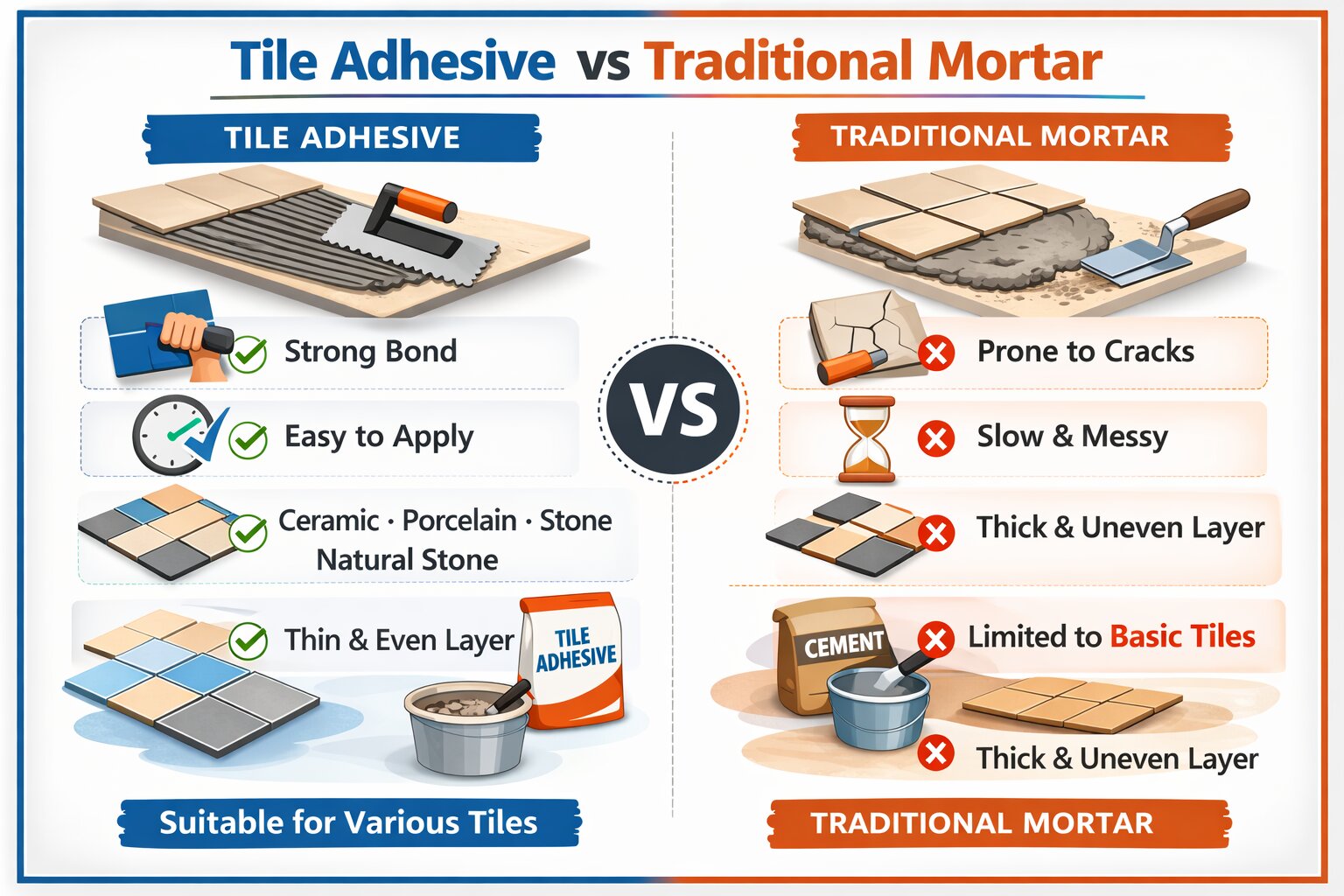
Tile adhesive is a ready-to-use bonding material used to fix tiles on floors and walls. It is made from cement, polymers, and special additives that provide strong bonding, flexibility, and water resistance. Tile adhesive is widely used in modern construction because it offers better performance compared to traditional methods.
When comparing tile adhesive vs traditional mortar, adhesive provides stronger grip and allows tiles to be installed using a thin and even layer. This improves installation quality and reduces the chances of tiles becoming loose over time. It is suitable for various tiles such as ceramic, porcelain, vitrified, and natural stone.
Another important point in the tile adhesive vs cement mortar comparison is ease of application. Tile adhesive is easy to mix and apply, which helps installers save time and achieve a more reliable tile installation. Because of these advantages, tile adhesive is now the preferred solution for most residential and commercial tiling projects.
Mortar is a traditional material used to fix tiles to surfaces. It is made from a mixture of cement, sand, and water that forms a thick paste for tile installation. Before modern adhesives were introduced, mortar was commonly used for installing tiles on floors and walls.
Mortar is often applied as a base layer where tiles are pressed into the mixture to create bonding with the surface. It is still used in some projects, especially for floor tiles and leveling uneven surfaces.
However, when comparing tile adhesive vs traditional mortar, adhesives provide stronger bonding, easier application, and better durability. Understanding the difference between tile adhesive and mortar helps builders choose the right material for modern tile installations.
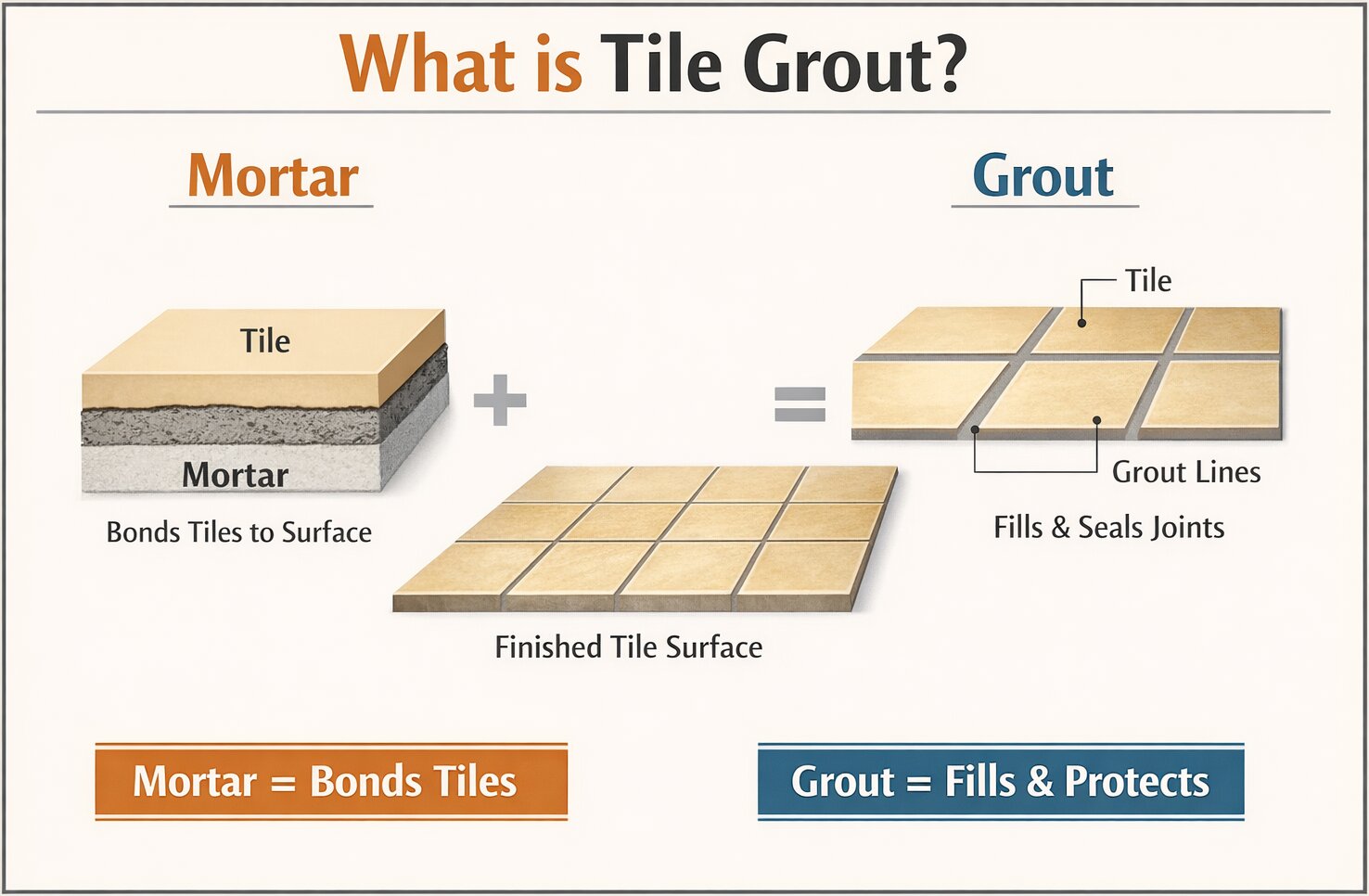
Tile grout is a material used to fill the gaps between tiles after installation. It helps lock tiles in place, improves the appearance of the surface, and protects the joints from moisture, dirt, and damage. Grout is typically made from cement, sand, and water, along with additives that enhance strength and durability.
Understanding the difference between grout and mortar is important in tile installation. Mortar is used to fix tiles to the base surface, while grout fills the spaces between the tiles. When comparing mortar vs grout for tiles, mortar acts as the bonding layer beneath the tiles, and grout works as the finishing material that seals and protects the tile joints.
Understanding the difference between tile adhesive and mortar is important when choosing the right material for tile installation. Although both are used to fix tiles, they differ in composition, application method, and overall performance.
Composition: Tile adhesive is a factory-made product that contains cement, polymers, and special additives that improve bonding strength and flexibility. Mortar, on the other hand, is a traditional mixture of cement, sand, and water prepared on-site.
Thickness of Application: Tile adhesive is applied in a thin and uniform layer using a notched trowel. Mortar usually requires a thicker layer to hold tiles in place, which can increase material usage and installation effort.
Bonding Strength: Tile adhesive provides stronger bonding, especially for modern tiles like vitrified and porcelain tiles. In comparison, traditional mortar may not provide the same level of grip for smooth or large-format tiles.
Installation Time and Ease of Use: Another key factor in the tile adhesive vs traditional mortar comparison is ease of application. Tile adhesive is easier to mix and apply, allowing faster and more efficient tile installation. Mortar requires more preparation and skill to achieve proper leveling and bonding.
Suitability for Modern Tiles: Tile adhesive is specifically designed for modern construction and works well with various tile types. This is why many professionals now prefer adhesive over traditional mortar for most residential and commercial tile installations.
Understanding tile adhesive vs grout is important for a successful tile installation because both materials perform completely different functions.
Tile adhesive is used to bond tiles firmly to surfaces such as floors, walls, and countertops. It creates a strong connection between the tile and the base surface, ensuring the tiles stay secure and stable over time.
Grout, however, is applied after the tiles are fixed. Its main role is to fill the joints between tiles. Grout helps keep tiles aligned, improves the finished appearance, and protects the gaps from moisture, dust, and dirt.
Although they are used together in the same project, tile adhesive vs grout cannot replace each other. Tile adhesive provides the bonding strength needed to hold tiles in place, while grout completes the installation by sealing and protecting the spaces between the tiles.
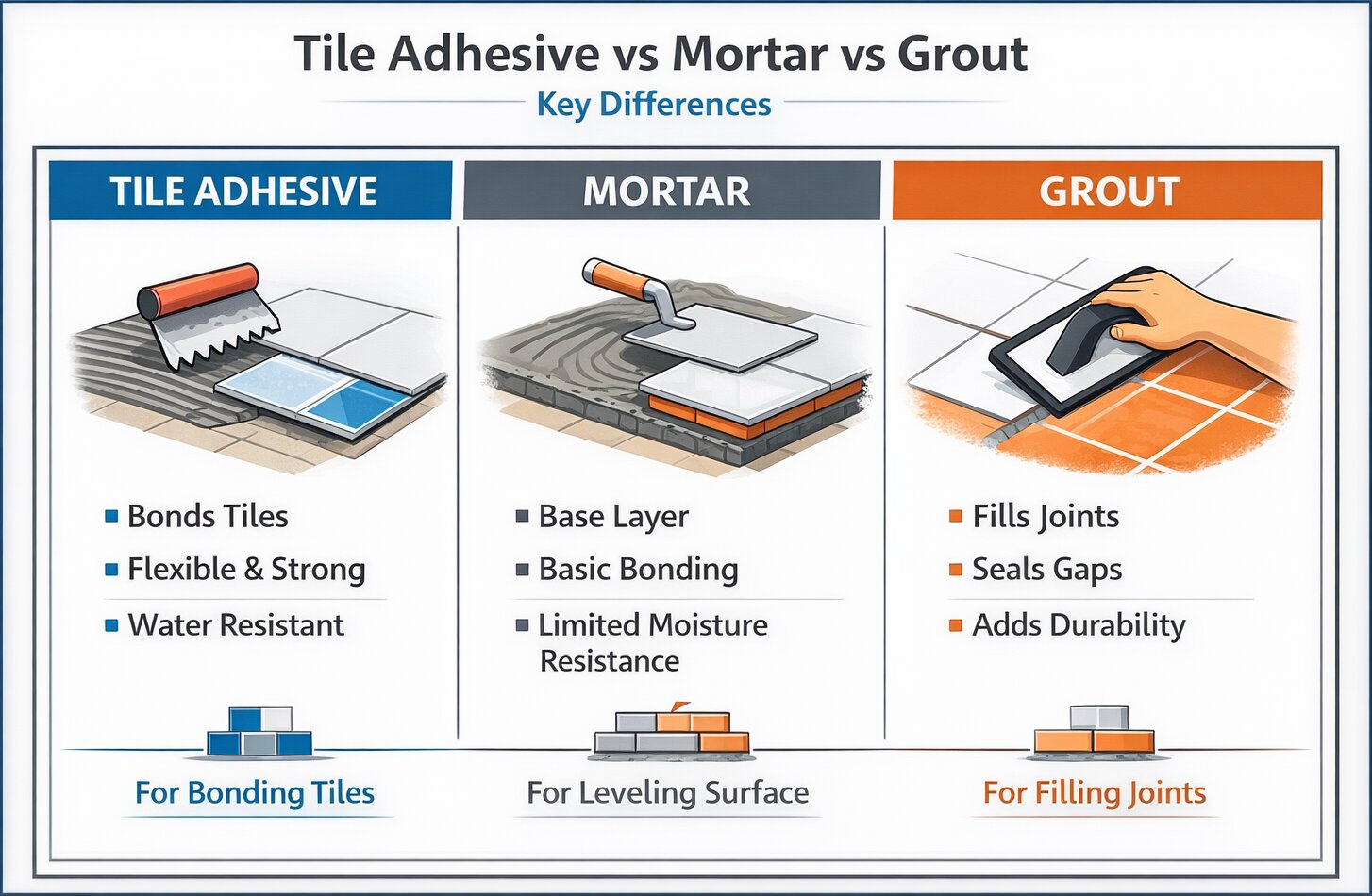
Understanding tile adhesive vs mortar vs grout is important for choosing the right material during tile installation. Although these materials are used in the same project, they serve different purposes and are applied at different stages of the tiling process.
Purpose: Tile adhesive is used to bond tiles firmly to surfaces like walls or floors. Mortar acts as a traditional base layer for fixing tiles and leveling surfaces. Grout is applied after the tiles are installed to fill the joints between them and protect the installation.
Composition: Tile adhesive is made from cement, fine sand, polymers, and additives that improve bonding strength and flexibility. Mortar is usually a simple mixture of cement, sand, and water. Grout is typically made from cement and fine fillers, along with additives for improved durability and water resistance.
Application Stage: Tile adhesive and mortar are applied during the tile installation stage to attach tiles to the surface. Grout is applied after the tiles are set to fill the gaps between them and complete the installation.
Strength and Bonding: Tile adhesive offers strong bonding and flexibility, making it suitable for modern tile installations. Mortar provides basic support but does not always offer the same level of bonding strength as adhesives. Grout does not bond tiles to surfaces but helps stabilize the tiles by filling the joints.
Water Resistance: Many tile adhesives are designed with water-resistant properties, making them suitable for bathrooms and kitchens. Traditional mortar has limited resistance to moisture. Grout can be made water-resistant, especially when using advanced or epoxy grout types.
Ease of Installation: Tile adhesive is easier to apply and requires less thickness compared to mortar. Mortar installation often requires more preparation and skill. Grout is relatively easy to apply and mainly used to finish and seal the tile joints.
By understanding the differences in tile adhesive vs mortar vs grout, builders and homeowners can select the correct material for each stage of tile installation and ensure long-lasting results.
Understanding the tile adhesive vs mortar vs grout comparison helps clarify how each material is used in tile installation. While all three are important, they serve different roles in the process. The table below highlights the key differences based on purpose, composition, application, and usage.
| Feature | Tile Adhesive | Mortar | Grout |
|---|---|---|---|
| Purpose | Used to bond tiles firmly to walls or floors | Used as a base layer or bedding material under tiles | Used to fill the joints between tiles |
| Composition | Cement, polymers, and special additives | Mixture of cement, sand, and water | Cement-based mixture with additives or epoxy compounds |
| Application Area | Applied between tile and surface | Applied under tiles as a thick bed | Applied between tiles after installation |
| Strength | Provides strong bonding for modern tiles | Provides structural support and leveling | Provides joint protection and finishing |
| Installation Process | Applied in a thin layer using a notched trowel | Spread in a thicker layer and leveled before placing tiles | Pushed into tile joints and cleaned after filling |
| Best Usage Scenarios | Ideal for ceramic, porcelain, and vitrified tiles in modern construction | Suitable for thick bed installations and uneven surfaces | Best for sealing joints and improving tile appearance |
Modern construction projects increasingly prefer tile adhesive instead of traditional mortar because it offers better performance and easier application. When comparing tile adhesive vs traditional mortar, tile adhesive provides several advantages that improve the quality and durability of tile installations.
Strong Bonding: Tile adhesive is specially formulated with polymers and additives that provide stronger bonding between the tile and the surface. This ensures tiles remain firmly attached even in high-traffic or moisture-prone areas.
Reduced Tile Cracks: One of the key benefits of tile adhesive is its flexibility. Unlike traditional mortar, adhesive can absorb minor movements in the surface, which helps reduce the chances of tile cracks or damage over time.
Less Material Usage: Tile adhesive is applied in a thinner layer compared to mortar. This means less material is required for installation, making the process cleaner and more efficient.
Faster Installation: Using adhesive simplifies the tile installation process. It requires less preparation and allows tiles to be installed more quickly compared to traditional sand-cement mortar methods.
Better for Large Format Tiles: Modern large format tiles require strong and even bonding. Tile adhesive spreads evenly across the surface and provides better grip, making it ideal for installing larger tiles on walls and floors.
Because of these benefits, professionals often prefer tile adhesive when comparing tile adhesive vs traditional mortar, especially for modern construction and renovation projects.
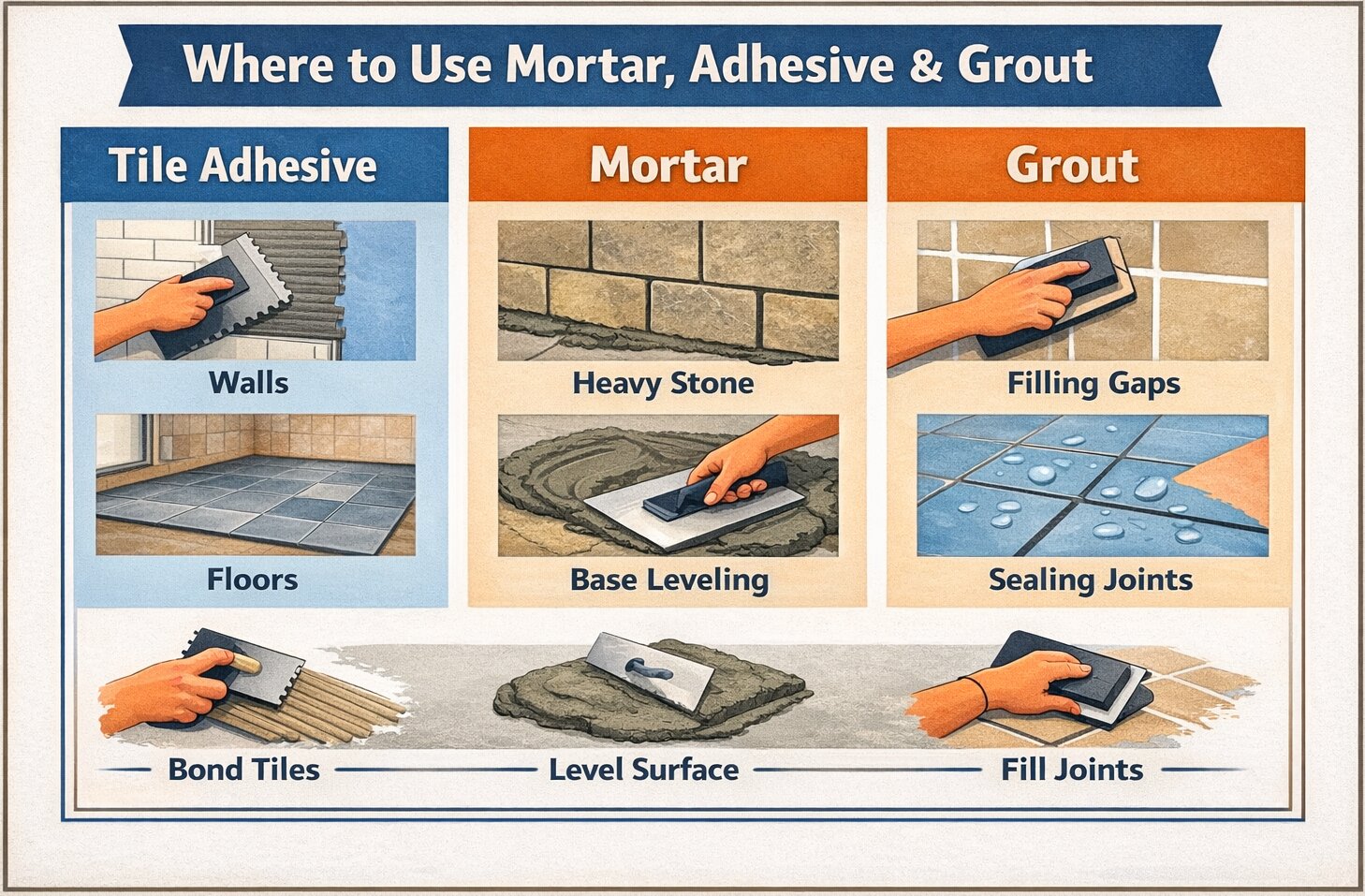
Each material used in tile installation has a specific purpose and works best in certain situations. Understanding where to use mortar, adhesive, and grout helps ensure a strong and long-lasting tile installation. It also clarifies the differences in mortar vs grout for tiles and how each material contributes to the final result.
Tile adhesive is mainly used to bond tiles directly to surfaces. It is widely preferred in modern construction because it provides strong bonding and easy application.
Common uses include:
Walls: Ideal for installing ceramic or porcelain tiles on interior walls.
Floors: Provides reliable bonding for floor tiles in residential and commercial spaces.
Bathrooms: Works well in moisture-prone areas such as bathrooms and kitchens.
Mortar is a traditional sand-cement mixture that is still used in some construction situations.
Common uses include:
Heavy Stone Installations: Suitable for fixing heavy natural stone or thick tiles.
Base Leveling: Often used to create a flat base before tile installation.
Grout is applied after tiles are fixed to the surface and is used to fill the joints between tiles.
Common uses include:
Filling Tile Gaps: Helps lock tiles in place and improve the finished appearance.
Waterproof Sealing: Prevents water, dirt, and moisture from entering the tile joints.
Understanding where each material should be used helps explain the difference in mortar vs grout for tiles and ensures that every stage of the tile installation process is completed correctly.
Understanding tile adhesive vs mortar vs grout helps ensure proper tile installation and long-lasting results. Tile adhesive is used to bond tiles to surfaces, mortar is a traditional mixture used for base support or leveling, and grout fills the gaps between tiles to protect and stabilize them.
Using the right material at the right stage improves tile durability, appearance, and overall performance. Choosing quality products from trusted manufacturers like Lapifix can help achieve strong and reliable tile installations.
The difference between tile adhesive and mortar lies in bonding strength, thickness, and application. Tile adhesive is a modern bonding material applied in a thin layer that provides strong adhesion between tiles and surfaces. Mortar is a traditional mixture of cement and sand applied in a thicker layer and usually requires more skill and preparation during installation.
No, grout cannot replace tile adhesive. Grout is designed only to fill the joints between tiles, while tile adhesive is used to bond tiles securely to the surface. Without adhesive, tiles will not stay firmly attached.
Tile adhesive generally provides stronger and more reliable bonding compared to cement mortar. It contains polymers and additives that improve adhesion, flexibility, and durability, making it suitable for modern tile installations.
Yes, both materials are needed. Tile adhesive fixes the tiles to the surface, while grout fills the spaces between tiles and protects the joints from moisture and dirt.
If tiles are installed without grout, the gaps between tiles remain open. This can allow moisture, dust, and debris to enter the joints, which may lead to tile movement, damage, or an uneven appearance over time.