

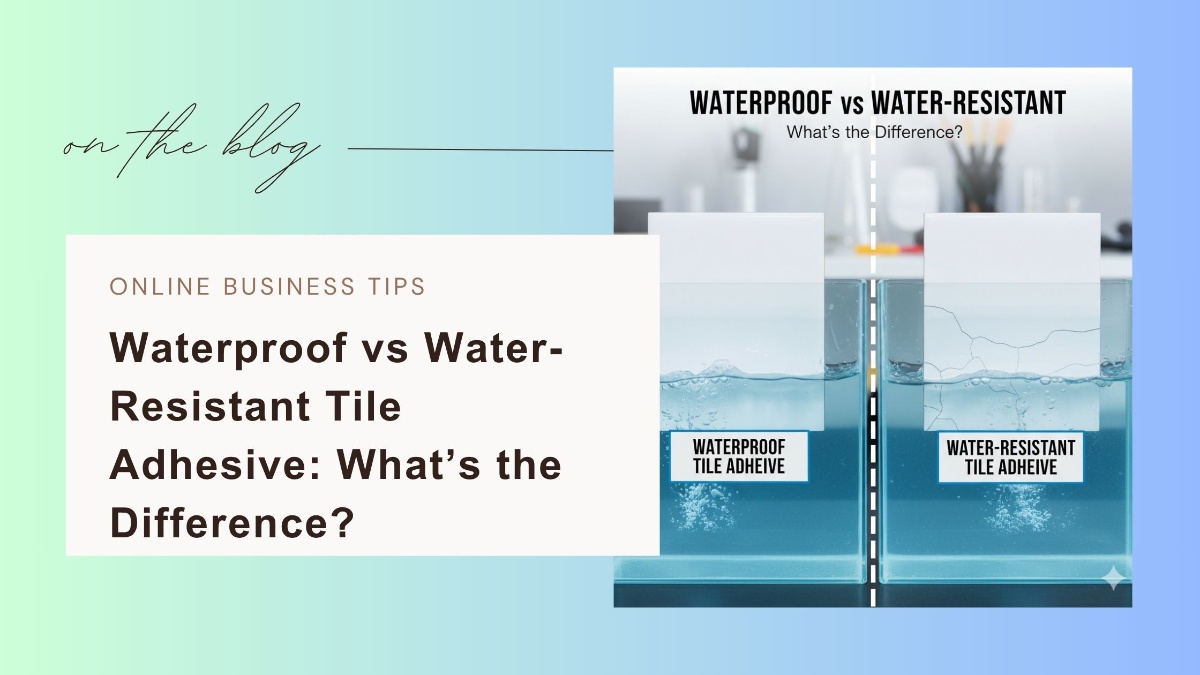
Choosing the right tile adhesive can make or break your project literally. Whether you’re installing tiles in a bathroom, kitchen, or outdoor area, understanding how your adhesive performs against moisture is essential. Many homeowners and even professionals often use the terms waterproof and water-resistant interchangeably, but they’re not the same.
A waterproof tile adhesive can completely prevent water penetration, keeping your tiles firmly bonded even in areas exposed to constant moisture, such as showers or swimming pools. A water-resistant adhesive, on the other hand, can handle occasional splashes or humidity but isn’t built for continuous water contact.
Knowing the difference helps you avoid peeling tiles, mold growth, and costly rework. In this guide, we’ll break down the science behind these adhesives, when to use each type, and how to make sure your tile installation lasts for years.
Tile adhesive is the bonding material that secures tiles to surfaces like concrete, plaster, or cement board. Modern adhesives are typically cement-based or polymer-modified, providing strength, flexibility, and moisture resistance. The adhesive layer must not only hold tiles in place but also resist expansion, contraction, and water exposure over time.
Different adhesives are formulated for different conditions, some for dry indoor walls, others for wet environments like bathrooms or pools. Understanding their composition and limitations is the first step toward choosing the right product for your project.
A waterproof tile adhesive is specially engineered to form a strong, water-impervious bond that prevents moisture from seeping through the tile layer and damaging the substrate beneath. These adhesives are commonly epoxy-based or polymer-modified cement adhesives designed for areas exposed to continuous or heavy water contact such as bathrooms, showers, swimming pools, balconies, and outdoor installations.
Unlike regular or water-resistant adhesives, waterproof formulations maintain adhesion even when submerged. Their dense structure and high polymer content block water penetration, ensuring the tiles stay bonded under harsh, wet conditions. They also provide excellent chemical resistance and long-term durability, making them ideal for both residential and commercial wet zones.
When selecting a waterproof adhesive, look for products that meet C2 and S1/S2 classifications under EN 12004 or ISO 13007 standards, indicating improved adhesion and flexibility. Although waterproof adhesives are slightly more expensive, they deliver superior protection, longevity, and peace of mind especially in moisture-rich environments where failure can lead to costly repairs.
A water-resistant tile adhesive is formulated to withstand occasional moisture, splashes, and humidity without losing its bonding strength. However, unlike waterproof adhesives, it cannot prevent water from penetrating over long or repeated exposure. Water-resistant adhesives are ideal for interior spaces such as kitchens, laundry rooms, and bathroom walls, where moisture is present but not constant.
These adhesives are typically cement-based and often polymer-modified to enhance flexibility and adhesion. They perform well in environments that experience intermittent dampness or condensation but should not be used in areas that are continuously wet or submerged like shower floors or pools.
The main advantage of water-resistant adhesive lies in its affordability and ease of application. It delivers reliable performance for light to medium moisture areas when paired with good surface preparation and proper grouting. Still, for maximum longevity, it’s best to combine water-resistant adhesives with a moisture barrier or waterproof membrane, especially on substrates that may absorb water over time.
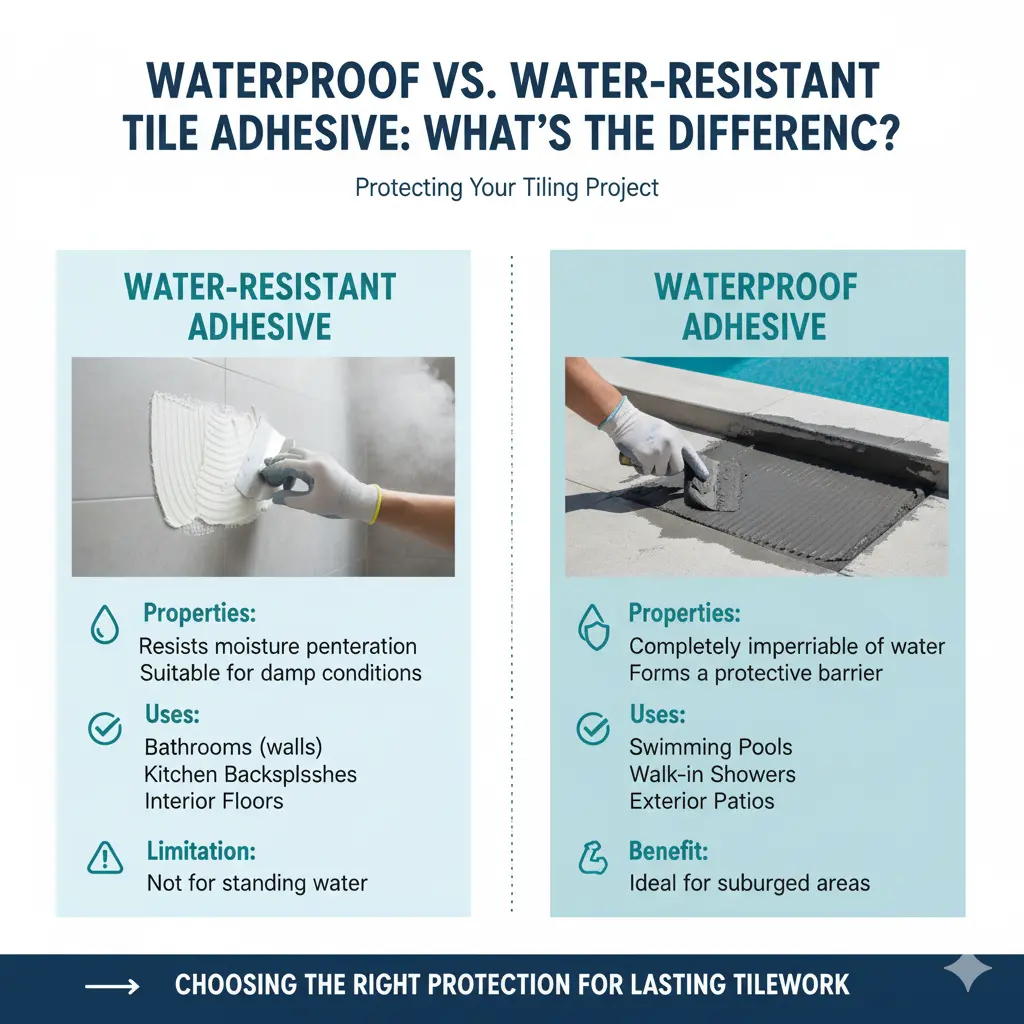
While both waterproof and water-resistant tile adhesives are designed to handle moisture, they differ significantly in composition, performance, and durability. Understanding these distinctions ensures you choose the right adhesive for your project and avoid costly moisture damage later.
Waterproof and water-resistant adhesives offer different levels of protection against water. Waterproof flooring is completely impervious to water and is built to handle exposure indefinitely. Water-resistant tile adhesive is designed to withstand water exposure for a limited time and often consists of a ceramic or porcelain base with a glazed surface. Waterproof adhesive is made from specialized non-porous materials with an impermeable structure.
| Feature | Waterproof Tile Adhesive | Water-Resistant Tile Adhesive |
|---|---|---|
| Moisture Protection | Completely blocks water penetration | Resists occasional splashes or humidity |
| Composition | Epoxy-based or polymer-modified | Cement-based, may include polymers |
| Best Used In | Showers, pools, outdoor areas, wet rooms | Kitchens, laundry areas, indoor walls |
| Durability | High — maintains bond even when submerged | Moderate — not suitable for constant moisture |
| Cost | Higher due to advanced formula | More affordable, ideal for light-duty areas |
| Flexibility | Excellent; handles movement and temperature changes | Moderate flexibility |
| Maintenance Needs | Low | May require periodic resealing or maintenance |
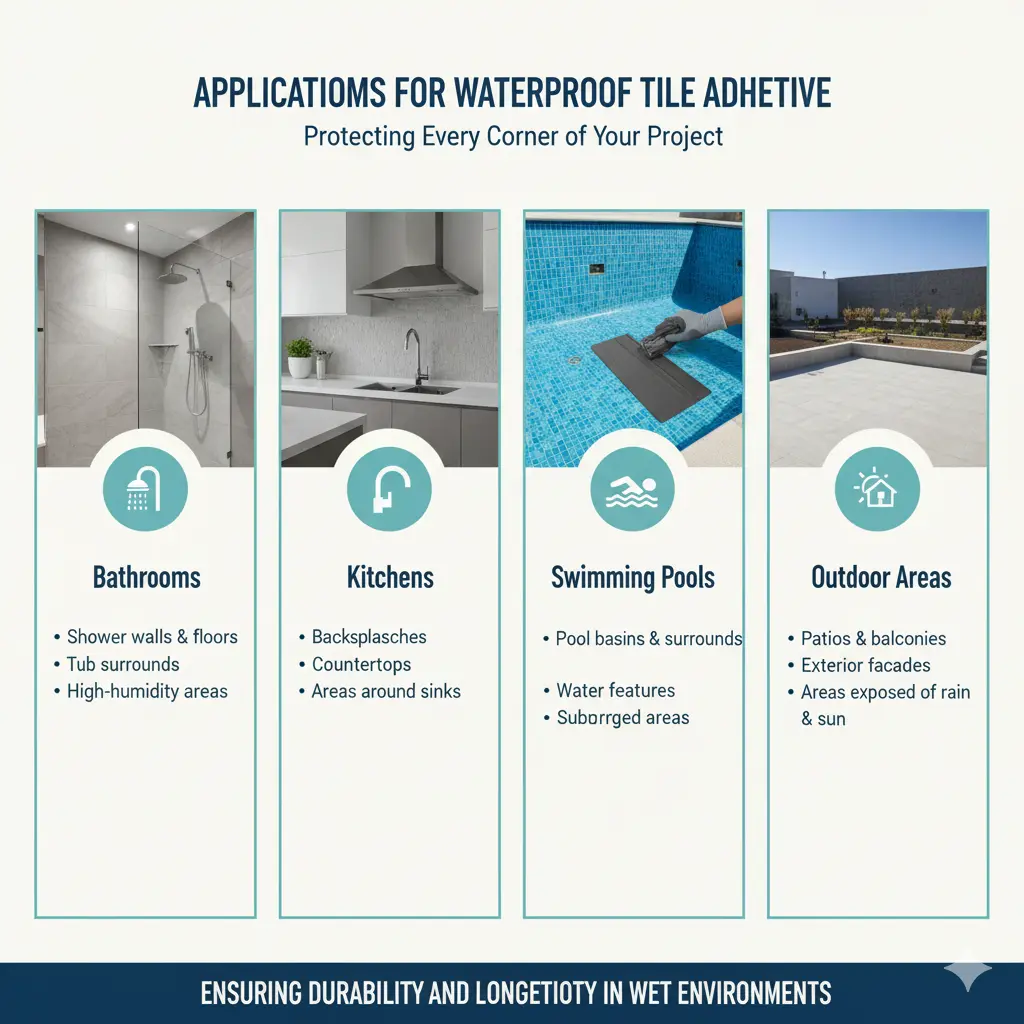
Waterproof tile adhesive is ideal for areas that are frequently exposed to water. Some common applications include:
Bathrooms: Waterproof adhesives are perfect for bathroom floors and walls, especially in shower areas where water exposure is continuous.
Kitchens: Kitchen backsplashes and countertops benefit from waterproof adhesives as they are often subjected to splashes and spills.
Swimming Pools: The constant presence of water in pools makes waterproof adhesives indispensable for ensuring tiles remain secure and intact.
Outdoor Areas: Patios, decks, and other outdoor tiling projects that face rain or snow require the protection offered by waterproof adhesives.
Using waterproof adhesive in these applications not only enhances the durability of the tiling job but also helps prevent costly repairs due to water damage. It ensures a long-lasting, attractive finish that can withstand the challenges of wet environments.
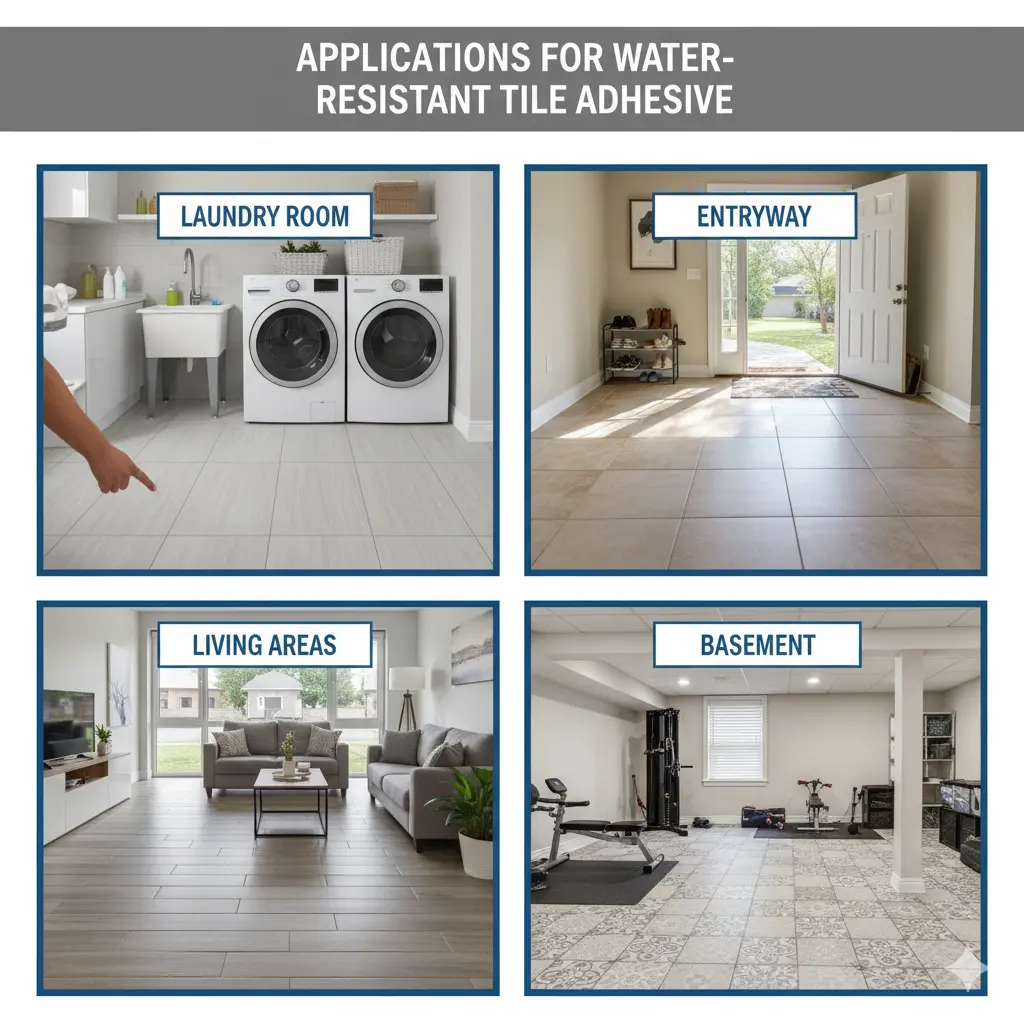
Water-resistant tile adhesive is suitable for areas that experience occasional moisture but are not consistently wet. These include:
Laundry Rooms: While not constantly exposed to water, laundry rooms can have occasional spills and splashes that water-resistant adhesives can handle.
Entryways: These areas may experience moisture from wet shoes or umbrellas, making water-resistant adhesives a practical choice.
Living Areas: For tiles in living rooms or hallways, where moisture exposure is minimal, water-resistant adhesives provide sufficient protection.
Basements: In basements with low humidity levels, water-resistant adhesives can be a cost-effective option for tiling projects.
Selecting water-resistant adhesive for these applications offers a balance between performance and cost. It provides the necessary protection without the expense of waterproof alternatives, making it an excellent choice for low-moisture environments.
Waterproof tile adhesive, engineered for areas with constant water exposure, relies on specialized materials to ensure complete water resistance. Typically, waterproof tile adhesives are crafted from substances like epoxy resins or modified polyurethane. These materials form an impermeable bond, preventing water penetration entirely. Waterproof tile adhesive is often used with waterproof flooring and waterproof tile.
The core composition of these adhesives ensures they maintain their integrity even when continuously exposed to water, making them ideal for bathrooms, wet rooms, and areas prone to spills. The selection of such materials is crucial for any homeowner looking to safeguard their tiling project against water damage.
Water-resistant adhesive, suitable for areas with occasional water exposure, typically consists of cement-based compounds enhanced with polymers. These polymers increase the water resistance of the adhesive, preventing water from easily penetrating the substrate, which is crucial for tile flooring. While water-resistant adhesive provides protection against moisture, it is not as impermeable as waterproof tile adhesive. These adhesives are frequently used in kitchens and bathrooms where water exposure is moderate.
The material composition allows them to withstand spills and splashes, ensuring that the tiles remain securely bonded. Understanding the material differences is essential when choosing between waterproof and water-resistant options for your tiling project.
The material composition of the adhesive significantly impacts its performance and durability. Waterproof tile adhesives, formulated with epoxy or modified polyurethane, offer superior protection in areas with constant water exposure. This durability ensures a longer lifespan and consistent performance, preventing issues like tile shifting and grout degradation. In contrast, water-resistant adhesive, composed of cement-based compounds and polymers, is designed to withstand temporary water exposure.
Over time, continuous water can penetrate these materials, leading to potential water damage and compromising the integrity of the installation. Therefore, selecting the right adhesive based on its material properties is crucial for the success and longevity of any tiling project, particularly when considering the difference between water resistant and waterproof options. Homeowners need to consider water resistance when they choose between waterproof flooring and water-resistant flooring.
Waterproof tile adhesive offers superior durability in wet and humid conditions. It does not swell, warp, or discolor, even with continuous water exposure, making it ideal for tank environments. In contrast, water-resistant tile, while durable under dry conditions, is more prone to damage when exposed to water for extended periods. This difference in durability stems from the material composition of each type of adhesive. Waterproof adhesive typically consists of epoxy resins or modified polyurethane, which create an impermeable barrier. Water-resistant adhesive, on the other hand, is usually cement-based with polymers that enhance water resistance but do not offer the same level of protection.
Adhesive longevity is influenced by several factors, with water exposure being a primary concern, particularly in types of flooring that are prone to moisture. Prolonged exposure to water can lead to damage, such as swelling, warping, or discoloration. Waterproof adhesive is designed to withstand such conditions, ensuring a longer lifespan. However, water-resistant adhesive can degrade over time if continuously exposed to moisture.
Additionally, the quality of the installation, including proper surface preparation and application techniques, also plays a significant role in how long the adhesive will last. Homeowners need to choose the best adhesive to enhance durability. They need to consider whether water-resistant flooring is sufficient for their particular scenario.
Warranty considerations are another crucial aspect when comparing waterproof adhesive and water-resistant adhesive. Waterproof flooring usually comes with comprehensive warranties that cover water damage, reflecting the manufacturer’s confidence in its performance. These warranties often provide coverage for several years, ensuring homeowners are protected against potential issues related to water exposure. Water-resistant tile, on the other hand, typically has shorter warranties with limited coverage for water-related issues. The difference in warranty coverage underscores the varying levels of protection offered by each type of adhesive, reinforcing the importance of choosing the right product for the intended environment.
When deciding on the appropriate tile adhesive for your tiling project, the level of water exposure is a critical factor. If the installation area will be subjected to constant water exposure, such as a shower or swimming pool, waterproof tile adhesive is essential. In these environments, the ability of the adhesive to prevent water penetration is paramount, especially when comparing different types of flooring.
For areas with occasional spills or moisture, such as a kitchen or bathroom, water-resistant adhesive may suffice. Homeowners must evaluate the specific conditions of their tiling project to determine whether the superior protection of waterproof flooring or the adequate water resistance of water-resistant tile is more suitable. This decision will significantly impact the longevity and performance of the installation.
Cost is an important factor to consider when choosing between waterproof adhesive and water-resistant adhesive. Waterproof adhesive is generally more expensive than water-resistant tile due to its advanced materials and manufacturing processes. The higher price reflects the superior protection and durability it offers in wet environments, especially when compared to lower-quality adhesive vs options.
On the other hand, water-resistant tile is more budget-friendly, making it a popular choice for homeowners looking for an affordable solution in spaces with minimal water exposure, especially when considering porcelain tiles. While water-resistant flooring offers adequate protection for many applications, it may not be the best choice for areas where constant water exposure is a concern. Therefore, homeowners must balance cost considerations with the specific requirements of their tiling project.
The maintenance requirements of different adhesives can also influence your decision-making process. Water-resistant tile requires immediate attention to spills and moisture to prevent long-term water damage. Regular cleaning and maintenance are essential to ensure the water-resistant properties of the adhesive remain effective, particularly for water-resistant and waterproof flooring.
Waterproof flooring, in contrast, is much easier to maintain. Its impermeable nature prevents water penetration, making it less susceptible to water damage and easier to clean. While both types of adhesives require some level of maintenance, the superior water resistance of waterproof adhesive can reduce the frequency and intensity of upkeep. Homeowners should factor in these maintenance considerations when choosing between waterproof and water-resistant options.
In summary, both waterproof tiles and water-resistant tile have their benefits and disadvantages according to different scenarios. Waterproof adhesive excels in environments with constant water exposure, providing superior protection and durability, while water-resistant adhesive offers an affordable and effective solution for areas with minimal moisture. The selection of the most appropriate tile adhesive depends heavily on the specific needs of the tiling project.
Evaluating the level of water exposure, the desired lifespan of the installation, and budgetary constraints will guide homeowners towards the optimal choice. Understanding the differences between waterproof adhesive and water-resistant adhesive ensures a successful and long-lasting tiling project.
For superior performance and durability, trusted brands like Lapifix offer high-quality tile adhesives, epoxy grouts, and wall putties designed to deliver professional results for every type of installation. Lapifix tile grout and epoxy grout solutions ensure tight, moisture-proof joints that resist staining and cracking essential for maintaining a clean, long-lasting tile finish.
Not all tile adhesives are waterproof. Most are water-resistant, meaning they can handle occasional moisture. True waterproof adhesives are formulated to block water completely and are ideal for wet zones like showers or pools.
Yes but only on walls or areas that aren’t constantly wet. For shower floors or areas with direct water exposure, always use a waterproof adhesive and a waterproof membrane.
Using a water-resistant adhesive in a wet area can lead to loose tiles, mold growth, or structural damage over time due to moisture penetration.
No. Even waterproof adhesives should be paired with a tanking or waterproofing membrane to fully protect the substrate from water damage.
It’s not recommended. Mixing different formulations can weaken bonding strength and cause uneven curing. Stick to one type and brand per project.
Curing time depends on the product and conditions, but most adhesives need 24–48 hours before grouting or exposure to moisture.
Some adhesives are multi-purpose, but floor applications often require stronger, more flexible formulations to handle load and movement. Always check the label.
For patios, balconies, and terraces, choose a flexible waterproof adhesive that can resist temperature changes, moisture, and UV exposure.
Use the correct adhesive, prepare the surface properly, seal joints, and perform regular cleaning and maintenance to prevent moisture buildup.
Yes. Even with waterproof adhesive, sealing the grout prevents stains, water absorption, and mold growth, keeping your tiles looking new for longer.