

Large-format bathroom tiles have become a defining element of modern bathroom design. Their clean lines, minimal grout joints, and seamless appearance instantly elevate interiors, making bathrooms feel more open, refined, and luxurious. From contemporary homes to high-end hospitality spaces, large tiles are now the preferred choice for creating visually expansive and elegant bathrooms.
However, as tile sizes increase, grout becomes far more noticeable. With fewer grout lines on the surface, the grout color for large bathroom tiles plays a crucial role in the final look. The wrong shade can break the visual flow, while the right grout color blends effortlessly, enhancing both aesthetics and symmetry. Unlike smaller tiles, large-format tiles demand a more thoughtful grout selection to maintain balance and proportion.
Choosing the right grout does more than improve appearance. It enhances the sense of space, complements tile textures, and contributes to long-term durability by supporting proper alignment and moisture resistance. When selected correctly, grout transforms large bathroom tiles from a design choice into a lasting investment in comfort, style, and performance.
When choosing what grout color to use with large tiles, it’s important to understand that larger tiles have fewer grout lines, making each line more visible. Unlike small tiles where grout blends into the pattern, large tiles highlight grout color more clearly, impacting the overall design.
This is why large format bathroom tiles grout needs special consideration. Matching or closely toned grout creates a smooth, seamless surface, while high-contrast grout makes tile edges stand out. The right choice depends on whether you want a clean, uniform look or a more defined, structured appearance.
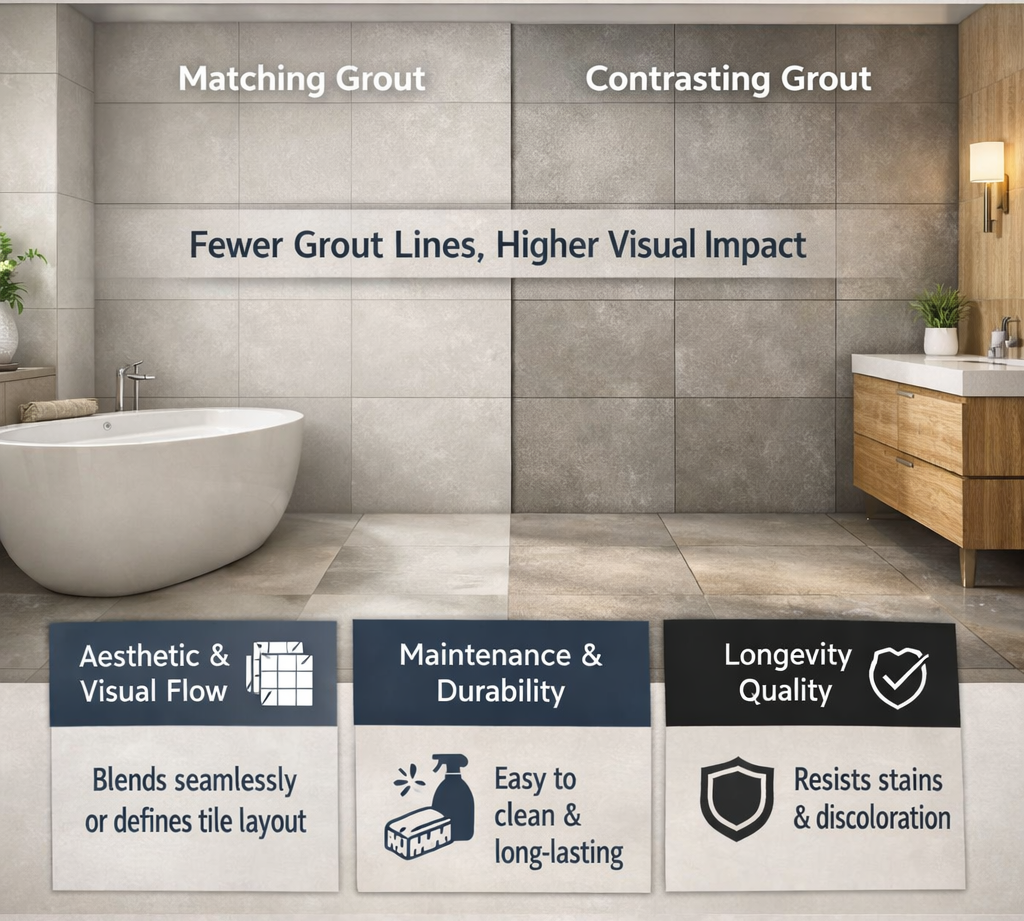
Large bathroom tiles are designed to create a clean, modern, and uninterrupted surface. Because these tiles have fewer joints, every grout line becomes more noticeable. This makes grout color selection for bathroom spaces especially important when working with large formats, as the wrong shade can draw unnecessary attention and disrupt the overall design.
With large tiles, grout lines are limited, but they carry greater visual weight. Unlike small tiles where grout blends into a pattern, large bathroom tiles rely on grout to either disappear or intentionally define the layout. A grout color that closely matches the tile helps create a smooth, seamless appearance, while a contrasting shade highlights tile boundaries and adds character. Even slight color mismatches can stand out, making careful selection essential.
Grout affects more than just how the bathroom looks. From an aesthetic perspective, the right grout color enhances tile color, texture, and finish. It can make the bathroom feel more spacious, balanced, and refined.
Maintenance is another critical factor. Lighter grout may enhance brightness but often requires frequent cleaning, while darker grout hides stains and moisture marks more effectively. Choosing the right grout also impacts longevity. High-quality grout in the correct shade resists discoloration, cracking, and wear, ensuring the tiled surface looks good for years.
One common mistake is choosing grout based solely on appearance without considering maintenance needs. Another is selecting a highly contrasting grout color that overwhelms large tiles instead of complementing them. Many homeowners also skip testing grout samples under bathroom lighting, which can alter how the color appears once installed.
Avoiding these mistakes helps ensure the grout color for large bathroom tiles supports both the design vision and long-term functionality of the bathroom.

Large bathroom tiles bring a sleek, contemporary look, but they also change how grout behaves visually and functionally. Unlike standard tiles, large formats require more thoughtful grout choices to maintain balance, alignment, and overall design harmony. This is why selecting the right grout color for large bathroom tiles becomes a critical part of the planning process.
Standard tiles create multiple grout lines that form a visible pattern, making grout less dominant in the overall design. In contrast, large format tiles have fewer joints, which means grout lines are more noticeable. Even subtle color differences can stand out against large tile surfaces. With large tiles, grout is no longer just a filler it becomes a design element that can either enhance or disrupt the tile layout.
Large tiles are designed to create clean lines and visual continuity. The grout color plays a major role in how spacing and alignment are perceived. Matching or closely toned grout supports a smooth visual flow and helps surfaces appear more expansive. On the other hand, high-contrast grout emphasizes tile edges, which can interrupt the flow and make the space feel segmented.
Proper grout selection also highlights precise installation. Misaligned tiles become more visible when contrasting grout is used, making accuracy even more important with large tiles.
Matching grout with bathroom tiles is often the safest and most effective approach for large tile installations. It allows the tile surface to remain the focal point while keeping grout lines subtle and refined. This technique is especially beneficial in small or modern bathrooms where a clean, seamless appearance is desired.
By carefully coordinating grout and tile colors, homeowners can enhance spatial continuity, reduce visual clutter, and achieve a polished, high-end bathroom finish.
Choosing between light and dark grout is one of the most important decisions when working with large bathroom tiles. Both options create very different visual effects and come with their own practical considerations. Understanding the pros, cons, and maintenance requirements will help you select the right grout color for large bathroom tiles based on your lifestyle and design goals.
Light grout shades such as white, ivory, beige, or soft grey are popular in modern bathrooms, especially when paired with large-format tiles.
Pros of light grout:
Creates a seamless and spacious look
Makes large tiles appear even bigger
Enhances brightness in bathrooms with limited natural light
Works well with minimalist and luxury bathroom designs
Cons of light grout:
Shows stains, soap residue, and water marks more easily
Requires regular cleaning and sealing
Can discolor over time in high-moisture areas
Light grout is ideal when the goal is visual continuity and an open, airy feel. However, it demands consistent upkeep to maintain its original appearance.
Dark grout colors such as charcoal, grey, or black are often chosen for contemporary and bold bathroom styles.
Pros of dark grout:
Hides dirt, stains, and moisture marks effectively
Requires less frequent cleaning
Adds definition and contrast to large tiles
Suitable for textured or matte tile finishes
Cons of dark grout:
Can make small bathrooms feel more compact
High contrast may visually break the tile surface
Lighter tiles may appear busier with dark grout
Dark grout works best when contrast is intentional and when durability and low maintenance are priorities.
From a maintenance perspective, dark grout generally performs better in bathrooms due to its ability to conceal stains and discoloration. Light grout, while visually appealing, often needs sealing and regular cleaning to prevent yellowing or mildew.
In terms of durability, both light and dark grout can last equally long if high-quality materials and proper installation are used. Epoxy or stain-resistant grout options improve longevity regardless of color. The final decision should balance design preference with daily maintenance expectations.
Ultimately, the better option depends on whether you prioritize aesthetics or ease of care when selecting the grout color for large bathroom tiles.
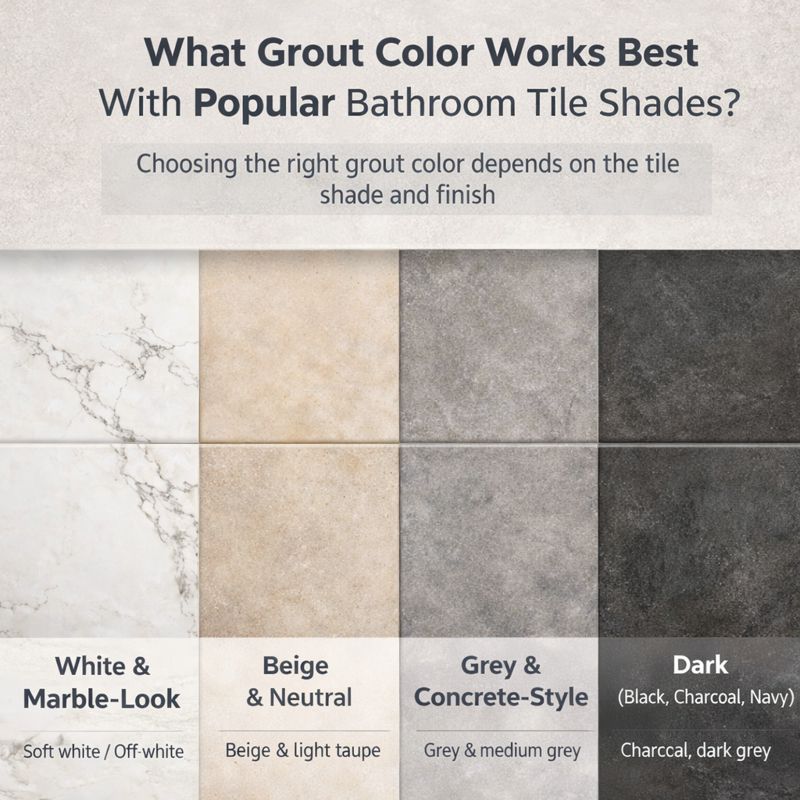
Choosing the right grout color depends largely on the tile shade and finish. Since large tiles minimize grout lines, even small color differences can change the overall look of the bathroom. Selecting the best grout color for large bathroom tiles based on tile shade helps maintain balance, elegance, and visual consistency.
White and marble-look tiles are timeless and luxurious, but grout choice can either elevate or diminish their appeal. Soft white, off-white, or very light grey grout works best, as it blends naturally with the tile and preserves the seamless marble effect. Avoid stark white grout with marble-look tiles that have grey veining, as it can look unnatural. A subtle grey tone enhances the veining and maintains a premium finish.
Neutral tiles pair beautifully with warm grout shades such as beige, sand, or light taupe. These combinations create a cohesive and welcoming look while avoiding harsh contrasts. Matching grout with bathroom tiles in similar warm tones helps large tile surfaces feel continuous and well-balanced, making this an excellent choice for classic and contemporary bathrooms alike.
Grey and concrete-style tiles are popular in modern and industrial bathrooms. Medium grey or slightly darker grout works best, as it complements the tile without overpowering it. For a more seamless look, choose grout within the same color family. Slightly darker grout can add depth while maintaining a clean, architectural aesthetic.
Dark tiles require careful grout selection to avoid overwhelming the space. Charcoal, dark grey, or matching black grout creates a refined, cohesive look and hides stains effectively. High-contrast light grout should be used sparingly, as it can draw too much attention to grout lines and disrupt the visual flow, especially with large bathroom tiles.
By aligning grout color with tile shade, homeowners can achieve a polished look that enhances both design and durability.
Bathroom size plays a major role in determining the right grout shade. The correct grout color for large bathroom tiles can visually enhance proportions, improve flow, and create a more balanced space. Choosing grout based on bathroom size ensures both aesthetic appeal and practical functionality.
In small bathrooms, the goal is to create a sense of openness. Light or matching grout works best with large bathroom tiles, as it minimizes visual breaks and makes the space feel larger. Soft white, beige, or light grey grout blends seamlessly with tiles, allowing surfaces to appear continuous. Avoid strong contrasts, as dark grout lines can make small bathrooms feel crowded and segmented.
Medium-sized bathrooms offer more flexibility. Matching grout still creates a clean, modern look, while slightly darker grout can add subtle definition without overpowering the space. Neutral tones such as warm grey or taupe strike a balance between style and practicality, making them ideal for everyday bathrooms with moderate use.
Large luxury bathrooms allow for more design freedom. Both matching and contrasting grout can work effectively, depending on the desired aesthetic. Darker grout can be used to define tile layouts and add depth, especially with textured or matte tiles. Since space is not a constraint, grout can be treated as a design element rather than just a functional necessity.
By aligning grout color selection for bathroom size and tile format, homeowners can achieve a cohesive and visually pleasing bathroom design.
Modern bathrooms focus on clean lines, balanced tones, and intentional design choices. The right grout color for large bathroom tiles plays a key role in achieving a contemporary look that feels both stylish and practical. Below are some popular bathroom tile grout color ideas that work especially well in modern spaces.
Spa-inspired bathrooms aim for calm, harmony, and visual continuity. Matching grout in soft white, beige, or light grey helps create a smooth, uninterrupted tile surface. This approach works beautifully with large format tiles, marble-look finishes, and neutral color palettes. The result is a relaxing, high-end aesthetic that feels open and uncluttered.
For homeowners who prefer a striking visual impact, contrasting grout can be used as a design feature. Dark grout with light tiles or light grout with dark tiles highlights tile geometry and layout. This approach works best in spacious bathrooms with excellent lighting, where contrast enhances character without overwhelming the space. Careful planning is essential to ensure grout enhances rather than dominates the design.
Minimalist and luxury bathrooms rely on subtle detailing rather than strong contrasts. Grout shades that are slightly lighter or darker than the tile help maintain sophistication while adding depth. Soft greys, greige, and muted neutrals are ideal choices. Matching grout with bathroom tiles in these tones supports a refined, elegant finish that aligns with modern design principles.
By choosing grout thoughtfully, homeowners can elevate large bathroom tiles and create a modern space that feels timeless and visually balanced.
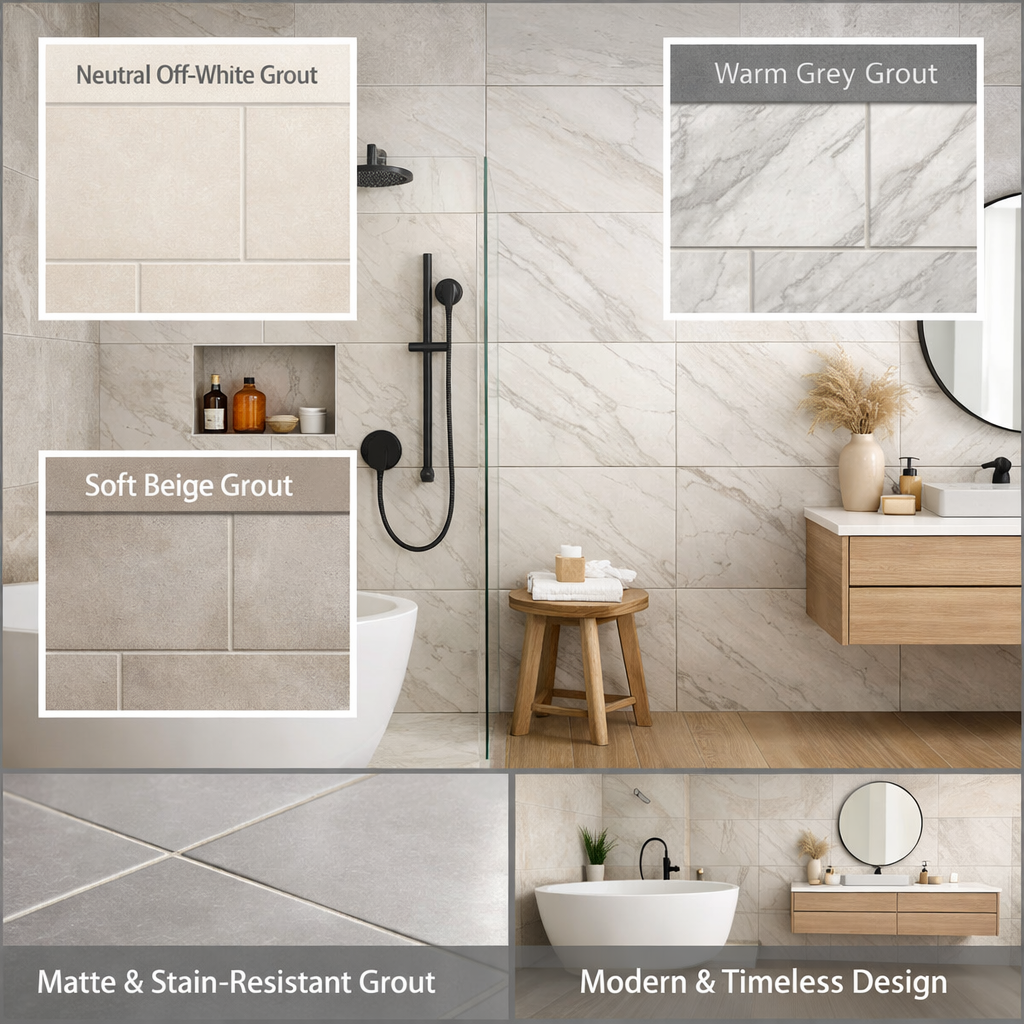
Grout is no longer just a functional element it has become an essential design feature in modern bathrooms. Current trends focus on subtle, versatile shades that complement large tiles while offering durability and ease of maintenance. Choosing a trending grout color for large bathroom tiles helps create a stylish bathroom that stays relevant for years.
Neutral grout tones continue to dominate bathroom design. Shades such as off-white, sand, and light taupe blend seamlessly with most tile colors. These tones enhance visual continuity, making them ideal for large bathroom tiles where a clean, cohesive look is desired. Neutral grout also adapts easily to changing décor styles, offering long-term design flexibility.
Cool greys are giving way to warmer shades that feel more inviting. Warm greys and soft beiges pair beautifully with marble-look, concrete-style, and neutral tiles. These tones soften the overall look of the bathroom while maintaining a modern edge. They are especially popular in luxury and spa-style bathrooms where comfort and elegance go hand in hand.
Matte grout finishes are trending due to their understated appearance and ability to hide imperfections. Alongside aesthetics, stain-resistant and epoxy grout options are increasingly preferred for bathrooms. These advanced grout types resist moisture, discoloration, and mold, making them practical for high-use spaces while preserving the original grout color over time.
By embracing these grout color trends for bathrooms, homeowners can combine modern style with long-lasting performance.
When selecting what grout color to use with large tiles, maintenance should be just as important as appearance especially in bathrooms exposed to constant moisture. The right grout color can reduce visible stains, slow discoloration, and keep the bathroom looking clean with minimal effort.
Grout naturally absorbs dirt, soap residue, and minerals from hard water. Medium-toned grout shades such as warm grey, greige, or beige offer the best stain resistance without appearing dull. Very light grout shows stains easily, while extremely dark grout can fade unevenly over time. Choosing a balanced, neutral shade helps maintain a fresh look with less frequent cleaning.
Bathrooms are high-moisture environments, making mold resistance a key factor in grout selection. Darker and mid-tone grout hides early signs of mold better than white grout. However, color alone is not enough. Stain-resistant or epoxy grout provides superior protection against moisture penetration, reducing the risk of mold growth. Proper sealing further improves grout longevity and hygiene.
Indian bathrooms often face hard water stains, high humidity, and frequent use. Practical grout color choices include light grey, beige, and taupe, as these shades effectively conceal water marks and everyday dirt. Matching grout with bathroom tiles in these tones ensures a clean, balanced appearance while remaining easy to maintain in Indian conditions.
By prioritizing durability and ease of care, homeowners can select a grout color for large bathroom tiles that stays visually appealing with minimal upkeep.
Choosing the right grout is the final step that brings your bathroom design together. This bathroom grout color guide highlights expert-backed considerations that help ensure the grout color for large bathroom tiles looks right both immediately after installation and in the long run.
Tile finish plays a major role in how grout color appears. Glossy tiles reflect light, making grout lines more noticeable, so matching or closely toned grout works best. Matte or textured tiles can handle slightly darker grout without overwhelming the surface. Always ensure the grout shade complements the tile’s finish rather than competing with it.
Lighting can dramatically change how grout color looks. Natural daylight highlights true color, while artificial lighting can warm or cool the shade. Bathrooms with limited natural light benefit from lighter grout that keeps the space bright. Before finalizing, test grout samples under the bathroom’s actual lighting to avoid unexpected contrasts.
Large tiles require precise grout coordination because fewer grout lines increase their visual impact. Matching grout supports clean alignment and seamless flow, especially with straight or stacked layouts. For patterned layouts, such as herringbone or offset designs, slightly contrasting grout can define the pattern without overpowering it.
By considering finish, lighting, and layout together, homeowners can confidently finalize a grout color that enhances both design and functionality.
Choosing the right grout color for large bathroom tiles plays a key role in both design and performance. Matching or neutral grout shades help maintain visual flow, enhance the sense of space, and highlight the elegance of large-format tiles. Factors such as bathroom size, lighting, tile finish, and maintenance needs should always guide grout selection.
Expert tile and grout choices ensure long-term durability, easier upkeep, and a consistently refined look. Large tiles demand precision, and thoughtful grout selection helps achieve a bathroom that looks seamless and balanced for years to come.
With its focus on premium surfaces and design-led solutions, Lapifix offers large-format tiles that pair beautifully with the right grout choices. When tiles and grout work in harmony, the result is a bathroom that reflects quality, sophistication, and lasting value.
Grout that closely matches the tile color works best with large bathroom tiles. It creates a seamless finish and prevents grout lines from drawing attention.
Yes. Light or matching grout colors make tiles appear larger by reducing visual breaks, especially when used with large-format tiles.
Light grout brightens the space and enhances openness, while dark grout hides stains better and requires less frequent cleaning.
Dark and mid-tone grout colors are easier to maintain as they conceal dirt, moisture marks, and discoloration over time.
Matching grout is recommended for large tiles to maintain visual flow. Contrast grout should only be used for deliberate design accents.
Grout should generally match the tile rather than the wall color. This keeps the surface cohesive and avoids visual distraction.
Light grey, beige, or tile-matching grout works best in small bathrooms, as it makes the space feel larger and more open.
Mid-grey, taupe, or warm neutral grout colors are ideal for low-maintenance bathrooms because they balance appearance and practicality.