

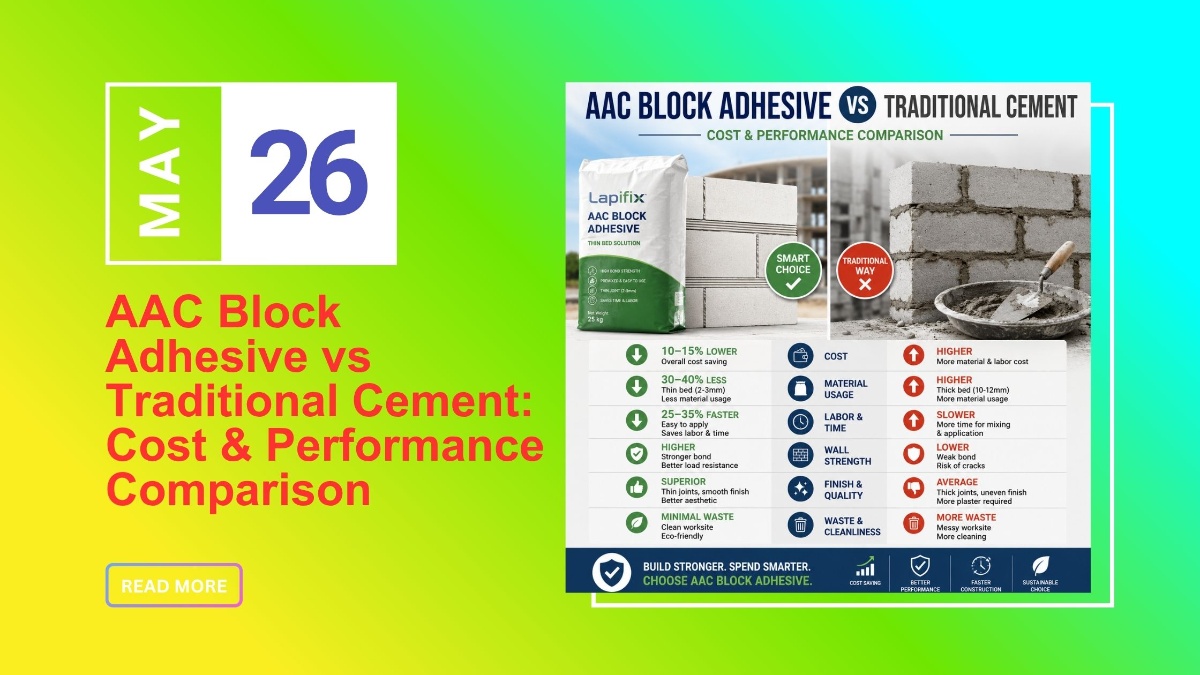
The construction industry has changed significantly over the last decade, with builders and contractors focusing more on speed, durability, and cost efficiency. One material that has gained massive popularity in modern construction is AAC blocks. Known for their lightweight structure, thermal insulation, and faster installation process, AAC blocks are now widely used in residential, commercial, and industrial projects.
Builders and contractors increasingly prefer modern AAC block adhesive solutions because of their strong bonding performance, faster application, and long-term cost efficiency.
However, the performance of AAC blocks largely depends on the bonding material used during installation. This is where the debate around AAC block adhesive vs traditional cement becomes important. Many builders still rely on traditional cement mortar, while modern construction professionals are increasingly shifting toward specialized AAC block adhesive solutions for better performance and long-term reliability.
Unlike conventional mortar, AAC block adhesive is specially designed to provide strong bonding with thin joints, helping reduce material consumption and construction time. On the other hand, traditional cement mortar requires thicker application layers, more water, and additional labor, which can increase overall project costs and maintenance issues over time.
Choosing the right bonding material is not just about initial cost it also affects wall strength, crack resistance, finishing quality, and project efficiency. In this detailed guide, we will explore the complete comparison between AAC block adhesive and cement mortar, including cost, durability, application process, and overall construction performance to help you make the right decision for your project.
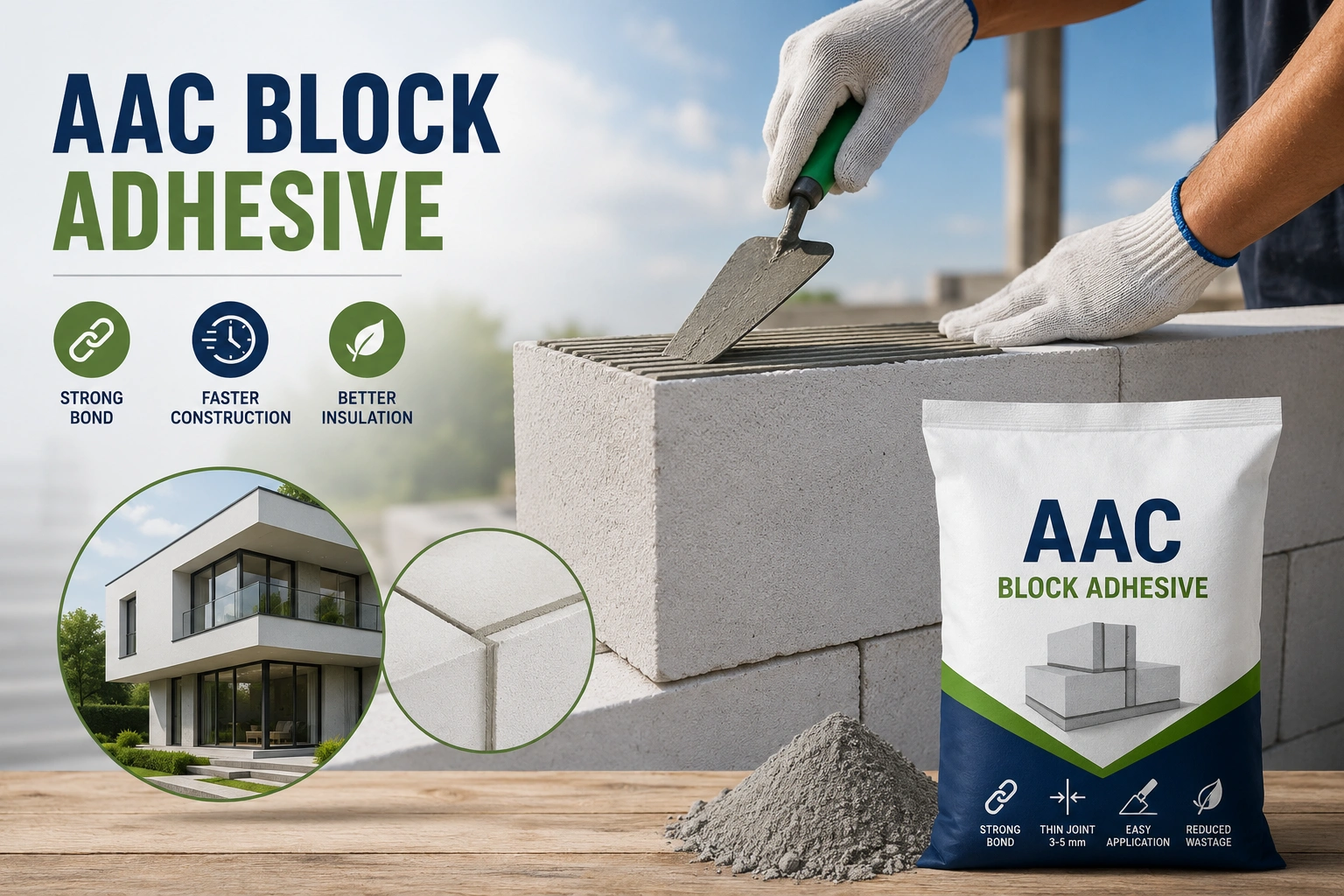
AAC block adhesive is a ready-mix bonding material specially developed for joining AAC blocks in modern construction. It is made from cement, graded sand, polymers, and special additives that improve bonding strength and durability. Unlike traditional mortar, it is applied in a thin layer, usually around 3–5 mm, which creates strong and even joints between blocks.
The main purpose of AAC block adhesive is to provide better adhesion and faster installation. Since AAC blocks are lightweight and smooth in texture, they require a specialized bonding solution for proper fixing. This is why many builders now prefer AAC block fixing adhesive over conventional methods.
One of the biggest advantages of using this material is reduced construction time and less material wastage. It requires less water, offers cleaner application, and improves overall wall alignment. Thin joints also help reduce cracks and improve thermal insulation performance.
Today, AAC block jointing mortar is widely used in residential and commercial projects because of its efficiency, durability, and long-term cost benefits. It is considered one of the best adhesives for AAC blocks for achieving strong and reliable masonry work.
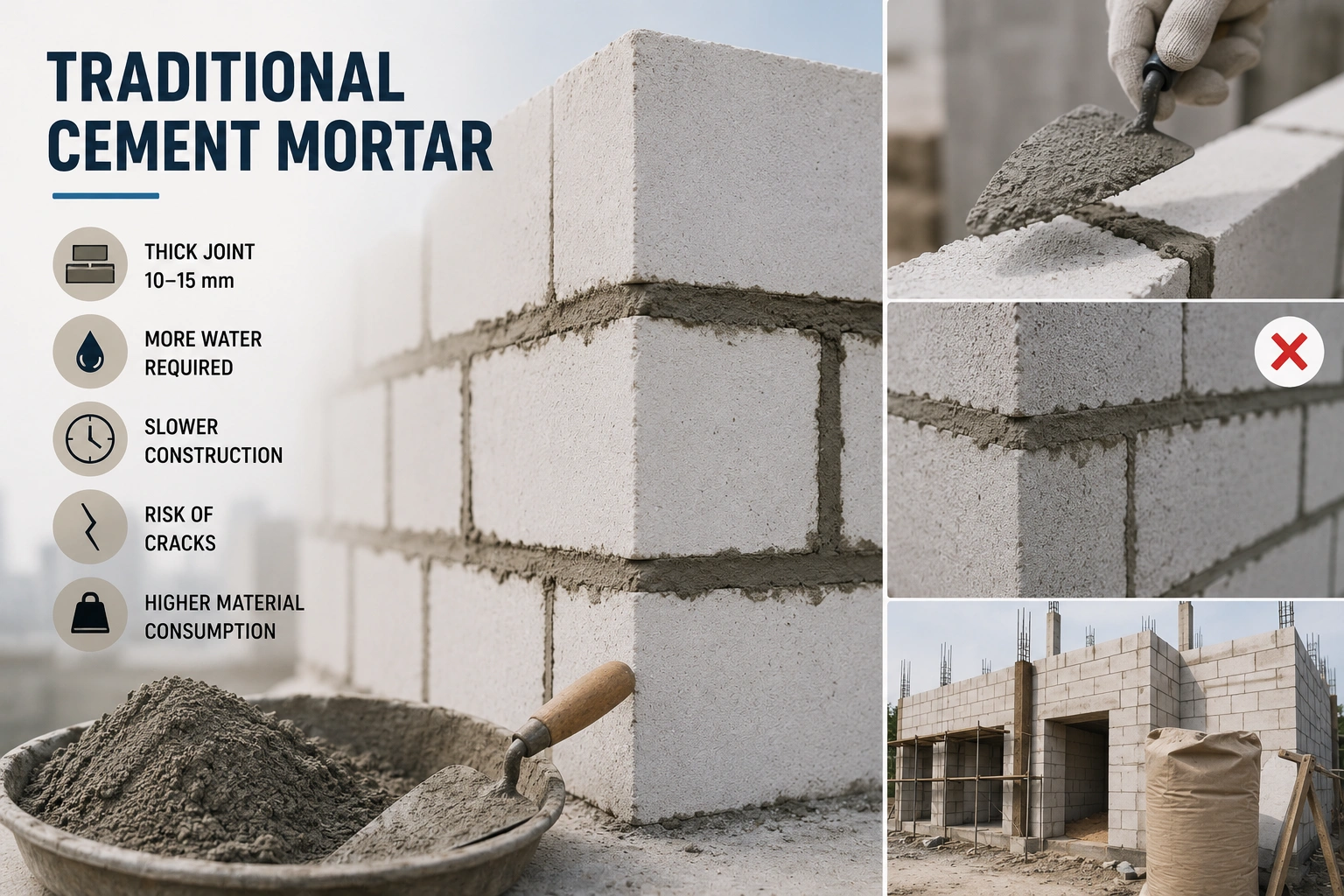
Traditional cement mortar is a conventional bonding material made by mixing cement, sand, and water. It has been used for decades in masonry and plastering work for brick and block construction. In many projects, builders still use traditional cement mortar for joining walls because of its easy availability and familiar application process.
Unlike AAC block adhesive, cement mortar is applied in a thicker layer, usually around 10–15 mm. This thicker application increases material consumption and adds extra weight to the structure. It also requires more water during mixing and curing, which can increase overall construction time.
One of the major challenges with cement mortar vs block adhesive is consistency. Manual mixing on-site can lead to uneven quality, affecting bonding strength and wall alignment. Thick joints may also create shrinkage cracks over time, especially in lightweight AAC block construction.
Although traditional mortar is still widely used, modern construction projects are gradually shifting toward advanced bonding solutions for improved structural performance and faster masonry workflow . This is why the discussion around AAC block adhesive vs traditional cement has become increasingly important in today’s construction industry.
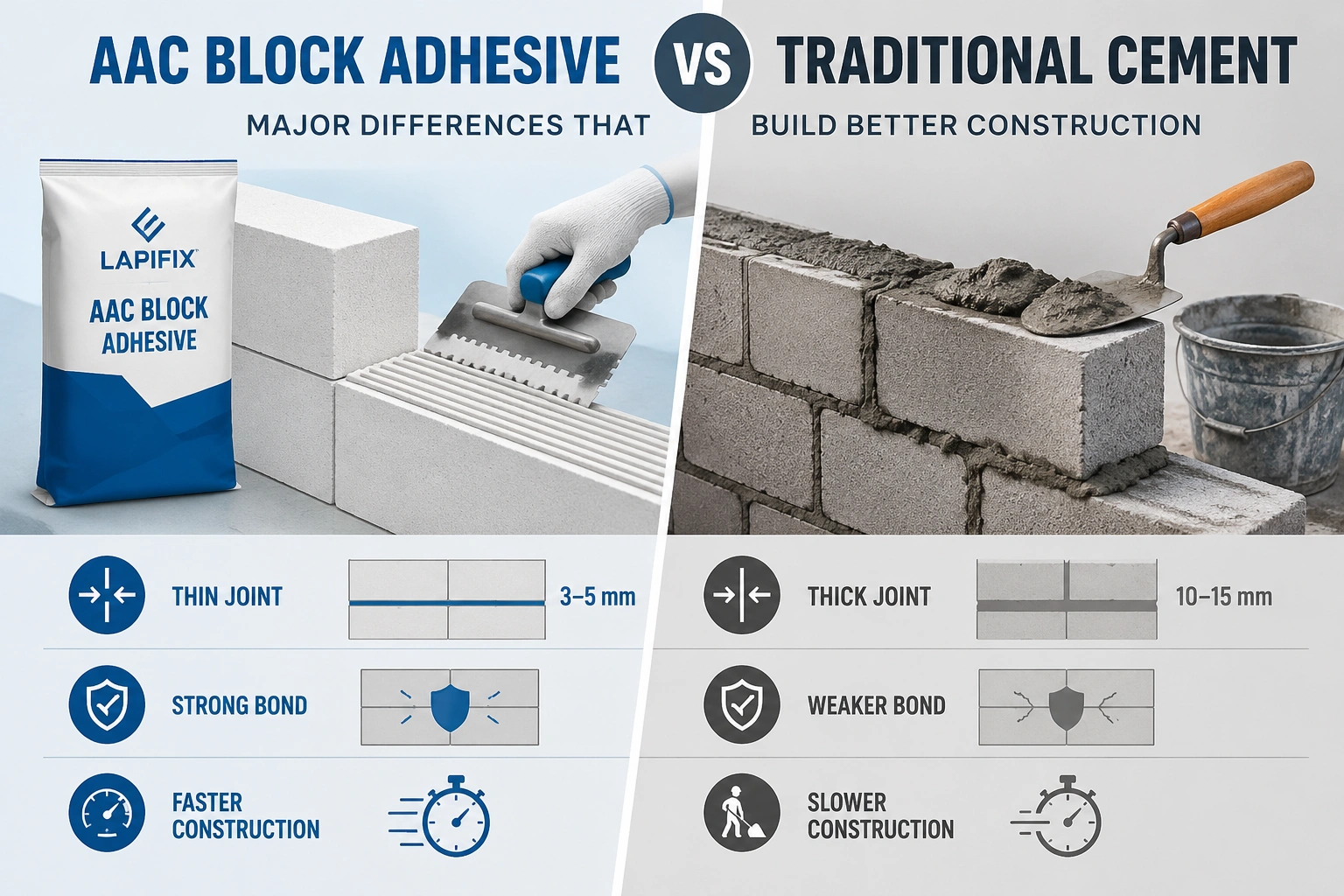
When comparing AAC block adhesive vs traditional cement, several important differences affect construction quality, durability, and overall project cost. While traditional mortar has been used for many years, modern construction increasingly prefers adhesive-based solutions because of their efficiency and better performance.
One major difference in this AAC block adhesive comparison is application thickness. AAC block adhesive is applied in a thin layer of around 3–5 mm, whereas traditional cement mortar requires a thicker layer of 10–15 mm. Thin joints help reduce material usage and provide better wall alignment.
Bonding strength is another key factor. AAC block jointing mortar is specially designed for lightweight AAC blocks, offering stronger adhesion and fewer chances of cracks. Traditional mortar may lose consistency because of manual mixing and excess water usage.
Construction speed also differs significantly in the cement mortar vs block adhesive comparison. AAC block adhesive is easier to prepare and apply, helping save labor time and reduce material wastage. Traditional mortar requires more mixing, curing time, and labor effort.
|
Factor |
AAC Block Adhesive |
Traditional Cement Mortar |
|
Layer Thickness |
Thin application |
Thick application |
|
Bonding Strength |
Stronger |
Moderate |
|
Material Consumption |
Less |
More |
|
Water Usage |
Low |
High |
|
Construction Speed |
Faster |
Slower |
|
Crack Resistance |
Better |
Lower |
|
Wastage |
Minimal |
Higher |
In this AAC block mortar comparison, adhesive-based solutions provide better efficiency, durability, and finishing quality, making them a preferred choice for modern construction projects.
Choosing between AAC block adhesive vs traditional cement is not only about bonding strength but also about overall construction cost. While many people focus only on material price, the actual expense depends on labor, wastage, construction speed, and long-term maintenance.
At first glance, traditional cement mortar may appear cheaper because cement and sand are commonly available materials. However, the total consumption is much higher due to thick layer application. In comparison, the AAC block adhesive price may seem slightly higher per bag, but it requires less quantity for the same area coverage.
AAC block adhesive helps reduce labor effort because it is easy to mix and apply. Thin joint application speeds up masonry work and reduces installation time. Traditional mortar preparation requires more mixing, handling, and curing, increasing labor dependency and project duration.
One of the major advantages of block adhesive vs cement mortar is reduced wastage. AAC block adhesive comes as a ready-mix product, ensuring consistent quality and minimal material loss. Traditional mortar often leads to excess mixing and site wastage.
AAC block adhesive provides better bonding and crack resistance, which helps reduce future repair and maintenance costs. Walls constructed using AAC block jointing mortar generally have improved durability and finishing quality compared to conventional mortar systems.
AAC block adhesive is lightweight and requires less storage space on-site. Traditional mortar needs separate storage for cement and sand, which increases handling and transportation efforts.
In the overall AAC block adhesive comparison, adhesive-based solutions are usually more cost-effective in modern construction projects. Even if the initial material cost is slightly higher, savings in labor, reduced wastage, faster completion, and lower maintenance make AAC block adhesive a smarter long-term investment.
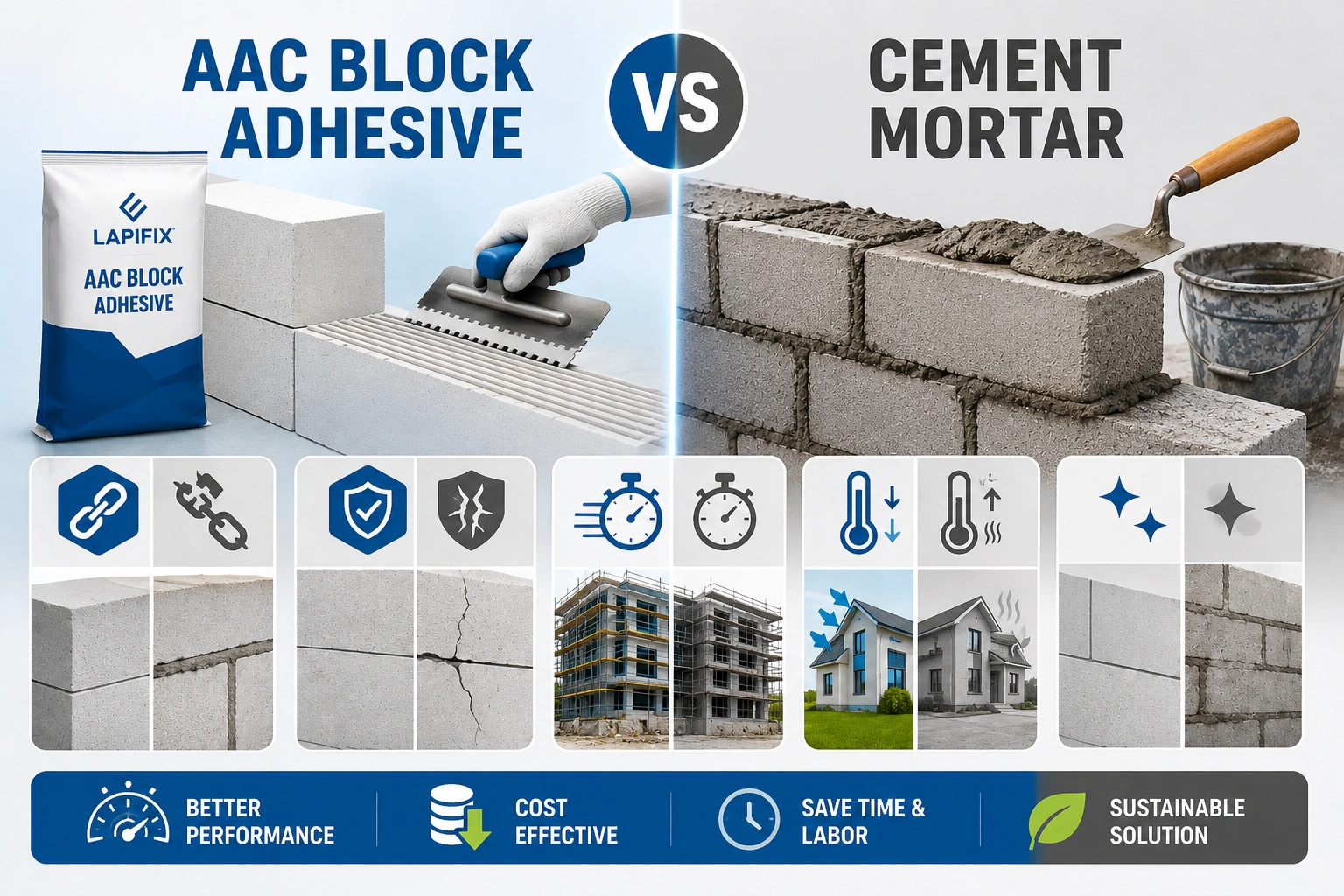
The performance of any wall construction depends greatly on the bonding material used. In the comparison of AAC block adhesive vs traditional cement, adhesive-based solutions offer several advantages in terms of strength, durability, and construction efficiency.
AAC block adhesive is specially designed for lightweight AAC blocks and provides stronger adhesion compared to conventional mortar. Thin and uniform joints improve block stability and reduce the chances of hollow spaces between blocks.
One of the major problems with traditional mortar is shrinkage cracking caused by thick application and excess water usage. In contrast, AAC block jointing mortar minimizes shrinkage and helps create more stable and crack-resistant walls.
AAC block adhesive supports faster installation because it requires less mixing and thinner application. Builders can complete masonry work more efficiently compared to using traditional cement mortar, which needs additional preparation and curing time.
Thin joints created by adhesive reduce thermal bridging and help maintain the insulation properties of AAC blocks. This improves energy efficiency and overall wall performance. Adhesive-based systems also provide better moisture resistance than conventional mortar joints.
In this AAC block mortar comparison, adhesive offers a cleaner and more even finish. Better alignment and stronger bonding improve the long-term durability of the structure while reducing maintenance requirements.
Modern construction projects increasingly prefer cement mortar vs block adhesive solutions that save time and improve performance. Because of its strength, efficiency, and durability, AAC block adhesive has become a preferred choice for residential, commercial, and high-rise construction projects.
Modern construction projects require materials that improve speed, strength, and overall efficiency. This is one of the main reasons why builders are shifting from traditional mortar systems to AAC block adhesive for masonry work.
AAC block adhesive is easy to prepare and apply, which helps speed up block installation. Thin joint application reduces working time and allows faster project completion compared to traditional cement mortar methods.
One of the biggest advantages of using AAC block fixing adhesive is its strong bonding capability. It creates uniform joints that improve wall stability and reduce the chances of cracks or weak bonding areas.
Unlike conventional mortar, AAC block adhesive is a ready-mix product that ensures controlled usage and minimal wastage. This helps contractors maintain cleaner construction sites and reduce unnecessary material loss.
Thin adhesive joints provide better wall alignment and smoother surface finishing. This reduces the need for excessive plaster thickness and improves the final appearance of the structure.
AAC blocks are lightweight and require specialized bonding materials for proper performance. This is why many experts consider adhesive-based solutions the best adhesive for AAC blocks in modern residential and commercial projects.
Walls constructed using AAC block jointing mortar generally offer better durability, crack resistance, and moisture performance compared to traditional mortar systems. These benefits make AAC block adhesive a reliable solution for long-lasting construction.
Although traditional mortar has been used in construction for many years, it comes with several limitations when used with modern AAC block systems. In the comparison of AAC block adhesive vs traditional cement, conventional mortar often falls behind in efficiency, durability, and overall performance.
Traditional cement mortar requires thick layer application, which increases the use of cement and sand. This leads to higher material consumption and increased construction weight.
One major drawback of traditional cement mortar is its high water usage during mixing and curing. Excess water can affect consistency and may lead to shrinkage cracks after drying.
Thick mortar joints are more likely to develop cracks over time due to shrinkage and uneven curing. This can reduce wall durability and increase future repair costs.
Compared to adhesive-based systems, traditional mortar takes more time to prepare, apply, and cure. This slows down masonry work and increases labor dependency on-site.
In the cement mortar vs block adhesive comparison, traditional mortar usually creates more wastage because mixing is done manually at the construction site. Uneven mixing can also affect bonding quality.
Thicker joints may result in poor alignment and uneven surfaces, increasing the need for extra plaster and finishing work. This adds additional cost and labor to the project.
Because of these limitations, many builders now prefer block adhesive vs cement mortar solutions that provide better efficiency, cleaner application, and improved long-term performance.
Selecting the right adhesive plays an important role in the strength and durability of AAC block walls. A good-quality product improves bonding performance, reduces cracks, and supports faster construction.
Always choose an AAC block adhesive that offers high bonding strength and is specially designed for lightweight AAC blocks. Strong adhesion helps improve wall stability and long-term durability.
Low-shrinkage adhesive reduces the chances of cracks after drying. This helps maintain better wall performance and minimizes future maintenance issues.
The best adhesive for AAC blocks should be easy to mix and spread. Smooth application improves work efficiency and helps achieve proper joint thickness during installation.
Good-quality adhesive should have proper water retention and balanced setting time. This ensures better curing and stronger bonding between AAC blocks.
Using certified and reliable AAC block fixing adhesive products ensures consistent quality and better performance on construction sites. Trusted brands also provide better technical support and application guidance.
Even high-quality adhesive performs best when applied correctly. Proper surface cleaning, accurate mixing ratio, and uniform joint thickness are important for achieving strong and durable masonry work.
Yes, AAC block adhesive is specially designed for lightweight AAC blocks and generally provides stronger bonding than traditional cement mortar. It creates thin and uniform joints that improve wall stability and reduce the chances of cracks.
The quantity depends on block size and wall area, but usually one bag of adhesive covers a larger area compared to traditional mortar because it is applied in a thin layer.
Yes, AAC blocks can be installed using traditional cement mortar, but it may not deliver the same efficiency and bonding performance as specialized AAC block adhesive. Thick joints can also increase dead load and material consumption.
The best adhesive for AAC blocks is one that offers strong bonding strength, low shrinkage, easy application, and good moisture resistance. Quality-certified AAC block fixing adhesive products are usually preferred for modern construction.
Yes, although the AAC block adhesive price may appear slightly higher initially, it helps reduce labor cost, material wastage, repair expenses, and construction time, making it cost-effective in the long run.
AAC block jointing mortar is specially manufactured for AAC block installation and is applied in thin layers. Traditional cement mortar is a conventional mix of cement and sand that requires thicker joints and more material usage.
When comparing AAC block adhesive vs traditional cement, AAC block adhesive offers better efficiency, stronger bonding, and improved construction performance. Modern construction projects prefer adhesive-based solutions because they help reduce material wastage, speed up installation, and provide better wall durability.
Compared to traditional cement mortar, AAC block adhesive requires less water, creates thinner joints, and reduces the chances of cracks. It also improves wall finishing and helps lower long-term maintenance costs. These benefits make it a practical solution for residential and commercial construction.
Although the AAC block adhesive price may seem slightly higher initially, the overall savings in labor, time, and repair costs make it more cost-effective in the long run. In today’s modern construction industry, block adhesive vs cement mortar comparisons clearly show why AAC block adhesive has become the preferred choice for AAC block installation.
Choosing a high-quality AAC block adhesive from trusted manufacturers like Lapifix helps ensure stronger walls, reduced maintenance, and long-lasting construction performance.