

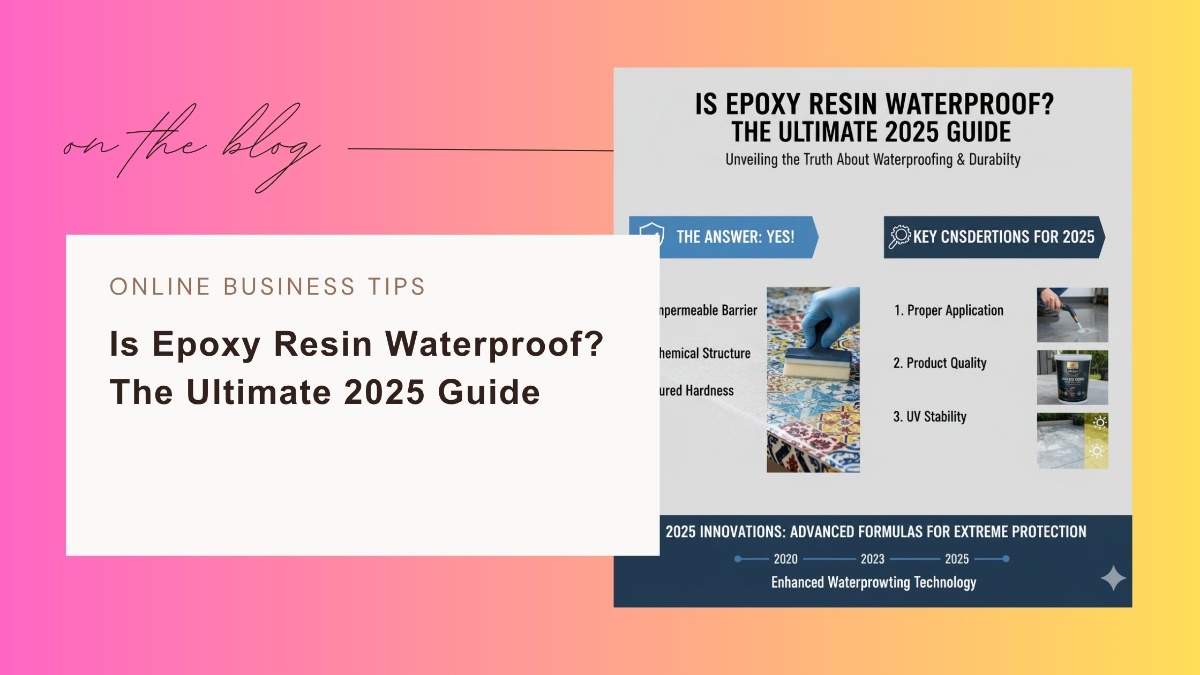
When it comes to creating strong, durable, and water-resistant surfaces, epoxy resin is one of the most versatile materials available today. Whether used in flooring, coatings, or sealing applications, its exceptional waterproofing properties make it a top choice for both residential and industrial projects. But the question that often arises is Is epoxy resin truly waterproof?”
To understand that, it’s important to know what epoxy resin actually is. In simple terms, epoxy resin is a thermosetting polymer created by mixing a resin and a hardener. When these two components react chemically, they form a rigid, high-strength surface that bonds extremely well to a variety of materials including concrete, metal, stone, and ceramics.
This strong molecular structure gives epoxy its impressive water resistance, making it ideal for waterproofing surfaces such as bathroom floors, kitchen counters, garages, industrial workspaces, and even swimming pools. Unlike ordinary paints or sealants, waterproof epoxy resin does not just form a superficial layer it penetrates deep and creates an impermeable barrier against moisture, chemicals, and stains.
Lapifix, a leading name in tile adhesives and waterproofing products, has developed advanced epoxy waterproofing solutions that deliver long-lasting performance in harsh environments. Their innovative formulations ensure that surfaces remain protected from water infiltration, cracks, and surface degradation over time.
In this comprehensive guide, we’ll explore how epoxy resin works, how waterproof it really is, its advantages, applications, and expert tips to help you choose the right epoxy waterproofing solution for your project.
To understand why epoxy resin is regarded as one of the most effective waterproof materials, it’s essential to explore how it works on a chemical level and what makes its structure so resilient.
Epoxy resin is formed by combining a resin base with a hardener in specific proportions. When mixed, these two components undergo a chemical reaction that enhances their bonding capabilities. chemical cross-linking reaction that transforms the liquid mixture into a tough, solid plastic-like material. This cross-linked polymer network is what gives epoxy its strength, durability, and remarkable resistance to water and chemicals.
Once applied as a waterproof epoxy coating, the mixture bonds tightly to the surface whether it’s concrete, tile, or metal creating an impermeable shield. This layer not only seals pores and microcracks but also prevents moisture penetration, protecting the substrate from damage. That’s why epoxy is widely used in bathrooms, kitchens, basements, and industrial floors where exposure to water is common.
Unlike traditional sealants or paints that simply form a film on the surface, epoxy waterproofing provides a permanent bond. It adheres deeply and becomes part of the substrate, ensuring a seamless and non-porous finish. Once cured, it can even withstand standing water, temperature variations, and heavy foot traffic making it an ideal solution for waterproof flooring and structural protection.
Epoxy, engineered with advanced polymer technology, enhances this process even further. Lapifix’s premium epoxy formulations are designed to deliver superior adhesion and long-term moisture resistance, ensuring that every coated surface remains durable, hygienic, and easy to maintain.
In short, the epoxy resin properties that make it waterproof include:
Tight molecular bonding for zero porosity
Strong adhesion to diverse surfaces
Resistance to moisture, stains, and chemicals
Durable curing that prevents cracks or peeling
With the right product and application method, epoxy acts as a reliable surface sealant, ensuring total waterproof protection in both residential and industrial environments.
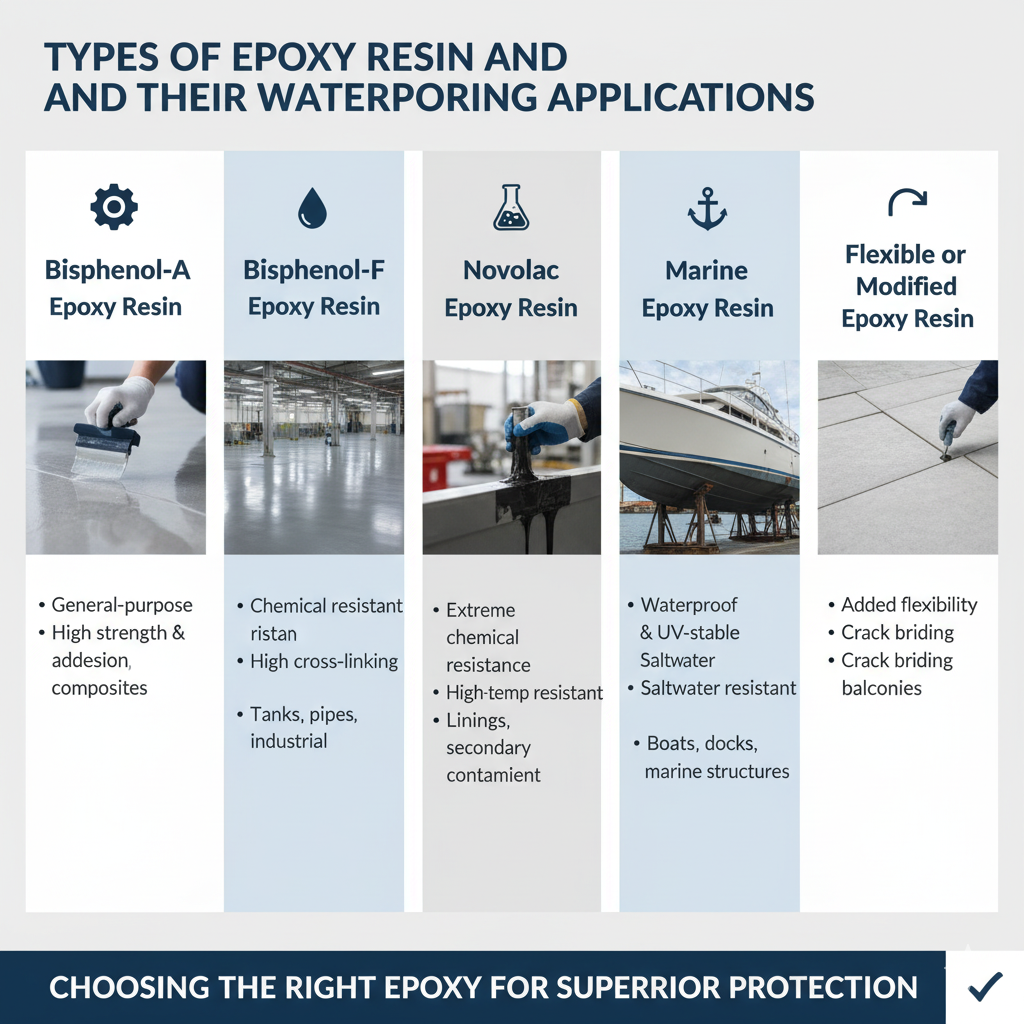
While epoxy resin is known for its waterproofing and durability, not all epoxies are the same. Different types of epoxy resins are engineered for specific environments and surface requirements. Understanding these variations helps you select the best epoxy for waterproofing according to your project’s needs.
Let’s look at the major types of epoxy resin and how each is used in waterproofing applications.
This is the most common form of epoxy resin, used widely in floor coatings, adhesives, and sealants. Known for its excellent hardness and adhesion, it forms a glossy, durable surface that resists water and chemicals.
Applications: The benefits of epoxy include its versatility, durability, and resistance to various environmental challenges. Residential flooring, countertops, and wall coatings.
Waterproofing Use: Ideal for homeowners seeking a cost-effective yet reliable waterproof epoxy coating for bathrooms and kitchens.
A modified version of Bisphenol-A, this epoxy offers lower viscosity and greater chemical resistance, making it an excellent choice for table top applications. Its finer molecular structure allows for stronger bonding and enhanced moisture protection.
Applications: Industrial and marine environments where constant exposure to water or chemicals occurs.
Epoxy Advantage: Lapifix uses this formulation in heavy-duty coatings and waterproof flooring systems for factories, workshops, and garages.
Novolac epoxies are known for their superior heat and chemical resistance, making them suitable for extreme conditions. They perform exceptionally well in waterproofing areas exposed to acids, solvents, or high temperatures.
Applications: Chemical plants, power stations, and high-temperature zones.
Use: Often recommended where durability under stress and complete moisture protection are essential.
Designed specifically for underwater and high-humidity environments, marine epoxy resin provides exceptional waterproof sealing even in submerged conditions.
Applications: Boat repairs, swimming pools, water tanks, and docks.
Waterproofing Range: Offers marine-grade epoxy systems that ensure lasting protection against water infiltration and corrosion.
These resins include additives that enhance flexibility and impact resistance. They adapt well to structural movements without cracking, maintaining waterproof integrity.
Choosing the right epoxy type depends on your environment, surface material, and exposure level. Whether you need epoxy floor coating for interiors or marine epoxy resin for submerged applications, Lapifix waterproofing solutions deliver unmatched protection, adhesion, and durability across all surfaces.
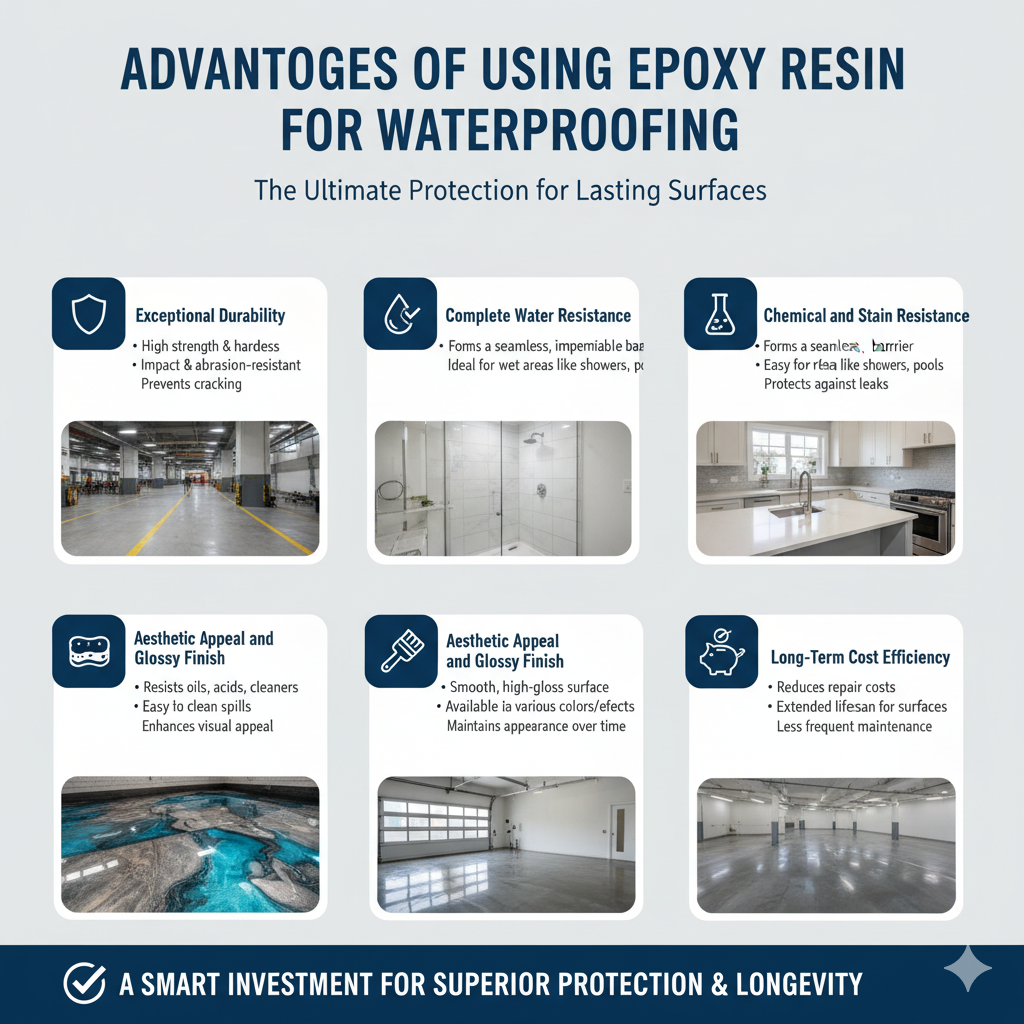
When it comes to protecting surfaces from moisture, stains, and structural damage, epoxy resin waterproofing is hard to beat. Its unique composition and strong adhesion make it an industry-trusted solution across homes, commercial spaces, and industrial facilities. Let’s explore the major advantages of epoxy resin and why Lapifix waterproof coatings stand out in the market.
One of the biggest benefits of waterproof epoxy is its long-lasting strength. Once cured, epoxy forms a hard, non-porous surface that can withstand heavy loads, chemical spills, and constant foot traffic. This makes it perfect for waterproof epoxy flooring in garages, basements, and industrial workshops. Lapifix epoxy coatings are specially formulated to maintain this durability for years without cracking or peeling.
Epoxy resin’s tightly bonded structure prevents any moisture penetration, showcasing the benefits of epoxy resin in protecting surfaces. It forms a waterproof seal that keeps surfaces dry, even under prolonged exposure to water, making it ideal for use in a clear epoxy resin application. Whether applied on kitchen floors or swimming pools, epoxy offers long-lasting waterproofing solutions that protect against leaks and seepage.
Another major advantage of epoxy resin is its ability to resist harsh chemicals, oils, and stains. This makes it ideal for environments like factories, commercial kitchens, and laboratories. The Lapifix waterproof coating line includes formulations resistant to acids and cleaning agents, ensuring surfaces remain clean and intact.
Beyond performance, epoxy resin enhances the visual appeal of spaces. Its smooth, glossy finish reflects light beautifully and adds a professional look to floors and walls. Lapifix epoxy coatings come in various finishes from high gloss to matte allowing designers and homeowners to match functionality with style.
Epoxy-coated surfaces are seamless and non-porous, leaving no room for dust, bacteria, or water to settle. Routine cleaning with mild detergents is enough to keep them spotless. Because of their minimal maintenance requirements, epoxy waterproof floors are widely used in hospitals, schools, and food processing units.
Although the initial installation cost may be slightly higher than regular sealants, epoxy’s longevity and minimal upkeep make it a cost-effective waterproofing solution in the long run.
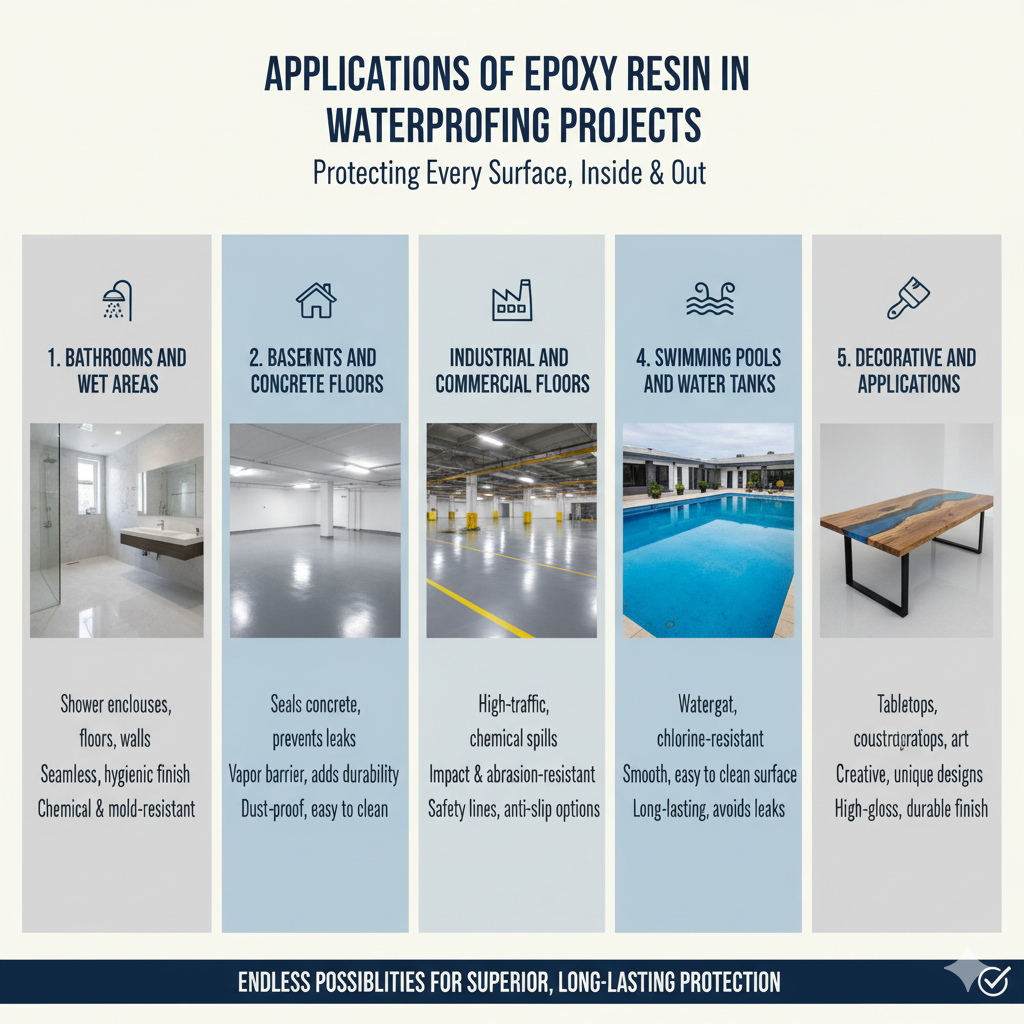
Epoxy resin is highly versatile and widely used in a variety of waterproofing applications across residential, commercial, and industrial settings. Its ability to form a durable, seamless, and water-resistant layer makes it one of the most effective solutions for controlling moisture and protecting surfaces.
Here are the key epoxy waterproofing applications you should know:
Bathrooms, kitchens, and laundry rooms are high-moisture zones prone to water seepage. Applying epoxy flooring in bathrooms or as a wall coating prevents leaks, mold growth, and surface damage.
epoxy waterproofing solutions create a non-porous barrier, ensuring long-lasting protection.
Benefits: Mold-resistant, easy to clean, and suitable for tiles or concrete surfaces.
Concrete is naturally porous and can allow water seepage from the ground, causing dampness and structural issues. Epoxy for waterproofing concrete penetrates micro-cracks and forms a tight, impermeable seal, protecting basements, garages, and storage areas with a reliable coating system.
Factories, warehouses, laboratories, and food processing units require floors that can resist water, chemicals, and heavy machinery. Epoxy provides a resilient, chemical-resistant, and waterproof flooring solution.
Best epoxy coating for wet areas in industrial setups ensures safety, durability, and hygiene.
Lapifix epoxy formulations are engineered to withstand chemical spills and daily foot or vehicle traffic, making them ideal for industrial waterproofing applications.
Marine-grade or waterproof epoxy resins are widely used in swimming pools, water tanks, and fountains. The seamless waterproof layer prevents leaks and protects structural concrete from water damage.
Epoxy is also used for waterproofing tabletops, wooden furniture, and countertops. Clear waterproof epoxy resin not only protects surfaces from moisture but also enhances aesthetic appeal with a glossy finish.
Key Takeaway: From bathrooms and kitchens to basements, industrial floors, and marine structures, Lapifix epoxy waterproofing provides a reliable, long-lasting solution. Selecting the right type of epoxy resin for the specific application ensures optimal performance, durability, and complete waterproof protection.
While epoxy resin is a highly effective waterproofing solution, it’s important to understand its limitations to ensure long-term performance. Even the best products can fail if applied incorrectly or in unsuitable conditions. Here’s what you should know about epoxy waterproofing issues and Lapifix epoxy considerations.
The most common reason for epoxy failures is improper mixing of the epoxy resin and a hardener. poor surface preparation. Dust, grease, moisture, or uneven surfaces prevent proper adhesion, leading to delamination or water seepage.
Tip: Refer to the complete guide for the best practices in using epoxy resin. Always clean and dry the surface thoroughly, remove loose particles, and, if necessary, apply a primer before the epoxy coat.
Lapifix Consideration: Lapifix epoxy formulations are designed to adhere strongly, but proper substrate preparation is critical for guaranteed waterproof performance.
Standard epoxy resins are prone to yellowing and chalking when exposed to direct sunlight over time. This affects both aesthetics and, in some cases, surface integrity.
Solution: Use UV-resistant topcoats or select a UV-stabilized epoxy for outdoor applications.
Epoxy Advantage: Some Lapifix products are formulated with UV stabilizers for exterior waterproofing.
Rigid epoxy coatings can crack when applied over surfaces subject to significant movement, such as concrete slabs that expand or contract with temperature changes.
Limitation: Cracks allow water penetration, compromising waterproofing.
Tip: Use flexible or modified epoxy blends in areas prone to movement, or combine epoxy with expansion joints.
While marine and waterproof epoxies resist water, not all epoxy resins are suitable for continuous immersion. Using decorative or standard-grade epoxy in ponds or pools may result in blistering or softening over time.
Epoxy requires accurate mixing, correct ratios, and careful application. Over-thick or uneven layers can trap air bubbles, leading to weak spots in the waterproof barrier.
Key Takeaway: Although epoxy resin is highly effective for waterproofing, it is not foolproof, especially under extreme environmental conditions. Understanding the limitations of epoxy resin, selecting the right grade, and following proper application methods especially with a two-part epoxy resin is crucial for success. epoxy ensures long-lasting protection and avoids common epoxy waterproofing issues.
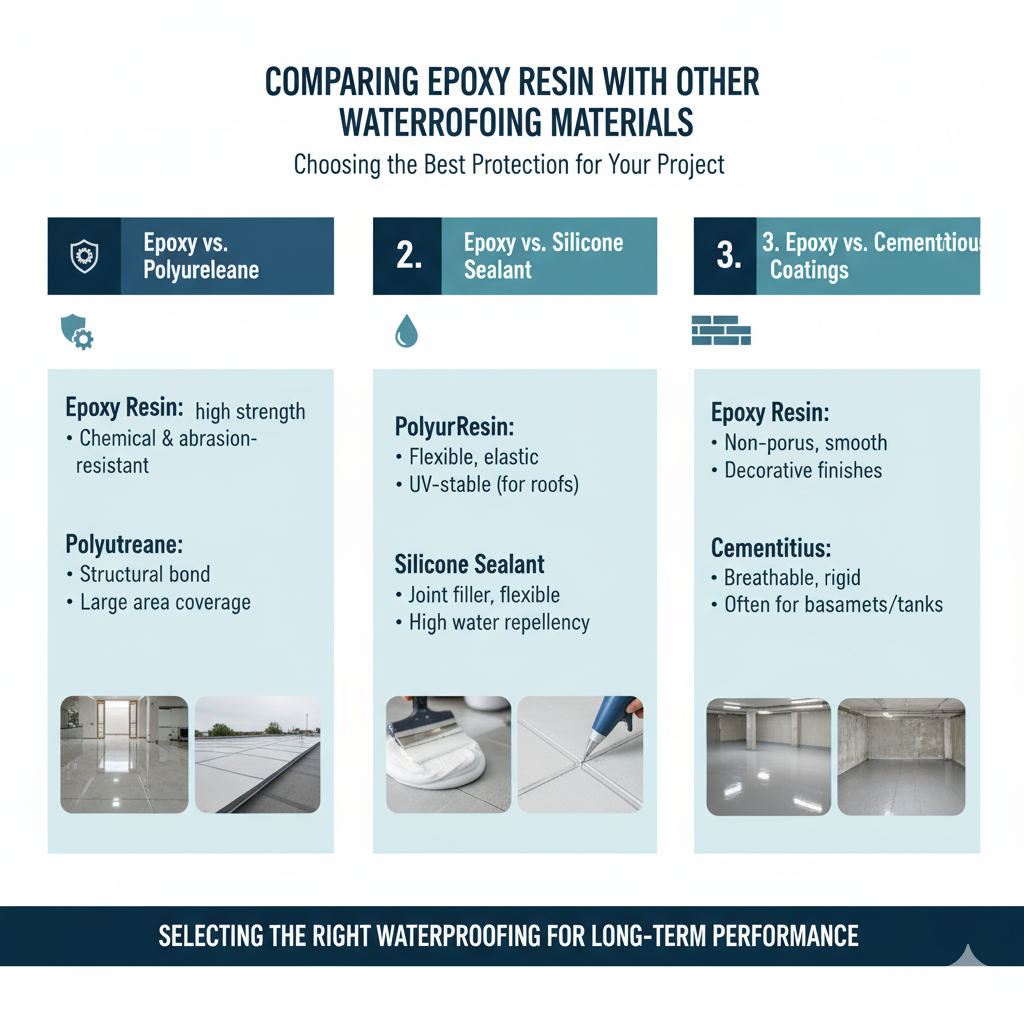
Choosing the right waterproofing solution is critical for durability and performance. Epoxy resin is widely praised for its water resistance, but it’s not the only option available. Let’s compare epoxy with other common waterproofing materials to understand where it excels and where alternatives might be better suited.
Polyurethane coatings are flexible, elastic, and often used in areas with significant movement, such as rooftops, balconies, and terraces. They are excellent for crack bridging and UV resistance.
Epoxy resin, on the other hand:
Provides a hard, rigid, and durable barrier ideal for floors, walls, and indoor wet areas.
Offers superior chemical and abrasion resistance, making it perfect for industrial applications.
Has limited UV resistance unless modified or top-coated.
Epoxy Comparison: epoxy coatings deliver higher hardness and chemical resistance than standard polyurethane while offering waterproofing for indoor and protected outdoor applications. Polyurethane may complement epoxy in areas requiring flexibility.
Silicone sealants are commonly used for joints, seams, and small repairs because they remain flexible and waterproof.
Key Differences:
Epoxy: Forms a continuous, hard, waterproof surface; ideal for floors, walls, and large-area coatings.
Silicone: Best for point sealing; cannot replace large-area waterproofing.
Epoxy Advantage: For full-surface protection, Lapifix epoxy provides a durable waterproof coating, while silicone is only suitable for localized sealing tasks.
Cementitious waterproofing materials are often mixed with water and applied like plaster. They are easy to use but can crack over time due to shrinkage or substrate movement.
Advantages of Epoxy Over Cementitious Coatings:
The result is a non-porous, highly water-resistant structure that is ideal for various epoxy resin applications.
Better adhesion and chemical resistance.
Long-term durability with minimal maintenance is one of the key benefits of epoxy resin.
Epoxy Comparison: epoxy coatings outperform cementitious coatings in terms of waterproofing reliability, longevity, and surface finish, making them ideal for bathrooms, kitchens, and basements.
Key Takeaway: While polyurethane, silicone, and cementitious coatings have their uses, epoxy resin waterproofing, especially Lapifix epoxy, is unmatched for hard, durable, and chemically resistant waterproof surfaces. Choosing the right material depends on your environment, movement tolerance, and exposure type, but for floors, walls, and wet areas, epoxy remains the top choice.
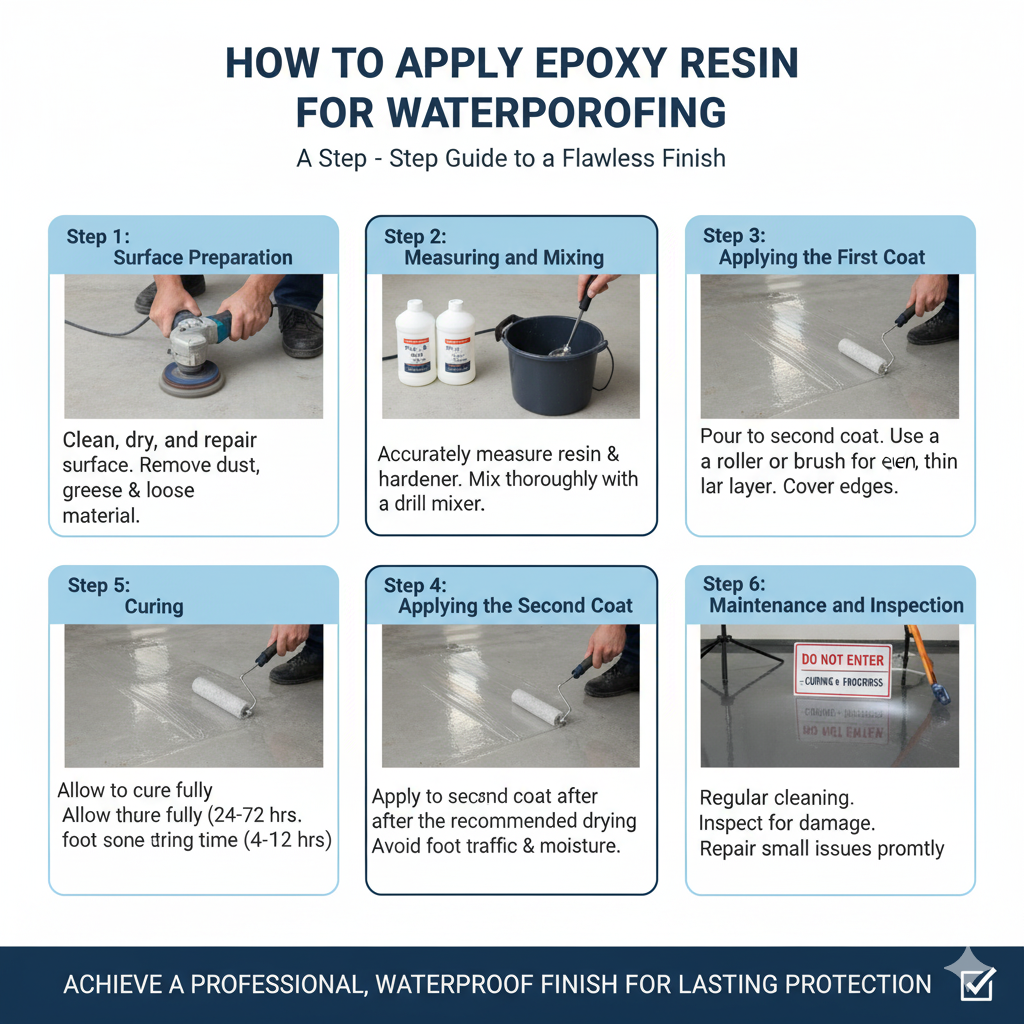
Applying epoxy resin for waterproofing requires careful preparation, correct mixing, and proper curing to achieve a long-lasting waterproof surface. Even high-quality products like Lapifix epoxy can fail if the application is not done correctly. Below is a guide to epoxy resin that outlines the best practices for application. step-by-step guide to ensure effective results.
The key to a successful waterproof epoxy coating is a clean, dry, and smooth surface.
Remove dirt, dust, grease, and loose particles.
Repair cracks, holes, or uneven areas using a suitable filler.
For porous surfaces like concrete, Lapifix recommends priming the area with a two-part epoxy resin for optimal results. the area with a thin epoxy primer to enhance adhesion, ensuring a strong curing process.
Tip: A well-prepared surface prevents delamination and ensures maximum waterproofing performance.
Correct ratios are critical for epoxy resin to cure properly.
Measure the resin and hardener as per manufacturer instructions (commonly 2:1 or 1:1).
Mix thoroughly using a clean, dry container until uniform. Avoid introducing air bubbles, which can compromise waterproofing.
Lapifix epoxy application emphasizes precise mixing to achieve optimal cross-linking, ensuring maximum water resistance.
Use a brush, roller, or squeegee to spread the first thin coat evenly over the surface.
Work systematically to cover the entire area without leaving gaps.
Allow the first coat to partially cure (as specified by the product) before applying the second coat.
Tip: Thin, even layers are more effective than a single thick layer, which may lead to bubbles or uneven curing.
After the first coat reaches the recommended tack-free stage, apply the second coat to ensure full waterproof coverage.
For high-moisture areas like bathrooms or pools, a third coat may be applied for added protection.
Allow the epoxy to fully cure according to manufacturer guidelines (usually 24–72 hours depending on temperature and humidity).
Avoid walking or placing objects on the surface during curing.
Proper curing ensures that the waterproof epoxy coating forms a dense, non-porous barrier.
Inspect the surface for missed spots or bubbles and touch up if needed.
Regular cleaning with mild detergents keeps the epoxy surface hygienic and prevents damage.
waterproof epoxy requires minimal maintenance, providing long-term protection with periodic checks.
Proper maintenance is the key to ensuring that your epoxy products perform well under various environmental conditions. epoxy resin waterproof surface continues to perform efficiently over time. While epoxy coatings are incredibly durable, neglecting basic upkeep can reduce their waterproofing and gloss quality.
Keep the surface free from dirt, oil, and debris. Use a mild detergent and warm water to clean epoxy-coated floors or countertops. Avoid abrasive scrubbing pads or harsh chemicals, as these can dull the finish and compromise the epoxy waterproof coating.
Even though epoxy resin is waterproof, standing water for extended periods can cause discoloration or seep into micro-cracks, undermining the benefits of epoxy resin. Wipe up spills and puddles immediately, especially in kitchens, bathrooms, or garage floors.
For flooring applications, place mats under heavy furniture or machinery. This helps prevent scratches or cracks that might expose the underlying surface to moisture.
If the epoxy surface is exposed to sunlight, consider applying a UV-resistant topcoat. UV rays can cause yellowing over time, reducing both appearance and waterproofing efficiency.
Inspect for chips or worn-out patches once a year to maintain the integrity of the coating system. If you notice dullness or minor cracks, reapply an epoxy waterproof coating to maintain integrity and shine.
By following these epoxy maintenance tips, you can extend the lifespan of your waterproof epoxy flooring or countertops, ensuring they remain both visually stunning and fully protected for years.
Yes, epoxy resin is waterproof once it fully cures. It forms a hard, non-porous surface that prevents water and moisture from penetrating. This makes it ideal for applications like bathroom floors, countertops, and marine coatings.
Yes, but with some precautions. Standard epoxy may yellow or degrade under UV exposure. For outdoor use, choose UV-resistant or marine-grade epoxy waterproof coating, which retains clarity and performance in sunlight and rain.
When properly applied and maintained, the ultimate guide to epoxy resin can help achieve optimal results. epoxy waterproof coatings can last anywhere between 10 to 20 years. Factors such as surface preparation, application thickness, and exposure conditions influence its durability, highlighting the importance of the curing process.
While epoxy for waterproofing can seal cracks and joints, it’s not a substitute for major structural repairs. It works best as a preventive coating or to seal minor leaks in concrete floors, tanks, or basements.
Absolutely. Once cured, epoxy is non-toxic and waterproof, making it suitable for countertops, backsplashes, and shower floors. It provides a seamless, glossy finish that’s resistant to stains, mold, and moisture.
DIY epoxy kits are available, but correct mixing ratios, surface cleaning, and curing time are critical for effective waterproofing. If you’re sealing large areas or commercial floors, it’s best to hire professionals for perfect results.
Unlike traditional sealants, epoxy waterproof flooring creates a durable, continuous film that resists water, chemicals, and wear. It not only seals the surface but also strengthens it for long-term use.
Epoxy resin isn’t just a surface coating it’s a powerful waterproofing solution trusted across residential, commercial, and industrial projects. Its water-resistant, chemical-proof, and durable properties make it a top choice for surfaces that need both beauty and performance. From kitchen countertops to garage floors and swimming pools, epoxy resin offers the perfect combination of aesthetics and protection.
When choosing epoxy, it’s essential to consider your surface type, environment, and usage needs. Not all epoxies are created equal some are designed for decorative finishes, while others excel in industrial waterproofing or outdoor weather resistance. Selecting a high-quality epoxy waterproof coating ensures long-lasting adhesion and a seamless finish that withstands moisture, UV rays, and thermal expansion, particularly when using a clear epoxy resin.
Proper surface preparation and professional application further enhance the waterproofing capability of epoxy resin. When applied correctly, it creates an impermeable bond that prevents moisture, demonstrating the science behind effective epoxy applications. leakage, seepage, and mold growth, even in the most demanding conditions.
Lapifix stands as a Lapifix is a trusted name in epoxy and waterproofing solutions, known for its high-quality epoxy products., offering a premium range of epoxy waterproof coatings, grouts, and sealants tailored for every need. Whether you’re sealing bathroom walls, industrial floors, or decorative tiles, Lapifix products ensure unmatched quality, durability, and waterproof protection.
With advanced formulations and expert-tested performance, Lapifix makes it easy to achieve professional-grade waterproofing results that last for years.