


Choosing the right tile adhesive for bathroom walls is essential for creating a stable, durable and attractive tiled surface. Bathrooms experience regular moisture, temperature changes, cleaning and, in some locations, direct water exposure. These conditions make adhesive selection and substrate preparation particularly important.
The correct product depends on more than the tile's appearance. Tile material, size, weight, wall construction, moisture exposure and the manufacturer's installation requirements all influence the choice. An adhesive suitable for a small ceramic tile in a dry bathroom area may not be appropriate for a heavy porcelain tile inside a shower.
Another important consideration is waterproofing. Even when an adhesive is suitable for wet environments, it should not automatically be treated as a replacement for a dedicated waterproofing membrane.
This guide explains how to evaluate bathroom wall tile adhesives, compare product specifications, prepare different wall surfaces and avoid common installation problems.
Bathroom walls require an adhesive that can hold tiles securely on a vertical surface while accommodating the conditions expected during everyday use. Unlike floor installations, wall tiling must also account for gravity and the possibility of tiles slipping before the adhesive develops sufficient strength.
Selecting a suitable tile adhesive for bathroom walls helps establish a reliable bond between the tile and the prepared substrate. However, successful installation also depends on the condition of the wall, the method of application and compatibility between the adhesive, tile and any waterproofing products.
Moisture is another important factor. Bathroom walls near basins may experience occasional splashes, while shower walls are exposed to repeated and more direct water contact. These areas should not automatically be treated as having identical installation requirements.
The adhesive must also suit the tile itself. Porcelain tiles, for example, generally have lower water absorption than many conventional ceramic tiles. Some large or heavy tiles need products specifically approved for their dimensions, weight and intended position.
Choosing an unsuitable product can contribute to poor adhesion, tile movement, hollow areas or debonding. These problems may require tiles to be removed and the installation to be repaired.
Not every bathroom installation requires an adhesive marketed as waterproof, but the product must be suitable for the actual moisture exposure and intended application.
A water-resistant adhesive may be appropriate for certain bathroom installations. A shower enclosure or another regularly wet area may have more demanding requirements. The correct specification depends on the adhesive manufacturer's documentation, the substrate and the complete installation system.
It is important to distinguish three different functions:
Adhesive: Bonds the tile to the prepared substrate.
Grout: Fills the joints between tiles and provides the joint finish specified for the installation.
Waterproofing membrane: Forms a dedicated waterproofing layer when required by the design and installation system.
Grout joints and tile surfaces should not automatically be considered a complete waterproofing system. Water can enter through joints, changes of plane, penetrations or other vulnerable details.
For a shower, follow the applicable building requirements and the waterproofing system manufacturer's instructions. Confirm that the membrane, primer, adhesive and other components are compatible with one another.
When selecting tile adhesive for bathroom walls, check whether the product is explicitly suitable for the intended wet-area application. Do not rely solely on terms such as strong, flexible or water-resistant.
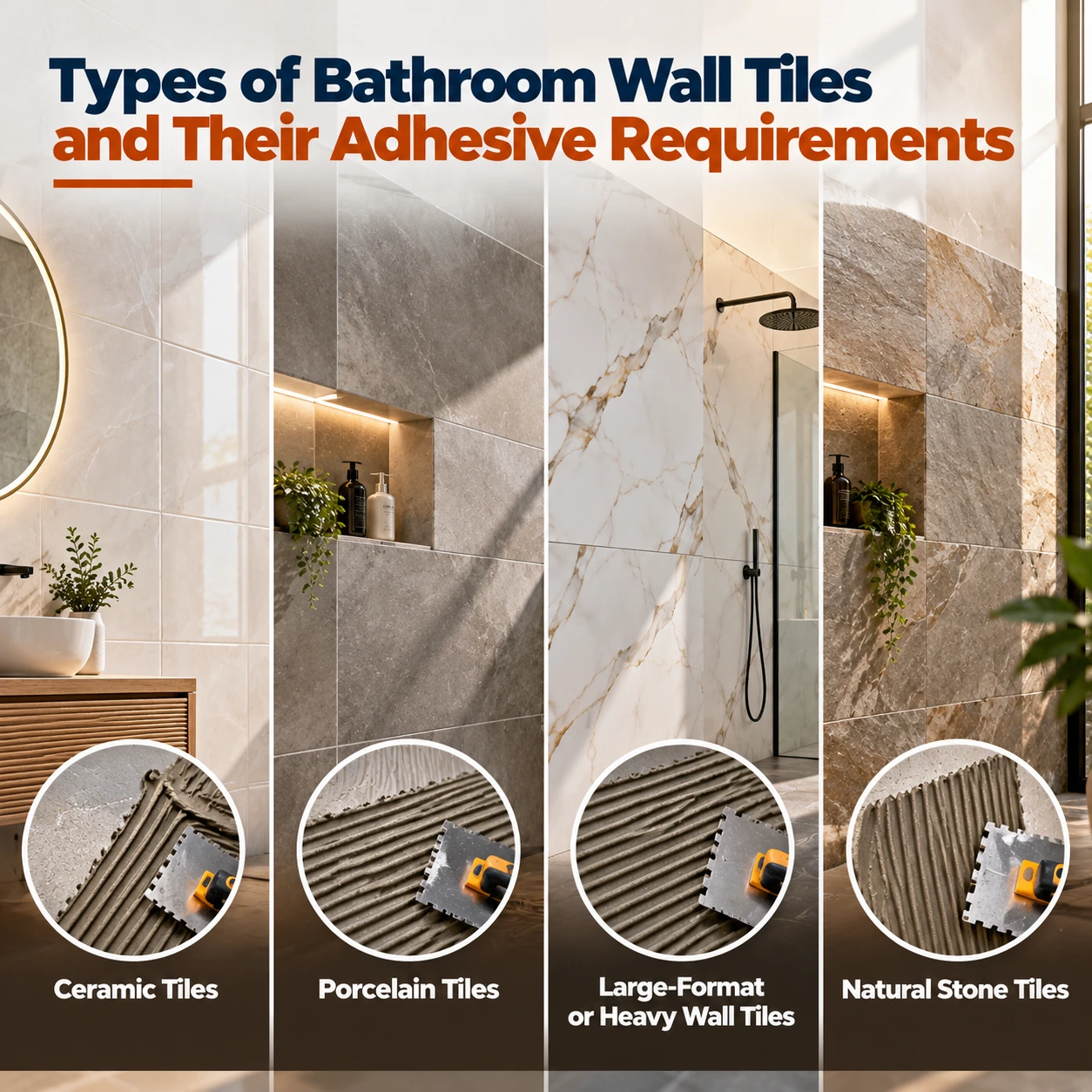
The tile material affects how well an adhesive can establish and maintain a bond. Tile size, weight, backing and surface characteristics also matter.
Ceramic tiles are widely used for bathroom walls because they are available in many sizes, finishes and designs. Their adhesive requirements vary according to the tile's properties and the installation location.
A suitable wall tile adhesive may work well for conventional ceramic tiles on a properly prepared substrate. However, the installer must still confirm whether the product is approved for the wall surface and moisture conditions.
Smaller ceramic tiles may have different handling and coverage requirements from larger formats. The product label and technical data sheet should guide the selection.
Porcelain tiles are generally denser and less absorbent than many standard ceramic tiles. This characteristic makes adhesive compatibility particularly important.
An adhesive intended for porcelain should be selected according to the tile size, substrate and installation environment. Do not assume that every general-purpose adhesive can bond reliably to every porcelain surface.
For bathroom walls, check the product documentation for porcelain compatibility, vertical application and the required wet-area performance.
Large-format tiles can create additional installation challenges because they may be heavy, difficult to handle and less tolerant of uneven substrates. The adhesive must be suitable for the tile dimensions and installation method.
Tile weight, substrate flatness and the ability to achieve adequate adhesive contact all affect the outcome. Some projects require a higher-performance adhesive or a specified deformability class.
Refer to Lapifix's large-format tile adhesive guide for a broader discussion of large-format installations. For this bathroom-specific application, focus on the product's permitted tile size, vertical use and compatibility with the wall system.
Marble, limestone and other natural stones may be sensitive to staining, moisture-related colour changes or other reactions with installation materials. Their weight and backing characteristics can also affect adhesive selection.
Choose an adhesive specifically approved for the stone type and application. Where appearance is critical, check whether a white adhesive or another specified formulation is required. Test recommendations should follow the stone supplier's and adhesive manufacturer's guidance.
The same bathroom can contain several different exposure conditions. Assess each location rather than selecting a product based only on the room name.
Walls outside direct shower spray may experience occasional splashes, humidity and routine cleaning. The appropriate adhesive depends on the tile and substrate, along with the expected exposure.
For conventional ceramic tiles, a product approved for interior wall applications may be sufficient. Porcelain, heavier tiles or unusual substrates can require a different specification.
Before choosing tile adhesive for bathroom walls, confirm that the product is intended for vertical installation and suitable for the tile being installed.
Shower walls require particular attention because they receive repeated water exposure. Adhesive selection must form part of a compatible wet-area installation system.
Check the manufacturer's guidance for shower applications, substrate preparation, waterproofing compatibility and the permitted tile types. The waterproofing system should be designed and installed according to the applicable requirements.
Do not assume that an adhesive described as water-resistant can replace a waterproofing membrane. The two components serve different functions.
Walls around basins may experience splashes, cleaning products and occasional standing moisture on horizontal ledges. These conditions differ from continuous shower exposure.
Choose an adhesive suitable for the tile and wall substrate, and pay attention to junctions, edges and penetrations. Appropriate sealing details may be necessary where specified by the installation system.
Large tiles require a suitable adhesive, an adequately prepared substrate and a safe installation method. Check the product's permitted tile dimensions and weight, particularly when tiles are installed vertically.
A product suitable for smaller ceramic tiles should not automatically be specified for large porcelain panels. The installation may also require specialised handling equipment and additional precautions against tile movement during setting.
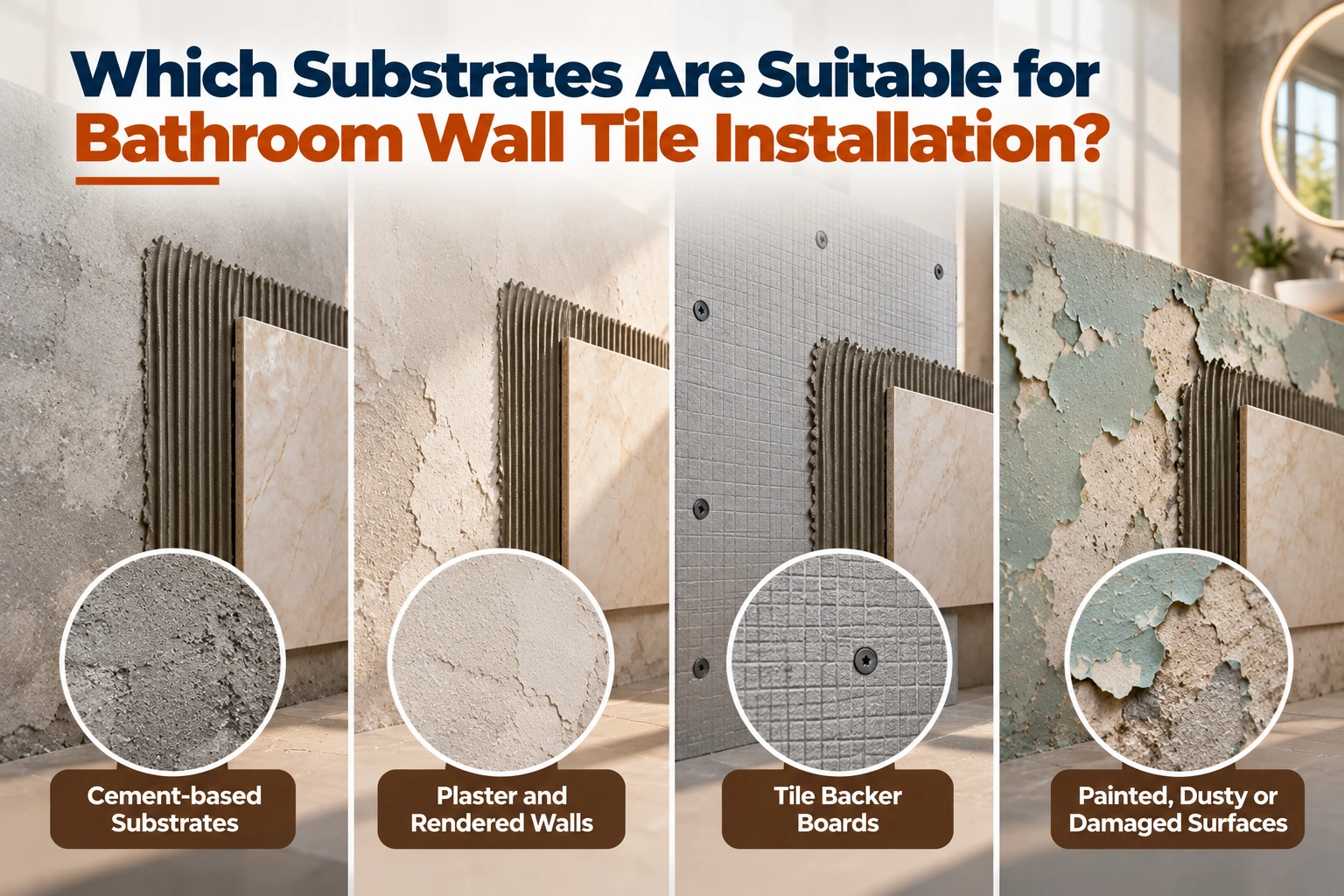
Substrate compatibility is just as important as the adhesive itself. A suitable product cannot compensate for a wall that is weak, contaminated, unstable or improperly prepared.
Sound, properly cured cement-based render and other approved cementitious surfaces are common substrates for bathroom tiling. The surface must meet the adhesive manufacturer's requirements for strength, flatness, cleanliness and moisture condition.
Loose material, dust, oil and other contaminants should be removed. Any required curing period or primer should follow the manufacturer's instructions.
Some adhesives can be used on particular plastered or rendered surfaces, but permission depends on the product and substrate. Gypsum-based plaster, for example, may have specific preparation, moisture and exposure limitations.
Before tiling, check the substrate manufacturer's recommendations and the adhesive technical data sheet. Do not assume that a wall suitable for a dry room is automatically appropriate inside a shower.
Purpose-designed tile backer boards may provide a suitable surface when installed according to their system instructions. Board type, joint treatment, fixing method and waterproofing details all influence compatibility.
Use an adhesive approved for the board and intended wet-area application. Where a waterproofing layer is required, follow the complete board and membrane system requirements.
Painted walls, weak plaster, loose render and dusty surfaces may prevent reliable bonding. Some coatings also interfere with adhesion or are not suitable for wet environments.
Identify and correct the underlying problem before tiling. Remove unsuitable material or use an approved preparation system. Do not cover a damp or unstable wall simply because the adhesive appears suitable.
Compare products by their documented performance and approved applications rather than relying only on packaging claims.
|
Product characteristic |
What to check |
Why it matters |
|
Tile compatibility |
Ceramic, porcelain, natural stone or other specified materials |
Different tile surfaces can require different bonding properties |
|
Substrate compatibility |
Cement render, plaster, backer board or other approved surfaces |
The adhesive must bond to the actual wall construction |
|
Vertical application |
Approval for wall tiling and relevant tile weight |
Helps address the demands of installing tiles vertically |
|
Wet-area suitability |
Explicit approval for the intended bathroom or shower conditions |
Moisture exposure varies across bathroom locations |
|
Tile dimensions and weight |
Maximum permitted format, thickness or weight, where specified |
Larger and heavier tiles may require a different product |
|
Open time and working conditions |
Published limits and environmental conditions |
Helps installers place tiles while the adhesive remains workable |
|
Performance classification |
Applicable classification and its documented meaning |
Provides a consistent way to compare specified properties |
|
System compatibility |
Primer, membrane, board and grout recommendations |
Reduces the risk of incompatible installation components |
An adhesive classification is useful only when interpreted alongside the intended application and product instructions. A higher classification does not automatically make a product suitable for every bathroom wall.
For a wider explanation of classification terminology, see Lapifix's tile adhesive classifications guide. For the bathroom project, the deciding factor remains whether the individual product is approved for the specific tile, substrate and exposure.
The technical data sheet should identify the product's intended uses, approved substrates, tile compatibility and application limitations. Depending on the product, it may also provide information about mixing, pot life, open time, setting conditions and performance classification.
Read the instructions for the actual product being purchased. Do not transfer mixing ratios, curing times or other specifications from a different adhesive, even if the products appear similar.
For projects with unusual substrates, heavy tiles or demanding wet-area conditions, consult the manufacturer or a qualified installer before finalising the specification.
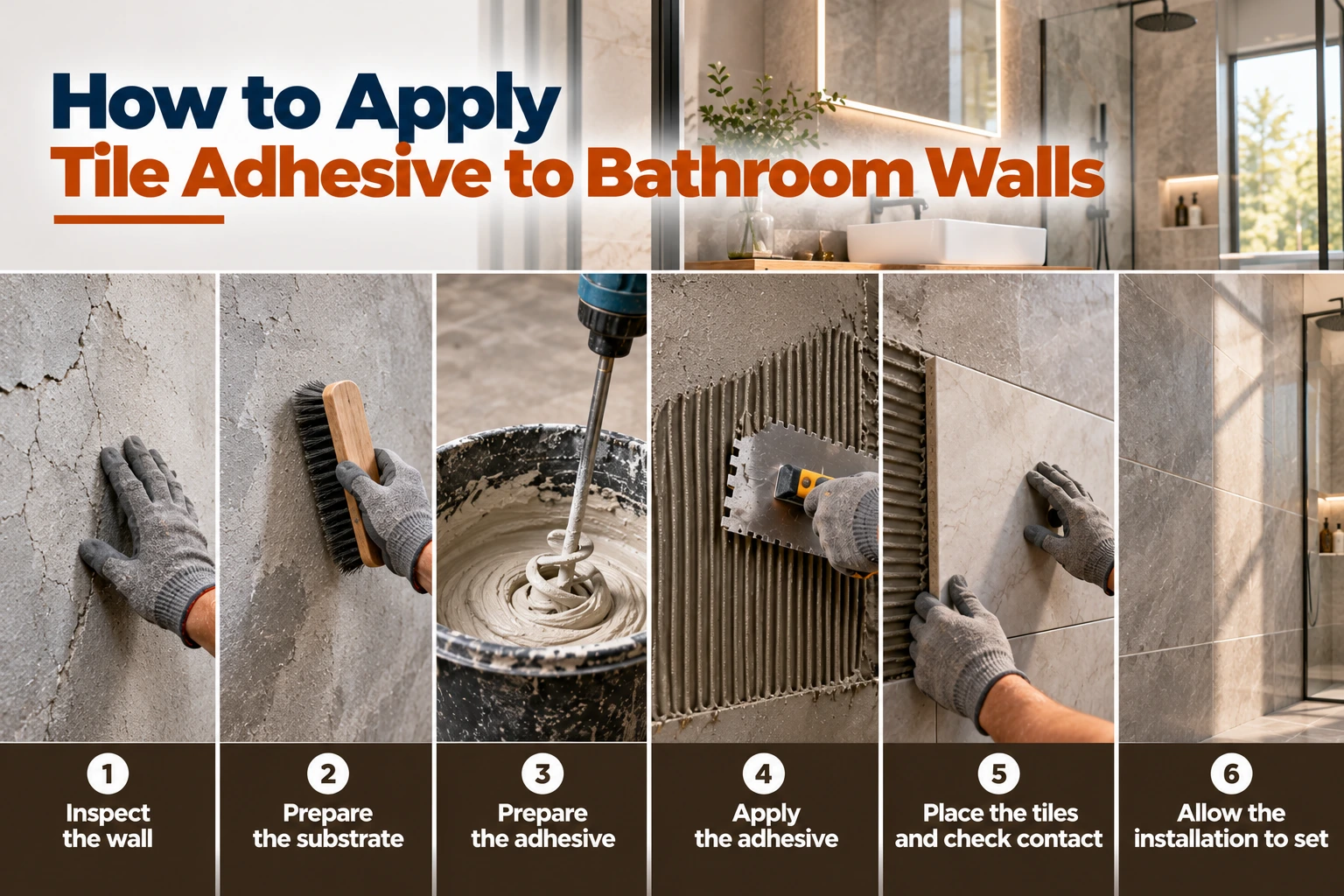
Correct application is essential for reliable bonding. The following sequence provides a practical overview, but the adhesive and tile manufacturers' instructions take precedence.
Check the substrate for cracks, movement, weak areas, contamination and unevenness. Confirm that the wall is appropriate for the intended tile load and installation environment.
Resolve moisture problems and complete any required waterproofing work before proceeding.
Remove dust, grease, loose material and other contaminants. Correct surface defects using suitable materials and allow any required preparation products to cure.
Apply a primer only when the selected system requires or permits it. Follow the substrate and adhesive manufacturers' instructions.
Mix the product using the specified water quantity, equipment and mixing procedure. Respect any stated resting period, remixing instructions and usable working time.
Ready-mixed products and cement-based powders have different preparation requirements, so do not assume they are interchangeable.
Spread the adhesive using the recommended tool and technique. Work in manageable areas so that the tiles can be placed within the specified open time.
Avoid spreading more adhesive than can be covered while it remains suitable for tile placement. If the surface develops a skin, follow the product instructions rather than simply wetting it or covering it with fresh adhesive.
Position each tile carefully and press it into the adhesive using the recommended method. Use suitable spacers and alignment systems where needed.
Periodically remove a newly placed tile to check adhesive transfer and coverage. Pay particular attention to the requirements for large or heavy tiles. Correct any inadequate coverage using the manufacturer's recommended method.
Protect the installation from disturbance and follow the product's specified setting and curing requirements. Temperature, humidity, substrate conditions, tile characteristics and adhesive chemistry can affect the time required.
Do not grout, load or expose the installation to water until the applicable instructions permit it.
Avoid these frequent bathroom wall tiling mistakes:
Selecting an adhesive without confirming compatibility with the tile, substrate and moisture exposure.
Applying adhesive to dusty, weak, contaminated or unsuitable wall surfaces.
Ignoring tile size, weight and vertical application limitations.
Allowing adhesive to exceed its specified open time before placing tiles.
Failing to check adhesive contact and coverage during installation.
Treating adhesive or grout as a substitute for a required waterproofing membrane.
Grouting or exposing newly installed tiles to water before the specified time.
Preventing these problems begins with selecting the right materials and following a compatible installation system. If conditions differ from those described in the product documentation, obtain technical guidance before proceeding.
Adhesive, grout and waterproofing materials work together in a tiled installation, but they have different purposes.
|
Component |
Main function |
Important consideration |
|
Tile adhesive |
Bonds tiles to the prepared substrate |
Must be approved for the tile, substrate and exposure |
|
Tile grout |
Fills the joints between tiles |
Must suit the joint, environment and installation requirements |
|
Waterproofing membrane |
Provides a dedicated waterproofing layer where required |
Must be installed with compatible primers, seals and detailing |
|
Flexible sealant |
Accommodates movement at specified joints and junctions |
Must be suitable for the joint location and surrounding materials |
The exact system depends on the bathroom design, applicable building requirements and product instructions. Shower corners, pipe penetrations, changes of plane and connections between different materials may need specific waterproofing and sealing details.
A successful tiled surface therefore depends on more than the adhesive alone. The complete system must be selected and installed correctly.
A practical selection process starts with the tile and the conditions in which it will be installed.
First, identify the tile material. Ceramic, porcelain and natural stone can have different adhesive requirements. Next, establish the tile's dimensions and weight and check whether the selected product permits those characteristics on a vertical surface.
Assess the wall substrate, including its material, condition, flatness and moisture status. Confirm that it is suitable for tiling and compatible with the proposed adhesive and any primer or waterproofing system.
Then evaluate the exposure. A wall beside a basin may have different requirements from a shower wall exposed to regular direct water contact. Select a product whose technical documentation covers the actual location.
Finally, review the installation instructions and local requirements. Confirm the specified preparation method, application conditions, curing requirements and any restrictions on use.
For a reliable purchase decision, request technical documentation if the product information is unclear. The cheapest option is not necessarily the most suitable if it falls outside the project's requirements.
Choosing tile adhesive for bathroom walls requires a careful assessment of tile material, dimensions, weight, substrate and moisture exposure. The correct product should be approved for the intended application and compatible with the other components of the installation system.
Bathroom walls outside a shower may have different requirements from regularly wet areas. Porcelain, natural stone and large-format tiles can also require more specific product selection. In every case, preparation, correct application and adherence to the manufacturer's curing instructions are essential.
Before purchasing, review the technical data sheet and confirm that the product meets the requirements of the project. Where waterproofing is required, use the specified system rather than relying on adhesive or grout alone.
Lapifix offers tile installation solutions for different project requirements. Explore the Lapifix tile adhesive range and consult the relevant product documentation to identify a suitable option for your bathroom wall installation.
The best option is a product approved for the tile material, substrate, vertical application and expected moisture exposure. Ceramic, porcelain and natural stone may have different requirements. For shower walls, also confirm compatibility with the specified waterproofing system.
Yes, but only when the specific adhesive is approved for the tile, substrate and intended shower application. The complete installation must also meet applicable waterproofing requirements. Adhesive alone should not be assumed to provide the required waterproofing.
Not all bathroom adhesives are waterproof, and water resistance does not necessarily mean that a product can replace a waterproofing membrane. Check the individual product's technical data sheet and follow the requirements for the complete wet-area installation system.
Porcelain tiles can be installed on bathroom walls when the tile, adhesive and substrate are compatible. Because porcelain is generally dense and less absorbent than many ceramic tiles, choose a product specifically approved for porcelain and the intended wall application.
This depends on the plaster type, its condition, moisture exposure and the adhesive manufacturer's instructions. Some plastered surfaces require particular preparation or have restrictions in wet areas. Verify compatibility before installation, especially inside a shower.
Waterproofing requirements depend on the location, building regulations and installation design. Shower and other designated wet areas commonly require a specified waterproofing system. Confirm the applicable requirements and ensure that the membrane and adhesive are compatible.
There is no single curing period for every adhesive. The required time depends on the product, tile, substrate and environmental conditions. Follow the manufacturer's stated grouting time and any additional requirements for wet-area exposure.
Only if the product documentation explicitly permits the tile's dimensions, weight, substrate and vertical application. Large-format tiles may require a higher-performance product and careful attention to substrate flatness and adhesive coverage. Do not assume that an adhesive suitable for small tiles is suitable for larger ones.