

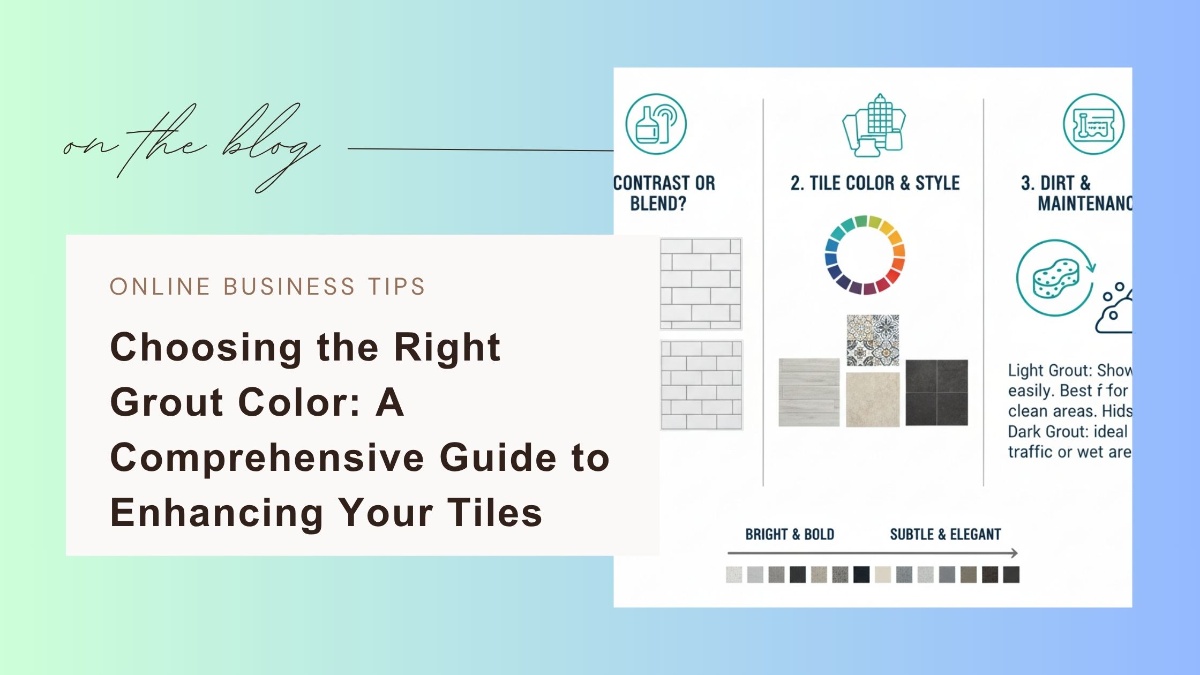
At first glance, these materials may look similar, leading many homeowners and DIYers to believe they are interchangeable. However, they serve very different purposes in tile installation.
Tile adhesive is the bonding agent that is used to glue tile to a wall, floor or other substrate. Grout is applied on the other hand to fill in the spacing of the tiles once they are in place to seal the surface and to give it a clean polished look.
Mixing them up can lead to costly mistakes: tiles that won’t stick, gaps that leak moisture, or surfaces that crack over time. In this comprehensive guide, we’ll break down the differences between tile adhesive and grout, explore the different types available, explain how to choose the right combination for your project, and share practical tips for application and maintenance.
You will come to understand when to apply adhesive, when to apply grout and their necessity to create a durable installation of tiles, which lasts long enough.
tile adhesive This is a bonding agent that is specifically designed to bond tiles to various surfaces, including concrete, plaster, drywall, or cement boards. Compared to regular cement, tile adhesive has polymers and additives that enhance flexibility, bonding strength and resistance to water. This guarantees that tiles stay in place due to weight, foot traffic and environmental stress. In the absence of adhesive, tiles would easily move, loosen or disintegrate with time. In a simple term tile adhesive forms the basis of any tiling project giving it the durability and stability needed to make a lasting installation.
Thin-set adhesive: This is the most widely used tile adhesive that is composed of cement, sand, and additives. Thin-set is flexible and can be used on both walls and floors. It is powerful, cost effective, and highly suggested on ceramic and porcelain tiles.
Mastic adhesive: This is an organic adhesive that is easy to apply and should be used in wall tiles in dry spaces. Nonetheless, it cannot be used in humid conditions such as bathrooms or outside because it can break down when it comes into contact with water.
Epoxy adhesive: A high-performance option known for its exceptional strength, chemical resistance, and waterproofing. Epoxy adhesive is perfect for bathrooms, kitchens, or industrial areas where durability is essential, though it is more expensive and harder to work with.A high-performance adhesive with a high strength level, chemical resistance capacity, and waterproofing. Epoxy adhesive suits best in bathrooms, kitchens or industrial applications where durability is a priority, but is costly and more difficult to use.
Pros: Provides a strong and durable bond, works with various tile types, and is available in waterproof options for wet environments.
Cons: Some adhesives (like epoxy) can be costly and tricky for DIYers, and all types require proper application and curing for best results.
Tile adhesive is most effective in the bathrooms, kitchen, and floors where a safe and moisture-free bond is necessary. Selecting the appropriate glue guarantees having beautiful and intact tiles in years.
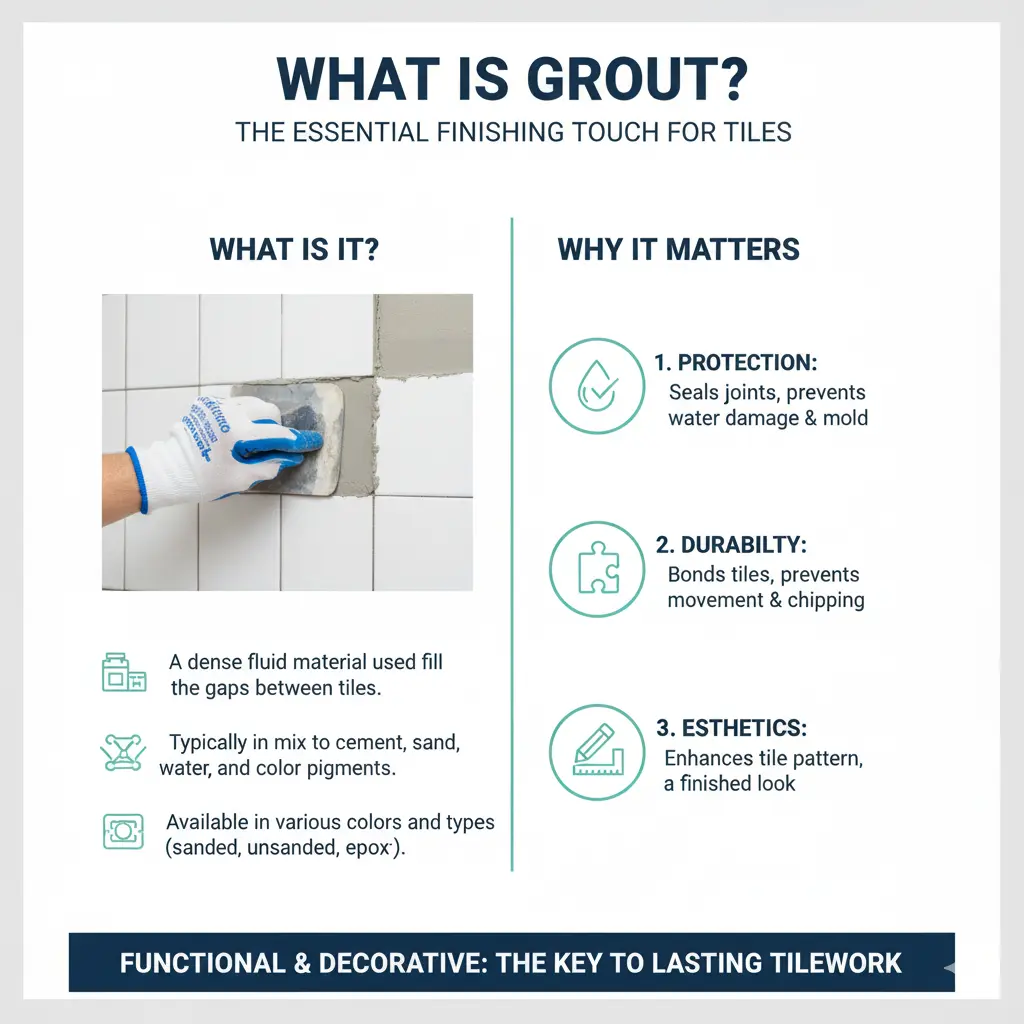
Grout is a material that is taken to seal the tiny gaps between tiles that have already been attached with adhesive. Unlike tile adhesive which fixes the tiles to the surface, the primary role of grouts is to seal the joints, resist moisture and give the surface a polished look. Grout is also used to ensure that tiles are in place and do not move or chip. It is available in powder or premixed and it may be applied using a rubber float to press the mixture into breaks between the tiles. After the treatment, grout cement binds the tiled floor together making it strong and aesthetically consistent.
Sanded grout: Contains fine sand, It is powerful and can be used where the joints are wider (3 mm or above). Usually applied to floor tiles to avoid shrinkage and cracking.
Unsanded grout: smooth and sticky and best suited to narrow joints (less than 3 mm) and delicate finishes like polished stone, where sand might leave scratches.
Epoxy grout: This is a waterproof, stain resistant and very strong type of grout that is made up of resin and a hardener. It is ideal in the kitchen, bathroom and outdoors but is more costly and needs expertise to use.
Pros: Enhances the aesthetics of tiled surfaces, prevents water and dirt infiltration, stabilizes tiles, and is available in multiple colors to match or contrast with tiles.
Cons: Cement-based grouts are porous and require sealing, grout can stain or discolor over time, and cracks may appear if applied incorrectly or exposed to heavy movement.
Grout is not just about looks, grout is a necessary protective coating that prolongs your tiles. Grout is used on shower walls, in the kitchen backsplash to make surfaces clean, strong, and attractive.
Both the grout as well as the tile adhesive are essential when it comes to tiling projects, but their purpose is entirely different. The two are confused by many DIYers and even some professionals since they are used on various stages of the tiling process and possess specific physical characteristics. This is necessary to know the differences in order to establish a long, polished, and durable tile installation.
The most common role of tile adhesive is to fix tiles in place on the substrate, which could be a wall, floor and counter top. Adhesives are made to form a solid base that is stable to ensure that tiles do not shift or become loose with time.
In comparison, the bonding of grouts is not its primary goal, since it is rather used in sealing and filling the spaces between tiles. Grout maintains dirt, debris and moisture, and also gives a finished appearance that adds to the overall design. In short the tiles are fixed by the use of adhesive, grout fixes the installation, and secures it.
During the installation stage, tile adhesive is used. The tiles are stamped on the adhesive bed and allowed to dry so that they are fixed. This is a process that needs to be accurate since the bond strength is a factor of application and curing.
Grout is applied later when the adhesive is completely dried and the tiles have been fixed. It is joints between tiles, normally by rubber float, and wiped off the surface. Early application of grout may affect the adhesive bond therefore it is important to apply it in that order.
The tile adhesive is designed to be strong and rigid. It must be able to sustain heavy weight, changes in temperature and the passage of time and still maintain its bonding capacity. Adhesive formulations (cement-based, epoxy) are provided with different strengths depending on the environment.
Grout, however, places flexibility and finishes first. Although it offers certain stability to the tiles, it does not serve as a weight bearing material or a bonding agent. Rather, grout allows the tiles some degree of movement, avoids edges being chipped, and forms a non-porous and cohesive surface.
With regard to wear, adhesive offers the base in case of failure, the tiles will become loose or even break. Adhesives of high quality withstand moisture, thermal stress and heavy foot traffic, particularly in kitchens, bathrooms and outdoors.
Grout also plays a different role of ensuring durability by sealing the cracks between tiles to avoid water infiltration. Epoxy grouts especially, are highly resistant to stains and moisture and therefore can be used in wet environments. Even the finest adhesive will never prevent the water from creeping under the tiles, which may lead to mold, mildew, or structural damage, unless it is properly grouted.
| Feature | Tile Adhesive | Grout |
|---|---|---|
| Purpose | Bonds tiles to the substrate | Seals joints and prevents moisture entry |
| When Applied | Before tiles are set | After tiles are secured |
| Physical Properties | Strong, rigid, high bonding strength | Flexible, fills gaps, aesthetic finish |
| Durability | Ensures tile stability and long-term hold | Protects against water, dirt, and stains |
| Water Resistance | Provides stable base, some formulations resist moisture | Creates watertight seal between tiles |
Both tile adhesives as well as grouts are available in various formulations; each of them is specific to a particular application. The appropriate type is not only a guarantee of a secure installation but also a long-term operation within the anticipated environment. We are going to further subdivide the most popular types of adhesives and grouts below, as well as provide practical suggestions on how to apply it to particular projects.

1. Thin-Set Adhesive
The most common tile adhesive is thin-set mortar, commonly used with ceramic and porcelain tiles. It is a cement based substance that may be incorporated with additives to enhance flexibility and resistance to water. Thin set can be used on walls and floors, it gives a long lasting attachment and can carry heavy weight, and can withstand change of temperature. Most residential and commercial tiling projects use it.
2. Mastic Adhesive
Mastic is a premixed adhesive that can be easily used and does not need to be mixed. It is very handy in small work and internal wall like backsplash and decorative tiling. Nonetheless, mastic cannot be used under wet conditions such as showers, bathrooms, or the outdoor areas. It is strong in convenience rather than durability.
3. Epoxy Adhesive
Epoxy based adhesives are characterized by high strength of bonds and their resistance to moisture and chemicals. They can be applied in areas of high demand like industrial kitchens, commercial bathrooms or open spaces prone to harsh weather. Although more costly and sensitive to handling, epoxy is more resistant to adverse environments and stands the test of time.

1. Sanded Grout
Sanded grout has fine sand particles that provide greater strength hence it is best used in floor tiles with wider joints (usually 1/8 inch and above). The grout is prevented by the sand that shrinks when it is cured, and it provides resistance to cracking under pressure. It is the most suitable in high-traffic places such as hallways, kitchens, and entryways.
2. Unsanded Grout
Unsanded grout, as the title implies, does not include any sand, and thus it is smoother. It has narrow grout lines (less than 1/8 inch) and is used with the sensitive surfaces such as polished marble or glass tiles where sanded grout may scratch delicate surfaces. Unsanded grout is normally applied on walls, backsplashes and on bathroom surfaces.
3. Epoxy Grout
Similar to epoxy adhesives, epoxy grout has increased resistance to stains, chemicals and water. It comes in handy especially in wet places like bathrooms, showers and kitchens where mold and mildew may be an issue. It is more expensive and difficult to apply than cement-based grouts but its performance in the long term usually warrants the expense.
Choosing the right combination of adhesive and grout ensures maximum strength, durability, and aesthetic appeal. Here are a few common scenarios:
Bathroom Floor: Use thin-set adhesive for secure bonding under heavy foot traffic and epoxy grout to provide waterproofing and mold resistance.
Kitchen Backsplash: Mastic adhesive works perfectly for quick and easy wall application, paired with unsanded grout to create smooth, tight joints that complement decorative tiles.
Outdoor Patio: Harsh weather and temperature shifts require the strength of epoxy adhesive and the resilience of epoxy grout to resist water penetration and damage from the elements.
By selecting the right pairings, you not only protect your installation but also make maintenance easier and extend the life of your tiled surfaces.
The choice of the adhesive and grout may be the defining factor between a successful and a failed installation of tiles. The choice will be made based on various practical considerations such as the kind of tile and the area where the tile will be used.
Tile size: Larger or heavier tiles such as large-format porcelain or stone require stronger adhesives like modified thin-set or epoxy to ensure proper support. Smaller tiles can often be set with standard cement-based adhesives.
Environment: Wet environments like bathrooms, kitchens and pools require water proof adhesives and grouts. Epoxy-based products offer better moisture resistance, whereas the old fashioned cement based products might require waterproofing to avoid water damage.
Substrate condition: Adhesives can only perform well if the substrate is clean, level, and stable. Irregular or weak surfaces can compromise bonding, no matter how strong the adhesive. In some cases, primers or leveling compounds are required before tiling.
Indoor Walls: Where the project includes back splash walls or accent walls, mastic product would be very convenient to use, and this goes paired with unsanded grout to create smooth and narrow joints. These are normally dry areas thus water resistance is not a major concern.
Outdoor Floors: The exterior tiling has difficulties such as rain, temperature variation and foot traffic. In this case, epoxy adhesive with epoxy grout are used to provide durability, waterproofing, and resistance to the elements with great strength.
Cost is another major factor when selecting materials:
Cement-based adhesives and grouts are affordable and widely available. They work well for standard applications but usually require regular sealing to protect against stains and moisture.
Epoxy adhesives and grouts come at a higher upfront cost, but they offer long-term durability, stain resistance, and waterproofing. Over time, the reduced maintenance and longer lifespan often offset the initial expense.
When you consider all these variables tile size, environment, substrate condition, and budget you will be able to determine the adhesive and grout combination that would guarantee you both beauty and durability in your tiling project.
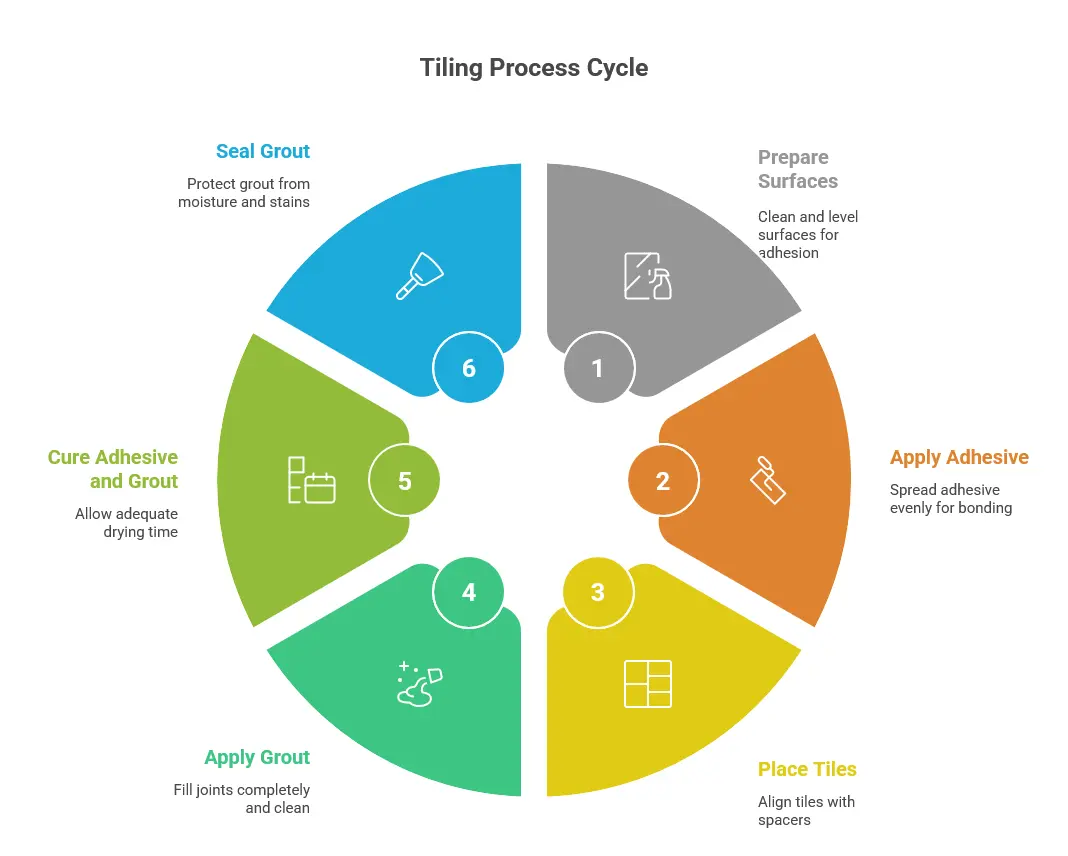
Even with the right materials, successful tiling comes down to proper application. Following the correct sequence, preparing surfaces carefully, and avoiding common mistakes can make the difference between a professional-looking installation and one that fails prematurely.
The tiling process should always follow a set order to ensure durability and a polished finish:
Apply adhesive to the prepared substrate using a notched trowel. Spread evenly to create consistent ridges that help the tile bond properly.
Place tiles onto the adhesive, pressing firmly and adjusting for alignmentThere should be equal spacing that is controlled with tile spacers. Before proceeding to the next step, make sure that the adhesive has dried as per the recommendations of the manufacturer.
Apply grout once the adhesive is set. Using a grout float, spread the grout diagonally across the tiles to fill joints completely. Wipe away excess with a damp sponge, being careful not to pull grout from the gaps.
The substrate plays a crucial role in ensuring a strong bond:
Clean and level surfaces: Dust, grease, or uneven patches can prevent proper adhesion. Preparing the substrate with a primer or leveling compound when needed improves performance.
Consistent joints: Use tile spacers to achieve uniform spacing. This not only improves the appearance but also makes grouting easier and more effective.
Proper depth: Ensure joints are deep enough for grout to sit firmly without crumbling over time.
Even experienced DIYers can make errors that compromise the final result. Some key mistakes to avoid include:
Using grout as adhesive: Grout is not designed to bond tiles; it only seals joints. Always use a proper adhesive for setting tiles.
Skipping curing time: Rushing the process can weaken the bond. Adhesive and grout both require adequate curing before foot traffic or sealing.
Failing to seal grout: Cement based grouts are porous and are supposed to be sealed to avoid absorption of water, stains, and development of moulds. Epoxy grout does not generally need sealing and yet it is advantageous to have it cleaned.
By following these best practices, you’ll ensure a tile installation that not only looks professional but also stands up to daily wear, moisture, and time.
Tile installations are durable, but both grout and adhesive need care over time to keep surfaces looking their best and performing as intended. Regular maintenance can extend the life of your tiling, while timely repairs prevent small issues from turning into costly problems.
Grout is more exposed than adhesive, so it requires more frequent upkeep:
Regular cleaning: Use a mild detergent or a solution of water and vinegar to clean grout lines. The harsh chemicals may erode the surface and reduce the life of grouts. A brush with soft bristles is good for lifting dirt without damaging tires.
Apply a grout sealer: Cement based grouts are porous and are highly likely to stain. The use of quality sealer after the intervals of 1 to 2 years will prevent the absorption of moisture, increase of the growth of mould and discoloration. Epoxy grout is also not usually requiring sealing, though it should be washed regularly.
Avoid harsh cleaners: Bleach and acidic products can weaken grout or cause fading. Stick to pH-neutral cleaners for long-term preservation.
Even with proper care, grout and adhesive may need repair or replacement after years of use:
Regrouting: If you notice cracks, chips, or crumbling joints, it’s time to regrout.Small areas repairs can usually be made on small spots, though a large area will normally require the removal of old grout and the addition of new. Regrouting does not only restore the appearance but also avoids leaking of water under the tiles.
Replacing adhesive:Unlike grout, adhesive is not visible and thus issues tend to manifest themselves in other forms. When the tiles are loose, uneven or hollow upon tapping, then the adhesive bond may fail. In this situation, the tiles need to be lifted carefully and old glue has to be removed and new adhesive is to be used to fix the tiles in place.
Regular checks can also work wonders in the avoidance of large-scale repairs. Look at the discolored grout, loose tiles, or water stains in the joints; these are a warning sign that the maintenance is required. By fixing and keeping them clean, you will keep your tile surfaces looking and sounding good over a long period of time.
Tile adhesive and grout play very dissimilar yet equally crucial roles as far as tiling is concerned. The adhesive keeps the tiles firmly attached to the surface and the grout is what ensures that the joints are sealed, preventing any moisture, dirt and damage. There is a risk of compromising the durability and appearance of your installation by using either of them without the other and by using them in a wrong manner.
The right choice depends on factors such as tile size, environment, and location. For example, epoxy grout and thin-set adhesive are ideal in wet environments, whereas mastic and unsanded grout can be used on interior walls. The correct combination ensures performance and decreases the maintenance requirements in the long-term.
In complex projects like outdoor installation, tile of large format, or a high-moisture environment it is prudent to enlist the services of a professional. In suitable planning, installation, and maintenance, a beautifully finished and functional tiled surface can be achieved.
No. Adhesive is for sticking tiles down, grout is for filling joints. Using adhesive in joints can cause cracks and poor appearance.
Usually 24 hours, but it depends on adhesive type and drying conditions. Always follow manufacturer guidelines.
Yes, most cement-based grouts need sealing to protect against water and stains. Epoxy grout usually does not.
Sanded grout: stronger, used for wider joints.
Unsanded grout: smoother, used for narrow joints or delicate tiles.
Use high-performance adhesives designed for heavy or large tiles, often flexible and semi-pourable.
Yes, epoxy grout is more durable, waterproof, and stain-resistant, but it is costlier and harder to apply.
Typically 2–3 mm on walls, and 3–12 mm on floors depending on tile size and surface conditions.
Cracked grout lets in water and dirt. It should be removed and replaced, and flexible sealant used in movement-prone areas.