

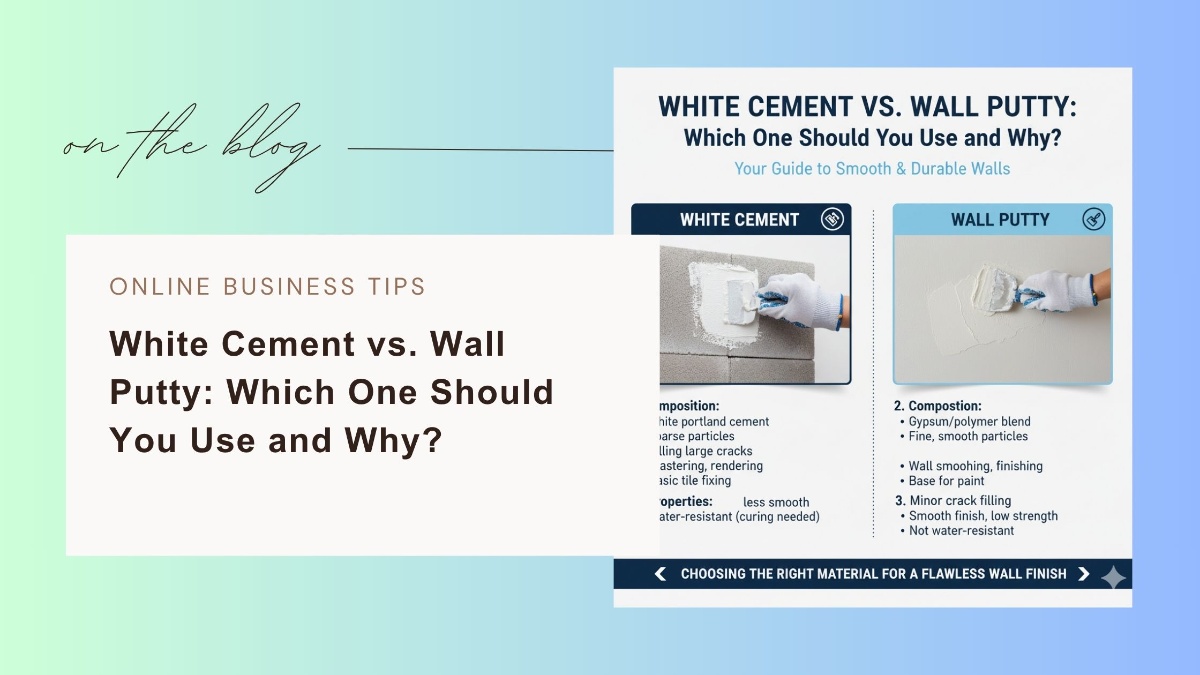
Selecting the appropriate material for preparing walls before painting is crucial for achieving a flawless and long-lasting finish. The choice between white cement and wall putty often arises, each possessing distinct characteristics and applications. Understanding the differences between white cement and wall putty is essential for making an informed decision that aligns with the specific requirements of your project, ensuring optimal adhesion, texture, and durability of the final paint job. This article delves into a detailed comparison, highlighting the key differences and helping you determine whether to use white cement or wall putty.
Before delving into the nuances, it's important to define what each material is and its primary purpose. White cement is a type of cement often used where aesthetics are important, especially in decorative finishes. Wall putty, on the other hand, is a material applied to walls to create a smooth surface, essential for preparing floors for tiling. Understanding their fundamental compositions sets the stage for comparing their applications and benefits, particularly how white cement offers unique properties.
White cement, specifically white portland cement, is a type of cement manufactured with carefully selected raw materials and a controlled production process to minimize the presence of manganese and other coloring agents. This results in a cement that is significantly lighter in color compared to ordinary portland cement. The primary use white cement provides is in applications where color is important, like decorative concrete, architectural precasts, and as a component in specialized mortars and grouts used with ceramic tiles. While it can be used in similar structural applications as regular cement, its cost often makes it more suitable for aesthetic purposes.
Wall putty is a fine paste-like material, typically cement-based or acrylic, used to create a smooth and even surface on walls and ceilings before painting or installing tiles. Applying wall putty is designed to fill in minor cracks, holes, and imperfections on wall surfaces, ensuring a flawless base for the final coat of paint or tile installation. Acrylic wall putty, a common variant, often incorporates additives to enhance adhesion, flexibility, and water resistance, making it superior compared to white cement for use with Mapei products. The composition of wall putty allows for easy application and sanding, resulting in a smooth finish that improves the appearance and longevity of the paint job. Putty is used both for interior and exterior walls, providing an excellent base for ceramic tiles in various settings.
Choosing between wall putty and white cement requires careful consideration because each material serves a different purpose in wall finishing. White cement provides a strong, durable base and can be used in structural applications. Wall putty is specifically designed for creating a smooth surface before painting or laying ceramic tiles. Deciding whether to use wall putty or white cement depends largely on the type of wall, the desired finish, and the specific requirements of the paint job. So, before starting make sure you know when one is better to use. It is important to know what the difference is when selecting products from suppliers in Dubai.
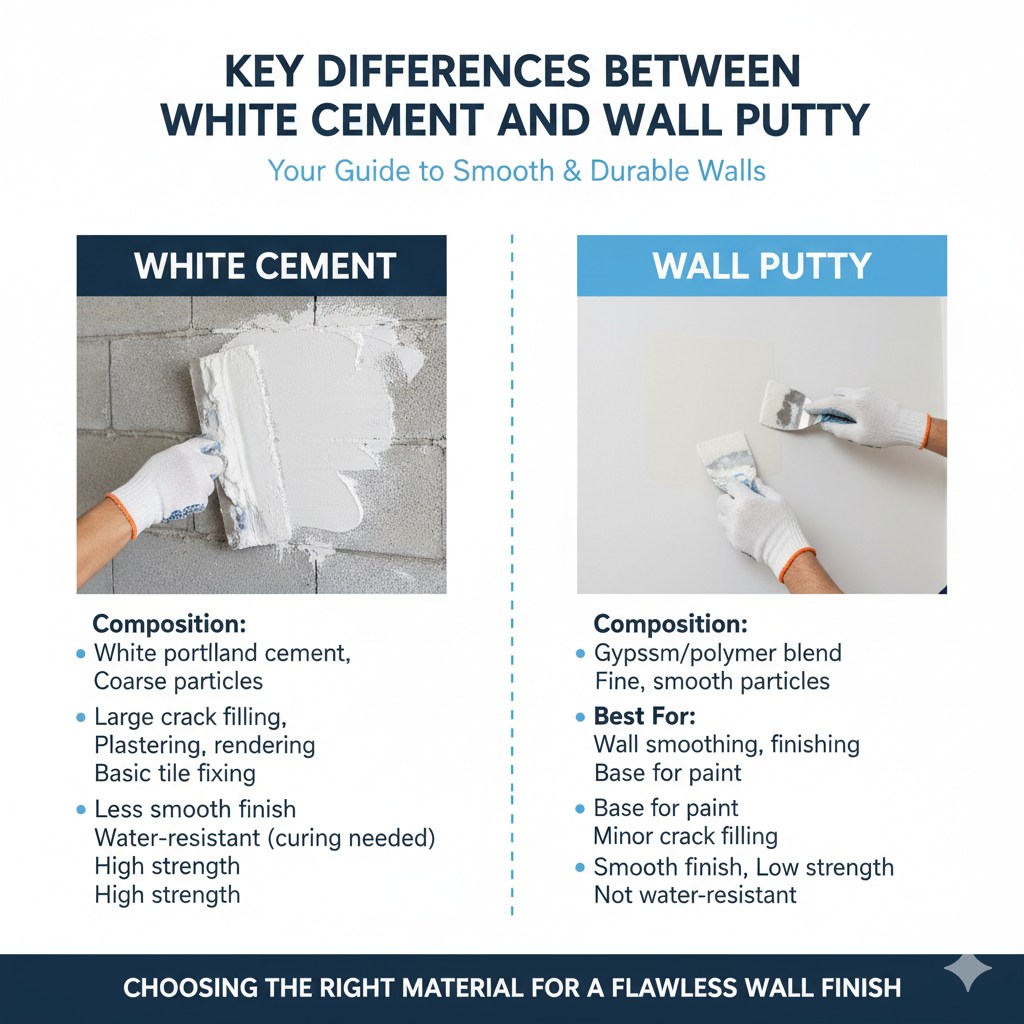
The key differences between white cement and wall putty begin with their fundamental composition. White cement, particularly white portland cement, is a fine powder composed of raw materials like limestone, clay, and gypsum, meticulously processed to minimize the presence of manganese and iron oxides, resulting in its distinct white color. On the other hand, wall putty is a paste-like substance that can be cement-based or polymer-based, often incorporating acrylic additives to enhance its properties. This difference in composition dictates their respective behaviors and applications, especially regarding strength and durability. Thus, cement vs putty is defined by the material from which they are made.
Significant differences between white cement and wall putty lie in their application and the smooth finish they provide, which is crucial when installing ceramic tiles with Laticrete products. White cement is primarily used as a structural or decorative component, requiring skilled application to achieve a relatively smooth surface. Wall putty, conversely, is specifically formulated for applying to create a flawless base before painting, filling imperfections and ensuring an even surface that enhances the adherence and appearance of the final paint coat. While white cement can be used for structural purposes, wall putty is strictly a finishing material.
In terms of performance and strength, wall putty can provide better adhesion compared to white cement, making it a suitable choice for surfaces that will be tiled. durability, white cement provides exceptional strength and durability, making it suitable for both interior and exterior applications. exterior walls where structural integrity is paramount. Wall putty, while offering excellent adhesion and a smooth finish for painting, is less robust than white cement and may not withstand heavy wear and tear or exposure to extreme weather conditions as effectively. Choosing between wall putty or white cement depends on the specific demands of the project, with white cement favored for its strength and wall putty for its surface-finishing capabilities, particularly before applying tile glue. It is important to know what the difference is for your building projects, especially when sourcing materials online in the UAE.
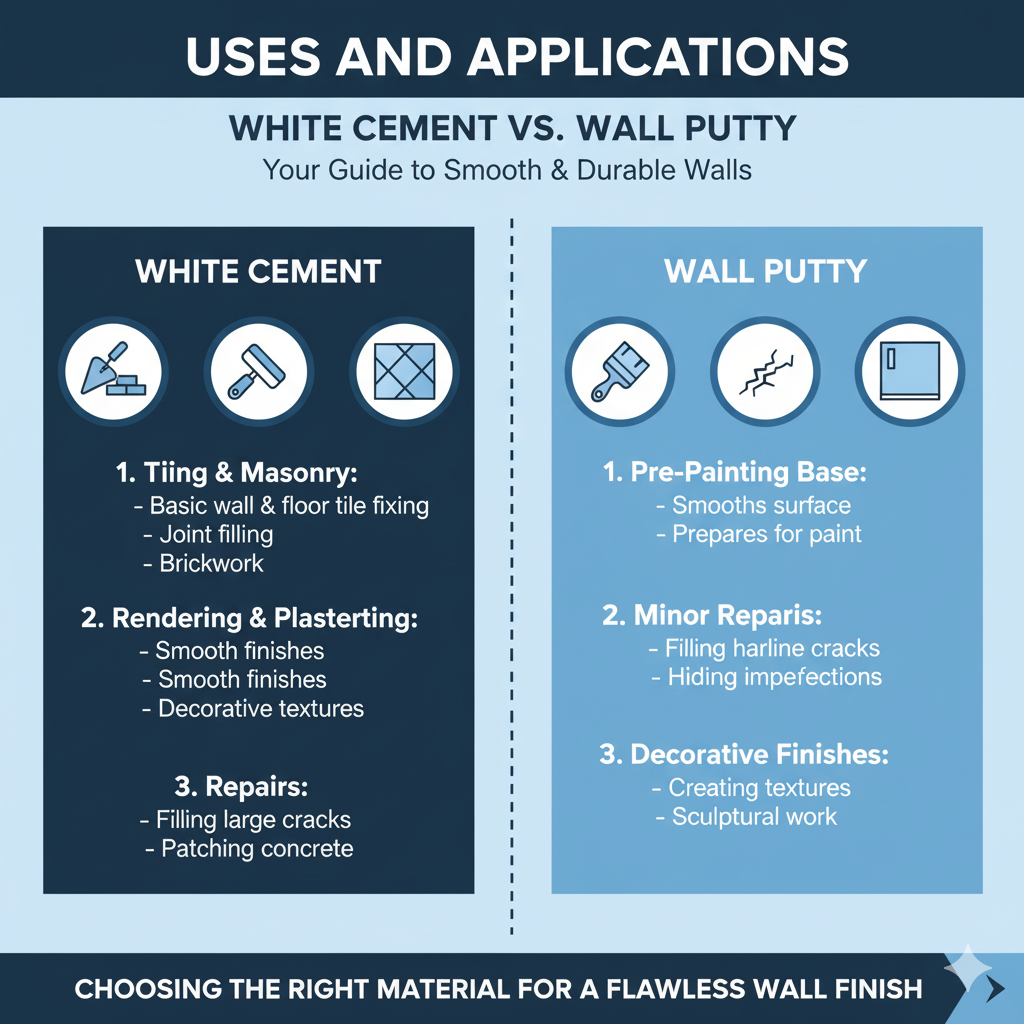
The versatility of white cement extends to a wide range of decorative applications where aesthetics are paramount. Unlike ordinary portland cement, white portland cement allows for vibrant colors and intricate designs when combined with pigments. From architectural precasts to decorative concrete elements, white cement provides a canvas for creating visually stunning surfaces, especially in high-end projects in Dubai. Its unique properties make it ideal for projects that demand both structural integrity and aesthetic appeal, ensuring a lasting and visually pleasing smooth finish, especially when combined with tile adhesive. For this reason, people use white cement for wall finishings, when they want to add some style to the building.
When preparing walls before painting, wall putty plays a crucial role in achieving a flawless and professional paint job. By applying wall putty to wall surfaces, imperfections such as minor cracks, dents, and uneven textures can be effectively filled and smoothed out. Wall putty provides a smooth, uniform base that enhances the adhesion and appearance of the final paint coat. Whether cement-based or polymer-based, wall putty ensures that the paint adheres properly and evenly, resulting in a smooth and long-lasting finish. For this reason, use wall putty for leveling a type of wall before final paint, especially when preparing surfaces for tile adhesive.
Deciding whether to use white cement or wall putty hinges on the specific requirements of the project and the desired outcome, particularly in flooring applications. For structural applications, artistic decorative elements, or instances where a light-colored matrix is essential, white cement provides the strength, durability, and aesthetic versatility needed. Conversely, when the primary goal is to prepare walls before painting and achieve a perfectly smooth finish by applying wall putty directly, it is also essential for subsequent tile installation. smooth surface, wall putty excels at filling imperfections and creating an even surface for optimal paint adhesion. So, before starting wall finishing you should know what the difference is between those materials, as white cement is better suited for aesthetic applications compared to wall putty. Wall putty isn’t a replacement for type of cement or plaster.
White cement production begins with the careful selection of raw materials to ensure minimal discoloration in the final product. Compared to ordinary portland cement, white portland cement may contain manganese and iron oxides that contribute to a gray hue. In contrast, white portland cement utilizes high-purity limestone, kaolin clay, and gypsum. The manufacturing process employs rapid quenching techniques to prevent the formation of colored compounds, ensuring the desired smooth finish suitable for flooring applications. The quality of raw materials directly impacts the durability and aesthetic appeal of decorative applications, including the use of tile adhesive and grout.
The raw materials for wall putty vary depending on whether it is cement-based or polymer-based, which can affect its compatibility with tile glue suppliers. Cement-based wall putty typically includes white cement, fine aggregates, and various additives to enhance workability and adhesion. Polymer-based wall putty, such as acrylic wall putty, incorporates acrylic polymers, fillers, and additives that improve flexibility and waterproof qualities, making it suitable for areas where tile adhesive is applied. These additives contribute to a smooth surface and enhanced bond strength when applying wall putty. The choice of raw materials significantly influences the durability and performance of wall putty on wall surfaces.
The manufacturing process plays a pivotal role in determining the quality and characteristics of both white cement and wall putty. White cement requires precise control over kiln temperatures and the introduction of raw materials to minimize impurities. Wall putty, on the other hand, involves a blending process that ensures a homogenous mixture of cement-based or polymer-based components, along with carefully selected additives. These techniques ensure that the final product delivers the desired properties, whether it's the smooth finish of wall putty or the strength that white cement provides. It is important to know what’s the difference between them.
In summary, choosing the right materials like wall putty or tile glue from suppliers in Dubai is essential for achieving the best results in construction projects. choosing between wall putty or white cement depends largely on the specific needs of your project. White cement provides structural strength and a decorative aesthetic, while wall putty excels at creating a smooth surface for painting. Understanding the key differences in composition, application, and performance will guide you in making an informed decision. Knowing what the difference is ensures the best possible results for your wall finishing endeavors. Cement vs putty is defined by the specific purpose, particularly in the context of projects in the UAE.
For homeowners embarking on a wall finishing project, consider the following recommendations: if your base coat is critical, you might prefer wall putty. type of wall requires structural repair or a durable base, use white cement. However, to achieve a flawless smooth finish on wall surfaces before painting, opt for wall putty from reputable suppliers in Dubai. When dealing with imperfections like cracks, applying wall putty is more effective. Assess the condition of your walls before painting, the desired aesthetic, and the level of putty offers durability required to select the most suitable material. When one is better it depends on the current state of the walls and the end goal. It is important to know what the difference is between those materials, especially when selecting tile glue suppliers.
The field of wall finishing materials in the UAE is continuously evolving, with future trends pointing towards more sustainable and versatile products. Innovations in wall putty have led to better adhesion and flexibility. polymer technology may lead to wall putty formulations that offer enhanced waterproof capabilities and improved adhesion. Similarly, advancements in white cement production could result in materials with even greater strength and whiteness. As environmental concerns grow, expect to see a rise in eco-friendly options for both wall putty and white cement, providing homeowners and contractors with greener alternatives for their wall finishing needs.
White cement is a binder used for decorative finishes and minor repair works, while wall putty is a mixture made from white cement and polymers that provides a smooth base for paint application.
You can, but it’s not ideal. White cement alone can make the surface rough and may cause paint to peel over time. Wall putty is designed to provide a smoother, more durable surface for painting.
White cement has more binding strength and is used in structural or finishing applications, whereas wall putty focuses on surface smoothness and paint adhesion rather than strength.
Yes. Most wall putties are formulated using white cement as a base ingredient, combined with polymers and additives for better adhesion and water resistance.
For exterior walls, cement-based wall putty is better because it provides a weather-resistant, paint-ready surface. White cement alone may not protect against moisture and cracks effectively.
Not exactly. White cement can leave a chalky and uneven finish, while wall putty is specifically designed to make the wall smooth and paint-ready.
Use white cement for repairing cracks, filling gaps, or creating decorative patterns like texture work or marble flooring joints not for preparing walls for paint.
You can paint over wall putty after proper drying and sanding. Painting directly over white cement is not recommended as the surface may not hold the paint evenly.